Tile Roofs vs Foam Roofs in Phoenix: Which Roofing System Makes More Sense for Arizona Homes?
Phoenix homeowners deal with roofing conditions that are very different from most parts of the country. Months of extreme UV exposure, rapid temperature swings, monsoon wind, blowing dust, and sudden heavy rain all put roofing systems under pressure. That is one reason the conversation around tile roofs vs foam roofs is so common across the Valley.
Both roofing systems are widely used throughout Phoenix, Scottsdale, Mesa, Chandler, Tempe, and surrounding Arizona communities, but they solve different problems. Tile roofs are known for their long lifespan, desert-friendly appearance, and ability to handle heat. Foam roofs are popular for flat and low-slope roof designs because of their seamless waterproofing and strong insulation performance.
Choosing between the two is not always straightforward. Roof slope, maintenance expectations, energy efficiency goals, roof age, drainage behavior, and long-term repair planning all matter. A roof that performs well in another climate may not respond the same way under Arizona heat and monsoon conditions.
Homeowners researching roofing materials often compare tile and foam systems alongside other roofing materials that perform well in Arizona heat because cooling efficiency and long-term durability are major concerns throughout the Valley.
Why Roofing Choices Matter More in Phoenix
Roofing systems in Arizona experience a level of sun exposure that many other regions simply do not see. According to the Arizona Office of Tourism, parts of Arizona receive more than 300 sunny days each year. Constant UV exposure gradually accelerates aging in roofing materials, especially around exposed flashings, penetrations, coatings, and sealants.
Monsoon season adds another layer of stress. Wind-driven rain can expose vulnerabilities that may not appear during lighter storms, while dust and debris often accumulate around drains and roof valleys. Homeowners throughout Phoenix frequently deal with roofing problems tied to thermal expansion, underlayment deterioration, and sudden weather shifts.
That is why many property owners narrow their options down to roofing systems that have historically performed well under Arizona conditions:
- Tile roofing for pitched residential roof systems
- Spray foam roofing for flat and low-slope roof structures
Both systems can perform very well in the desert climate when properly maintained. The better choice usually depends on the roof structure itself along with the homeowner’s long-term maintenance expectations.
What Is a Tile Roof?
Tile roofing remains one of the most recognizable roofing systems throughout Arizona neighborhoods. It is especially common on sloped homes across Scottsdale, Mesa, Chandler, Gilbert, and Phoenix.
Most Arizona tile roofing systems use either clay or concrete roof tiles. The tile itself primarily acts as a protective outer layer that shields the roof from direct UV exposure and weather. Beneath the tile sits the underlayment, which serves as the main waterproofing barrier.
Homeowners researching tile roofing Phoenix are often looking for a roofing system capable of handling decades of desert exposure while complementing Southwestern-style architecture.
If you want a deeper understanding of how these roofing systems are designed for desert climates, this guide on tile roofing systems commonly used throughout Arizona explains how tile roofs respond to heat, monsoon weather, and long-term aging.
What Is a Foam Roof?
Spray polyurethane foam roofing, commonly called SPF roofing or foam roofing, is most often used on flat and low-slope roofs throughout Arizona.
The system is spray-applied directly onto the roof surface where it expands into a continuous insulated layer. After curing, a protective elastomeric coating is applied over the foam to shield it from UV exposure and weather.
Unlike many traditional roofing systems, foam roofs create a seamless waterproofing surface with very few joints or seams where water intrusion may develop.
Foam roofing is commonly installed on:
- Flat residential roofs
- Patio roof systems
- Commercial buildings
- Additions and low-slope structures
- Modern architectural homes
Property owners considering spray foam roofing Phoenix AZ often focus on insulation performance and energy efficiency during Arizona summers. This detailed overview of how spray foam roofing systems work in Arizona climates explains why SPF has become so common throughout the Valley.
The Biggest Structural Difference Between Tile and Foam Roofs
The most important distinction between tile roofing and foam roofing is roof slope.
Tile roofs are primarily designed for pitched roof systems where gravity naturally moves water down the roof surface.
Foam roofs are designed for flat or low-slope structures where seamless waterproofing and drainage management become more important.
Many Arizona homes actually use both systems together. It is common to see:
- Tile roofing on the main sloped roof sections
- Spray foam roofing on patios, additions, or flat architectural sections
This is one reason many Phoenix roofing contractors regularly work with both systems depending on the roof layout.
How Tile Roofs Perform in Arizona Heat
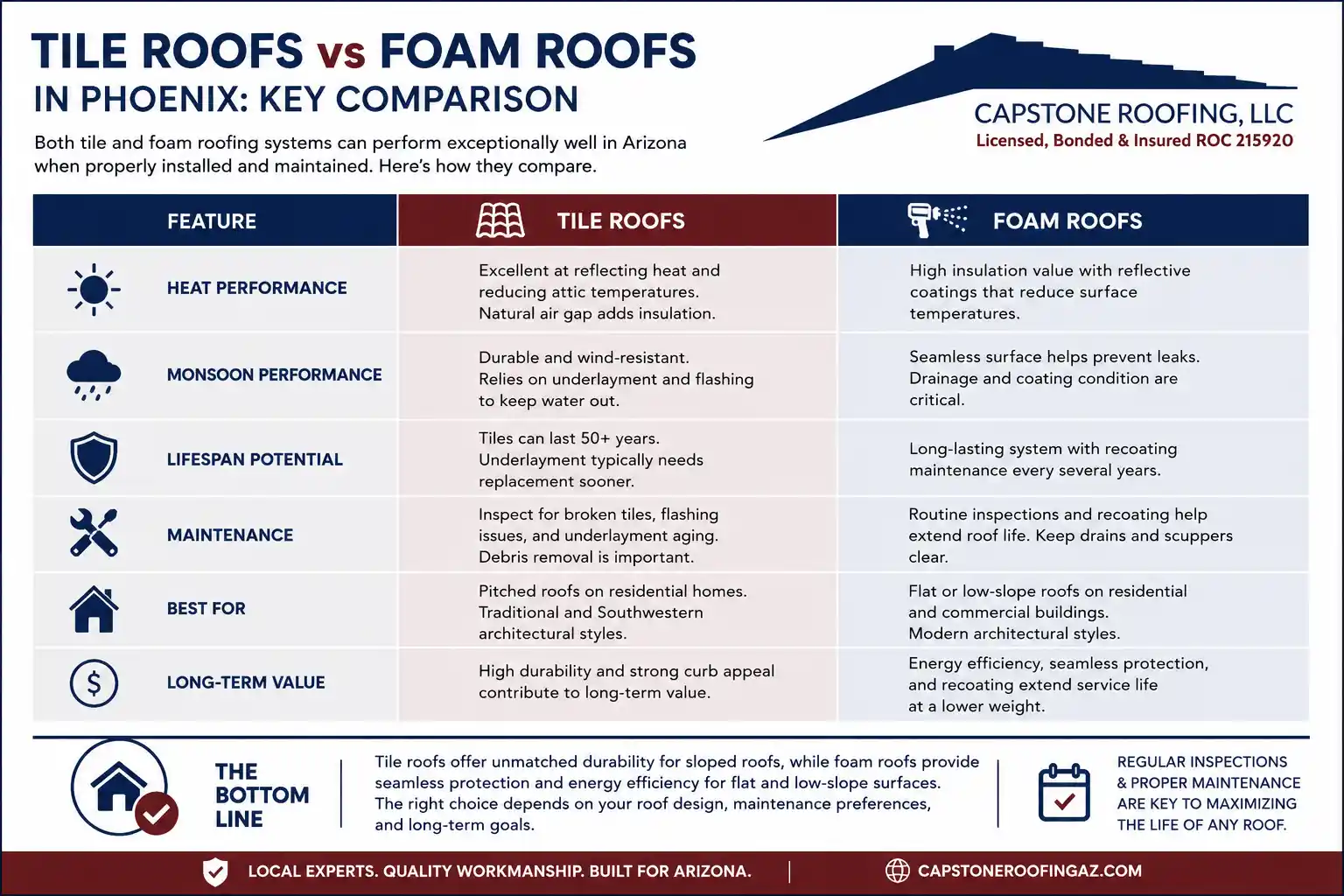
Tile roofing has remained popular in Arizona because it handles prolonged heat exposure extremely well. Clay and concrete roof tiles naturally resist UV damage and help reduce direct heat transfer into the attic space.
The air gap beneath the tile also creates a thermal buffer that slows down heat movement into the home. Combined with the reflective properties of many tile materials, this can help reduce cooling demands during long Arizona summers.
Benefits commonly associated with tile roofing include:
- Strong resistance to UV exposure
- Long-term durability
- Excellent heat tolerance
- Good wind resistance during monsoon storms
- Strong curb appeal
- Compatibility with Southwestern-style homes
Many homeowners researching tile roofing Scottsdale or tile roofing Chandler AZ are specifically looking for roofing systems designed to withstand decades of desert conditions.
Additional local tile roofing resources include:
The Most Important Thing Homeowners Miss About Tile Roofs
One of the biggest misconceptions about tile roofs is assuming the tile itself is what keeps water out of the home.
In reality, the underlayment beneath the tile serves as the primary waterproofing layer.
Arizona heat gradually breaks down roofing underlayment over time. Even when the tile still looks good from the ground, the waterproofing system beneath it may already be aging.
This is one reason tile roof leaks sometimes appear unexpectedly during monsoon season. Wind-driven rain may expose vulnerabilities in older underlayment systems long before the tile itself fails.
Homeowners dealing with older tile roofs often benefit from learning more about how long roof underlayment typically lasts under Arizona conditions along with the differences between modern underlayment materials.
Additional resources:
How Foam Roofs Perform in Arizona Heat
Foam roofing became increasingly popular throughout Phoenix because of its insulation performance and seamless waterproofing characteristics.
Spray foam roofing creates a continuous insulated layer across the roof surface. Reflective roof coatings help reduce roof surface temperatures while limiting heat absorption during Arizona summers.
Advantages often associated with foam roofing include:
- Strong insulation value
- Continuous thermal protection
- Seamless waterproofing
- Good energy efficiency potential
- Lightweight roofing assembly
- Adaptability for flat roof structures
Property owners comparing roofing systems often review how spray foam roofing may improve cooling efficiency during Arizona summers because energy costs remain a major concern throughout the Valley.
The U.S. Department of Energy’s cool roof resource center also explains how reflective roofing surfaces help reduce roof temperatures in hot climates.
Foam Roof Recoating Is a Major Part of Long-Term Maintenance
One of the most important aspects of owning a foam roof is understanding how coatings affect roof longevity.
The coating above the spray foam acts as the primary protective layer against:
- UV exposure
- Weathering
- Surface deterioration
- Moisture intrusion
Over time, coatings gradually wear down under Arizona sun exposure. That is why foam roof recoating is considered a normal part of long-term maintenance rather than an unusual repair.
Many foam roofing systems continue performing well for years when coatings are maintained appropriately and inspections are performed regularly.
Homeowners comparing long-term roofing costs often benefit from reviewing the difference between recoating a foam roof versus fully replacing the roofing system because maintenance planning plays a major role in SPF roof lifespan.
Additional maintenance guidance:
routine foam roof maintenance practices for Arizona properties
Which Roof Handles Monsoon Season Better?
Both roofing systems can perform very well during Arizona monsoon season when maintained properly. However, they respond differently to heavy storms and wind-driven rain.
Tile Roof Performance During Monsoon Storms
Tile roofs are naturally heavy, which helps resist wind uplift during storms. Properly installed tile roofing systems typically handle monsoon weather effectively.
Still, monsoon conditions may expose:
- Broken or displaced tiles
- Aging flashing systems
- Underlayment deterioration
- Debris accumulation in roof valleys
- Leaks around penetrations
Wind-driven rain can sometimes move beneath tile when underlayment systems have already weakened over time.
Foam Roof Performance During Monsoons
Foam roofing creates a seamless surface with very few joints or seams. This can reduce common leak pathways around transitions and penetrations.
However, foam roofs depend heavily on:
- Proper drainage flow
- Coating condition
- Drain and scupper maintenance
- Routine inspection schedules
If debris blocks drainage systems, ponding water may accelerate coating wear and shorten roof lifespan.
Homeowners trying to understand why leaks appear after major summer storms can review how Phoenix monsoon conditions commonly contribute to roof leak problems.
Tile Roof Repair vs Foam Roof Repair
Tile Roof Repairs
Tile roof repairs commonly involve:
- Replacing broken or slipped tiles
- Repairing flashing systems
- Addressing underlayment failures
- Correcting drainage issues
- Repairing valleys and penetrations
Homeowners searching for clay tile roof repair are often dealing with storm damage, aging underlayment, or isolated leak areas.
Arizona homeowners frequently research tile roof leak repair solutions for Arizona weather conditions after heavy storms expose older roofing vulnerabilities.
Foam Roof Repairs
Foam roof repairs often involve:
- Recoating worn roof sections
- Repairing punctures
- Correcting ponding water areas
- Repairing flashing transitions
- Improving drainage flow
Because spray foam roofing is seamless, many repairs can be integrated into surrounding roof sections without replacing large portions of the roof.
Which Roofing System Lasts Longer?
Tile roofing generally has the longer structural lifespan potential. Concrete and clay tile roofs may remain intact for several decades when properly maintained.
However, homeowners should remember that underlayment replacement remains a normal part of long-term tile roof ownership in Arizona.
Foam roofs can also last many years, but longevity depends heavily on:
- Recoating schedules
- Drainage behavior
- Inspection frequency
- Surface maintenance
- UV exposure management
Many property owners evaluating roof lifespan also compare how different roofing systems age under Arizona climate conditions before deciding on repairs or replacement.
Which Roofing System Is More Energy Efficient?
Both roofing systems may contribute to energy efficiency, although they do so differently.
Tile Roof Energy Efficiency
- Reflective materials help reduce heat absorption
- The air space beneath tile slows thermal transfer
- Dense materials moderate temperature swings
Foam Roof Energy Efficiency
- Continuous insulation layer
- Reflective coatings reduce surface temperatures
- Minimal seams reduce thermal weak points
- Strong insulation performance for flat roofs
Homeowners evaluating cooling efficiency often compare these systems alongside other roofing improvements that may help reduce heat transfer in Arizona homes.
Common Problems With Tile Roofs in Phoenix
- Underlayment aging
- Broken tiles after storms
- Flashing deterioration
- Debris accumulation in valleys
- Leaks around roof penetrations
- Tile slippage over time
Routine maintenance can help identify these issues before they develop into larger water intrusion problems.
Helpful maintenance resource:
maintenance strategies for extending the life of Arizona tile roofs
Common Problems With Foam Roofs in Phoenix
- Coating wear from UV exposure
- Ponding water problems
- Puncture damage
- Drain blockage from debris
- Surface cracking from aging coatings
- Drainage slope concerns
Regular inspections are important because many foam roof problems are easier to address early before moisture intrusion develops.
Property owners researching foam roofing companies Phoenix AZ often prioritize contractors experienced with drainage evaluation and coating maintenance due to Arizona’s climate conditions.
How Roof Inspections Help Extend Roof Life
Both tile roofs and foam roofs benefit from regular roof inspections throughout Arizona.
Roof inspections commonly identify:
- Early flashing issues
- Storm-related damage
- Drainage problems
- Surface deterioration
- Coating wear
- Underlayment aging
Many roofing issues become significantly more expensive when left unaddressed through multiple monsoon seasons.
Homeowners trying to build a long-term maintenance plan often review what professional roof inspections typically evaluate in Arizona roofing systems.
Additional inspection resources:
Which Roofing System Makes More Sense for Your Property?
There is no universal answer because roofing systems should match the structure and goals of the property itself.
Tile roofing may make more sense when:
- The home has a pitched roof design
- Long-term durability is the priority
- Southwestern aesthetics matter
- The structure supports heavier roofing materials
- A lower-maintenance appearance is preferred
Foam roofing may make more sense when:
- The roof is flat or low-slope
- Energy efficiency is a major priority
- A seamless waterproofing system is preferred
- The structure benefits from lightweight materials
- Recoating maintenance schedules are acceptable
Final Thoughts on Tile Roofs vs Foam Roofs in Phoenix
Both roofing systems have earned their place in Arizona because both respond well to specific desert roofing challenges.
Tile roofing remains one of the most durable and visually recognizable roofing systems throughout the Valley. Foam roofing continues to be one of the most practical and energy-efficient solutions for flat and low-slope roofs.
The better choice depends less on which system is universally “best” and more on:
- Your roof design
- Your maintenance expectations
- Your long-term planning goals
- Your energy efficiency priorities
- Your drainage conditions
- Your property style
Understanding how Arizona climate conditions affect each roofing system can help homeowners make better long-term roofing decisions rather than focusing only on upfront installation costs.
Frequently Asked Questions
Are tile roofs better than foam roofs in Phoenix?
Neither roofing system is universally better. Tile roofs are usually better for pitched residential roofs, while foam roofs are commonly better for flat and low-slope roof systems. The right option depends on the structure of the property and maintenance expectations.
How long do tile roofs last in Arizona?
Tile roofs can last several decades in Arizona when maintained properly. However, the underlayment beneath the tile generally ages faster due to heat and UV exposure.
How often does a foam roof need recoating?
Recoating schedules vary depending on coating thickness, weather exposure, roof traffic, and maintenance history. Many foam roofing systems are periodically evaluated for recoating as part of ongoing maintenance.
Do foam roofs help reduce cooling costs?
Foam roofs are often selected for their insulation value and reflective coatings, which may help reduce heat transfer into the structure during Arizona summers.
Can monsoon storms damage tile roofs?
Yes. Monsoon storms can crack roof tiles, loosen flashing, expose underlayment weaknesses, and contribute to roof leaks when systems are already aging.
What causes leaks in tile roofs?
Many tile roof leaks are related to underlayment deterioration, flashing failures, cracked tiles, or drainage problems rather than the tile itself.
Are foam roofs only used on commercial buildings?
No. Foam roofing is commonly installed on residential flat roofs, patios, additions, and modern home designs throughout Phoenix and surrounding Arizona cities.
Do tile roofs require maintenance?
Yes. Tile roofs still benefit from inspections, debris removal, flashing evaluations, and underlayment monitoring even though the tile itself is highly durable.
published on Wednesday, May 20th, 2026