Tile Roof Leak Repair in Arizona: What Homeowners Should Know
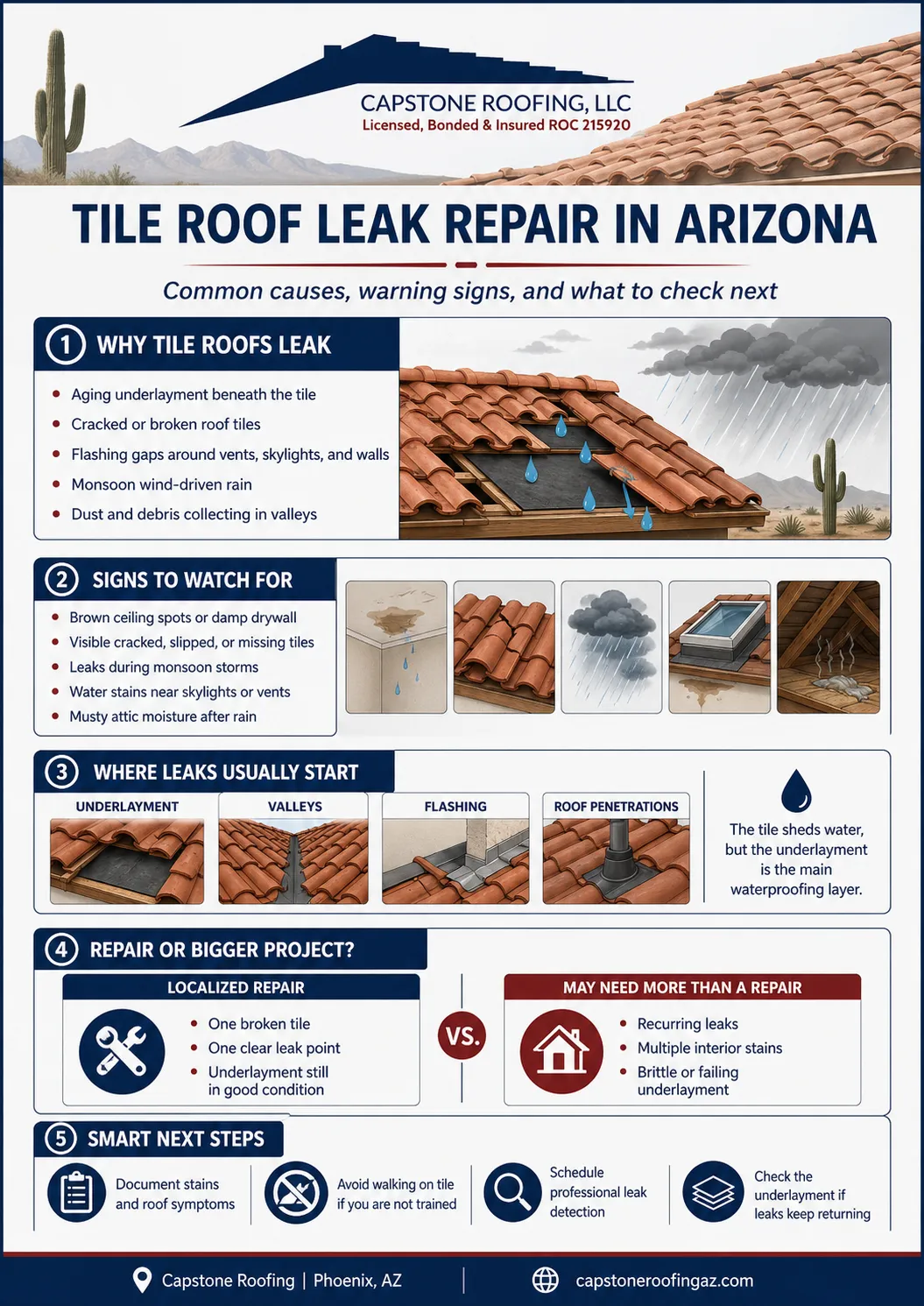
Tile roof leak repair in Arizona is often different from roof leak repair in cooler or wetter parts of the country. In the Phoenix metro area and throughout the Valley, tile roofs are exposed to extreme heat, intense UV rays, dust, thermal movement, and short bursts of heavy monsoon rain. A tile roof may look strong from the outside, but the system underneath the tile is usually what determines whether water stays out of the home.
For many Arizona homes, the tile itself is not the first part of the roof to fail. Clay and concrete tiles are durable, but the underlayment beneath those tiles does the real waterproofing work. Once that underlayment becomes brittle, torn, loose, or aged out, a roof can start leaking even when most of the visible tiles still look fine.
This guide explains why tile roof leaks happen in Arizona, how to spot early warning signs, what professional leak detection usually includes, and when a repair may turn into a larger underlayment replacement project. It also covers monsoon roof leaks, cracked roof tiles, broken roof tiles, flashing issues, and the difference between a small tile roof repair and a more involved roofing project.
Why Tile Roof Leaks Are Common in Arizona
Tile roofs are common across Phoenix, Scottsdale, Mesa, Chandler, Gilbert, Glendale, Peoria, Tempe, Avondale, Goodyear, and Surprise because they perform well in desert conditions when the full roof system is installed and maintained properly. The challenge is that Arizona’s climate is hard on the parts of the roof you cannot easily see from the ground.
The visible roof tile is only one layer. Beneath the tile, the roof system typically includes underlayment, flashings, battens or fastening components, valleys, penetrations, vents, and drainage paths. When those parts age, shift, crack, or lose their seal, water can move under the tile and into the roof deck.
Arizona creates several conditions that make tile roof leaks more likely over time:
- Extreme heat and UV exposure can dry out underlayment, sealants, and flashing details.
- Thermal expansion and contraction can slowly open small gaps around penetrations, fasteners, and metal transitions.
- Monsoon wind-driven rain can push water sideways into areas that may not leak during a light vertical rain.
- Dust and roof grit can collect in valleys, gutters, and drainage areas, slowing runoff.
- Cracked roof tiles or broken roof tiles can expose the underlayment to more heat and moisture than intended.
- Aged underlayment can fail long before clay or concrete tiles reach the end of their useful life.
The National Weather Service Phoenix monsoon safety page explains that severe thunderstorms can produce damaging winds, dust, hail, and heavy rain. For Arizona roofs, that combination matters because a roof may be dealing with wind pressure, blowing debris, and sudden rainfall all at once.
That is why tile roof leak repair in Arizona should not stop at replacing one visible tile. A good repair starts with finding how water entered the system and whether the underlayment, flashing, or drainage path has been compromised.
The Important Difference Between Tile Damage and Underlayment Failure
One of the biggest misunderstandings about tile roof leaks is assuming that the tile itself is the waterproofing layer. Clay and concrete tiles shed water, protect the roof from sunlight, and create the roof’s finished appearance. However, the underlayment beneath the tile is the layer that helps keep water from reaching the roof deck.
This matters because a leaking tile roof can look normal from the driveway. The tile may still be in place, the roofline may look clean, and there may not be an obvious hole. Inside the home, however, there may be brown ceiling stains, damp drywall, peeling paint, or attic moisture.
When a tile is cracked, slipped, or missing, the underlayment underneath is exposed to more direct sunlight and stormwater. If that underlayment is still in good condition, a localized tile roof repair may be enough. If the underlayment is brittle, curled, split, or worn down, the leak may return even after the tile is replaced.
Capstone Roofing has a dedicated page explaining how tile roof underlayment replacement works in Arizona, which is often the next step when leaks are tied to aging materials beneath the tile rather than one isolated damage point.
A repair-focused inspection should answer a few key questions:
- Is the leak coming from a cracked tile, broken tile, or slipped tile?
- Is water entering around a roof valley, pipe, vent, skylight, or wall transition?
- Is the underlayment still flexible and intact?
- Are there multiple leak points or just one isolated area?
- Is the roof showing age-related underlayment failure across a wider section?
The answer to those questions determines whether the home needs a focused tile roof repair, roof leak repair, a flashing repair, or a larger underlayment replacement project.
Common Causes of Tile Roof Leaks in Arizona
A leaking tile roof can come from several different issues. Some are storm-related. Others develop slowly as the roof ages under Arizona heat. The most important part of leak repair is identifying the actual source instead of patching the first visible symptom.
1. Aging Tile Roof Underlayment
Tile roof underlayment is one of the most common reasons roof leaks develop in Arizona. The tile above may last for many decades, but the underlayment underneath is exposed to intense heat under the tile field. Over time, older underlayment can dry out, crack, split, or lose its ability to shed water.
When this happens, rainwater that gets beneath the tile can reach the roof deck. At first, the signs may be small. A light ceiling stain may appear after a storm. The attic may smell musty. A homeowner may only notice the problem during monsoon season when rain arrives fast and sideways.
Capstone’s guide to tile roof underlayment in Arizona explains why this hidden layer is so important in the desert and why it should be evaluated when tile roof leaks begin showing up.
2. Cracked Roof Tiles
Cracked roof tiles can happen from storm debris, falling branches, foot traffic, improper walking patterns, or age-related wear. A small crack may not always create an immediate interior leak, but it can expose the underlayment to more sunlight and moisture.
In Arizona, that exposure matters. Once sunlight reaches the underlayment through a cracked tile, the material underneath may age faster in that spot. During heavy rain, water can enter through the crack and test the condition of the underlayment below.
3. Broken Roof Tiles
Broken roof tiles create larger openings than hairline cracks. They can leave sections of underlayment exposed to UV rays, debris, and direct rainfall. Broken tiles should be addressed because they can turn a small surface issue into a deeper leak problem.
Broken tiles are especially common after wind events, tree impacts, or improper roof access. Satellite dishes, HVAC service work, solar work, and other rooftop activity can also lead to broken or shifted tiles if the roof is not walked carefully.
4. Slipped or Displaced Tiles
A tile does not need to be broken to cause a leak. If tile shifts out of place, water may be able to run beneath the tile pattern instead of shedding correctly. Slipped tiles can happen when fasteners loosen, battens age, or wind affects a vulnerable section.
Because slipped tiles may only be visible from certain angles, they are easy to miss from the ground. This is one reason a professional roof leak inspection is useful when interior stains appear but no obvious tile damage is visible.
5. Flashing Problems Around Penetrations
Flashings protect vulnerable areas where the roof meets another surface or object. Tile roof leaks often happen around chimneys, walls, skylights, vents, pipes, valleys, and roof-to-wall transitions. When flashing cracks, lifts, corrodes, separates, or loses its seal, water can enter around the transition point.
The U.S. Department of Energy’s Building America Solution Center explains that roof flashing and moisture barriers should be integrated around chimneys, vent stacks, valleys, roof/wall intersections, and other penetrations to help manage water properly: moisture barrier and flashing roof guidance.
6. Valley and Drainage Issues
Roof valleys move a large amount of water during storms. In Arizona, dust, leaves, roof grit, small branches, and debris can collect in these areas. When drainage slows, water may back up under tiles or move into areas that are not designed to hold standing water.
Valley problems are especially noticeable during monsoon storms because rainfall can be sudden and intense. A roof that performs fine during a light winter rain may leak during a fast summer storm if drainage areas are clogged or restricted.
7. Skylight or Vent Leaks
Tile roofs often include vents, pipes, and skylights. These penetrations need proper flashing and sealing. Over time, sealants can dry out, flashing can shift, and the surrounding underlayment can age. When water stains appear near a bathroom, hallway, kitchen, or skylight area, the leak may be tied to a nearby penetration.
8. Monsoon Wind-Driven Rain
Monsoon roof leaks can be frustrating because they may not happen every time it rains. Wind-driven rain can push water under tile laps, into flashing gaps, and against roof transitions in ways that a calm rain does not. That makes leak detection more complex.
The Arizona State University School of Geographical Sciences and Urban Planning explains how monsoon patterns bring moisture that supports summer thunderstorm development in Arizona. For homeowners, the practical takeaway is simple: short, intense storm patterns can expose weak points that stay hidden during drier months.
Signs You May Need Tile Roof Leak Repair
Some tile roof leaks are obvious. Others start with small clues. Arizona homeowners should pay attention to interior and exterior signs because early detection can reduce the amount of drywall, insulation, paint, and roof deck damage involved.
Interior Signs of a Leaking Tile Roof
- Brown spots on ceilings
- Dark stains around vents, skylights, or upper walls
- Peeling paint near the ceiling line
- Bubbling drywall or soft drywall texture
- Musty smells after rain
- Dripping sounds during storms
- Damp insulation in the attic
- Water marks on rafters or roof decking
Ceiling stains are one of the most common signs homeowners notice first. Capstone’s resource on what brown spots on your ceiling can mean is a useful related read when trying to understand whether a stain may be tied to a roof leak.
Exterior Signs of Tile Roof Problems
- Cracked roof tiles visible from the ground
- Broken tiles near valleys, eaves, or roof edges
- Tiles that appear lifted, crooked, or out of alignment
- Debris buildup in valleys or around roof transitions
- Damaged flashing around skylights, vents, chimneys, or walls
- Loose mortar or deteriorated roof details
- Water staining on fascia, soffits, or exterior walls
Exterior signs should be documented from the ground when possible. Avoid walking on a tile roof unless you are trained to do so. Tile can crack under improper foot placement, and roof access always carries safety risks.
Why Roof Leak Detection Matters Before Repairing a Tile Roof
Roof leak detection is especially important on tile roofs because the place where water appears inside is not always the place where water entered outside. Water can travel along underlayment, rafters, wiring, insulation, or roof decking before it finally shows up as a stain.
A homeowner may see a stain in a bedroom ceiling and assume the leak is directly above that spot. On a tile roof, the entry point could be several feet away near a valley, flashing transition, or cracked tile. Repairing the wrong section can leave the true source untouched.
That is why Capstone has a dedicated page for roof leak detection in Arizona. Leak detection is the diagnostic step that helps determine whether the issue is isolated, storm-related, underlayment-related, or connected to a broader roofing system concern.
A professional tile roof leak inspection may include:
- Checking visible tile damage from safe access points
- Inspecting roof valleys and drainage areas
- Reviewing flashings around penetrations and walls
- Looking for lifted, slipped, cracked, or broken tiles
- Carefully lifting tile in the suspected leak area
- Evaluating the condition of underlayment below the tile
- Checking attic moisture patterns where accessible
- Comparing interior stains with roof slope and water travel paths
This process helps separate surface damage from deeper underlayment failure. It also helps prevent unnecessary repairs in the wrong area.
Concrete Tile Roof Leaks vs. Clay Tile Roof Leaks
Concrete tile and clay tile are both common across Arizona, but they can age and respond to damage differently. The leak repair process is similar in many ways because both systems rely on underlayment beneath the tile. However, the tile material can influence how damage appears.
Concrete Tile Roof Leak Issues
Concrete tile is durable and widely used, but it can become more porous over time and may show surface wear, fading, or erosion. Concrete tiles can crack from impact, foot traffic, or movement. A concrete tile roof leak is often tied to one of three issues: damaged tile, failed flashing, or aged underlayment.
Because concrete tiles are heavy, proper placement and support matter. When tiles shift or crack, the water-shedding pattern can be interrupted. If the underlayment underneath is older, water can move through the weak point and into the roof deck.
Clay Tile Roof Leak Issues
Clay tile is often valued for its long lifespan and classic Southwest look. Clay can be more brittle than concrete in some situations, which means improper walking or impact can create cracks. A clay tile roof leak may start with broken tiles, loose ridge details, flashing issues, or underlayment that has aged out beneath otherwise attractive tile.
Because clay tile can last so long visually, homeowners may assume the full roof system is still in excellent condition. The tile may still have years of service life left, while the underlayment underneath may be ready for replacement.
The Similarity That Matters Most
For both clay and concrete tile roofs, the key point is the same: the tile sheds water, but the underlayment is the backup protection. When leak repair focuses only on tile replacement without checking the underlayment, the repair may miss the deeper issue.
Capstone’s broader page for tile roofing repairs across Arizona homes provides more context on the repair side of these systems.
Tile Roof Leak Repair: What the Process Usually Includes
The exact repair process depends on what caused the leak, how much of the roof is affected, and whether the underlayment is still in good condition. A small repair may involve replacing a broken tile and repairing a localized underlayment tear. A larger repair may involve removing a wider tile section to replace underlayment and correct flashing details.
Step 1: Confirm the Leak Source
The repair starts with diagnosis. The roofer reviews the interior damage, looks at the roof slope above the stain, checks nearby valleys and penetrations, and inspects the tile field. The goal is to find how water entered the roof system.
Step 2: Remove Tile in the Affected Area
Tile may need to be carefully removed around the suspected leak area. This allows the roofer to inspect the underlayment, battens, fasteners, flashing, and roof deck. Removing tile is often necessary because the most important damage may be hidden below the surface.
Step 3: Evaluate the Underlayment
The underlayment is checked for cracks, tears, brittleness, holes, open laps, and signs of deterioration. If the underlayment is still in good shape and the damage is isolated, the repair may be limited. If the underlayment is failing across a wider area, the recommendation may shift toward more extensive replacement.
Step 4: Repair or Replace Flashing Details
Flashings around roof penetrations, walls, skylights, and valleys may need to be resealed, reset, or replaced. Flashing work is critical because many roof leaks happen where materials meet, not in the middle of the tile field.
Step 5: Replace Damaged Tile
Cracked or broken tiles are replaced, and displaced tiles are reset. When matching tile is available, repairs can often preserve the roof’s overall appearance. In some cases, compatible replacement tile may be needed if the original profile is older or harder to source.
Step 6: Restore Water Flow
The repaired section should allow water to shed properly. That includes clearing valleys, checking drainage paths, and making sure tiles overlap correctly. Roof leak repair is not just about sealing a hole; it is about restoring the way the roof manages water.
For homeowners comparing different leak scenarios, Capstone’s roof leak repair resource explains how roof leaks are evaluated and repaired across different roofing systems.
When a Tile Roof Leak Means Underlayment Replacement May Be Needed
Not every leaking tile roof needs full underlayment replacement. However, recurring leaks are often a sign that the underlayment is failing beyond one isolated area. This is common in older Arizona tile roofs because the tile may outlast the membrane underneath.
Underlayment replacement may be worth discussing when:
- The roof has multiple leak points
- Leaks return after small repairs
- The underlayment is brittle or breaking apart when tile is lifted
- Interior stains appear in different rooms after storms
- The roof is near or past the expected underlayment lifespan
- Large sections of tile are still usable, but the waterproofing layer is aging
Underlayment replacement typically involves removing the tile, replacing the membrane beneath it, correcting flashing details, and reinstalling usable tile. This is different from replacing the full tile roof. In many cases, the tile may be reused if it is in good condition and compatible with the repair plan.
Capstone’s article on whether roof tile can be reused during underlayment replacement explains why this question matters for Arizona homeowners planning a larger roofing project.
Monsoon Roof Leaks: Why They Show Up Suddenly
Many Arizona homeowners first discover a tile roof leak during monsoon season. That does not always mean the storm caused the entire problem. In many cases, the roof already had a weak point, and the storm exposed it.
Monsoon storms can create a unique roof leak pattern because they often combine several stressors at once:
- Strong wind
- Wind-driven rain
- Dust accumulation
- Debris impact
- Rapid temperature changes
- Heavy water flow through valleys and drainage points
A roof that does not leak during a light rain may leak when wind pushes rain against a wall transition or under a lifted tile. A valley that drains normally during a small storm may back up if dust and debris have collected there before a heavier rainfall.
Capstone’s guide on why roof leaks are common in Phoenix during monsoon season gives additional context on how local storm patterns affect roofing systems.
After a monsoon leak, homeowners should document the area, protect the interior from additional moisture where safe, and arrange a roof leak inspection. It is also helpful to note which direction the storm came from, whether wind was involved, and whether the leak appeared during the storm or after the rain stopped.
Water Damage From a Roof Leak: What to Watch For Inside the Home
Water damage from a roof leak can stay hidden. A small stain may represent more moisture above the ceiling than is visible from the room below. In Arizona, homeowners sometimes underestimate roof leaks because rain is not constant year-round. A ceiling stain may dry out between storms, but the underlying issue can still remain.
Interior areas to watch include:
- Ceilings: Look for brown rings, yellow staining, sagging, or texture changes.
- Walls: Watch for streaking, bubbling paint, or soft drywall near the ceiling line.
- Attic insulation: Wet insulation can hold moisture and lose performance.
- Roof decking: Water marks, dark spots, or soft areas may indicate longer-term intrusion.
- Electrical fixtures: Moisture near recessed lights or fans should be treated carefully.
Interior cleanup and roof repair are separate issues, but they are connected. The roof leak source should be addressed before cosmetic interior repairs are completed. Painting over a stain before the roof is repaired may hide the symptom without solving the problem.
Tile Roof Leak Repair vs. Roof Replacement
A leaking tile roof does not automatically mean the entire roof needs to be replaced. The right solution depends on the age of the roof, the condition of the underlayment, the number of leaks, and the overall tile condition.
A Localized Repair May Be Enough When:
- The leak comes from one cracked or broken tile
- The underlayment below the tile is still flexible and intact
- The flashing issue is limited to one penetration
- The roof has no history of recurring leaks
- The damage is tied to one clear storm impact or debris strike
A Larger Repair or Underlayment Replacement May Be Needed When:
- Leaks appear in multiple areas
- The underlayment is brittle or deteriorated
- Previous small repairs have not solved the problem
- The roof is older and showing system-wide wear
- Tile can be reused, but the waterproofing layer has reached the end of its service life
Roof Replacement May Be Considered When:
- The tile is extensively damaged or difficult to reuse
- The roof deck has widespread damage
- The roof has multiple system failures beyond underlayment
- The homeowner is planning a larger exterior renovation or roofing upgrade
Capstone’s guide on how to decide between roof repair, patching, or replacement is a helpful companion resource when weighing the scope of a roofing project.
How to Reduce the Risk of Future Tile Roof Leaks
Preventing tile roof leaks in Arizona comes down to maintenance, drainage, and paying attention to the underlayment timeline. You cannot control the heat or monsoon storms, but you can reduce the number of weak points those conditions can exploit.
Schedule Roof Inspections Before Problems Become Interior Damage
A roof inspection can catch cracked tiles, flashing gaps, debris buildup, and underlayment concerns before they become active leaks. This is especially helpful before monsoon season or after a strong storm.
Capstone’s page on Phoenix roof inspections explains what roofers look for when evaluating local roofing systems.
Keep Valleys and Drainage Areas Clear
Dust and debris are part of desert living. On a tile roof, they can settle in valleys and drainage paths. When water cannot move properly, it may back up under tiles or stress flashing details. Keeping drainage areas clear is a simple but important maintenance habit.
Address Broken Tiles Promptly
A broken tile may look minor, but it exposes the layers below. In Arizona, exposed underlayment can age quickly under direct sun. Replacing broken tiles helps protect the waterproofing layer underneath.
Limit Unnecessary Roof Traffic
Tile roofs can be damaged by improper walking. HVAC, satellite, solar, and home service work can all put people on the roof. When possible, make sure anyone accessing the roof understands how to walk on tile correctly and avoids unnecessary tile breakage.
Track the Age of the Underlayment
Many homeowners know the age of their tile but not the age of the underlayment. If you bought a home with an existing tile roof, try to find out whether the underlayment has ever been replaced. Capstone’s article on how long roof underlayment lasts in Arizona can help you understand when that layer may need attention.
Prepare Before Monsoon Season
Monsoon preparation does not need to be complicated. A pre-season inspection, debris removal, and basic maintenance can help reduce storm-related leak risk. Capstone’s resource on preparing your roof for monsoon season provides more seasonal context.
What Homeowners Should Avoid With a Leaking Tile Roof
When a tile roof starts leaking, it is natural to want a quick fix. However, some common shortcuts can create more problems or make the leak harder to diagnose.
Avoid Walking the Roof Without Training
Tile can crack under improper foot placement. A homeowner trying to inspect one leak may accidentally create more broken tiles. It is safer to document visible issues from the ground and leave roof access to trained professionals.
Avoid Sealing Random Areas Without Finding the Source
Applying sealant to visible gaps may not solve the leak if water is entering from another area. It can also complicate future repairs by covering important clues. Leak repair should be based on diagnosis, not guesswork.
Avoid Ignoring Small Ceiling Stains
A small stain can represent a leak that only appears during certain storm conditions. Waiting for the next major rain may allow more water to enter. It is better to identify the source before the stain grows.
Avoid Assuming Newer Tile Means No Underlayment Issue
Tile appearance does not always reflect underlayment condition. A tile roof can look clean and still have underlayment aging below the surface, especially if the system is older or has had previous repairs.
FAQ: Tile Roof Leak Repair in Arizona
What is the most common reason a tile roof leaks in Arizona?
The most common reason is often aging or damaged underlayment beneath the tile. Clay and concrete tiles are durable, but they are not the only waterproofing layer. In Arizona, heat and UV exposure can age the underlayment over time. Once that layer becomes brittle, cracked, or torn, water can move beneath the tile and reach the roof deck.
Can a tile roof leak even if no tiles are missing?
Yes. A tile roof can leak even when all tiles appear to be in place. Water may enter through failed flashing, aged underlayment, loose penetrations, slipped tiles, clogged valleys, or small cracks that are not easy to see from the ground. This is why roof leak detection is important before deciding on the repair.
How do I know if my tile roof leak is from underlayment?
Underlayment-related leaks often show up as recurring leaks, multiple leak locations, or stains that appear after wind-driven rain. A roofer may need to lift tiles in the affected area to inspect the underlayment directly. If the material is brittle, torn, curled, or deteriorated, the leak may be tied to underlayment failure rather than one damaged tile.
Do cracked roof tiles always cause leaks?
Not always. A cracked tile may not create an immediate interior leak if the underlayment beneath it is still intact. However, cracked roof tiles should still be addressed because they expose the underlayment to additional sunlight and moisture. Over time, that exposure can increase the chance of a leak.
What should I do if my tile roof starts leaking during a monsoon storm?
Focus on interior protection first. Move belongings away from the leak area, place a container under active dripping if safe, and document the stain or water entry point with photos. Avoid climbing on the roof during or after the storm. Once conditions are safe, schedule a roof leak inspection so the source can be identified and repaired properly.
Why do tile roof leaks sometimes appear only during heavy wind and rain?
Wind-driven rain can push water into gaps that may not leak during a calm rain. This is common during Arizona monsoon storms. Water may enter around flashing, under shifted tiles, or through areas where drainage is restricted. A roof can appear leak-free during light rain and still leak during a storm with strong wind.
Can broken roof tiles be replaced without replacing the whole roof?
Yes, broken roof tiles can often be replaced as part of a localized tile roof repair. The roofer should also check the underlayment beneath the broken tile. If the underlayment is still in good condition, the repair may stay localized. If the underlayment is aged or damaged, additional work may be needed.
How often should an Arizona tile roof be inspected for leaks?
Many Arizona homeowners benefit from periodic roof inspections, especially before monsoon season, after major storms, or when the roof is older. The right timing depends on the roof’s age, repair history, underlayment condition, nearby trees, and whether previous leaks have occurred.
Is a ceiling stain always from a roof leak?
No. Ceiling stains can come from roof leaks, plumbing issues, HVAC condensation, or other moisture sources. However, if the stain appears after rain or is located below a roof slope, attic, skylight, or vent area, a roof leak inspection is a logical next step.
Can tile roof underlayment be replaced while reusing the existing tile?
In many cases, yes. If the tile is still in good condition and compatible with reuse, it may be removed, stored, and reinstalled after new underlayment is placed. Broken or damaged tiles may need to be replaced during that process.
What is the difference between roof leak repair and roof leak detection?
Roof leak detection is the process of finding where and how water is entering the roof system. Roof leak repair is the work done after the source is identified. On tile roofs, detection is especially important because water can travel beneath the tile before it appears inside the home.
Are monsoon roof leaks covered by insurance?
Coverage depends on the cause of the leak, the policy, and whether the damage is tied to a covered storm event or long-term wear. Homeowners should document storm-related damage, keep photos, and review their policy. A roof inspection can help identify what happened, but the insurance company makes the final coverage decision.
Does a leaking tile roof mean I need a new roof?
Not necessarily. Some tile roof leaks can be repaired with a localized fix. Others may require underlayment replacement if the waterproofing layer has aged out. A full roof replacement is usually considered when the tile, underlayment, roof deck, or overall system condition makes smaller repairs less practical.
What areas of a tile roof are most likely to leak?
Common leak areas include valleys, roof-to-wall transitions, skylights, vents, chimneys, pipe penetrations, low-slope sections, and areas with cracked or slipped tiles. These areas should be reviewed carefully during a roof leak inspection.
Can a tile roof leak cause mold?
Any roof leak that allows moisture into drywall, insulation, or attic materials can create conditions where mold may develop if the moisture is not addressed. The best approach is to stop the leak source, dry affected materials properly, and repair interior damage as needed.
Why is tile roof leak repair different in Phoenix than in other climates?
Phoenix and the Valley have intense heat, high UV exposure, dust, and monsoon storms. These conditions can age underlayment, dry out sealants, clog drainage paths, and expose small weaknesses during wind-driven rain. Tile roof leak repair in Arizona needs to account for those local conditions instead of treating the roof like it is in a cooler or wetter climate.
Final Takeaway: Tile Roof Leak Repair Starts Below the Surface
Tile roof leak repair in Arizona is rarely just about the tile you can see. The source may be a cracked tile, broken tile, slipped tile, flashing gap, clogged valley, or aged underlayment beneath the surface. Because water can travel under tile before it appears inside, accurate leak detection matters.
For Arizona homeowners, the most important takeaway is to look at the roof as a system. Clay and concrete tiles can last a long time, but the underlayment, flashing, drainage paths, and penetrations need to stay intact for the roof to keep water out. When stains, moisture, or storm-related leaks appear, a professional inspection can help determine whether the right solution is a localized repair, roof leak repair, or tile roof underlayment replacement.
Understanding these differences helps you make a more informed decision and protect your home from preventable water damage, especially before and during monsoon season.
published on Thursday, April 30th, 2026