How Long Does Roof Underlayment Last in Arizona?
Tile roofs are widely used across Phoenix and the surrounding Valley because they perform well in high heat, intense sunlight, and desert conditions. While the tile itself can often last for decades, the waterproof layer beneath it — known as roof underlayment — has a shorter lifespan and plays a critical role in protecting the home.
Many Arizona homeowners begin researching underlayment lifespan when their roof reaches mid-life or when they are planning ahead for maintenance. The challenge is that tile often looks structurally sound from the outside even when the protective barrier underneath has begun to age. Understanding realistic lifespan expectations, environmental influences, and early warning signs can help property owners make informed decisions without unnecessary urgency.
This guide explains how long underlayment typically lasts in Arizona, why desert conditions affect durability, and how homeowners can plan inspections and maintenance timelines with greater confidence.
What Roof Underlayment Does
Roof underlayment is the protective layer installed between the roof deck and the outer roofing material. In tile roofing systems, this layer serves as the primary waterproof barrier. While tile sheds most rainwater, it is not designed to be completely watertight on its own. Wind-driven rain, dust infiltration, and storm debris can allow moisture to reach the layer beneath, making underlayment essential for long-term protection.
Underlayment also helps protect the structure from:
- Moisture intrusion during storms
- Dust and debris migration beneath tiles
- Condensation from temperature differences
- Thermal movement between roofing layers
Because Arizona roofs experience extreme temperature swings between daytime and nighttime hours, this material is exposed to ongoing expansion and contraction cycles. Over time, those cycles influence durability.
Typical Underlayment Lifespan in Arizona
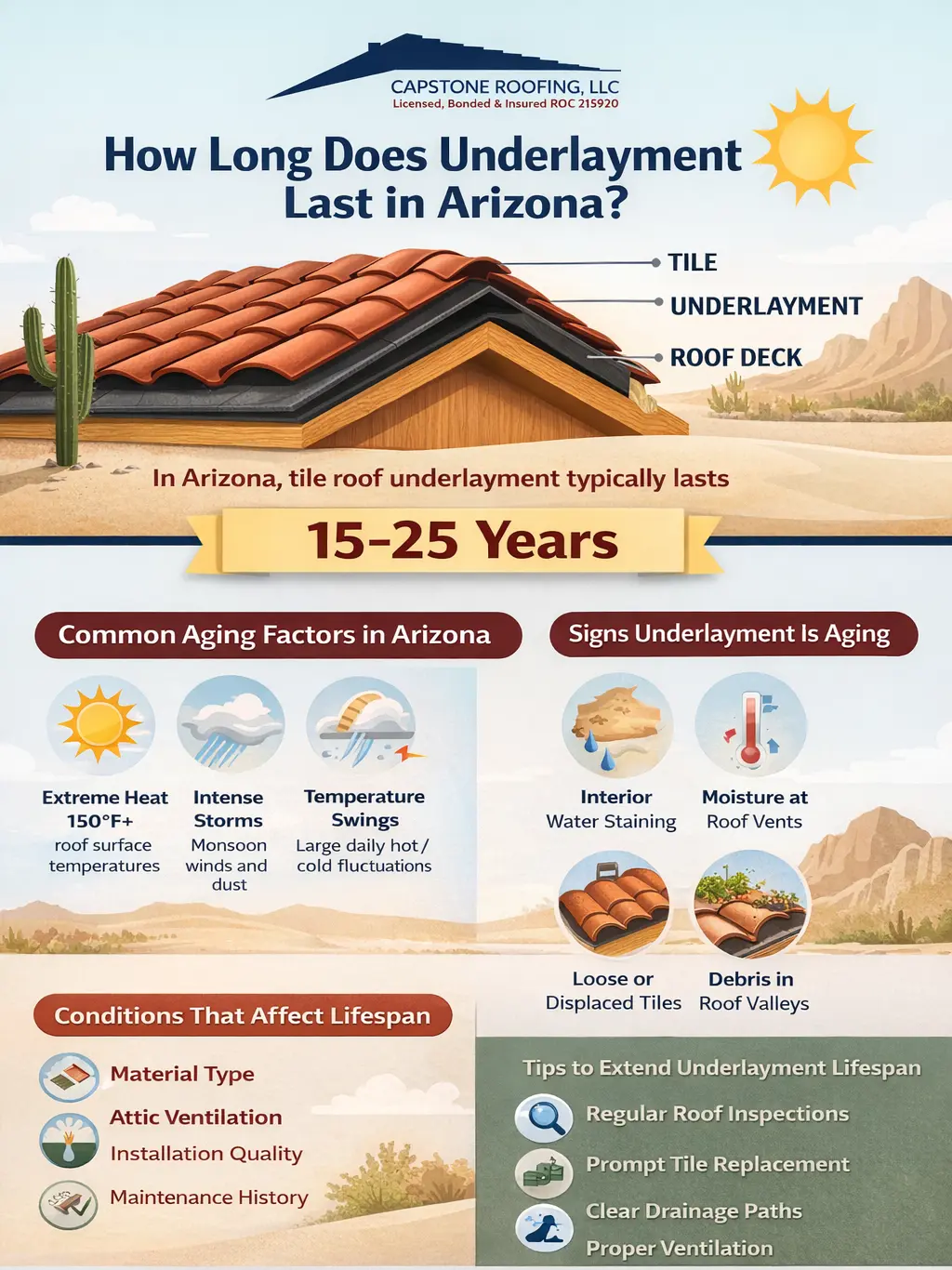
In Arizona conditions, roof underlayment lifespan is influenced more by environmental exposure than by simple chronological age. Many systems last approximately 15–25 years depending on material type, installation conditions, attic ventilation, and maintenance history.
Homes exposed to intense sun, prolonged heat, and limited attic airflow may see aging occur toward the shorter end of that range. Conversely, roofs with good ventilation, consistent maintenance, and minimal storm exposure sometimes perform longer.
It is important to recognize that lifespan estimates are averages rather than fixed timelines. Planning periodic evaluations is often more useful than relying on a specific year threshold.
Why Arizona Climate Impacts Lifespan
Arizona presents one of the most demanding roofing environments in the United States. Several regional factors contribute to accelerated aging compared to milder climates:
- Extreme heat: Summer roof surface temperatures can exceed 150°F, stressing materials over time.
- UV radiation: Persistent sun exposure gradually breaks down material composition.
- Thermal cycling: Large daily temperature swings create expansion and contraction forces.
- Monsoon storms: Short, intense rain combined with wind can shift tiles and expose vulnerable areas.
- Dust accumulation: Desert debris can affect drainage pathways and moisture movement.
Seasonal awareness during Arizona monsoon season is particularly helpful because storms introduce wind-driven rain patterns that differ from typical precipitation events.
Climate research from organizations such as the U.S. Department of Energy and regional weather data from the National Weather Service confirm that extreme solar exposure and heat significantly influence building material performance in desert regions.
How Tile Roofs and Underlayment Age Differently
One of the most common points of confusion among homeowners is that tile itself can remain structurally sound long after the underlayment beneath it has aged. Clay and concrete tiles are durable materials designed to withstand decades of sun exposure. However, the waterproof barrier beneath them carries the primary responsibility for moisture protection.
This difference explains why some homes require underlayment replacement even when tiles appear intact. In many cases, tiles can be temporarily removed and reinstalled if they remain structurally sound, allowing the protective layer to be renewed without replacing the entire roof system.
Understanding this distinction helps homeowners evaluate roof condition more accurately and avoid assumptions based solely on exterior appearance.
Signs Underlayment May Be Aging
Because underlayment is hidden beneath tiles, early indicators often appear gradually. Observations may include:
- Interior water staining following storms
- Moisture around roof penetrations such as vents or skylights
- Loose or displaced tiles after wind events
- Debris buildup in roof valleys or drainage areas
- Recurring minor repairs over time
These signs do not necessarily indicate immediate failure, but they may suggest that the protective layer is approaching later stages of its lifespan. Periodic evaluations through tile roof inspections can help identify changes before they progress.
When Replacement Becomes a Consideration
Underlayment replacement is typically considered when aging materials begin to lose flexibility, when moisture protection becomes less reliable, or when recurring maintenance increases. Planning timelines early allows homeowners to coordinate future maintenance more efficiently rather than reacting unexpectedly.
Educational information about tile roof underlayment replacement can help property owners understand how the process works when the time arrives. Replacement planning often aligns with broader maintenance decisions such as ventilation improvements or structural upgrades.
Factors That Can Extend Underlayment Lifespan
Several conditions may help maximize the longevity of roof systems in Arizona:
- Proper attic ventilation to reduce trapped heat
- Routine roof maintenance to address minor issues early
- Prompt replacement of cracked or displaced tiles
- Clear drainage pathways to prevent water accumulation
- Periodic professional evaluations
Regular roof maintenance supports long-term performance across roofing systems and helps homeowners track changes over time.
The Role of Attic Ventilation
Attic ventilation is an often-overlooked factor in roof lifespan. Proper airflow helps reduce heat buildup beneath the roof deck, lowering thermal stress on materials. Research from building science organizations indicates that temperature moderation and moisture control both contribute to improved durability of roofing components.
Homes with insufficient ventilation may experience faster aging due to sustained high temperatures within the attic cavity. Addressing airflow issues can support overall system performance.
Residential vs Commercial Considerations
While this guide focuses primarily on residential tile roofs, similar principles apply to commercial properties with tile or flat roofing systems. Commercial roofs may experience additional stress due to larger surface areas, mechanical penetrations, and drainage design considerations.
Property managers often benefit from scheduled maintenance programs to monitor system condition and plan long-term maintenance cycles. Educational information about roofing services may provide helpful context for both residential and commercial planning.
Planning Ahead for Roof Longevity
Even when underlayment is aging, homeowners often have time to plan rather than react urgently. Understanding lifespan expectations helps coordinate future decisions such as repairs, ventilation upgrades, or broader roof replacement planning.
Long-term planning is especially useful for homeowners who intend to remain in their property for many years or who are preparing for resale considerations.
Arizona Homes Benefit From Periodic Evaluation
Because desert conditions accelerate material aging, periodic professional evaluations are often recommended for tile roofs older than 10–15 years. Early awareness allows homeowners to make informed decisions without unexpected surprises.
Additional educational resources are available through the roofing FAQ section and general information about working with an Arizona roofing professional.
How Climate Trends May Influence Future Lifespans
Long-term climate patterns in the Southwest suggest increasing temperature averages and extended heat periods. These environmental shifts may influence roofing system durability over time. Building science research continues to evaluate how prolonged heat exposure affects material performance in desert environments.
Monitoring evolving conditions can help homeowners adapt maintenance schedules to changing environmental realities.
Working With Roofing Professionals
Professional evaluations provide homeowners with condition assessments based on observed roof performance rather than assumptions about age alone. This approach helps prioritize maintenance decisions and supports informed planning.
Homeowners seeking additional information may find it helpful to review general educational materials or reach out through the contact page for questions related to their specific property.
FAQ
How long does tile roof underlayment last in Arizona?
Most underlayment systems in Arizona last approximately 15–25 years depending on climate exposure, installation conditions, and maintenance history.
Does tile need replacement when underlayment is replaced?
In many cases, tiles can be reused if they remain structurally sound, although individual conditions vary.
Yes. Extreme heat, UV exposure, and thermal cycling accelerate material aging compared to cooler environments.
How often should a tile roof be inspected?
Periodic inspections are often helpful after major storms or once roofs reach mid-life age ranges.
What causes underlayment to fail?
Heat exposure, UV degradation, moisture intrusion, and long-term thermal movement are common contributing factors.
published on Thursday, February 19th, 2026