Everything You Need to Know About Foam Roofs
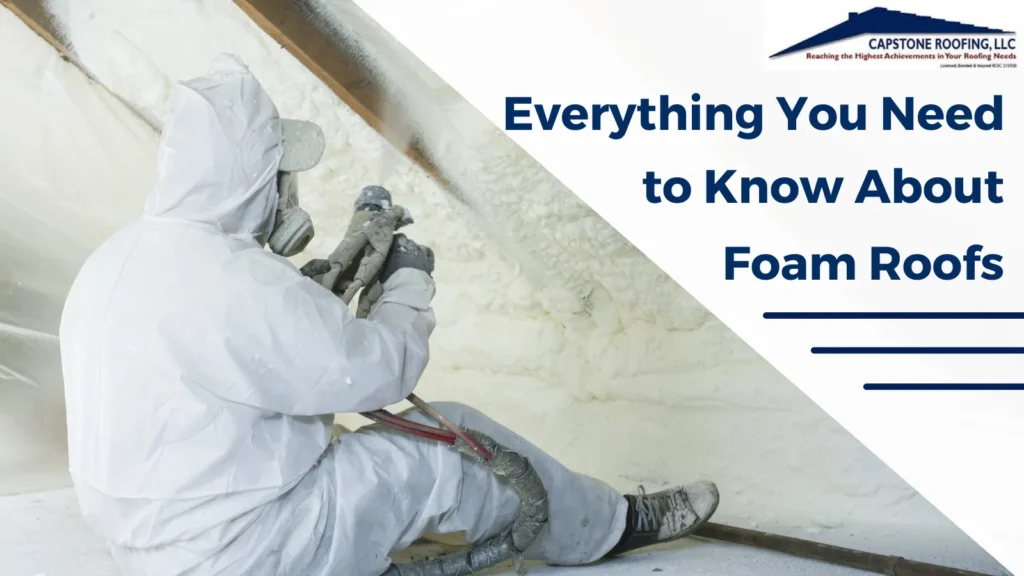
Foam roofs have become one of the most popular roofing systems for homes and commercial buildings throughout Arizona—and for good reason. Designed specifically for low-slope and flat roofs, spray polyurethane foam (SPF) creates a seamless, highly insulated roofing system that stands up well to Phoenix’s intense sun, extreme temperatures, and seasonal monsoon storms.
Whether you’re researching a new roof, comparing different roofing materials, or trying to understand how long a foam roof lasts, it’s important to know how these systems work and what they require over time. While foam roofing has been used for decades, many homeowners still have questions about its durability, maintenance needs, energy efficiency, and whether it’s the right fit for their property.
Unlike traditional roofing systems that rely on seams, fasteners, or overlapping materials, foam roofs are sprayed directly onto the existing roof surface where they expand into a continuous layer of closed-cell polyurethane foam. Once cured, the foam is protected with a reflective elastomeric coating that helps shield it from ultraviolet (UV) exposure while improving waterproofing and reducing heat transfer into the building.
Because Arizona’s climate presents unique challenges—including prolonged UV exposure, summer temperatures well above 100°F, blowing dust, and heavy monsoon rains—foam roofing has become a practical solution for many residential and commercial property owners looking for durability and energy savings.
In this guide, we’ll explain what foam roofs are, how spray polyurethane foam roofing is installed, the advantages and disadvantages of foam roofs, expected lifespan, maintenance requirements, repair options, and how foam roofing compares to other popular roofing systems. We’ll also answer many of the questions Arizona property owners ask before deciding whether a foam roof is the right investment for their home or business.
What Is a Foam Roof?
A foam roof is a roofing system made from spray polyurethane foam, often called SPF. Instead of being installed in sheets, rolls, shingles, or tiles, SPF begins as a liquid material that is sprayed onto the roof surface. As it is applied, the material expands and hardens into a lightweight, seamless layer of foam roof insulation.
Once the foam cures, it is covered with a protective roof coating. This coating is extremely important because it shields the polyurethane foam from direct UV exposure, helps with waterproofing, and creates the reflective surface many Arizona property owners associate with foam roofs.
The most common type of foam used for roofing is closed-cell polyurethane foam. Closed-cell foam is dense and rigid, which allows it to add insulation value while also helping create a continuous barrier across the roof. Because the material is sprayed into place, it can conform around roof penetrations, pipes, vents, curbs, drains, parapet walls, and other areas where leaks often develop on flat roofs.
This is one of the biggest differences between foam roofing and many traditional roof systems. Tile roofs, shingle roofs, modified bitumen, TPO, and built-up roofing systems all have seams, laps, fasteners, or layered components. Foam roofing is designed to reduce those weak points by creating one continuous surface.
For Arizona homes and businesses, foam roofs are most often used on flat roofs and low-slope roofs. They can be installed on some existing roof surfaces after proper preparation, which is why they are often considered for older flat roofs that need better waterproofing, insulation, or energy performance.
It is also important to understand that foam roofing is not the same thing as the spray foam insulation used inside walls, attics, or ceilings. Spray foam insulation for roofs is part of a complete exterior roofing system. It must be installed at the correct thickness, shaped for drainage, and protected with a compatible foam roof coating. When installed and maintained properly, it can function as both an insulated roofing system and a protective waterproofing layer.
Why Foam Roofs Are So Popular in Arizona
Foam roofs are especially common in Arizona because they solve several problems that flat and low-slope roofs face in the desert. Phoenix-area roofs deal with intense UV exposure, long stretches of extreme heat, dust buildup, thermal expansion, and seasonal monsoon storms. A properly installed foam roof can help reduce heat transfer, limit vulnerable seams, and create a reflective surface that supports better building comfort.
One reason property owners choose foam roofing is energy efficiency. The closed-cell foam layer adds insulation directly above the roof deck, while the reflective coating helps reduce surface heat. For homes and businesses that struggle to stay cool during summer, this combination can make foam roofing appealing compared to darker or less insulated flat roof systems. We cover this topic more deeply in our guide on whether foam roofing can help reduce energy costs.
Foam roofing is also popular because it works well on many flat roof designs found throughout the Phoenix metro area. Older homes, patio additions, commercial buildings, and low-slope roof sections often need a roofing system that can conform around drains, vents, HVAC curbs, parapet walls, and other roof details. Since spray foam is applied as a liquid and expands into place, it can create a seamless surface across areas that are often harder to protect with rolled or layered materials.
Another major benefit is that foam roofs can often be restored through maintenance and recoating instead of being fully torn off. Arizona sun eventually wears down roof coatings, but the foam underneath may still be performing well if it has been protected and inspected over time. That makes foam roofing a strong option for property owners who want a roof system that can be maintained in stages rather than replaced every time the outer surface ages.
Foam roofing is not the right fit for every roof, but it remains one of the most practical roofing systems for Arizona properties with flat or low-slope designs. For a more localized look at how this system performs in the Valley, see our page on foam roofing for Phoenix properties.
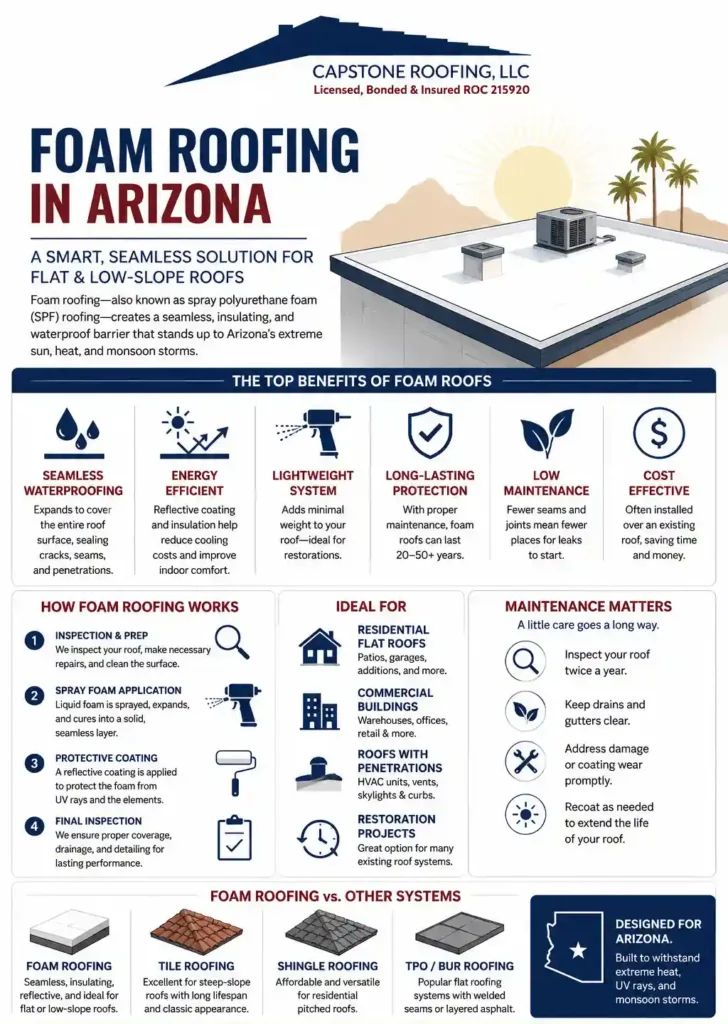
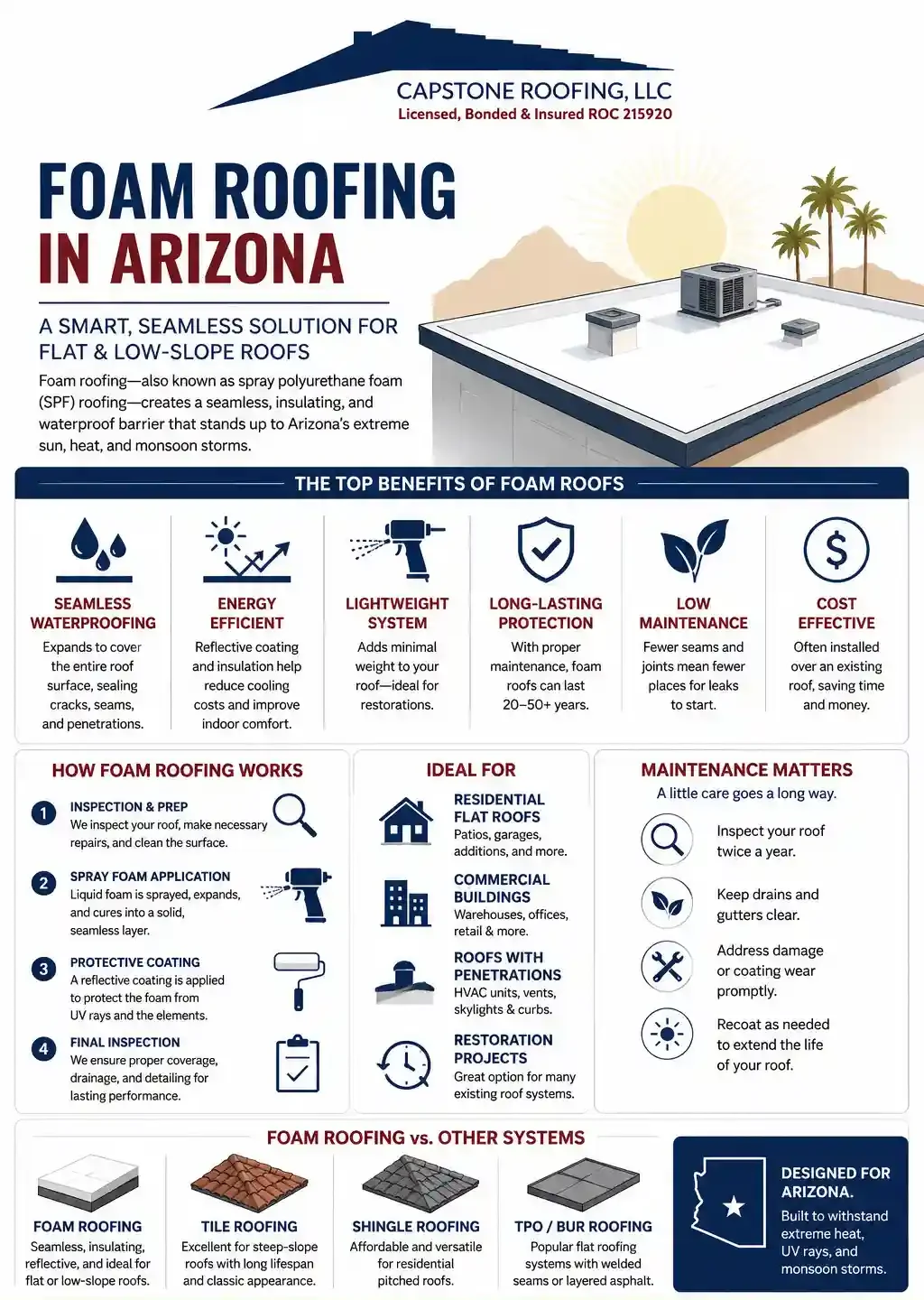
How Foam Roof Installation Works
Foam roof installation is a specialized process that depends heavily on preparation, weather conditions, and the experience of the roofing crew. While the finished roof may look simple from the ground, the system has to be installed in the right sequence to perform well in Arizona heat, monsoon rain, and long-term UV exposure.
1. Roof Inspection and Surface Evaluation
The process starts with a detailed roof inspection. The contractor checks the existing surface, drainage, flashing, penetrations, ponding areas, soft spots, cracks, previous coatings, and signs of active leaks. Foam roofing can be installed over some existing roof systems, but the roof still has to be structurally sound and properly prepared first. If the roof has hidden moisture or leak concerns, a professional roof inspection can help determine whether foam installation is appropriate.
2. Cleaning and Prep Work
Before spray foam for roofs can be applied, the surface must be clean, dry, and free of loose debris. Dust, oils, deteriorated coatings, and trapped moisture can interfere with adhesion. This step is especially important in Arizona, where dust buildup and sun-baked roof surfaces are common.
3. Repairs Before Foam Application
Any existing damage should be corrected before the foam is sprayed. That may include addressing cracks, loose flashing, open penetrations, drainage issues, or damaged roof sections. A foam roof should not be used to hide an unresolved roofing problem underneath. When an existing flat roof already has leaks, soft areas, or drainage problems, it may need flat roof repair before the foam system is installed.
4. Spray Polyurethane Foam Application
Once the surface is ready, the foam roofing material is sprayed onto the roof. The liquid expands and cures into a seamless layer of closed-cell polyurethane foam. During this step, the installer shapes the foam to create proper slope and improve drainage where possible.
5. Protective Foam Roof Coating
After the foam cures, a protective coating is applied over the surface. This coating helps protect the foam from UV rays, adds weather resistance, and creates the reflective finish commonly seen on Arizona foam roofs. Without this coating, the foam would deteriorate quickly under direct sun exposure. Property owners comparing coating options can also review how roof coatings help protect flat and low-slope roofing systems.
6. Final Detail Work and Inspection
The final step is checking the completed roof system, including edges, drains, parapet walls, penetrations, skylight curbs, HVAC stands, and coating coverage. These details matter because many flat roof issues begin around transitions rather than in the open field of the roof.
Foam roof installation should always be handled by experienced foam roofing contractors. Temperature, moisture, wind, spray thickness, coating compatibility, and roof slope all affect the finished result. When the system is installed correctly, a foam roof can provide seamless waterproofing, strong insulation value, and long-term performance for flat and low-slope roofs.
What Types of Roofs Can Use Foam Roofing?
Foam roofing is most often used on flat roofs and low-slope roofs, which are common on both residential and commercial properties throughout Arizona. Because spray polyurethane foam is applied as a liquid before it expands and cures, it can conform to many roof shapes, penetrations, curbs, drains, parapet walls, and existing roof surfaces.
That flexibility is one reason foam roofs are often considered for older flat roofing systems. In some cases, foam can be installed over an existing roof after the surface has been inspected, cleaned, repaired, and properly prepared. This can reduce the need for a full tear-off, but the existing roof still has to be stable enough to support the new system.
Residential Flat Roofs
Many Arizona homes have flat roof sections over patios, garages, additions, or modern low-slope roof designs. For these areas, foam roofing can add insulation, improve waterproofing, and reduce the number of seams where leaks can start. Homeowners comparing flat roof options may find foam especially useful when comfort, reflectivity, and long-term maintenance are priorities.
Commercial Flat Roofs
Foam roofing is also widely used on commercial buildings because it can cover large roof areas without the same number of seams found in many membrane systems. For warehouses, offices, retail buildings, and other low-slope properties, foam can help protect roof penetrations, HVAC curbs, and drainage details that are common on commercial flat roofs.
Existing Built-Up Roofs
Some built-up roofing systems may be candidates for foam roofing if the existing surface is dry, secure, and properly prepared. Built-up roofs are common on older flat roof structures, but they can develop surface wear, cracks, or drainage problems over time. If the roof is still structurally sound, foam may be considered as part of a restoration strategy. If the existing system is too deteriorated, a more traditional built-up roofing system may be a better fit.
Metal Roof Sections
Foam can sometimes be applied over certain metal roof sections to help reduce heat transfer, seal fasteners, and improve insulation. The roof has to be cleaned, rust must be addressed, and the surface must be compatible with the foam and coating system. For metal roofs with active leaks, loose panels, or damaged seams, targeted metal roof repairs may be needed before foam is considered.
Foam roofing is not automatically right for every roof. Steep-slope tile and shingle roofs are typically better served by roofing systems designed for those slopes. The best way to determine whether foam roof installation makes sense is to evaluate the roof’s slope, drainage, existing materials, moisture conditions, and long-term maintenance needs.
Benefits of Foam Roofs for Arizona Properties
Foam roofs offer several advantages for Arizona homes and businesses, especially when the property has a flat or low-slope roof. The biggest benefits come from the combination of seamless waterproofing, added insulation, reflective coating, and the ability to maintain the system over time instead of replacing it at the first sign of surface wear.
Seamless Waterproofing
Because spray polyurethane foam is applied as a liquid, it expands around roof penetrations, vents, drains, skylight curbs, HVAC stands, and parapet walls. This helps reduce the seams and overlaps where water often finds a path into flat roofing systems. For property owners who have dealt with repeat leaks around transitions, foam roofing can be a strong option when the existing roof is a good candidate for restoration.
Strong Energy Efficiency
Foam roof insulation helps reduce heat transfer through the roof deck, while the reflective coating helps limit surface heat during summer. This can be especially helpful in Phoenix, where roofs absorb intense sunlight for much of the year. Property owners comparing different energy-efficient roofing options often consider foam because it combines insulation and reflectivity in one system.
Lightweight Roofing System
Foam roofing is lightweight compared to many traditional materials. That can make it useful for certain flat roof structures where adding unnecessary roof weight is a concern. The roof still needs to be evaluated before installation, but the lightweight nature of polyurethane foam is one reason it is commonly used on both residential and commercial low-slope roofs.
Useful for Flat Roof Restoration
In some cases, foam can be installed over an existing flat roof after proper inspection, cleaning, repairs, and preparation. This can make it a practical restoration option when the existing roof is not too damaged to recover. For property owners comparing repair, restoration, and replacement options, this is similar to the decision-making process outlined in our guide on whether to repair, patch, or replace your roof.
Recoatable Surface
One of the biggest long-term advantages of foam roofs is that the protective coating can be renewed. As Arizona sun wears down the outer coating, the roof can often be cleaned, repaired where needed, and recoated before the foam underneath is exposed. This is why regular maintenance and timely recoating are so important for foam roof life expectancy.
Good Fit for Arizona Climate Challenges
Foam roofs perform best when they are installed and maintained with the local climate in mind. In Arizona, that means planning for UV exposure, monsoon rain, dust, windblown debris, and thermal movement. A properly coated foam roof can help address many of these challenges while supporting better comfort inside the property.
Disadvantages of Foam Roofs to Consider
Foam roofs can be an excellent fit for many Arizona properties, but they are not maintenance-free and they are not right for every situation. Understanding the disadvantages of foam roofs helps homeowners and building owners make a more informed decision before installation.
Foam Must Be Protected From UV Exposure
Spray polyurethane foam should not be left exposed to direct sunlight. Arizona UV exposure can break down unprotected foam, which is why the protective coating is such a critical part of the system. If the coating wears thin, cracks, or becomes damaged, the foam underneath can begin to deteriorate.
Recoating Is Part of Ownership
A foam roof is designed to be maintained over time. That usually means periodic inspections, spot repairs, and recoating when the protective surface reaches the end of its service life. Property owners who want a deeper breakdown of this decision can compare foam roof recoating and replacement before assuming a full tear-off is needed.
Installation Quality Matters
Foam roofing depends heavily on proper preparation and application. If the surface is dirty, damp, unstable, or poorly repaired before installation, the foam may not bond correctly. If the foam is sprayed unevenly, drainage problems can develop. This is one reason foam roof installation should be handled by experienced roofing professionals instead of treated like a simple coating project.
Sharp Objects Can Damage the Surface
You can walk on a foam roof when needed, but it should not be treated like a walking deck. Tools, sharp shoes, dropped equipment, patio furniture, HVAC work, tree branches, and storm debris can puncture the surface. If damage occurs, it should be addressed quickly so water and UV exposure do not reach the foam layer.
Poor Drainage Can Shorten Roof Life
Foam roofing can be shaped to improve drainage, but it cannot fix every structural slope problem. Areas with standing water, clogged drains, blocked scuppers, or settled roof decking may need correction before or during the roofing project. This is especially important before monsoon season, when a roof with drainage issues can show problems quickly.
Not Every Roof Is a Good Candidate
Foam is best suited for flat and low-slope roof areas. Steep-slope tile and shingle roofs typically need materials designed for water shedding rather than a sprayed low-slope system. If a roof has extensive moisture trapped underneath, serious structural damage, or failing materials throughout, a more complete roof replacement may make more sense than trying to restore it with foam.
Most disadvantages of foam roofs come down to installation quality, coating maintenance, and choosing the right roof for the system. When those factors are handled correctly, foam roofing can still be a practical, long-lasting option for many Arizona flat roofs.
Foam Roof vs. Other Roofing Systems
Every roofing system has its strengths, and the best choice depends on your property’s design, budget, long-term goals, and maintenance expectations. Foam roofs are particularly well suited for Arizona’s flat and low-slope roofs because they combine insulation, waterproofing, and a seamless application in one system. However, they are not the ideal solution for every building.
If you’re comparing roofing materials, it’s important to look beyond the initial installation cost. Lifespan, maintenance requirements, repairability, energy efficiency, and performance in Arizona’s climate all play a role in the total value of a roofing system over time.
| Roofing System |
Best For |
Maintenance |
Energy Efficiency |
Expected Lifespan* |
| Spray Polyurethane Foam |
Flat & low-slope roofs |
Moderate (recoating required) |
Excellent |
20–50+ years |
| Tile Roofing |
Steep-slope residential roofs |
Moderate |
Good |
50+ years |
| Asphalt Shingles |
Residential pitched roofs |
Moderate |
Moderate |
15–30 years |
| TPO Roofing |
Commercial flat roofs |
Low to Moderate |
Very Good |
20–30 years |
| Built-Up Roofing (BUR) |
Commercial flat roofs |
Moderate |
Moderate |
20–30 years |
Foam Roofs vs. Tile Roofs
Tile roofs remain one of the most common roofing systems in Arizona because they perform well on sloped homes and offer exceptional longevity. Foam roofs, on the other hand, are designed primarily for flat and low-slope applications. While both can last for decades with proper maintenance, they solve different roofing challenges. A homeowner with a flat patio roof may benefit from foam, while the main pitched roof may still be better suited for tile.
Foam Roofs vs. Shingle Roofs
Shingle roofs are generally less expensive to install on steep roofs, but they don’t provide the same seamless waterproofing or insulation benefits as spray polyurethane foam. Foam roofing also eliminates many of the exposed seams and fasteners found on traditional roofing systems, making it an attractive option for flat roof designs.
Foam Roofs vs. TPO
TPO is another popular choice for commercial buildings because of its reflective surface and welded seams. Foam roofing differs by creating a fully adhered, seamless layer that can conform around rooftop equipment and penetrations. Depending on the building’s design and maintenance goals, either system may be appropriate.
Foam Roofs vs. Built-Up Roofing
Built-up roofing systems have been used for decades on commercial buildings and continue to be an effective option for many properties. Foam roofing offers improved insulation and eliminates the multiple layers and seams found in traditional BUR systems, but each system has its place depending on the building and owner’s priorities. If you’re comparing the advantages and limitations of SPF roofing in greater detail, our article covering the pros and cons of foam roofs provides a more in-depth breakdown.
*Actual lifespan depends on installation quality, climate, maintenance, and routine inspections.
How Long Does a Foam Roof Last?
One of the most common questions homeowners ask is, “How long does a foam roof last?” The answer depends less on the foam itself and more on how well the roof is maintained throughout its life. Unlike many roofing materials that eventually require complete replacement, a properly maintained foam roof can often be restored by renewing its protective coating.
Most professionally installed foam roofs have an expected service life of 20 to 30 years before significant restoration is needed. However, many foam roofing systems continue performing well for 40 years or longer when they receive regular inspections, timely repairs, and periodic recoating.
What Affects Foam Roof Life Expectancy?
- Quality of the original installation
- Thickness of the spray polyurethane foam
- Type of protective coating used
- Arizona UV exposure
- Routine maintenance and inspections
- Storm damage and foot traffic
- Drainage performance
Arizona’s climate is both an advantage and a challenge for foam roofs. The dry environment reduces freeze-thaw damage seen in colder climates, but intense ultraviolet exposure gradually wears away protective coatings. That’s why coating maintenance is such an important part of maximizing the life expectancy of a foam roof.
Why Recoating Extends Roof Life
The spray foam itself typically remains stable for many years. The coating above it acts as the first line of defense against sunlight, weather, and normal wear. Once that coating begins to thin, it can often be cleaned, repaired, and recoated before the foam underneath is affected.
Rather than waiting until visible damage appears, many Arizona property owners schedule periodic inspections to determine when recoating makes the most sense. Our guide to foam roof maintenance in Arizona explains how preventative care can help maximize the lifespan of SPF roofing systems.
Repairing Foam Roofs vs. Recoating: What’s the Difference?
Not every foam roof problem requires a complete replacement. In fact, one of the biggest advantages of spray polyurethane foam roofing is that many issues can be repaired or restored before they become major structural concerns. The key is identifying problems early and addressing them before moisture reaches the underlying foam.
When Foam Roof Repairs Are Usually Enough
Small areas of damage can often be repaired without affecting the rest of the roofing system. Common examples include:
- Minor punctures from foot traffic or dropped tools
- Localized coating wear
- Small cracks around roof penetrations
- Damage caused by wind-blown debris
- Minor flashing issues
- Small areas of water intrusion that have not spread
These types of repairs are generally less disruptive and more affordable than replacing large sections of the roof, especially when the foam underneath remains dry and structurally sound.
When Recoating Makes More Sense
Over time, the protective coating naturally wears from Arizona’s intense sunlight. If the foam itself is still in good condition, applying a new coating can restore UV protection and waterproofing without removing the existing roofing system.
Recoating is often recommended when:
- The protective coating has worn thin.
- The roof is showing widespread weathering.
- The foam remains intact.
- The roof continues to drain properly.
- No major structural damage is present.
When Replacement May Be Necessary
Although foam roofs can often be restored, replacement may be the better long-term solution if the roof has extensive moisture infiltration, severe structural deterioration, widespread foam damage, or multiple failed repairs over many years. A professional inspection helps determine whether repairing, recoating, or replacing the roof will provide the greatest long-term value.
Whether you’re considering residential or commercial SPF roofing, choosing experienced installers remains one of the biggest factors in long-term performance. Our teams install spray polyurethane foam systems throughout the Valley, including Scottsdale and Maricopa, using installation methods designed for Arizona’s climate and low-slope roofing conditions.
Foam Roof Maintenance Checklist
Foam roofs require less maintenance than many people expect, but they should not be ignored. Routine inspections and preventative maintenance help extend the life of the protective coating, reduce repair costs, and catch small issues before they develop into larger roofing problems.
Twice Each Year
- Inspect the roof surface for cracks or coating wear.
- Remove leaves, branches, and accumulated debris.
- Check roof drains, scuppers, and gutters for blockages.
- Look for damage around vents, skylights, HVAC equipment, and flashing.
Before Arizona’s Monsoon Season
- Verify that water drains properly.
- Repair any punctures or coating damage.
- Trim tree branches that could impact the roof during storms.
- Inspect rooftop equipment for loose fasteners or sharp edges.
After Major Storms
- Look for wind-blown debris.
- Check for punctures caused by falling branches.
- Confirm that standing water drains within a reasonable time.
- Schedule an inspection if you notice new leaks or interior water stains.
Routine maintenance doesn’t just protect the coating—it also helps preserve the insulation value, waterproofing performance, and overall longevity of the roofing system. Like any roofing material, small maintenance items are typically much easier and less expensive to address than larger repairs after damage has spread.
Common Myths About Foam Roofs
Foam roofing has been used for decades, yet there are still plenty of misconceptions surrounding how these roofing systems perform. Many of the concerns homeowners have are based on outdated information or confusion between roofing foam and spray foam insulation used inside walls and attics. Here are a few of the most common myths about foam roofs.
Myth: You Can’t Walk on a Foam Roof
While foam roofs are not intended to serve as patios or rooftop decks, they are designed to support normal foot traffic for inspections, maintenance, and HVAC servicing. Care should still be taken to avoid sharp tools, dragging equipment, or unnecessary traffic that could damage the protective coating.
Myth: Foam Roofs Are Only for Commercial Buildings
Commercial buildings commonly use foam roofing because of their large flat roof areas, but many Arizona homes also benefit from SPF roofing. Residential flat roofs over garages, patios, additions, and contemporary home designs are all common candidates for spray polyurethane foam.
Myth: Foam Roofs Leak Easily
One of the biggest advantages of foam roofing is its seamless application. Unlike roofing systems that rely on multiple seams, fasteners, or overlapping materials, SPF creates a continuous surface across much of the roof. Leaks are more likely to occur when the protective coating has been neglected or when physical damage is left unrepaired for an extended period.
Myth: Foam Roofs Don’t Last Very Long
Many people are surprised to learn that a well-maintained foam roof can remain in service for decades. Because the protective coating can often be renewed, many foam roofs continue performing well far beyond the lifespan people typically associate with conventional roofing systems.
Myth: Foam Roofing Is Just Spray Foam Insulation
Although both products are polyurethane-based, roofing foam is part of a complete exterior roofing assembly. It is specifically engineered for weather exposure and is always protected by specialized roof coatings designed to withstand sunlight, rain, and changing temperatures.
Is a Foam Roof Right for Your Property?
Foam roofing isn’t the best solution for every building, but it can be an outstanding option when installed on the right type of roof. Homes and commercial buildings with flat or low-slope roof sections often benefit the most from spray polyurethane foam because of its seamless application, insulation value, and ability to conform around rooftop details.
A foam roof may be worth considering if your property has:
- Flat or low-slope roof sections
- Recurring issues around roof seams or flashing
- High summer cooling costs
- An older flat roof that may qualify for restoration
- A desire for a roofing system that can often be maintained rather than completely replaced
However, steep-slope roofs covered with tile or shingles are generally better served by roofing systems specifically designed for those applications. Every property is different, which is why a professional roof evaluation is the best way to determine whether foam roofing makes sense for your long-term goals.
Frequently Asked Questions About Foam Roofs
What is a foam roof?
A foam roof is a seamless roofing system created by spraying closed-cell polyurethane foam onto a prepared roof surface. After the foam cures, it is protected with a reflective coating that helps resist UV exposure, weather, and water intrusion.
How long does a foam roof last?
With proper installation, regular inspections, and timely recoating, many foam roofs last 20 to 50 years or longer. The protective coating typically requires periodic renewal before the foam itself reaches the end of its service life.
Are foam roofs good for Arizona?
Yes. Foam roofs are widely used throughout Arizona because they perform well on flat and low-slope roofs while providing insulation and reflective properties that help combat extreme summer temperatures.
Can you walk on a foam roof?
Yes, foam roofs can safely support normal foot traffic for inspections and maintenance. However, unnecessary traffic and sharp objects should be avoided to prevent damage to the protective coating.
Do foam roofs require maintenance?
Yes. Like every roofing system, foam roofs benefit from regular inspections, debris removal, minor repairs, and periodic recoating to maximize their lifespan.
How often should a foam roof be recoated?
The timing varies depending on the coating material, weather exposure, and roof condition. A roofing professional can determine the appropriate schedule based on inspections rather than age alone.
Can a foam roof be repaired instead of replaced?
Often, yes. Small punctures, localized coating wear, and isolated damage can frequently be repaired without replacing the entire roofing system. More extensive deterioration may require recoating or replacement.
Are foam roofs energy efficient?
Foam roofing combines insulation with a reflective roof coating, helping reduce heat transfer into the building. Many Arizona property owners choose SPF roofing as part of an overall energy-efficient roofing strategy.
How much does a foam roof cost?
Pricing depends on roof size, existing roof condition, preparation requirements, coating selection, accessibility, and other project-specific factors. Because every roof is different, a professional inspection provides the most accurate estimate.
Can foam roofing be installed over an existing roof?
In some situations, yes. Existing flat roofs that are structurally sound and properly prepared may qualify for foam roofing without requiring a complete tear-off. A roof inspection determines whether restoration is appropriate.
What happens if a foam roof gets damaged?
Minor punctures or coating damage can often be repaired if addressed promptly. Waiting too long allows UV exposure or moisture to affect the underlying foam, which may increase repair costs.
Is foam roofing the same as spray foam insulation?
No. Although both products use polyurethane chemistry, roofing foam is specifically engineered as an exterior roofing system and always includes a protective roof coating designed for weather exposure.
Learn More About Foam Roofs from Capstone Roofing
Foam roofs continue to be one of the most effective roofing solutions for Arizona’s flat and low-slope properties. Their seamless design, excellent insulation value, long service life, and ability to be maintained through repairs and recoating make them an attractive option for many homeowners and commercial property owners alike.
Whether you’re researching foam roofing for the first time, comparing it to other roofing systems, or trying to determine whether your existing roof can be restored, understanding how spray polyurethane foam performs in Arizona’s climate is the first step toward making an informed decision.
If you have questions about foam roofing or would like a professional evaluation of your roof, the experienced team at Capstone Roofing can help you determine the most practical solution based on your property’s condition, budget, and long-term roofing goals.
published on Tuesday, September 14th, 2021