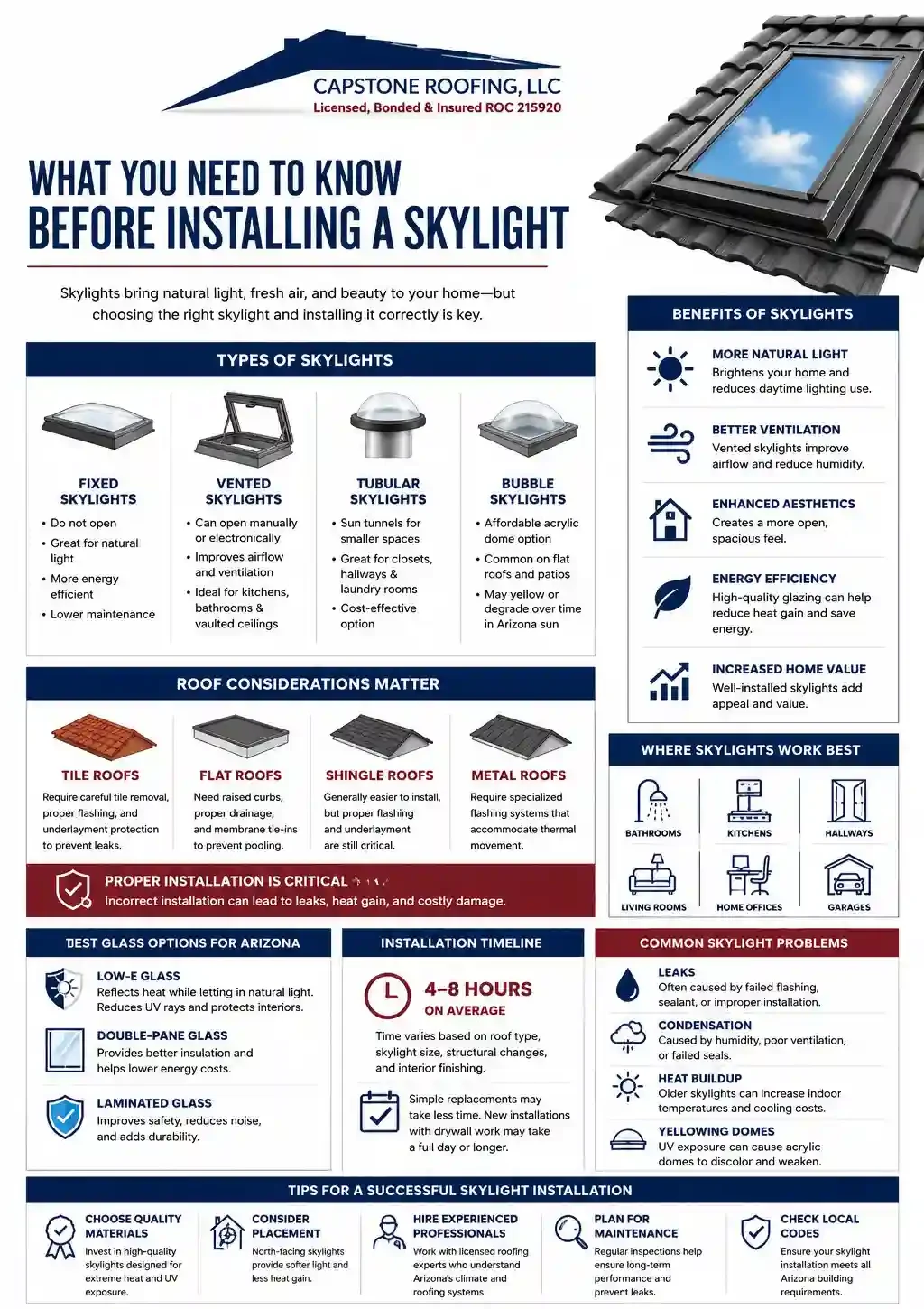
What You Need to Know Before Installing a Skylight in Phoenix
Natural light can completely change the feel of a home, especially in areas that tend to feel dark or closed off. That is one reason more homeowners are considering installing a skylight in kitchens, bathrooms, hallways, living rooms, and even garages. Skylights can brighten interior spaces, improve ventilation, and make rooms feel larger without adding square footage.
But before installing a skylight, there are important things homeowners in Phoenix and the East Valley should understand. Arizona’s intense UV exposure, monsoon storms, extreme heat, and common roof types all impact skylight performance and lifespan. Choosing the wrong skylight or installing it incorrectly can lead to leaks, excess heat, condensation, or premature failure.
This guide explains what homeowners should know before moving forward with skylight installation, including skylight types, costs, timelines, roof considerations, energy efficiency, maintenance, and common mistakes to avoid.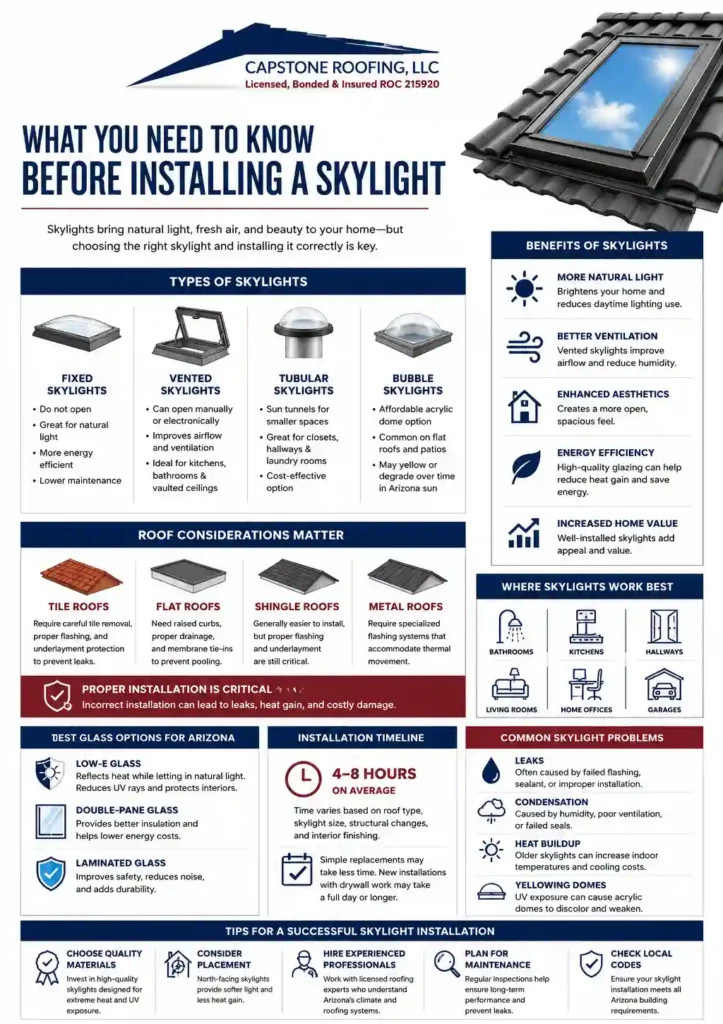
What Is a Skylight?
A skylight is a roof-mounted window designed to bring natural daylight into the home from above. Unlike traditional windows installed in walls, skylights allow sunlight to enter through the roofline, helping brighten spaces that may not receive enough exterior wall light.
Skylights are commonly installed in:
- Bathrooms
- Kitchens
- Hallways
- Living rooms
- Closets
- Garages
- Stairwells
- Home offices
Modern skylights can also improve airflow, reduce daytime lighting needs, and help create a more open feeling inside the home.
According to the U.S. Department of Energy, properly selected skylights can contribute to energy efficiency when paired with quality glazing and correct placement.
Types of Skylights Available for Arizona Homes
Not all skylights are built the same. The best option depends on your roof type, ventilation needs, budget, and how much natural light you want.
Fixed Skylights
Fixed skylights are sealed units that do not open. These are ideal when the goal is simply adding natural light without additional airflow.
Benefits include:
- Lower cost
- Less maintenance
- Fewer moving parts
- Strong energy efficiency
Vented Skylights
Vented skylights can open manually or electronically to improve airflow and ventilation.
These are commonly installed in:
- Bathrooms
- Kitchens
- Vaulted ceilings
- Rooms that trap heat
Some newer models include rain sensors that automatically close during storms.
Tubular Skylights
Tubular skylights, also called sun tunnels, use reflective tubing to channel sunlight into smaller spaces.
They are often installed in:
- Closets
- Hallways
- Laundry rooms
- Small bathrooms
These systems require less roof modification and are often more affordable.
Bubble Skylights
Bubble skylights are common throughout Phoenix on flat roofs, patio covers, and older homes.
These acrylic dome skylights are lightweight and affordable but often wear down faster under Arizona UV exposure.
Homeowners dealing with aging dome skylights can learn more on our Bubble Skylights in Phoenix guide.
Why Skylights Are Popular in Phoenix
Phoenix receives over 300 sunny days per year, making natural daylight a major advantage for homeowners looking to brighten interiors.
Benefits of installing a skylight in Arizona include:
- More natural daylight indoors
- Reduced daytime lighting use
- Better airflow with vented units
- Improved aesthetics
- Enhanced openness in darker rooms
- Potential energy savings
Natural daylight has also been linked to improved mood, productivity, and sleep quality. Research from the World Green Building Council highlights how daylight exposure positively impacts wellbeing and indoor comfort.
Roof Types Matter Before Installing a Skylight
One of the biggest factors in skylight installation is the roof itself.
Different roofing systems require different flashing methods, waterproofing details, and skylight products.
Tile Roof Skylights
Tile roofs are extremely common in Phoenix and Scottsdale. Installing a skylight on tile requires:
- Careful tile removal
- Proper flashing integration
- Underlayment protection
- Water diversion details
Incorrect installation can allow water to travel under the tile during monsoon storms.
Flat Roof Skylights
Flat and foam roofs often use curb-mounted skylights. Proper drainage is critical because standing water increases leak risk.
Arizona flat roof skylights usually require:
- Raised curbs
- Foam tie-ins
- Elastomeric coating integration
- Drainage slope planning
Shingle Roof Skylights
Asphalt shingle roofs are generally simpler for skylight installation, but flashing and underlayment details still matter.
Metal Roof Skylights
Metal roofing requires specialized flashing systems that accommodate thermal movement and water runoff.
How Phoenix Heat Impacts Skylights
Arizona heat changes how skylights perform compared to cooler climates.
In Phoenix, skylights deal with:
- Extreme UV exposure
- Triple-digit temperatures
- Thermal expansion
- Dust buildup
- Monsoon debris impact
Low-quality skylights can:
- Yellow over time
- Crack under UV stress
- Create hot spots indoors
- Increase cooling costs
That is why choosing energy-efficient skylight glazing is extremely important in Arizona.
Best Skylight Glass Options for Arizona
Glass selection plays a major role in skylight performance.
Low-E Glass
Low-emissivity (Low-E) coatings help reduce solar heat transfer while still allowing natural light indoors.
Benefits include:
- Reduced heat gain
- Lower glare
- Improved energy efficiency
- UV protection
Double-Pane Glass
Double-pane skylights provide insulation and reduce heat transfer better than single-pane options.
Laminated Glass
Laminated glass helps improve safety and reduces noise transfer during storms or heavy rain.
Tinted Skylights
Tinted skylights help minimize glare and heat in rooms with direct sun exposure.
Where Skylights Work Best Inside the Home
Some rooms benefit from skylights more than others.
Bathrooms
Bathrooms often lack exterior windows. Skylights help introduce natural light while maintaining privacy.
Kitchens
Kitchens can feel brighter and more open with overhead daylight.
Hallways
Tubular skylights work especially well in long, dark hallways.
Living Rooms
Large fixed skylights can create dramatic natural lighting in living areas.
Home Offices
Natural daylight can reduce eye strain and improve comfort during the workday.
Common Skylight Problems in Arizona
Many skylight issues in Phoenix come from poor installation or aging materials.
Leaks
Leaks are the most common skylight issue.
Common causes include:
- Failed flashing
- Deteriorated sealant
- Improper installation
- Roof aging around the skylight
If you already notice staining or moisture, visit our Skylight Repair & Replacement in Phoenix page.
Yellowing Domes
Older acrylic skylights often turn yellow or cloudy after years of UV exposure.
Condensation
Condensation can form when ventilation is poor or seals fail.
Heat Buildup
Older skylights without modern glazing can create significant heat gain indoors.
How Long Does It Take to Install a Skylight?
Most skylight installations take between 4–8 hours depending on:
- Roof type
- Skylight size
- Structural modifications
- Interior finishing work
- Accessibility
Simple replacements may take less time, while new installations with drywall work may take a full day or longer.
Do Skylights Increase Home Value?
In many cases, skylights can improve buyer appeal by making rooms feel brighter and more modern.
Potential resale benefits include:
However, poor installations or leaking skylights can negatively impact home value.
Skylight Installation Costs in Phoenix
Skylight costs vary depending on:
- Skylight type
- Roof type
- Size
- Interior finish work
- Electrical components
- Structural modifications
Generally:
- Tubular skylights are the least expensive
- Fixed skylights are mid-range
- Vented and motorized skylights cost more
- Tile roof installations are often more labor-intensive
According to Thumbtack’s skylight cost guide, installation costs can vary significantly depending on roof complexity and product selection.
Should You Replace a Skylight During Roof Replacement?
In many cases, yes.
Replacing skylights during a roof replacement often makes sense because:
- Flashing integrates with the new roof system
- Older skylights may fail after reroofing
- Waterproofing details can be rebuilt correctly
- Labor overlap reduces future disruption
Homeowners considering a reroof should also read How to Know Whether to Repair, Patch, or Replace Your Roof.
How to Choose the Right Skylight Installer in Phoenix
Skylight installation is more complex than many homeowners realize.
Choosing the right installer matters because skylights involve:
- Roof waterproofing
- Structural framing
- Flashing systems
- Insulation
- Ventilation
- Interior finishing
Look for contractors with:
- Arizona roofing experience
- Knowledge of monsoon conditions
- Tile and flat roof expertise
- Licensed and insured crews
- Skylight-specific experience
Homeowners researching contractors can also visit our Skylight Installers in Phoenix page.
Frequently Asked Questions About Installing a Skylight
What is the best type of skylight for Arizona homes?
Most homeowners choose double-pane Low-E glass skylights because they provide better energy efficiency and UV protection.
How long does it take to install a skylight?
Most skylight installations take 4–8 hours, though larger or more complex projects may take longer.
Can skylights leak?
Yes, especially if flashing or sealants fail. Proper installation greatly reduces leak risk.
Do skylights make rooms hotter?
Older skylights can increase heat gain. Modern Low-E glass skylights help minimize excess heat.
How long do skylights last in Phoenix?
Glass skylights can last 20–30 years, while acrylic dome skylights often wear out faster under Arizona UV exposure.
Can skylights be installed on tile roofs?
Yes, but tile roofs require specialized flashing and waterproofing details.
What causes skylight condensation?
Condensation is often caused by humidity buildup, failed seals, or poor ventilation.
Are tubular skylights worth it?
Tubular skylights are an excellent option for small spaces where full skylights are unnecessary.
Should skylights face a certain direction?
North-facing skylights typically provide softer light with less heat gain in Arizona.
Do skylights require maintenance?
Yes. Skylights should be inspected periodically for debris, sealant deterioration, and flashing issues.
Can old bubble skylights be upgraded?
Yes. Many homeowners retrofit or replace aging acrylic domes with newer glass skylights.
Should skylights be replaced during reroofing?
In many cases, replacing skylights during roof replacement helps improve waterproofing integration and long-term performance.
Final Thoughts on Installing a Skylight
Installing a skylight can dramatically improve natural lighting, ventilation, and the overall feel of a home. But in Phoenix, choosing the right skylight and installing it correctly is critical because of the region’s extreme heat, UV exposure, and monsoon weather.
Before moving forward, homeowners should evaluate:
- Roof type
- Skylight materials
- Energy efficiency ratings
- Ventilation needs
- Placement direction
- Long-term maintenance
Whether you are considering a new skylight installation, replacing an aging dome skylight, or dealing with a skylight leak, understanding how skylights perform in Arizona conditions helps homeowners make smarter long-term decisions.
published on Wednesday, May 20th, 2026