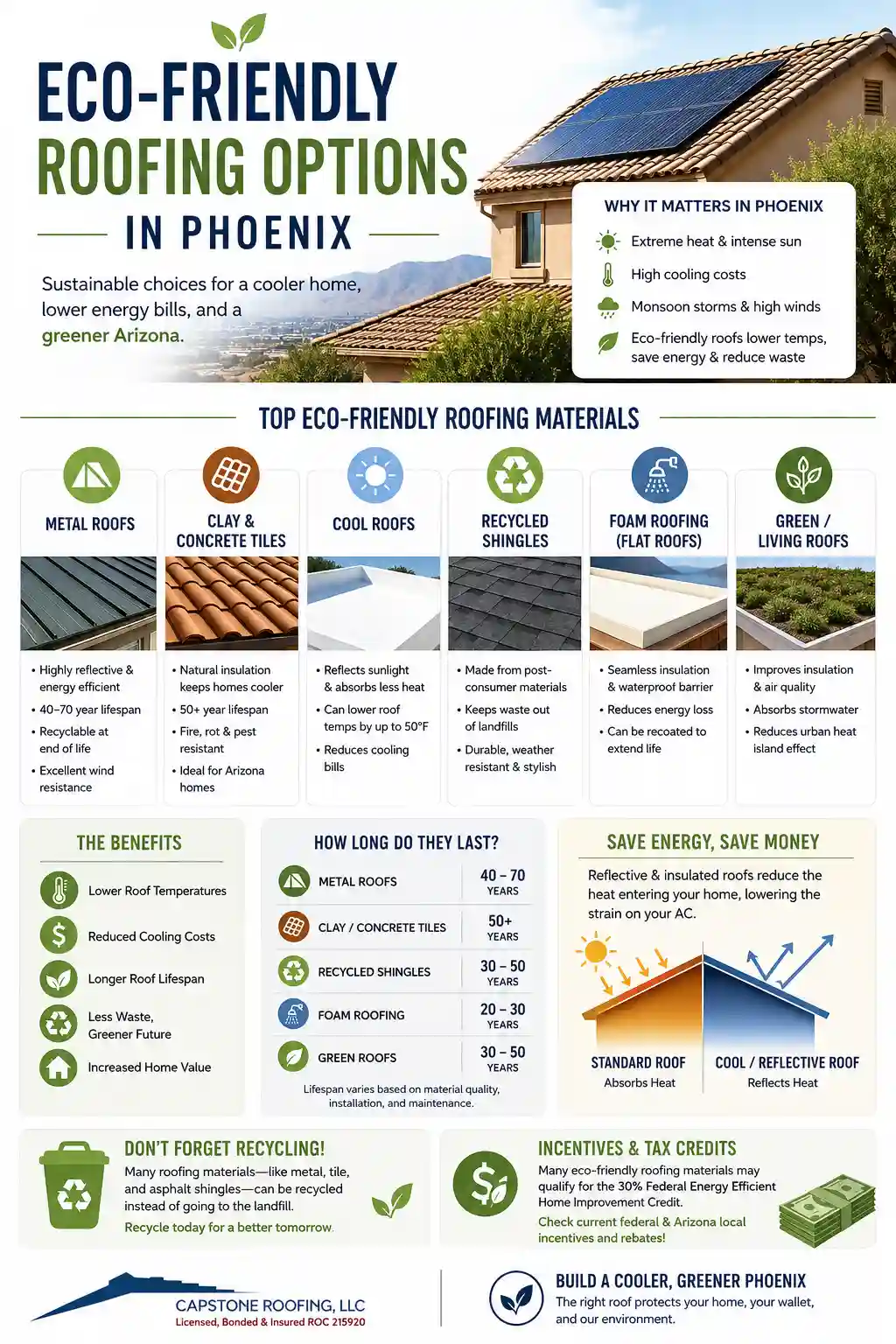
Exploring Eco-Friendly Roofing Options in Phoenix
Phoenix homeowners deal with some of the harshest roofing conditions in the country. Between extreme UV exposure, triple-digit summer temperatures, monsoon storms, and blowing dust, roofing materials in Arizona need to do more than just look good. They need to improve energy efficiency, hold up against heat, and reduce long-term waste. That’s why more homeowners and commercial property owners are looking into eco-friendly roofing in Phoenix.
Modern sustainable roofing systems are designed to lower energy consumption, reduce cooling costs, improve indoor comfort, and last longer than many traditional roofing materials. Whether you’re replacing an older roof, planning a new build, or exploring energy-efficient upgrades, there are several eco-friendly roofing options that perform exceptionally well in Arizona’s climate.
In this guide, we’ll break down the best sustainable roofing materials for Phoenix homes and businesses, how they perform in the desert climate, and what to know before investing in an eco-friendly roofing system.
What Is Eco-Friendly Roofing?
Eco-friendly roofing refers to roofing systems designed to reduce environmental impact through sustainable materials, energy efficiency, recyclability, and long-term durability. Many of these roofing systems are made from recycled or natural materials and help reduce heat absorption to lower cooling demands inside the home.
Eco-friendly roofing in Arizona often focuses heavily on:
- Reflecting solar heat away from the structure
- Reducing indoor cooling costs
- Improving insulation performance
- Using recyclable or sustainable materials
- Reducing landfill waste through longer roof lifespans
- Supporting solar panel integration
With Phoenix homeowners running air conditioning systems for much of the year, sustainable roofing materials can significantly impact monthly utility costs while improving long-term roof performance.
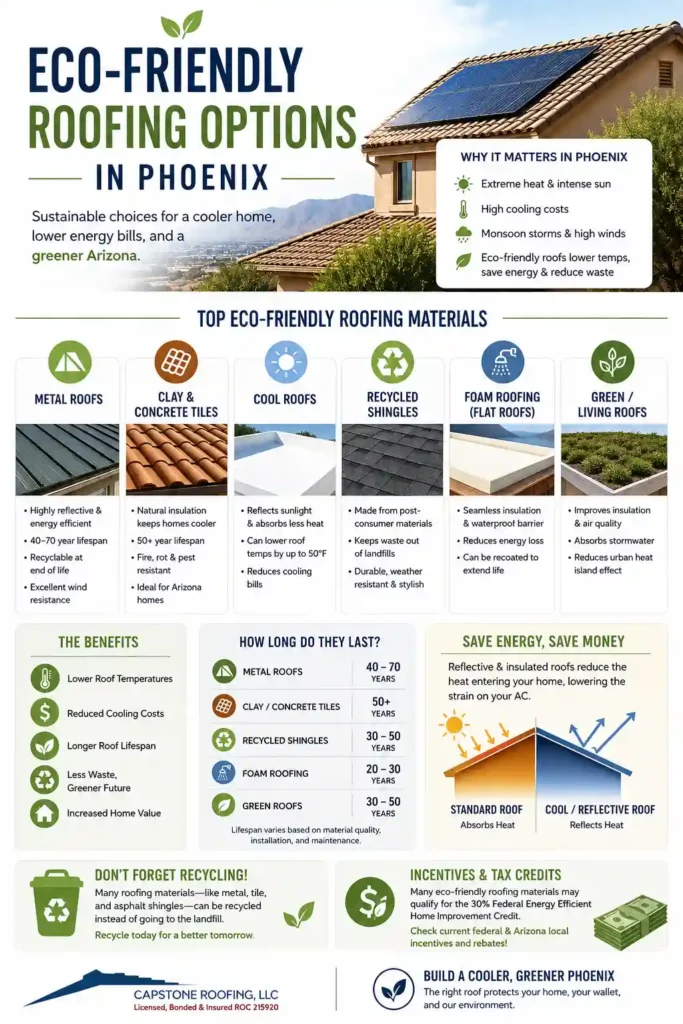
Why Sustainable Roofing Matters in Phoenix
Phoenix’s climate creates unique challenges for roofing systems. Asphalt shingles and low-quality roofing products often deteriorate quickly under constant UV exposure and extreme heat. Sustainable roofing systems are designed to perform better in these conditions while improving energy efficiency.
Eco-friendly roofs can help:
- Reduce roof surface temperatures
- Lower attic heat buildup
- Decrease HVAC strain
- Improve indoor comfort
- Reduce cooling costs during summer
- Extend overall roof lifespan
According to the U.S. EPA’s guidance on cool roofs, reflective roofing systems can significantly reduce heat absorption and help combat urban heat island effects in hot cities like Phoenix.
Many sustainable roofing systems are also designed to withstand monsoon storms, heavy winds, and debris impact better than traditional roofing products.
Metal Roofing: One of the Most Sustainable Roofing Materials
Metal roofing continues to grow in popularity across Arizona because of its durability, recyclability, and energy efficiency. Many metal roofs are manufactured using recycled materials and can be recycled again at the end of their lifespan.
Metal roofs are highly reflective, especially when coated with cool-roof pigments designed to bounce sunlight away from the home. This reduces roof surface temperatures and helps lower attic heat buildup during Phoenix summers.
Benefits of metal roofing include:
- 40–70 year lifespan
- Reflective energy-saving properties
- Recyclable materials
- Excellent wind resistance
- Low maintenance requirements
- Solar panel compatibility
Metal roofs also perform well during Arizona monsoon season because they resist cracking, warping, and moisture damage.
If you’re comparing roofing materials that help reduce cooling costs, our guide on materials that keep your home cool during the summer provides additional insights.
Clay and Concrete Tile Roofs for Arizona Homes
Clay and concrete tile roofs have been used throughout the Southwest for decades because they perform exceptionally well in desert climates. Tile roofs offer natural thermal resistance and help regulate indoor temperatures by slowing heat transfer into the structure.
Tile roofing is also:
- Long-lasting
- Fire-resistant
- Resistant to pests and rot
- Well-suited for Arizona architecture
- Compatible with solar panel systems
Concrete and clay tiles can often last 50 years or more when properly maintained. Although tile roofs are heavier than some other systems, their durability and thermal performance make them one of the most energy-efficient roofing options in Phoenix.
Homeowners exploring tile roofing should also review the pros and cons of tile roofs before deciding on the best roofing system for their property.
Cool Roof Systems and Reflective Coatings
Cool roofs are specifically engineered to reflect sunlight and absorb less heat than traditional roofing systems. These roofs use highly reflective coatings or materials to lower roof temperatures and reduce indoor heat transfer.
Cool roof systems are especially valuable in Phoenix, where rooftop temperatures can become extreme during the summer months.
Benefits of cool roofs include:
- Reduced roof surface temperatures
- Lower cooling bills
- Less HVAC strain
- Improved indoor comfort
- Extended roofing material lifespan
Reflective coatings can often be applied over existing foam, metal, or flat roofing systems to improve energy efficiency without requiring a full roof replacement.
For commercial buildings and flat roofs, reflective roof coatings are one of the most popular sustainable roofing upgrades in Arizona.
Homeowners looking into energy-saving systems can also explore our article on energy-efficient roofing options.
Recycled and Synthetic Roofing Shingles
Recycled roofing shingles are manufactured using post-consumer materials like rubber, plastic, and recycled wood fibers. These products help reduce landfill waste while providing strong durability and weather resistance.
Many synthetic roofing products are designed to replicate:
- Slate roofing
- Cedar shake roofing
- Traditional shingles
- Tile roofing appearances
Unlike some natural materials, synthetic roofing products are often lighter, easier to install, and more resistant to cracking or deterioration from Arizona’s UV exposure.
Some recycled shingles also include reflective pigments to improve energy efficiency and reduce heat absorption.
For additional information on sustainable roofing systems, see our article on environmentally friendly roofing options.
Foam Roofing for Flat Roofs in Arizona
Spray polyurethane foam roofing remains one of the most popular eco-friendly roofing systems for flat roofs in Phoenix. Foam roofing creates a seamless, highly insulated barrier that reduces air leakage and improves energy performance.
According to the Spray Foam Coalition’s energy efficiency resource, spray foam insulation helps reduce energy loss by sealing air leaks and improving thermal resistance.
Benefits of foam roofing include:
- Excellent insulation performance
- Reduced air leakage
- Lightweight application
- Waterproof seamless system
- Reflective coating compatibility
- Reduced cooling costs
Foam roofing systems are commonly recoated rather than fully replaced, which reduces long-term roofing waste and extends roof lifespan.
Homeowners and commercial property owners considering foam roofing should also review our article on foam roof recoat vs replacement.
Green Roofs and Living Roof Systems
Green roofs, also called living roofs, are among the most environmentally friendly roofing systems available. These roofs incorporate vegetation and soil systems installed over waterproof roofing membranes.
Although less common in Phoenix due to irrigation requirements, green roofs can still provide major environmental benefits when properly designed.
Benefits of green roofs include:
- Improved insulation
- Reduced urban heat island effect
- Stormwater absorption
- Improved air quality
- Protection for roofing membranes
- Unique visual appeal
A recent study on green roof benefits highlighted how vegetative roofing systems help absorb rainfall, reduce heat buildup, and improve urban environmental conditions.
Most green roof systems in Arizona utilize drought-tolerant plants and carefully planned irrigation systems to reduce water usage.
How Long Do Eco-Friendly Roofs Last?
One of the biggest sustainability benefits of eco-friendly roofing systems is longevity. Longer-lasting roofs reduce landfill waste, minimize replacement frequency, and reduce the need for raw materials.
Average eco-friendly roof lifespans include:
- Metal roofing: 40–70 years
- Clay/concrete tile: 50+ years
- Recycled shingles: 30–50 years
- Foam roofing: 20–30 years with maintenance
- Green roofs: 30–50 years with proper upkeep
Compared to traditional asphalt shingles that may last only 15–25 years in Arizona’s climate, these systems can significantly reduce long-term replacement waste.
Can Eco-Friendly Roofing Increase Home Value?
Many homeowners wonder whether sustainable roofing systems increase resale value. In many cases, they do.
Energy-efficient roofing systems are attractive to buyers because they can:
- Reduce utility costs
- Improve indoor comfort
- Require less maintenance
- Last longer than standard roofs
- Support solar energy systems
New roofing systems also improve curb appeal and can make homes more appealing during resale, especially when paired with solar upgrades or energy-efficient improvements.
Federal Tax Credits and Arizona Incentives
Many eco-friendly roofing systems may qualify for federal tax incentives under the Energy Efficient Home Improvement Credit.
Homeowners may qualify for:
- Up to 30% of qualifying material costs
- Annual combined improvement caps
- Energy Star-qualified roofing materials
- Credits for reflective roofing systems
The Energy Efficient Home Improvement Credit outlines current federal guidelines and eligibility requirements.
Arizona utility companies and municipalities may also offer rebates for solar-ready roofs, reflective roof coatings, or energy-efficient upgrades.
Choosing a Roofing Contractor Focused on Sustainability
Not every roofing contractor specializes in sustainable roofing systems. Choosing the right roofing company can make a major difference in long-term roof performance and energy efficiency.
Questions to ask include:
- Do they install Energy Star-rated products?
- Do they recycle old roofing materials?
- Do they have experience with foam and reflective systems?
- Can they design solar-ready roofing systems?
- Do they understand Phoenix climate challenges?
It’s also important to work with a contractor familiar with monsoon preparation, UV-resistant materials, and Arizona-specific roofing systems.
Our guide on tips for hiring a roofing contractor can help homeowners evaluate roofing companies before starting a project.
Frequently Asked Questions About Eco-Friendly Roofing in Phoenix
What is the most eco-friendly roofing material?
Metal roofing, tile roofing, foam roofing, recycled shingles, and green roofs are all considered environmentally friendly roofing systems depending on the building type and climate conditions.
Are cool roofs worth it in Arizona?
Yes. Cool roofs reduce heat absorption and help lower cooling costs, making them highly effective in Phoenix’s extreme summer temperatures.
How long does a foam roof last?
Foam roofs typically last 20–30 years when properly maintained and recoated on schedule.
Can eco-friendly roofs support solar panels?
Yes. Metal roofs, tile roofs, and many flat roofing systems are compatible with solar panel installations.
Are recycled shingles durable?
Many recycled roofing shingles are highly durable and designed to withstand heat, UV exposure, and severe weather conditions.
Do sustainable roofs reduce energy bills?
Yes. Reflective coatings, improved insulation, and better ventilation can significantly reduce indoor cooling demands.
Can old roofing materials be recycled?
Many roofing materials including metal, concrete tile, and asphalt shingles can be recycled instead of sent to landfills.
Are green roofs practical in Phoenix?
Green roofs are less common in Phoenix but can work when designed with drought-tolerant vegetation and efficient irrigation systems.
What roofing material lasts the longest in Arizona?
Metal roofs and clay/concrete tile roofs generally offer the longest lifespans in Arizona’s desert climate.
Do eco-friendly roofs require more maintenance?
Not necessarily. Many sustainable roofing systems actually require less maintenance than traditional asphalt shingles.
Eco-Friendly Roofing Solutions Built for Arizona
Eco-friendly roofing systems continue to grow in popularity throughout Phoenix because they help homeowners lower energy costs, improve comfort, and reduce environmental impact. Whether you’re interested in metal roofing, tile roofing, reflective cool roofs, recycled shingles, foam systems, or solar-ready materials, choosing the right roofing system for Arizona’s climate can make a major difference in long-term performance.
Capstone Roofing helps homeowners and businesses throughout the Phoenix metro area explore sustainable roofing systems designed for Arizona heat, monsoon weather, and long-term durability.
published on Thursday, May 21st, 2026