What You Need To Know About Roof Leaks In Arizona
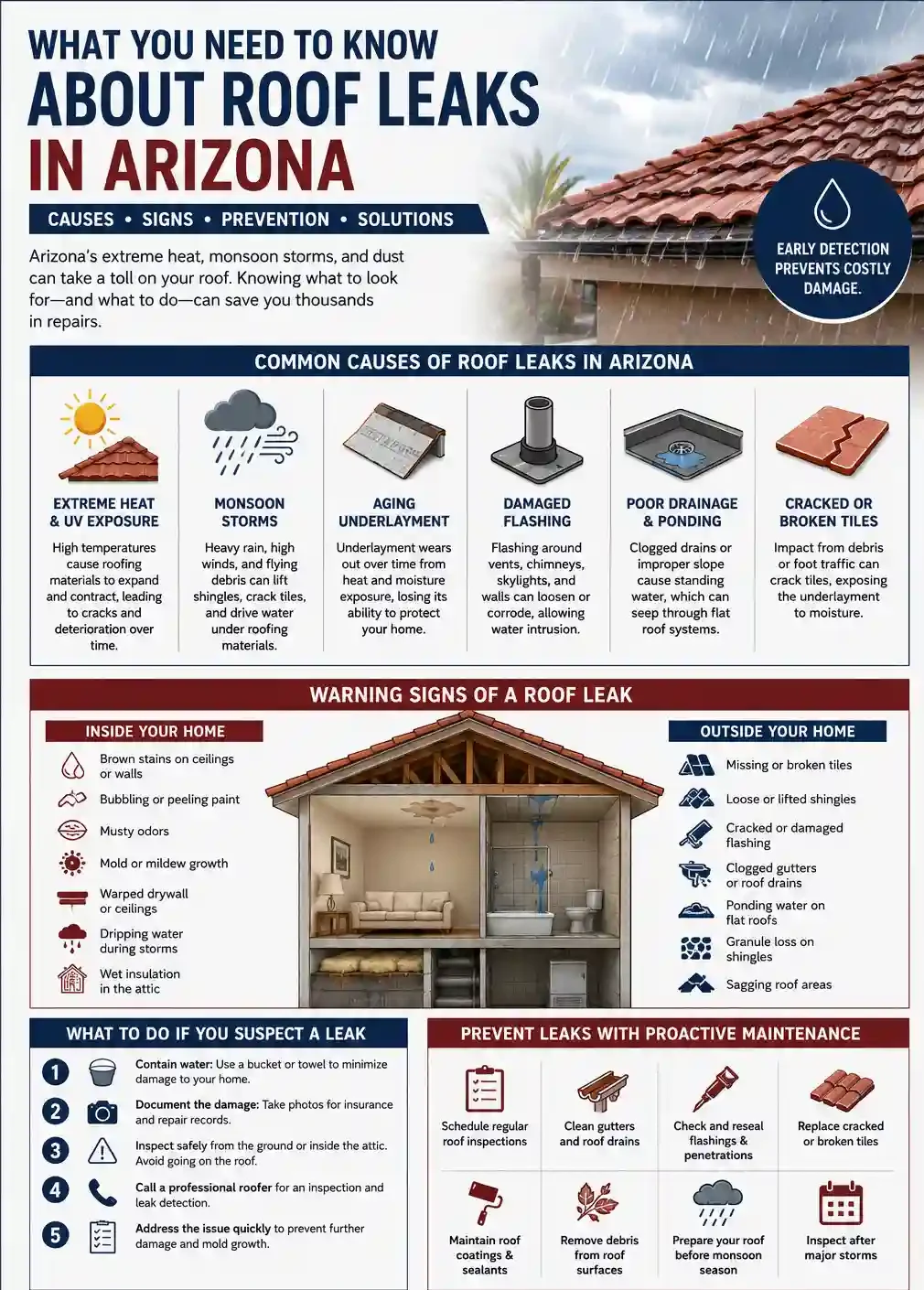
Roof leaks in Arizona can start small and turn into expensive structural problems fast. While Arizona is known for sunshine and dry weather, the combination of extreme UV exposure, monsoon storms, dust, high winds, aging roofing materials, and sudden heavy rainfall creates ideal conditions for roof leaks. Whether you have a tile roof, flat roof, foam roof, or shingle roof, understanding how leaks happen can help you prevent costly damage to your home.
This guide covers the most common causes of roof leaks in Arizona, warning signs to watch for, what homeowners should do after discovering a leak, and how preventative roof maintenance can help extend the life of your roofing system.
Why Roof Leaks Are So Common In Arizona
Arizona’s climate is especially tough on roofing systems. While many homeowners assume roofs only fail in snowy or rainy climates, roofing materials in Phoenix and the surrounding Valley face unique environmental stress year-round.
The intense desert heat causes roofing materials to expand and contract daily. According to the U.S. Department of Energy, conventional roofs can reach temperatures around 150°F during summer afternoons. Over time, this repeated thermal movement weakens underlayment, flashing, sealants, and roof penetrations.
Arizona’s monsoon season adds another layer of stress. Sudden storms can dump heavy rain in a short amount of time while powerful winds drive water underneath roofing materials. Dust storms and debris can clog drains, gutters, and scuppers, especially on flat roofing systems where drainage is critical.
Even roofs that look fine from the ground may have hidden vulnerabilities that only become obvious once water starts entering the home.
Learn more about preparing your roof for seasonal storms in our guide to how to prepare your roof for monsoon season.
Extreme Arizona Heat Accelerates Roof Wear
Arizona roofs experience some of the harshest UV exposure in the country. High temperatures dry out roofing materials faster than in milder climates, especially on older roofs.
Tile Roof Systems
Tile roofs are popular throughout Phoenix because they hold up well against sun exposure, but the tiles themselves are not the waterproof barrier. The underlayment beneath the tile protects the home from moisture intrusion. Over time, underlayment becomes brittle, cracks, and eventually allows water intrusion.
Read more about this in our article on tile roof underlayment in Arizona.
Flat & Foam Roof Systems
Flat and foam roofing systems are common across Arizona due to their energy efficiency and clean appearance. However, standing water, UV exposure, and drainage issues can eventually cause cracks or seam separation if maintenance is ignored.
Homeowners can learn more about preventative maintenance in our guide to foam roof maintenance in Arizona.
Shingle Roof Systems
Asphalt shingles often age faster in Arizona than in cooler regions. The heat causes shingles to curl, dry out, lose granules, and weaken over time.
The National Renewable Energy Laboratory has published research on how reflective roofing materials can reduce heat absorption and improve energy efficiency in hot climates like Arizona. Reflective roofing systems can significantly reduce roof surface temperatures.
Monsoon Storms Create Ideal Conditions For Roof Leaks
Monsoon season is one of the biggest causes of roof leaks in Arizona. Sudden storms bring:
- High winds
- Wind-driven rain
- Flying debris
- Dust storms
- Heavy downpours
- Occasional hail
Wind can lift shingles, loosen flashing, crack tiles, or expose vulnerable roof penetrations. Heavy rain then follows, finding its way into weakened areas.
According to the National Weather Service, monsoon storms in Arizona can produce damaging winds exceeding 60 mph. Arizona monsoon storms can rapidly create dangerous weather conditions.
After severe storms, homeowners should inspect for:
- Broken roof tiles
- Missing shingles
- Debris accumulation
- Water stains inside the home
- Damaged flashing
- Clogged roof drains
Our article on why roof leaks are common in Phoenix during monsoon season explains how Arizona storms specifically impact local roofing systems.
Common Causes Of Roof Leaks In Arizona
1. Damaged Flashing
Flashing protects areas where the roof meets chimneys, skylights, vents, and walls. Improper installation or deteriorated flashing is one of the most common sources of leaks.
2. Cracked Roof Tiles
Tile roofs are durable but individual tiles can crack from foot traffic, debris impact, or aging. Water can then travel beneath the tiles and damage underlayment.
3. Failed Underlayment
In Arizona, underlayment often wears out before the visible roofing materials above it.
4. Ponding Water
Flat roofs depend on proper drainage. Standing water increases the risk of leaks, especially when drains clog during monsoon season.
The International Institute of Building Enclosure Consultants notes that proper drainage is critical because prolonged ponding water can lead to structural and roofing failures. Positive roof drainage helps prevent ponding instability.
5. Roof Penetration Failures
Every penetration through the roof creates a potential leak point. Plumbing vents, HVAC units, skylights, satellite mounts, and solar attachments must be sealed correctly.
6. Aging Roofing Materials
Even properly installed roofs eventually wear out. UV radiation, dust, heat, and storms slowly break down roofing systems over time.
Warning Signs Of A Roof Leak
Many roof leaks begin long before homeowners notice active dripping water. Early detection can help prevent major structural damage and mold growth.
Interior Warning Signs
- Brown ceiling stains
- Bubbling drywall
- Peeling paint
- Musty odors
- Warped drywall
- Visible mold growth
- Wet insulation in the attic
- Dripping water during storms
Read more about ceiling discoloration in our article on brown spots on your ceiling.
Exterior Warning Signs
- Broken or missing tiles
- Loose flashing
- Sagging roof areas
- Cracked sealants
- Granule loss on shingles
- Pooling water on flat roofs
- Clogged drains or gutters
Roof Leaks Often Start Small
One of the biggest misconceptions homeowners have is assuming small leaks are not urgent. Even a tiny leak can eventually lead to:
- Mold growth
- Rotting wood
- Damaged insulation
- Electrical hazards
- Structural deterioration
- Ceiling collapse
- Interior water damage
Water often travels along roof decking or rafters before becoming visible inside the home. The visible stain may not directly align with the actual source of the leak.
Why Professional Roof Leak Detection Matters
Finding the source of a leak is often more complicated than homeowners expect. Water can travel considerable distances before becoming visible.
Professional roof leak detection may involve:
- Infrared thermal imaging
- Moisture detection equipment
- Attic inspections
- Drainage evaluations
- Roof penetration inspections
- Flashing assessments
Learn more about the process in our article on roof leak detection in Arizona.
How Roof Type Affects Leak Risks
Tile Roof Leaks
Tile roofs typically leak because of:
- Broken tiles
- Underlayment deterioration
- Valley flashing failures
- Poor drainage
- Foam adhesive failures
Flat Roof Leaks
Flat roofing systems commonly leak due to:
- Ponding water
- Seam separation
- Cracked coatings
- Drain blockages
- UV deterioration
Shingle Roof Leaks
Shingle roofs often experience:
- Lifted shingles
- Granule loss
- Nail pops
- Wind damage
- Flashing issues
Roof Maintenance Helps Prevent Leaks
Routine roof maintenance is one of the best ways to prevent expensive repairs.
Preventative maintenance typically includes:
- Roof inspections
- Drain cleaning
- Gutter cleaning
- Sealant checks
- Tile replacement
- Flashing inspections
- Coating evaluations
- Debris removal
Our guide to roofing maintenance tips explains how regular maintenance can extend roof lifespan.
Arizona Roof Inspections Are Especially Important
Arizona homeowners should schedule inspections:
- Before monsoon season
- After major storms
- Before purchasing a home
- When selling a home
- If the roof is over 10 years old
- After noticing interior stains
Roof inspections often identify hidden problems before they become major repairs.
Learn more in our article on whether you need your roof inspected every year.
Can Roof Leaks Cause Mold?
Yes. Roof leaks are one of the most common causes of attic and ceiling mold growth.
When moisture becomes trapped inside insulation, drywall, or attic spaces, mold can begin developing quickly. Mold growth may spread before homeowners even realize a leak exists.
Common signs include:
- Musty smells
- Dark attic staining
- Discolored insulation
- Respiratory irritation
- Visible mold spots
Addressing leaks quickly helps reduce the risk of secondary moisture damage.
Should You Repair Or Replace Your Roof?
Not every leak requires a full roof replacement. The best solution depends on:
- Roof age
- Extent of damage
- Roof type
- Condition of underlayment
- Number of leak areas
- Previous repairs
Minor isolated leaks may only require repairs, while widespread aging or underlayment failure may justify replacement.
Our guide on whether to repair, patch, or replace your roof explains the differences.
Frequently Asked Questions About Roof Leaks In Arizona
How common are roof leaks in Arizona?
Roof leaks are very common in Arizona because of extreme UV exposure, monsoon storms, aging underlayment, and dust accumulation.
What is the most common cause of roof leaks in Arizona?
Failed flashing, aging underlayment, and storm damage are among the most common causes.
Can monsoon storms damage a roof?
Yes. Monsoon storms can crack tiles, lift shingles, clog drains, and expose vulnerable roof areas to heavy rain.
How do I know if my roof is leaking?
Common signs include water stains, attic moisture, dripping water, peeling paint, mold growth, or damaged roofing materials.
Can a roof leak cause mold?
Yes. Moisture trapped inside attic spaces or drywall can quickly create conditions for mold growth.
Do flat roofs leak more often?
Flat roofs require proper drainage. If water ponds or drains clog, leaks become more likely.
How often should roofs be inspected in Arizona?
Most roofs should be professionally inspected every 1–2 years and after severe storms.
Can roof leaks affect insulation?
Yes. Wet insulation loses efficiency and may eventually need replacement.
Will homeowners insurance cover roof leaks?
Insurance coverage depends on the cause of the leak. Sudden storm damage is more likely to be covered than normal wear and tear.
Can cracked roof tiles cause leaks?
Yes. Even small cracks can allow water beneath the tile system.
What happens if I ignore a roof leak?
Leaks can lead to mold growth, structural damage, electrical hazards, and expensive repairs if ignored.
Can clogged drains cause flat roof leaks?
Yes. Poor drainage and ponding water are major causes of flat roof failures.
Are roof leaks worse during Arizona summers?
Extreme summer heat accelerates roofing material deterioration, increasing vulnerability before monsoon season arrives.
How long does tile roof underlayment last in Arizona?
Depending on the material and installation quality, many underlayments last around 15–25 years in Arizona’s climate.
Can a small ceiling stain indicate a major leak?
Yes. Water often travels before becoming visible inside the home.
Protecting Your Roof From Future Leaks
Arizona homeowners can reduce leak risks through proactive maintenance, routine inspections, and addressing small roofing issues early. Extreme weather will always challenge roofing systems in the desert, but preventative care helps roofs last longer and perform better during monsoon season.
If you notice warning signs like ceiling stains, damaged tiles, bubbling drywall, or ponding water, scheduling a professional roof inspection early may help prevent more serious damage later.
published on Tuesday, May 19th, 2026