Phoenix Roof Repair vs. Replacement
One of the most common questions homeowners ask after spotting a leak or storm damage is whether they should move forward with a roof repair or a full roof replacement. In Phoenix, the answer depends on more than just the visible damage. Arizona heat, UV exposure, monsoon storms, roof age, underlayment condition, and long-term costs all play a role.
Understanding the difference between roof repair vs. replacement can help you avoid overspending on temporary fixes or replacing a roof before it is truly necessary. This guide breaks down the pros and cons of roof replacement vs repair, common warning signs, cost considerations, and how Phoenix weather affects roofing systems.
When Roof Repair Makes More Sense
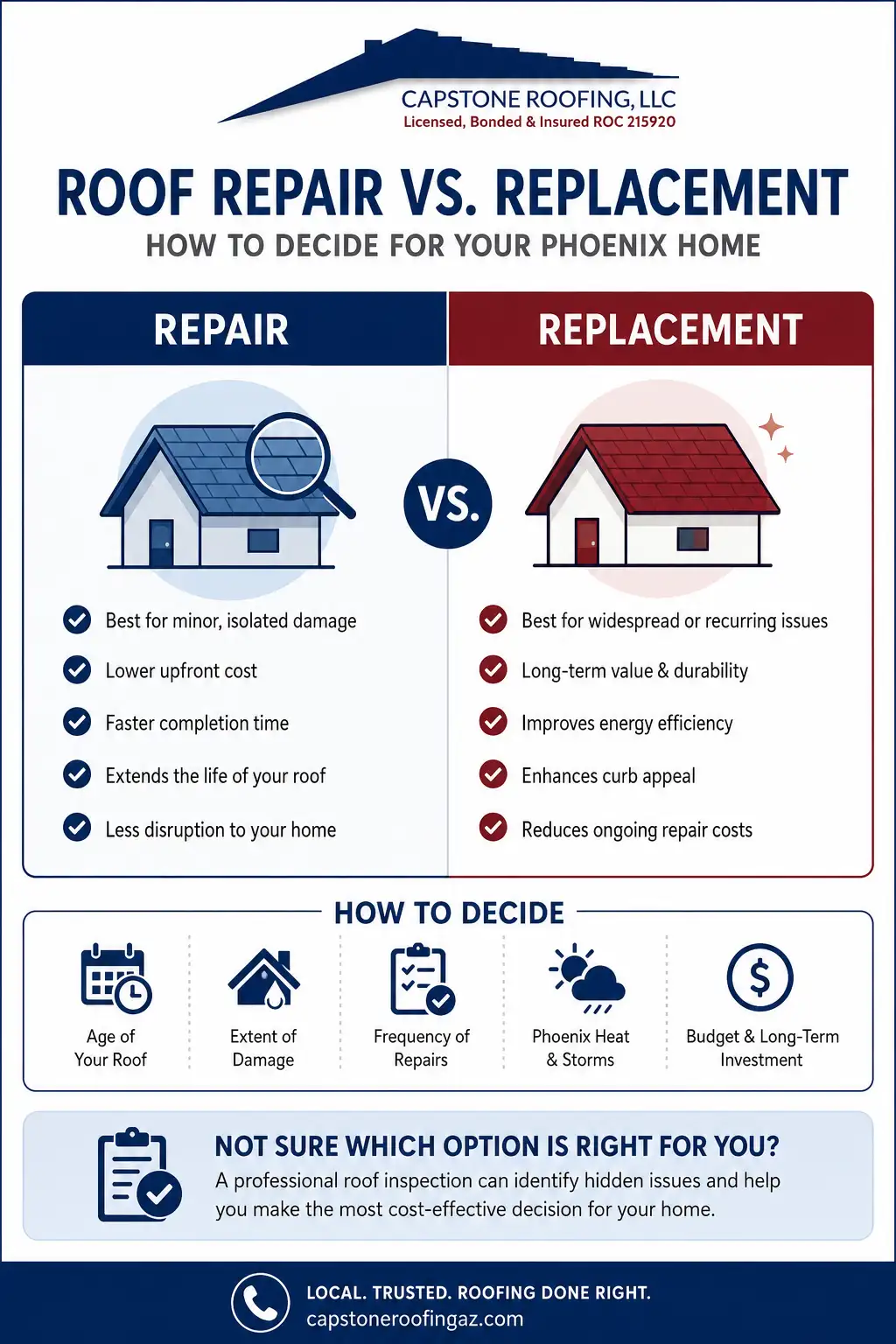
In many cases, roof repair is the smarter and more cost-effective option. Repairs are usually best when the issue is isolated and the rest of the roofing system is still in good condition.
Homeowners can often repair a roof instead of replacing it when:
- The damage is limited to one section
- The roof is under 10–15 years old
- Leaks are minor and caught early
- The underlayment is still performing properly
- Storm damage is localized
- The roof structure is still solid
Common Phoenix roof repairs include replacing broken tiles, repairing flashing around skylights, fixing roof leaks, resealing penetrations, replacing lifted shingles, and patching foam roofing systems.
If your roof issue is limited to one area, a targeted repair may extend the roof’s lifespan for several more years. Homeowners dealing with active leaks can learn more about roof leak repair in Phoenix and how early intervention prevents more expensive structural damage.
Signs Your Roof Needs Replacement Instead of Repair
There comes a point where ongoing repairs stop being cost-effective. If roofing problems continue returning, or damage is widespread, replacement may offer better long-term value.
Some of the biggest signs your roof needs replacement vs repair include:
- Recurring leaks in multiple areas
- Extensive cracked or missing tiles
- Widespread underlayment deterioration
- Sagging roof sections
- Storm damage across large roof planes
- Major granule loss on shingles
- Visible water damage in the attic
- Frequent repair bills adding up over time
Phoenix homeowners with aging tile roofs often discover that the tiles themselves may still look good while the underlayment underneath has failed. This is especially common in homes built during the early 2000s construction boom.
If you are unsure whether your roof has reached the end of its lifespan, this guide on when to replace a roof explains common age-related warning signs in Arizona roofing systems.
Roof Repair vs Roof Replacement Cost
One of the biggest deciding factors is cost. Roof repair vs roof replacement cost can vary significantly depending on roofing material, labor requirements, roof complexity, and the extent of the damage.
Typical Roof Repair Costs
- Minor leak repairs
- Broken tile replacement
- Flashing repairs
- Foam roof patching
- Storm damage spot repairs
Repairs are usually less expensive upfront, especially when damage is isolated.
Typical Roof Replacement Costs
- Complete tear-off
- New underlayment installation
- Roof decking repairs
- New roofing materials
- Updated flashing and ventilation
Although replacement requires a larger investment, it often reduces long-term repair costs and improves energy efficiency.
Many homeowners end up spending more money over time by repeatedly patching an aging roof. If repairs become frequent, replacement may ultimately provide better value.
The Department of Energy’s cool roof guide also explains how newer roofing systems can improve heat reflectivity and lower cooling demands in hot climates like Phoenix.
How Phoenix Heat Changes the Repair vs Replacement Decision
Arizona roofs experience extreme environmental stress throughout the year. Phoenix heat, UV exposure, dust storms, and monsoon rains can accelerate roof aging much faster than in other parts of the country.
Summer temperatures regularly exceed 110°F, which can:
- Dry out roofing materials
- Cause thermal expansion and contraction
- Crack sealants and flashing
- Damage foam coatings
- Accelerate underlayment deterioration
- Fade and weaken shingles
According to Energy.gov, reflective roofing systems can reduce roof temperatures significantly by reflecting sunlight instead of absorbing it.
Monsoon season adds another challenge. Heavy rain and wind-driven debris can expose weak spots that may not have been obvious before storms arrive.
Homeowners preparing for Arizona storms should also review how to prepare your roof for monsoon season to reduce the risk of emergency roof damage.
Roof Age Matters More Than Most Homeowners Realize
Roof age is one of the strongest indicators when deciding between roof repair vs. roof replacement.
Asphalt Shingle Roofs
Most asphalt roofs in Arizona last approximately 15–25 years depending on ventilation, maintenance, and UV exposure.
Tile Roofs
Tile roofs can last decades, but the underlayment beneath the tile usually needs replacement after 20–30 years in Arizona.
Foam Roofs
Foam roofs typically last 15–25 years with regular recoating and maintenance.
Metal Roofs
Metal roofing systems often last 40–70 years when properly maintained.
If your roofing system is nearing these ranges, major repairs may only delay a necessary replacement.
Homeowners with foam roofing systems may also want to compare foam roof recoat vs replacement before deciding on a full tear-off.
Can a Roof Be Repaired Instead of Replaced After Hail Damage?
Yes, in many cases hail damage can be repaired instead of requiring full replacement. The deciding factor is usually how widespread the damage is.
Roof repairs may work when:
- Damage is isolated
- Only a few tiles or shingles are affected
- The underlayment remains intact
- No structural damage occurred
Replacement is often recommended when:
- Damage affects multiple roof sections
- The roofing material is brittle or aging
- Leaks are widespread
- Insurance approves full replacement
- The roof was already near the end of its lifespan
Arizona homeowners should schedule inspections after severe storms because hail damage is not always obvious from the ground.
The Insurance Information Institute explains how roof damage claims are commonly evaluated after storms.
Pros and Cons of Roof Repair
Pros
- Lower upfront cost
- Faster completion time
- Less disruption to the home
- Extends roof lifespan
- More environmentally friendly
Cons
- May not address underlying issues
- Repairs can become frequent
- Matching materials may be difficult
- Older roofs may continue deteriorating
- Shorter long-term value
Pros and Cons of Roof Replacement
Pros
- Resets roof lifespan
- Addresses structural issues
- Improves energy efficiency
- Enhances curb appeal
- May increase home value
- Reduces ongoing maintenance costs
Cons
- Higher upfront investment
- Longer installation timeline
- More disruptive process
- Requires material selection decisions
When to Repair Roof Problems Immediately
Some roofing issues should never wait. Delaying repairs can allow moisture intrusion to spread beneath roofing materials and into insulation, decking, or interior drywall.
You should contact a roofer immediately if you notice:
- Active interior leaks
- Ceiling stains
- Sagging roof areas
- Missing tiles after storms
- Exposed underlayment
- Water entering around skylights
- Foam roof cracking or blistering
Emergency repairs can often stabilize the roof and prevent significantly larger repair costs later.
Homeowners facing urgent issues can also review emergency roof repair services in Phoenix to understand how temporary protection and rapid response work after storms.
Roof Repair vs Replacement for Tile Roofs in Phoenix
Tile roofs are extremely common across Phoenix because they perform well in hot climates and have a long lifespan. However, many homeowners assume cracked tiles automatically mean full replacement is needed.
In reality, many tile roofing systems can be repaired successfully when:
- Damage is isolated
- The underlayment is still in good condition
- Leaks are localized
- The roof structure remains solid
Replacement usually becomes necessary when the underlayment deteriorates across large roof sections or when repairs become widespread.
Homeowners can learn more about localized tile issues through tile roof repair in Phoenix.
How Roof Inspections Help You Decide
A professional roof inspection is often the best way to determine whether repair or replacement makes the most financial sense.
Inspections can identify:
- Hidden moisture intrusion
- Underlayment deterioration
- Storm damage
- Structural concerns
- Ventilation problems
- Flashing failures
- Foam roof coating wear
Many roofing problems look minor from the ground but involve larger hidden issues underneath roofing materials.
Routine inspections also help homeowners avoid waiting until monsoon season exposes existing vulnerabilities.
Should I Repair or Replace My Roof?
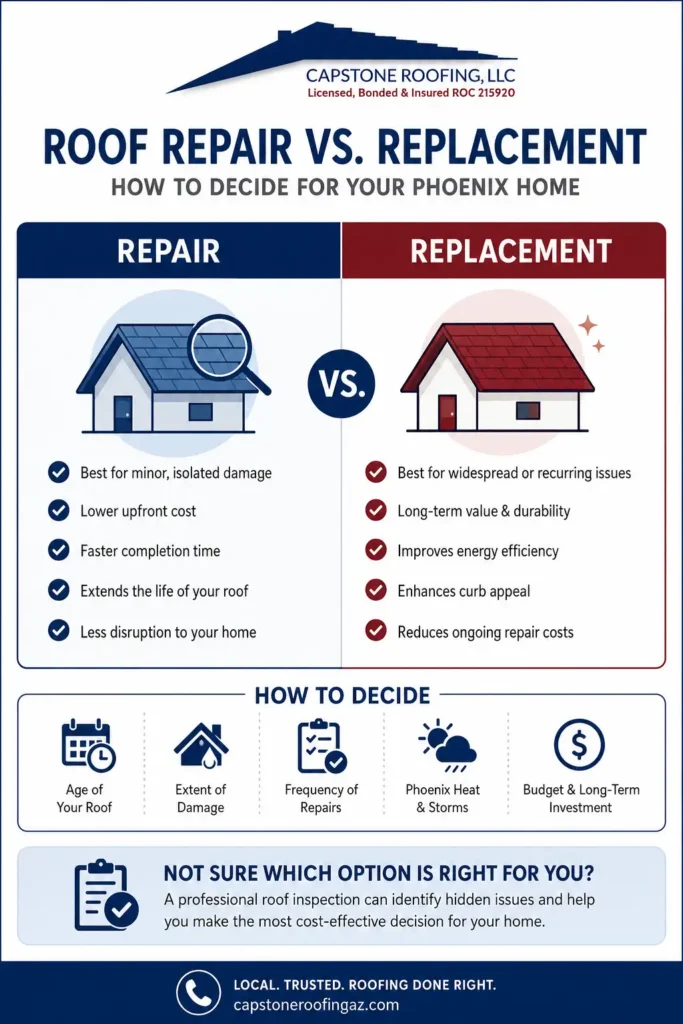
There is no universal answer for every Phoenix homeowner. The right choice depends on:
- Roof age
- Extent of damage
- Frequency of repairs
- Roofing material
- Long-term homeownership plans
- Budget considerations
- Energy efficiency goals
In general:
- Newer roofs with isolated damage are often repair candidates
- Older roofs with recurring issues usually benefit from replacement
- Storm-damaged roofs may require inspections before deciding
- Foam roofs sometimes qualify for recoating instead of replacement
Phoenix roofs face some of the harshest environmental conditions in the country, so delaying decisions too long can allow manageable repairs to become major replacement projects.
Frequently Asked Questions
Is it better to repair or replace a roof?
It depends on the roof’s age, condition, and extent of the damage. Minor isolated issues often qualify for repair, while widespread or recurring damage usually points toward replacement.
Can a roof be repaired instead of replaced?
Yes. Many roofs can be repaired successfully if the underlying structure and roofing system are still in good condition.
How do I know if my roof needs replacement?
Signs include recurring leaks, widespread material deterioration, sagging, extensive storm damage, or a roof nearing the end of its lifespan.
How long does a roof last in Phoenix?
Arizona roofs often have shorter lifespans due to extreme UV exposure and heat. Asphalt roofs commonly last 15–25 years while tile underlayment usually lasts 20–30 years.
Does Phoenix heat damage roofs faster?
Yes. Extreme heat and UV exposure accelerate wear on shingles, underlayment, flashing, sealants, and foam coatings.
Should I replace my roof before monsoon season?
If your roof is already showing signs of deterioration, replacing or repairing it before monsoon season can help prevent major storm-related leaks.
Can hail damage require full roof replacement?
Yes, especially if damage is widespread or the roof was already aging before the storm occurred.
What is cheaper: roof repair or roof replacement?
Roof repairs usually cost less upfront, but repeated repairs on an aging roof may eventually cost more than replacement.
Do roof replacements improve energy efficiency?
Modern roofing systems and reflective materials can improve energy efficiency and reduce cooling demands in Phoenix homes.
Can tile roofs be repaired?
Yes. Many tile roofs qualify for repairs if the underlayment beneath the tile is still functioning properly.
published on Thursday, May 21st, 2026