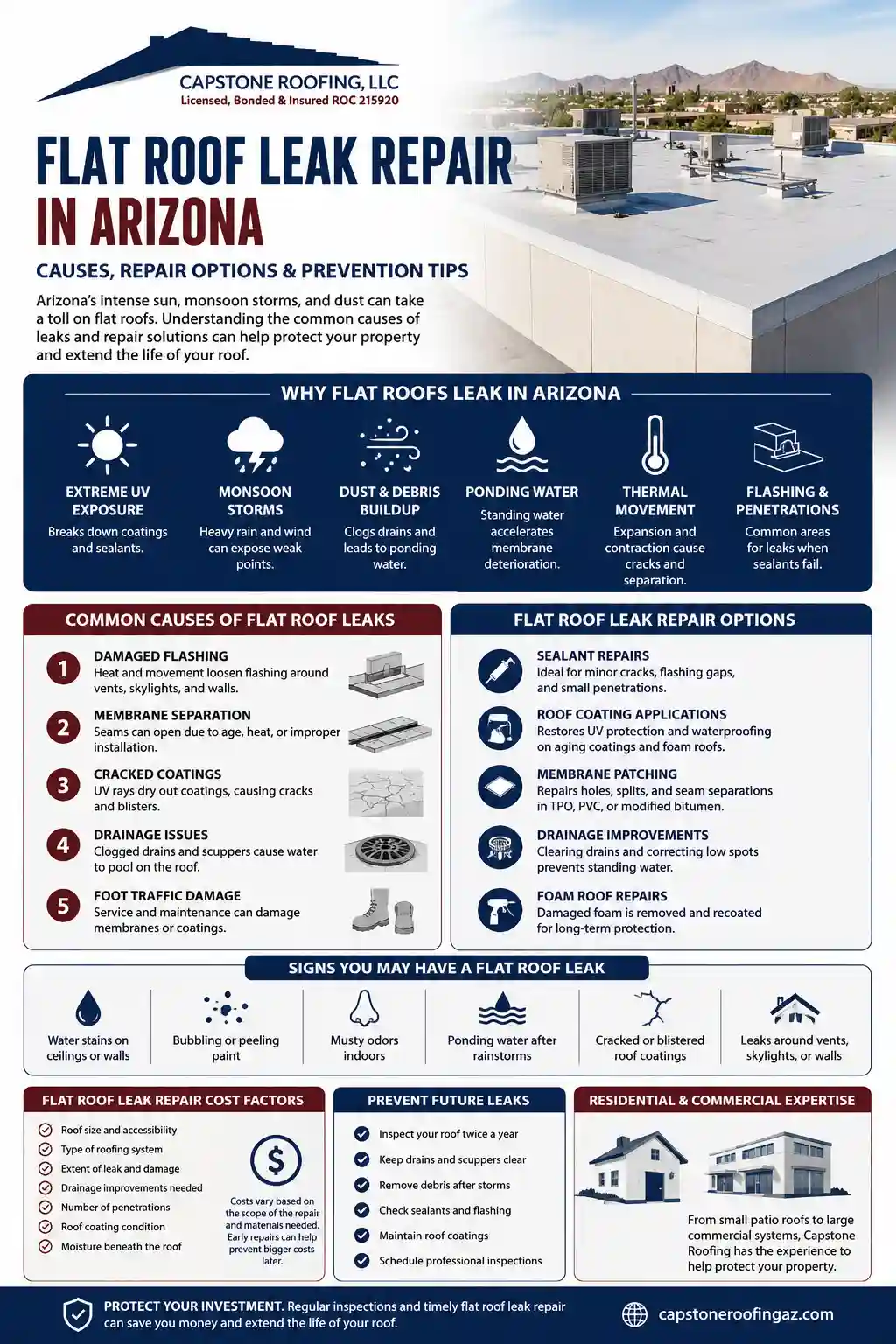
Flat Roof Leak Repair in Arizona: What Property Owners Should Know
Flat roof leak repair in Arizona comes with a different set of challenges than roof repairs in cooler or wetter parts of the country. Phoenix-area homes and commercial buildings deal with intense UV exposure, rapid temperature swings, dust buildup, and monsoon storms that can expose weak points in low-slope roofing systems. Over time, these conditions can cause coatings to crack, seams to separate, flashing to loosen, and water to pond in low areas of the roof.
Unlike sloped roofing systems that naturally shed water quickly, flat roofs rely on proper drainage design, coatings, sealants, and regular maintenance to prevent moisture intrusion. Even a small drainage issue can eventually lead to trapped water, roof membrane damage, insulation saturation, and interior staining.
Flat roof leaks are also difficult because water rarely enters directly above the visible damage inside. Moisture can travel beneath membranes or insulation layers before appearing inside the property, which makes proper leak detection especially important in Arizona flat roof systems.
Whether the roof is a residential patio roof, foam roof, TPO system, modified bitumen roof, or a large commercial flat roofing system, understanding how Arizona weather affects low-slope roofs can help property owners make smarter repair and maintenance decisions.
Homeowners researching flat roof leak repair often want to understand:
- What causes flat roofs to leak in Arizona
- How ponding water damages flat roofing systems
- Whether a leak can be repaired instead of replaced
- How much flat roof leak repair cost may vary
- What repair methods work best for foam, TPO, and modified bitumen roofs
- How to prevent future roof leaking repair issues
Many of these problems are tied directly to Arizona’s environment. Constant heat causes roofing materials to expand and contract daily. UV exposure dries out coatings and sealants. Dust storms clog drains and scuppers. Monsoon storms bring sudden heavy rainfall that exposes drainage failures very quickly.
Property owners dealing with recurring leaks may also benefit from learning more about roof leak detection and how moisture travels through low-slope roofing systems.
Why Flat Roof Leaks Are So Common in Arizona
Arizona’s climate is one of the biggest reasons flat roof leaks develop earlier than many property owners expect.
During the summer, roof surface temperatures in Phoenix can become extremely hot for long periods of time. Constant exposure to heat and UV radiation causes roofing materials to expand, contract, and gradually lose flexibility. Over time, coatings dry out, sealants crack, and seams begin separating.
Monsoon storms create another challenge. Flat roofs are designed with slight slopes to guide water toward drains or scuppers, but debris buildup and drainage problems can quickly create ponding water. When water sits on a roof for extended periods, it accelerates membrane deterioration and increases the likelihood of leaks.
Dust storms and high winds also contribute to roof leaking repair problems in Arizona. Wind-driven debris can clog drains, damage flashing, or loosen roofing materials around penetrations and roof edges.
Some of the most common Arizona-specific causes of flat roof leaks include:
- Thermal expansion and contraction
- Ponding water after monsoon storms
- UV damage to coatings and sealants
- Drainage blockages from debris and dust
- Flashing separation around penetrations
- Aging foam or modified bitumen membranes
- Cracks around HVAC equipment and skylights
- Poor original installation practices
Property owners researching roof weather damage in Phoenix often discover that many “sudden” leaks actually started months earlier as small drainage or coating problems.
How Ponding Water Damages Flat Roofs
Ponding water is one of the biggest concerns with flat roof repair in Arizona.
Flat roofs are never completely flat. They are designed with subtle slopes that move water toward drainage points. When drains become clogged or low spots develop in the roofing system, water may remain on the roof for days after a storm.
Standing water creates several problems:
- Accelerates membrane deterioration
- Weakens roof coatings
- Increases structural stress
- Creates leak pathways around flashing
- Promotes mold and algae growth
- Increases the risk of seam separation
In Arizona, ponding water becomes even more damaging because intense sunlight heats the trapped moisture repeatedly during the day. This constant heating and cooling cycle stresses roofing materials and speeds up deterioration.
Commercial property owners researching commercial flat roofing systems often discover that drainage management is one of the most important factors in extending roof life.
After monsoon storms, property owners should inspect roofs for:
- Water that remains after 48 hours
- Clogged scuppers
- Blocked drains
- Bubbling roof coatings
- Blisters in membrane systems
- Soft spots around ponding areas
Common Types of Flat Roof Leaks
Flashing Leaks
Flashing protects transitions and penetrations throughout a roof system. Heat movement and UV exposure can eventually loosen flashing around skylights, vents, HVAC units, and parapet walls.
When flashing separates from the roof surface, water can enter beneath the membrane and travel throughout the roofing system before appearing inside.
Roof Membrane Separation
TPO, modified bitumen, and other membrane systems rely heavily on sealed seams. Arizona heat causes these materials to expand and contract daily, which can eventually weaken adhesives or welded seams.
Membrane separation is especially common on aging roofs that have not received regular maintenance.
Roof Coating Failures
Foam roofing systems and coated roofs rely on protective coatings to shield the roof from UV exposure. Once coatings crack or wear away, the underlying roofing material becomes vulnerable to moisture intrusion.
Many Arizona property owners researching foam roof maintenance in Arizona are trying to prevent coating deterioration before leaks develop.
Drainage Leaks
Improper drainage around drains and scuppers can allow water to back up beneath roofing materials. Drainage leaks are especially common during Arizona monsoon storms when sudden rainfall overwhelms clogged drainage systems.
Punctures and Foot Traffic Damage
Flat roofs often experience foot traffic from HVAC servicing, satellite installation, or maintenance work. Over time, repeated foot traffic may puncture membranes or damage coatings.
Commercial roofs are especially vulnerable because rooftop equipment creates concentrated wear around service pathways.
How Roof Leak Detection Works on Flat Roof Systems
One of the most frustrating parts of flat roof leak repair is locating the actual source of the leak.
Water can travel beneath roofing layers for long distances before entering the building. This means the visible water stain inside may not line up with the actual roof failure.
Professional roof inspections often include:
- Inspecting drains and scuppers
- Evaluating roof coatings
- Checking seams and penetrations
- Inspecting flashing
- Looking for soft spots or trapped moisture
- Evaluating ponding areas
- Inspecting parapet walls
Property owners researching roof leak detection in Arizona often discover that moisture intrusion may exist long before visible interior damage appears.
Infrared inspections, moisture meters, and visual inspections are commonly used to identify trapped moisture and hidden leak pathways.
Flat Roof Leak Repair Methods
The right repair method depends on the type of roofing system and the extent of the damage.
Flat Roof Leak Repair Sealant
Sealants are often used around flashing, penetrations, roof edges, and seams. Different roofing systems require different sealant types, which is why repairs should match the original roof material.
Professional-grade sealants can help address:
- Small flashing gaps
- Minor seam separation
- Localized coating cracks
- Small penetrations
Roof Coating Repairs
Foam roofs and built-up roofing systems may benefit from partial recoating when coatings begin deteriorating but the underlying roof remains structurally sound.
Many Arizona property owners compare repair options after reading about roof coatings for built-up roofs in Arizona.
Membrane Patching
TPO and modified bitumen systems may require membrane patching or seam reinforcement where damage is isolated.
Drainage Improvements
Some flat roof repair projects involve correcting low spots, adding drainage support, or clearing blocked drains to improve water flow.
Foam Roof Repairs
Spray foam roofing systems may require removing damaged foam and reapplying protective coatings in affected areas.
Property owners exploring foam roofing systems often learn that coating maintenance is one of the biggest factors in preventing leaks.
Concrete Flat Roof Leak Repair Considerations
Concrete flat roof leak repair often involves additional waterproofing challenges because concrete expands and contracts significantly in Arizona heat.
Common problems with concrete flat roofs include:
- Hairline cracking
- Expansion joint failures
- Water penetration through porous surfaces
- Sealant deterioration
- Drainage failures
Because concrete retains heat for long periods, thermal stress can gradually widen cracks and create leak pathways.
Repair strategies may include:
- Crack sealing
- Waterproof coatings
- Drainage improvements
- Expansion joint repair
- Surface restoration
Residential vs Commercial Flat Roof Leaks
Residential flat roofs and commercial flat roofing systems often experience different types of leaks.
Residential Flat Roof Leaks
Residential leaks commonly occur around:
- Patio roofs
- Parapet walls
- Foam roofing systems
- Roof transitions
- Skylights
- Scuppers
Homeowners researching skylight repair and replacement often discover that many skylight leaks are tied to flashing failures rather than the skylight itself.
Commercial Flat Roof Leaks
Commercial roofs typically deal with:
- Large drainage systems
- HVAC penetrations
- Heavy rooftop traffic
- Long membrane seams
- Equipment-related punctures
- Wide ponding areas
Commercial roofs often require more frequent inspections because rooftop equipment creates additional stress points throughout the roofing system.
How Arizona Monsoon Storms Impact Flat Roofs
Arizona monsoon storms expose weaknesses in flat roofs very quickly.
Heavy rainfall combined with high winds can push water beneath flashing, roof edges, and membrane seams. Dust storms also contribute to drainage problems by clogging scuppers and drains before storms arrive.
Common monsoon-related flat roof problems include:
- Ponding water
- Lifted seams
- Debris impacts
- Drain blockages
- Roof coating damage
- Flashing separation
Property owners preparing for storm season may benefit from reviewing roof preparation tips for monsoon season.
Routine maintenance before storm season can help identify vulnerable areas before heavy rainfall arrives.
Signs a Flat Roof Leak May Be More Serious
Some leaks are isolated and repairable. Others may indicate broader roof system failure.
Warning signs that suggest more extensive deterioration include:
- Multiple leaks in different areas
- Recurring leaks after previous repairs
- Large ponding areas
- Soft or spongy roof surfaces
- Interior mold growth
- Widespread blistering
- Extensive coating failure
- Saturated insulation beneath membranes
Property owners comparing repair versus replacement may find helpful information in roof repair versus replacement guidance.
Flat Roof Leak Repair Cost Factors
Flat roof leak repair cost varies depending on several factors.
Repair pricing is influenced by:
- Roof size
- Roof accessibility
- Type of roofing system
- Extent of moisture intrusion
- Drainage issues
- Number of penetrations
- Roof coating condition
- Underlying structural damage
Commercial flat roof repair projects may involve additional costs due to larger roof sizes and more complex drainage systems.
Hidden moisture beneath roofing materials can also increase repair scope once inspections begin.
Preventing Future Flat Roof Leaks
Routine maintenance is one of the best ways to reduce future roof leaking repair issues.
Arizona flat roofs benefit from:
- Regular inspections
- Drain cleaning
- Debris removal
- Roof coating evaluations
- Sealant inspections
- Post-monsoon roof checks
- Flashing maintenance
Many property owners researching roof maintenance tips are trying to avoid costly emergency repairs after monsoon season.
Routine inspections help identify:
- Early coating deterioration
- Small seam failures
- Blocked drains
- Ponding water
- Minor flashing separation
- Surface cracking
Addressing these smaller issues early may help extend the overall lifespan of flat roofing systems.
FAQ: Flat Roof Leak Repair in Arizona
What is the most common cause of flat roof leaks in Arizona?
Ponding water, flashing separation, clogged drains, and UV-related coating deterioration are among the most common causes of flat roof leaks in Arizona.
Can a flat roof leak be repaired without replacing the roof?
Yes. Many flat roof leaks can be repaired if the damage is isolated and the overall roofing system remains structurally sound.
How long should water remain on a flat roof after rain?
Water that remains on a roof for more than 48 hours is generally considered ponding water and may indicate a drainage problem.
Does Arizona heat damage flat roofs?
Yes. Extreme heat and UV exposure can dry out coatings, weaken sealants, and increase thermal movement in roofing materials.
What roofing systems are commonly used on Arizona flat roofs?
Common flat roofing systems in Arizona include spray foam roofing, modified bitumen, TPO, built-up roofing, and coated low-slope systems.
Can clogged drains cause roof leaks?
Yes. Drainage blockages can create ponding water, which increases stress on roofing materials and may eventually lead to leaks.
How often should flat roofs be inspected in Arizona?
Many roofing professionals recommend inspections before and after monsoon season, especially for aging roofs or commercial buildings.
Can roof coatings help prevent leaks?
Protective roof coatings help shield roofing materials from UV exposure and moisture intrusion. Regular coating maintenance can help extend roof life.
Additional Roofing Resources:
published on Friday, May 8th, 2026