When to Replace a Roof: Signs, Timing & What Phoenix Homeowners Should Know
Knowing when to replace a roof can help you avoid costly interior damage, improve energy efficiency, and prevent emergency repairs during Arizona’s monsoon season. While some roofing systems can be restored or repaired, others eventually reach a point where a full roof replacement becomes the smarter long-term investment.
In Phoenix and the surrounding Valley, roofs deal with intense UV exposure, dust storms, high summer temperatures, thermal expansion, and seasonal monsoon damage. Those conditions can shorten the lifespan of roofing materials compared to other parts of the country. Understanding the warning signs early gives homeowners time to plan instead of reacting after a major leak or storm event.
This guide explains how to know when to replace a roof, how long different roofing systems typically last in Arizona, when restoration may still be an option, and what factors affect the price to replace a roof.
How Long Does a Roof Last in Arizona?
One of the biggest factors in determining when to replace a roof is age. Roofing materials all have expected lifespans, but Phoenix weather can accelerate deterioration due to heat, UV exposure, and monsoon storms.
According to the National Roofing Contractors Association, climate and maintenance heavily impact how long a roofing system performs effectively.
Average Roof Lifespans in Arizona
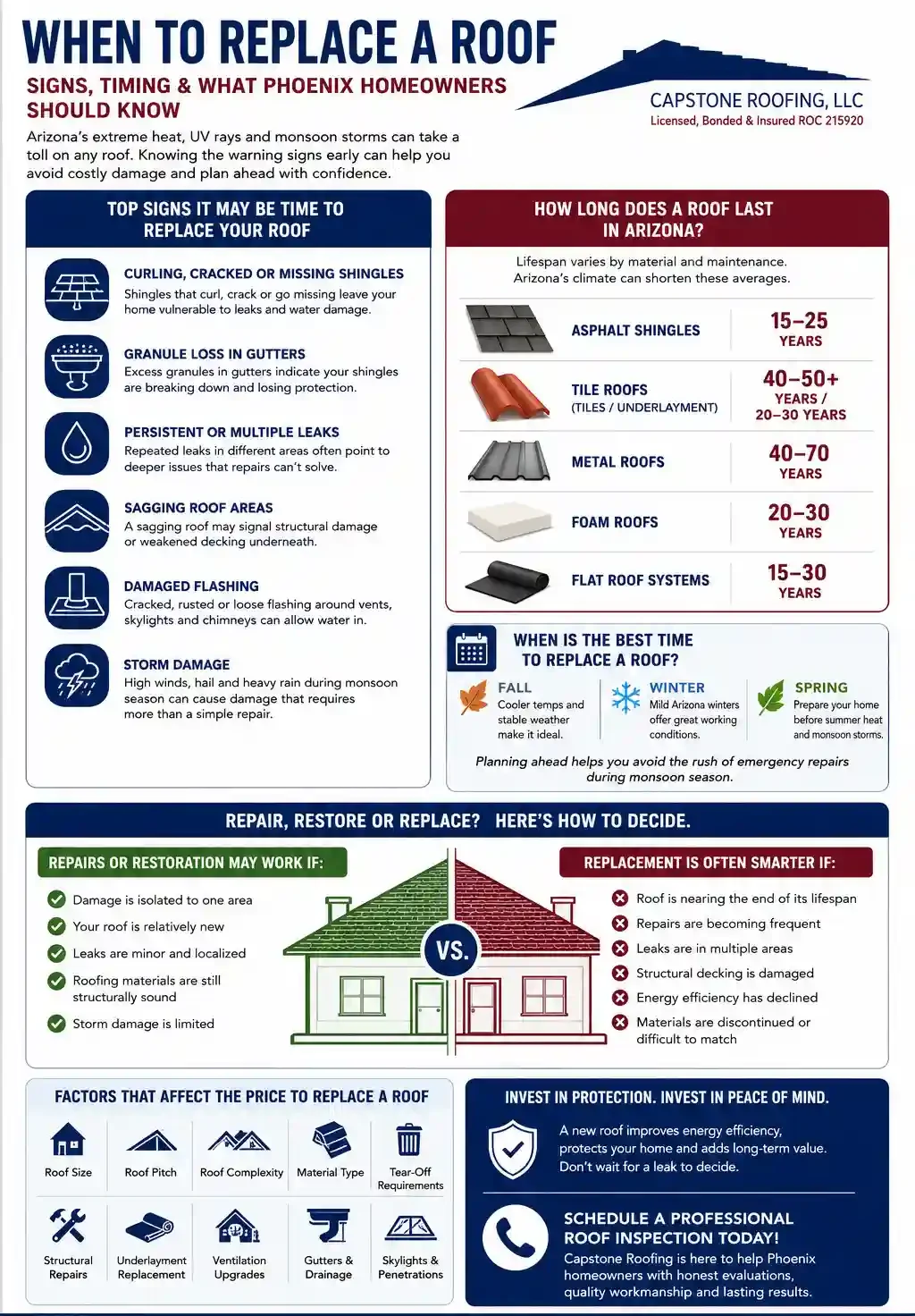
- Asphalt shingle roofs: 15–25 years
- Tile roofs: 40–50+ years for tiles, 20–30 years for underlayment
- Metal roofs: 40–70 years
- Foam roofs: 20–30 years with proper recoating
- Flat roofing systems: 15–30 years depending on material
Arizona’s extreme heat causes roofing materials to expand and contract daily. Over time, this thermal movement weakens sealants, flashing, underlayment, and fasteners. Even roofs that appear fine from the ground may have hidden deterioration underneath.
If your roof is nearing the upper end of its expected lifespan, it’s smart to schedule a professional inspection before leaks begin.
Learn more about Arizona-specific roofing systems in our guide to best roofing materials for Arizona.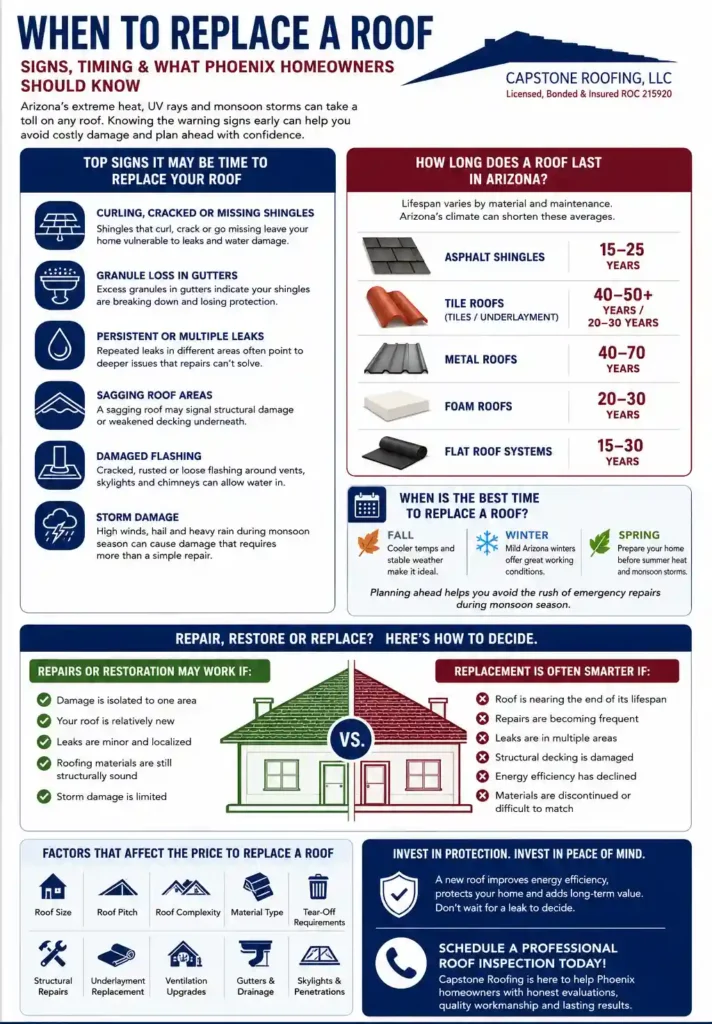
Top Signs It May Be Time to Replace Your Roof
Not every roofing problem means you need a full replacement. However, certain warning signs often indicate the roof system is reaching the end of its useful life.
1. Curling, Cracked, or Missing Shingles
If shingles are curling upward, cracking, blistering, or missing entirely, UV exposure has likely weakened the asphalt. Damaged shingles allow moisture intrusion and reduce your roof’s ability to protect the structure underneath.
This is one of the clearest indicators of when to replace roof shingles rather than continue patching isolated areas.
2. Granules Collecting in Gutters
As asphalt shingles age, they lose protective granules. If you notice excessive granule buildup in gutters or around downspouts, your roof may be deteriorating faster than expected.
Granule loss leaves shingles exposed to direct UV damage and accelerates breakdown.
3. Persistent Roof Leaks
Occasional leaks may be repairable, but repeated leaks in multiple areas often signal deeper roofing failure. Water intrusion can damage decking, insulation, drywall, and electrical systems.
Learn more about identifying hidden moisture issues in our article on roof leak detection in Arizona.
4. Sagging Roof Areas
A sagging roof line may indicate structural damage beneath the roofing material. This can result from long-term moisture intrusion, weakened decking, or deteriorating support systems.
Structural sagging typically requires more than repairs and often points toward a full roof replacement.
5. Damaged Flashing Around Roof Penetrations
Flashing around skylights, vents, chimneys, and valleys helps prevent leaks. If flashing becomes rusted, separated, or cracked, water can penetrate beneath the roof system.
Older flashing issues often appear alongside aging underlayment and roofing deterioration.
6. Monsoon Storm Damage
Phoenix monsoon storms bring high winds, debris impact, and heavy rain. Missing shingles, cracked tiles, punctures, or lifted roofing materials after a storm may require more than simple repairs.
See our guide on roof weather damage in Phoenix to understand common storm-related issues.
When to Restore vs Replace a Metal Roof
Metal roofs are known for durability, but even metal systems eventually require major repairs or replacement.
Understanding when to restore vs replace a metal roof depends on the condition of the panels, seams, fasteners, and coatings.
Metal Roof Restoration May Work If:
- Surface oxidation is minimal
- Fasteners remain structurally sound
- Leaks are isolated
- Panels are not severely warped or separated
- The roof coating system can still bond properly
Replacement May Be Necessary If:
- Rust has compromised structural integrity
- Seams are separating extensively
- Fastener failure is widespread
- Leaks occur repeatedly in multiple areas
- Panels are severely damaged by storms or age
Metal roof restoration can extend lifespan temporarily, but eventually a full replacement becomes more cost-effective than ongoing repairs.
Our metal roof repair services page explains common repair scenarios and warning signs.
Tile Roofs in Arizona: Why Underlayment Matters
Tile roofs are extremely common throughout Phoenix because they handle heat and UV exposure well. However, many homeowners mistakenly believe the tiles themselves are the waterproof barrier.
In reality, the underlayment beneath the tiles is what keeps water out.
Concrete and clay tiles can often last decades longer than the underlayment below them. In many Arizona homes, the tiles remain reusable while the underlayment requires replacement.
Signs Your Tile Roof Underlayment May Need Replacement
- Leaks during monsoon storms
- Water stains on ceilings
- Cracked or brittle underlayment during inspection
- Roof age exceeding 20–30 years
- Moisture buildup beneath tiles
Replacing tile roof underlayment while preserving existing tiles can often be more affordable than replacing the entire roof system.
Learn more about this process on our tile roof underlayment replacement page.
How to Know When to Replace a Roof Instead of Repairing It
Many homeowners try to avoid a full roof replacement for as long as possible. In some cases, repairs are absolutely the right choice. In others, repairs simply delay larger problems.
Repairs Often Make Sense When:
- Damage is isolated to one section
- The roof is relatively new
- Leaks are minor and localized
- The roofing material is still structurally sound
- Storm damage is limited
Replacement Is Often Smarter When:
- The roof is nearing end-of-life
- Repairs are becoming frequent
- Leaks occur in multiple areas
- Structural decking damage exists
- Energy efficiency has declined significantly
- Roof materials are difficult to match or discontinued
Eventually, repair costs begin adding up faster than the value they provide. At that point, investing in a new roof usually offers better long-term protection and lower maintenance costs.
For a deeper comparison, read our article on how to know whether to repair, patch, or replace your roof.
When Is the Best Time to Replace a Roof in Arizona?
Many homeowners ask when is the best time to replace a roof in Phoenix. While roofing work can happen year-round in Arizona, some seasons offer advantages.
Best Seasons for Roof Replacement
- Late fall: Cooler temperatures improve working conditions and material installation
- Winter: Mild Arizona winters often provide stable roofing weather
- Early spring: Helps prepare roofs before summer heat and monsoons
Extreme summer heat can create more difficult installation conditions, especially for asphalt shingles and certain adhesives.
Scheduling replacement before monsoon season helps reduce the risk of leaks during heavy storms.
The U.S. Department of Energy also recommends considering energy-efficient roofing materials when replacing older roofs in hot climates like Arizona.
How Arizona Heat Impacts Roof Replacement Decisions
Phoenix roofs regularly reach surface temperatures exceeding 150°F during summer. That constant heat exposure dramatically affects roofing materials.
Common Heat-Related Roofing Problems
- Shingle brittleness
- Sealant failure
- Foam roof UV degradation
- Tile movement from thermal expansion
- Cracked flashing
- Warped decking
Roofs with poor ventilation also trap additional heat inside attics, increasing cooling costs and accelerating roofing deterioration.
Explore more strategies in our guide to why roof ventilation is important.
What Does a Roof Replacement Cost?
The price to replace a roof depends on multiple variables, including:
- Roof size
- Roof pitch
- Roof complexity
- Material type
- Removal requirements
- Structural repairs needed
- Underlayment replacement
- Ventilation upgrades
- Gutter or skylight integration
According to This Old House, roofing material, labor, and roof complexity are among the biggest cost factors homeowners should evaluate.
Roofing Systems Generally Increase in Cost From:
- Basic asphalt shingles
- Architectural shingles
- Foam roofing systems
- Tile roofing systems
- Standing seam metal roofing
While full roof replacement is a major investment, continuing to repair a failing roof can become more expensive over time.
For more detailed local information, visit our guide on roof replacement costs in Phoenix.
Roof Replacement Options for Phoenix Homes
Today’s roofing systems offer more choices than ever before. Arizona homeowners often prioritize energy efficiency, durability, and storm resistance.
Popular Roofing Options in Phoenix
Asphalt Shingles
Affordable and versatile, asphalt shingles remain one of the most common residential roofing options.
Tile Roofing
Tile roofs offer long lifespan potential and strong heat resistance. They are especially common in Southwestern architecture.
Metal Roofing
Metal systems reflect solar heat effectively and provide excellent longevity.
Foam Roofing
Foam roofing systems are popular for flat and low-slope roofs due to seamless waterproofing and insulation benefits.
See our comparison guide covering foam roof pros and cons.
Should You Replace Your Own Roof?
Some homeowners consider DIY roofing to save money, but roof replacement involves major safety risks and technical installation requirements.
DIY Roof Replacement Risks Include:
- Falls and injuries
- Incorrect flashing installation
- Poor ventilation setup
- Warranty issues
- Permit and code violations
- Improper underlayment installation
- Shortened roof lifespan
Arizona roofing also requires understanding monsoon protection, ventilation requirements, thermal movement, and material compatibility.
Learn more in our article: Should You Replace Your Own Shingle Roof?
Benefits of Professional Roof Replacement
Working with experienced roofing professionals helps ensure proper installation and long-term performance.
Professional Roof Replacement Advantages
- Proper material installation
- Code-compliant work
- Improved ventilation planning
- Warranty protection
- Safer installation process
- Accurate inspections
- Storm-resistant roofing details
Professional inspections also help identify hidden issues before replacement begins.
See why many homeowners choose experienced contractors in our guide on benefits of hiring a professional roofing company for a full roof replacement.
Frequently Asked Questions
How do I know when to replace a roof?
Common signs include recurring leaks, curling shingles, sagging areas, granule loss, damaged flashing, and roof age approaching expected lifespan.
How long does a roof last in Arizona?
Arizona roofs often have shorter lifespans than national averages due to extreme heat and UV exposure. Asphalt roofs may last 15–25 years while tile and metal systems can last much longer.
When should roof shingles be replaced?
Roof shingles should typically be replaced when they become cracked, brittle, curled, missing, or when widespread granule loss occurs.
What is the best time of year to replace a roof?
Late fall, winter, and early spring generally provide the best roofing conditions in Arizona.
Can roof repairs extend roof lifespan?
Yes, targeted repairs can extend lifespan if the roof is still structurally sound and damage is isolated.
Does Arizona heat damage roofs faster?
Yes. Phoenix heat and UV exposure accelerate aging, sealant failure, and material deterioration.
How often should roofs be inspected?
Most Arizona roofs should be professionally inspected at least once per year and after major storms.
Can tile roofs be repaired instead of replaced?
Often yes. In many cases, replacing underlayment while reusing existing tiles is possible.
Are foam roofs good for Arizona?
Foam roofs are popular in Arizona because they provide seamless waterproofing and energy efficiency for flat roofs.
Can monsoon storms force early roof replacement?
Yes. Severe wind, hail, or debris impact can significantly shorten roof lifespan or cause sudden structural damage.
Schedule a Professional Roof Inspection Before Problems Get Worse
If your roof is aging, leaking, or showing signs of damage, a professional inspection can help determine whether repairs, restoration, or replacement make the most sense.
Capstone Roofing provides roof inspections, roof replacement services, tile roof underlayment replacement, foam roofing solutions, and storm damage evaluations throughout Phoenix and the East Valley.
Learn more about our roof replacement services or request a professional evaluation to better understand the condition of your roofing system.
published on Tuesday, May 19th, 2026