Do I Need My Roof Inspected Every Year?
Yes—an annual roof inspection is a smart baseline for Phoenix-area homes and businesses. The desert climate is tough on roofing: intense UV breaks down materials over time, dust and debris collect in valleys and drains, and monsoon storms can loosen flashing, blow debris onto the roof, or drive rain under weakened seals.
If you want more on roofing systems and maintenance topics, check out Capstone Roofing’s roofing resources.
How often should you get a roof inspection?
Roof inspection frequency depends on roof age, material, design (flat vs. pitched), and exposure. A practical framework for Phoenix:
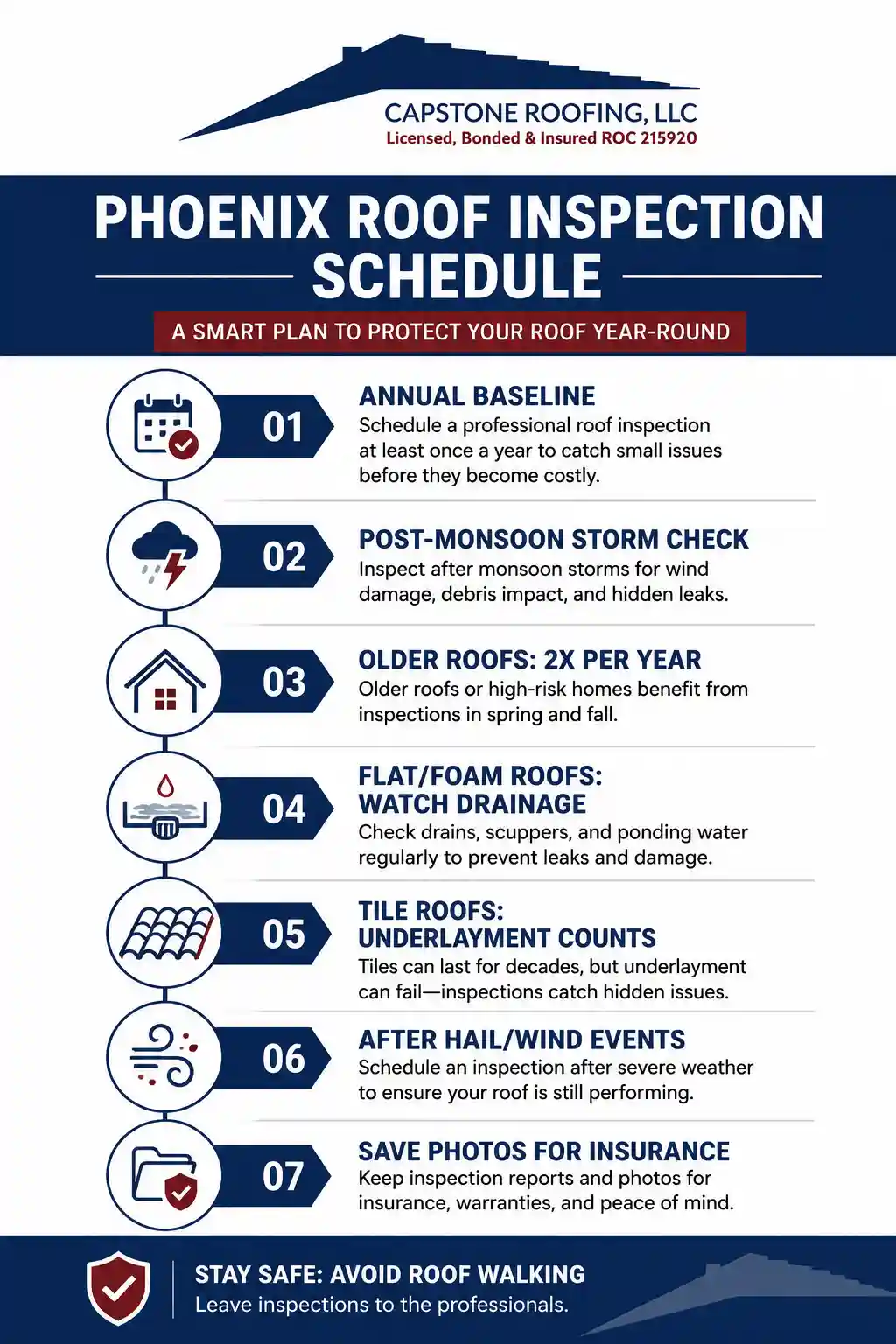
- Annual baseline: at least once per year, ideally timed to your most extreme weather.
- After severe weather: schedule an inspection (or at minimum a visual check) after monsoon events with high wind, hail, or heavy debris.
- Older roofs or complex roofs: consider a twice-yearly cadence—especially if you have aging shingles, lots of tree coverage, skylights, or a flat/foam system.
If you prefer industry guidance, NRCA guidance on inspection frequency emphasizes routine inspections and checking roofs after severe storms.
What’s included in a professional roof inspection?
A professional roof inspection looks for vulnerabilities that become leaks, energy loss, or structural issues if they’re ignored. While details vary by roof type, most inspections cover:
- Roof covering condition: shingles, tile, metal, foam, or coating wear; cracking; blistering; missing pieces; premature aging from UV.
- Flashing and transitions: areas where leaks commonly start—chimneys, skylights, walls, roof-to-wall transitions, valleys, and penetrations.
- Drainage: gutters, scuppers, downspouts, and flat-roof drains to ensure water moves off the roof instead of ponding.
- Seals and joints: sealant integrity around penetrations (vents, pipes, HVAC curbs).
- Ventilation and insulation indicators: signs of heat buildup, moisture issues, or attic ventilation problems that shorten roof life.
- Interior indicators: ceiling staining, attic moisture, or wood discoloration that can point to slow leaks.
For a deeper list of component-by-component checkpoints, you can review InterNACHI roof inspection checklist basics and compare what you’re getting from a local inspection.
Also see what Capstone covers in what roofers check during a roof inspection.
Roof inspections and monsoon season
Monsoon storms matter for inspection timing because damage isn’t always obvious. Wind uplift can break seals without tearing off visible material. Debris can block drains. Driving rain can get under weak flashing. A good approach:
- Pre-monsoon inspection: verify drainage and vulnerable flashing areas are sound.
- Post-storm check: look for fresh debris piles, blocked scuppers, missing tiles, or damaged sealant.
If you’re planning ahead for storm season, you might also read how to prepare your roof for monsoon season.
Roof inspection after replacement
If you recently replaced your roof, inspections are still useful because “new” doesn’t mean immune to storms. Consider scheduling:
- An inspection within the first year (especially after monsoon season) to confirm flashing, sealing, and drainage are performing as intended.
- After major weather events if you’re unsure whether wind or debris caused subtle damage.
- Ongoing inspections tied to your roof’s warranty and maintenance plan (if applicable).
Roof inspection requirements: insurance, HOA, and lenders
Some inspections aren’t just preventative—they’re required by an insurer, HOA, or lender. Requirements vary, but common triggers include:
- Older roofs or roofs near the end of their expected service life.
- Policy renewal or new policy binding where the carrier wants proof of condition.
- Visible risk factors such as damaged covering, missing shingles/tiles, or clogged drainage.
The Triple-I guidance on roof condition and insurance explains how roof age and condition can impact coverage decisions.
For a deeper overview of coverage-specific inspections, see roof inspections for insurance coverage.
How much do roof inspections cost?
Roof inspection pricing varies by roof type, roof size, pitch, accessibility, and whether reporting (photos, written summary, moisture readings) is included. Instead of assuming a price, focus on:
- Scope: what areas are inspected and what reporting you receive.
- Safety and method: ground-only, ladder access, drone assist, thermal imaging, etc.
- Timing: whether it’s a routine inspection or tied to a recent storm event.
If cost is important to you, ask for a clear scope in writing and confirm whether the inspection includes recommendations only or a quote for repairs.
DIY checks between professional inspections (stay safe)
A professional inspection is the best way to assess roof condition, but between annual visits you can do safe, ground-level monitoring:
- Watch for missing or displaced shingles/tiles.
- Look for warping, cracking, or discoloration.
- Check for piles of debris in valleys or at drains.
- Look for new stains or sagging indoors.
Learn more about early warning signs in how to spot roof damage and what discoloration can mean in brown spots on the ceiling.
Arizona roof types: flat roofs, tile roofs, and foam systems
Roof type influences inspection cadence:
- Flat roofs & foam systems: drainage is critical—ponding water and blocked scuppers accelerate aging.
- Tile roofs: tiles can look intact while underlayment deteriorates beneath them, especially in heat and UV.
- Metal roofs: look for fastener issues, flashing movement, and sealant wear at penetrations.
Tile owners can learn more about underlayment considerations in tile roof underlayment in Arizona, and flat/foam roof owners can keep upkeep top-of-mind with foam roof maintenance in Arizona.
Roof inspection frequency: a quick schedule
Use this as a Phoenix-friendly starting point:
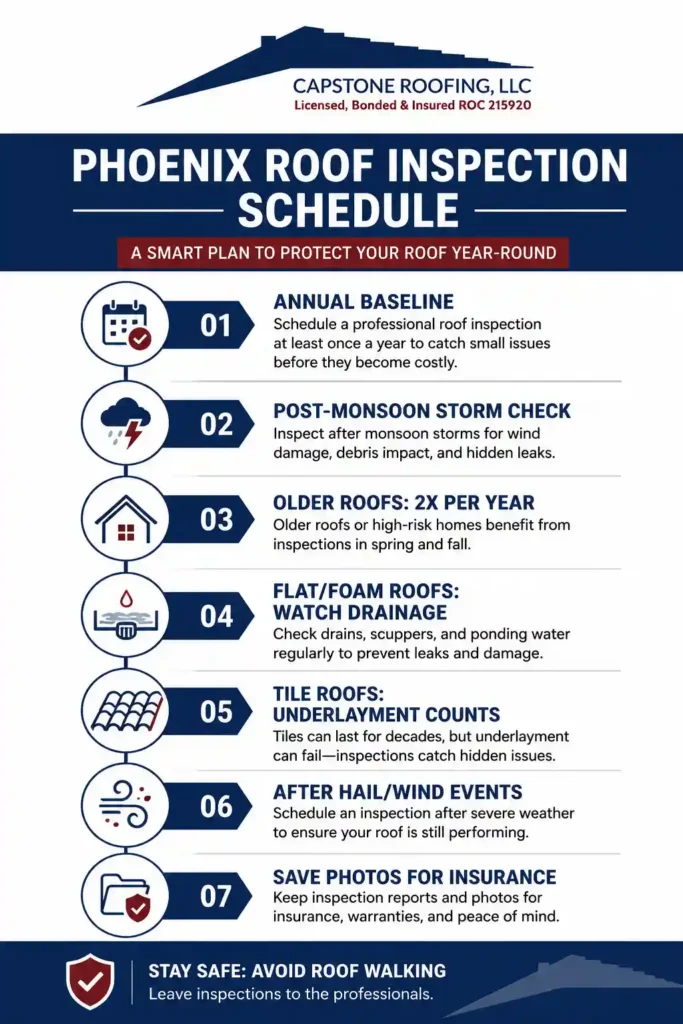
- Healthy roof (annual): once per year, plus a quick check after major monsoon storms.
- Older roof or high-risk factors: twice per year (often spring and fall).
- After replacement: within the first year + after any major storm.
- After emergencies: schedule promptly—especially if you see active leaks or significant debris accumulation.
FAQ: roof inspections in Phoenix
Do I really need an annual roof inspection?
Yes—annual inspections catch minor issues before they become leaks, especially in Phoenix heat and monsoon conditions.
How often should I have my roof inspected?
At least once a year, and consider twice-yearly if your roof is older, complex, or exposed to heavy debris and storms.
What is included in a roof inspection?
Typically covering, flashing, drainage, seals, ventilation indicators, and interior signs of moisture.
Should I get a roof inspection after a replacement?
Yes—storms can stress new roofs. An inspection within the first year helps confirm performance.
How much do roof inspections cost?
Cost depends on roof type, scope, accessibility, and reporting; clarify the scope before comparing providers.
Are roof inspections required for insurance?
Sometimes. Requirements vary, but older roofs and policy changes may trigger an inspection.
Can I inspect my roof myself?
You can monitor from the ground for obvious changes, but a full inspection is best left to professionals.
When is the best time to inspect in Phoenix?
Often around monsoon season planning—before and/or after the highest storm risk periods.
Do flat roofs need more frequent inspections?
They often benefit from closer monitoring because drainage problems can escalate quickly.
What should I do if I see brown spots on the ceiling?
Call a professional quickly; brown spots can indicate moisture intrusion and should be investigated.
What roof problems can an inspection prevent?
Leak escalation, wood rot, energy efficiency loss, and premature aging from UV and trapped moisture.
Where can I schedule an inspection with Capstone Roofing?
For an informational overview and next-step guidance, visit Capstone Roofing’s page on roof inspections.
published on Friday, May 22nd, 2026