Monsoon Season Roofing Tips: How to Prepare Your Roof
Arizona’s monsoon season can bring sudden downpours, powerful wind gusts, blowing dust, falling tree branches, lightning, and wind-driven debris. A roof that handled months of dry weather without an obvious problem may begin leaking as soon as heavy rain exposes a cracked tile, deteriorated seal, loose flashing, clogged drain, or worn section of underlayment.
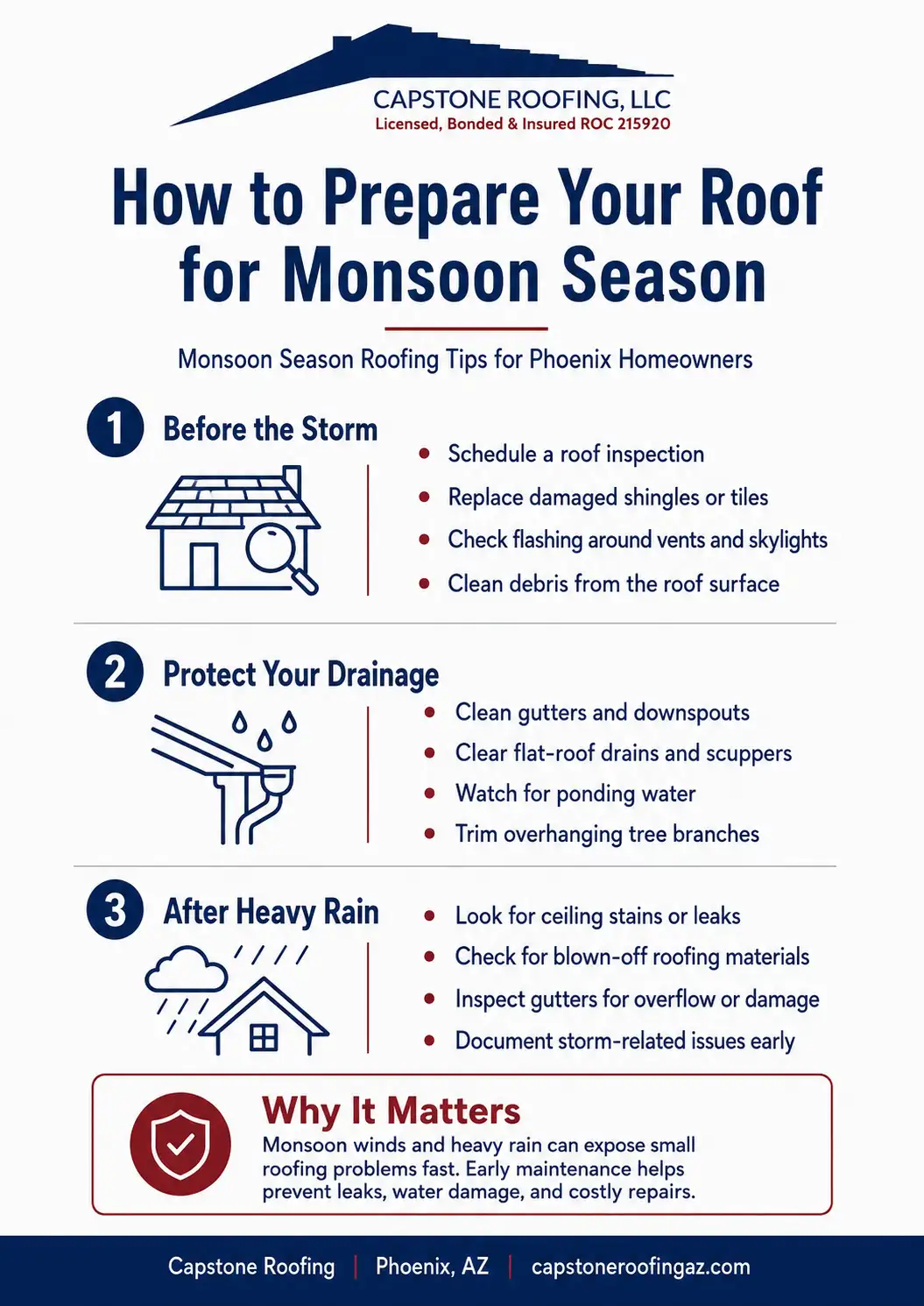
Preparing early gives you time to identify these problems before the first major storm reaches the Phoenix area. The most useful monsoon season roofing tips focus on inspection, drainage, minor repairs, tree maintenance, documentation, and safe post-storm checks. You do not need to assume that every older roof requires replacement. You do, however, need to know whether the roof has weak areas that could allow rainwater to reach the roof deck, attic, insulation, ceilings, walls, or electrical systems.
This guide explains how to prepare tile, shingle, foam, flat, metal, built-up, and single-ply roofs for Arizona’s rainy season. It also covers monsoon gutters, roof drainage, common homeowner mistakes, warning signs to watch for, and what to do after a storm.
Why Arizona Monsoon Storms Are Hard on Roofing Systems
Arizona’s monsoon is more than a period of occasional rain. The National Weather Service defines the Southwest monsoon season as June 15 through September 30 and identifies damaging winds, dust storms, lightning, flash flooding, and severe thunderstorms as common hazards. Homeowners can review current alerts and regional safety guidance through the National Weather Service Phoenix Monsoon Safety page.
Roofing systems in Phoenix spend much of the year exposed to extreme heat, dry air, dust, and ultraviolet radiation. Those conditions can gradually dry out sealants, age underlayment, weaken exposed coatings, and cause roofing materials to expand and contract. Monsoon rain may not create the original weakness. Instead, it reveals damage that developed during the dry months.
A typical storm can affect a roof in several ways:
- Strong wind can lift loose shingles, shift tiles, bend metal edges, and stress roof-mounted equipment.
- Wind-driven rain can enter beneath roofing materials that normally shed vertical rainfall.
- Tree limbs, gravel, patio furniture, and other debris can strike or puncture the roof.
- Dust and plant debris can block scuppers, gutters, valleys, drains, and downspouts.
- Heavy rainfall can expose low areas where water ponds instead of draining properly.
- Hail can dent metal, damage coatings, fracture tiles, and loosen granules from asphalt shingles.
- Repeated wetting can worsen small openings around vents, flashing, skylights, and roof transitions.
These conditions explain why roof leaks become more common during Phoenix monsoon storms. The leak may appear suddenly, but the vulnerable area may have existed for months or years.
When Should You Begin Seasonal Roof Maintenance?
The best time to begin seasonal roof maintenance is before storms become frequent. Late spring and early summer usually provide a better window for inspections, cleaning, and repairs than the middle of an active storm cycle.
Once widespread rain arrives, roofing companies often receive a surge of calls from property owners who have active leaks, missing materials, storm debris, or interior water damage. Emergency conditions naturally take priority, and schedules can become crowded. Preparing early gives you more time to understand the roof’s condition, compare repair options, and complete necessary work without making a rushed decision while water is entering the building.
A practical maintenance schedule includes:
- A thorough inspection before monsoon season
- A visual ground-level check after major wind or hail events
- An interior check during or shortly after heavy rainfall
- A follow-up inspection after the season when significant storms occurred
- Routine maintenance throughout the year based on the roofing system and its age
Homeowners who are unsure how frequently their roofing system should be evaluated can review guidance on how often to schedule a roof inspection in Phoenix. Roof age, previous repairs, nearby trees, drainage design, and past leak history can all affect the recommended timing.
My Roof Is Not Leaking. Do I Still Need a Monsoon Roof Inspection?
A roof does not have to be actively leaking to benefit from a monsoon roof inspection. In many cases, the purpose of an inspection is to find the conditions that may cause the next leak.
Homeowners frequently assume that no ceiling stain means no roof problem. That is not always true. Water can travel along underlayment, rafters, pipes, insulation, or roof decking before it becomes visible inside a room. Some damage remains dry until wind pushes rain beneath tile, shingles, flashing, or a roof edge from a particular direction.
A pre-monsoon inspection can identify issues such as:
- Cracked, slipped, or missing roof tiles
- Loose, lifted, curled, or damaged shingles
- Exposed fasteners and deteriorated sealant
- Cracks or worn areas in a foam roof coating
- Open membrane seams on a flat roof
- Damaged flashing around vents and skylights
- Blocked valleys, scuppers, drains, and downspouts
- Evidence of ponding water
- Soft areas or staining that may indicate trapped moisture
- Loose fascia, edge metal, or roof-mounted components
A professional inspection is especially useful when the roof is difficult to access, has a steep slope, includes fragile tile, has experienced prior leaks, or is approaching the later years of its expected service life. Capstone’s overview of what roofers check during a roof inspection explains how roofing materials, penetrations, drainage components, and interior warning signs are evaluated together.
Monsoon Season Roofing Tips: A Complete Preparation Checklist
Preparing a roof for monsoon season requires more than looking for missing materials. The roof covering, underlayment or membrane, penetrations, edges, drainage system, nearby trees, attic, ceilings, and surrounding property all work together. Use the following checklist to evaluate the complete system.
1. Inspect the Roof From the Ground First
Begin with a ground-level walk around the property. Binoculars or a camera with zoom can help you identify visible concerns without climbing onto the roof.
Look for:
- Uneven tile lines
- Missing or broken tiles
- Shingles that appear lifted, curled, torn, or absent
- Loose metal along roof edges
- Branches touching the roof
- Debris in valleys or behind chimneys
- Displaced ridge materials
- Damaged gutters or downspouts
- Roof-mounted equipment that appears tilted or loose
- Previous repair materials that look cracked or separated
Do not climb onto a wet, steep, brittle, or unfamiliar roof. Walking on tile can break roofing materials, and foam or membrane roofs can be punctured by improper footwear or foot traffic. A professional inspection is safer when the roof cannot be evaluated adequately from the ground.
2. Check Tile Roofs for More Than Broken Tiles
Concrete and clay tile roofs are common across the Phoenix metro area. Tile is durable and sheds water well, but the tile is not the only part of the waterproofing system. The underlayment beneath it provides a critical secondary barrier.
During preparation, look for cracked, slipped, chipped, or missing tiles. Pay particular attention to roof valleys, transitions, penetrations, ridges, hips, and areas where people have previously walked. Tiles that are out of position can expose the underlayment to ultraviolet light and wind-driven rain.
It is also important to understand that a tile roof may look acceptable from the street while the underlayment beneath it is aging. Warning signs can include recurring leaks, staining near valleys or penetrations, brittle exposed underlayment, previous patchwork, and repeated movement of roof tiles.
Homeowners with older tile roofs may benefit from reading about how long tile roof underlayment lasts in Arizona. The actual condition depends on the material, installation, exposure, ventilation, maintenance history, and roof design rather than age alone.
3. Check Shingle Roofs for Wind and Heat Damage
Asphalt shingles can become less flexible after years of intense Arizona heat. During a shingle roof inspection, look for lifted corners, curling edges, torn tabs, missing shingles, exposed nails, cracked surfaces, and granules collecting near downspouts.
A small lifted area can become more vulnerable when wind reaches beneath the shingle. Once a shingle tears or pulls free, the underlayment and roof deck may be exposed to direct rainfall.
Check roof edges carefully because wind pressure often affects eaves, rakes, and corners. Flashing and drip edges should remain secure. Previous repairs should be examined for loose materials, dried roofing cement, or fasteners that have backed out.
Do not assume that a few loose shingles automatically mean the entire roof must be replaced. Localized damage may be repairable when the surrounding materials remain serviceable. However, widespread curling, brittleness, granule loss, or repeated failures may indicate a larger maintenance issue.
4. Examine Foam Roofs and Protective Coatings
Spray polyurethane foam roofing is frequently used on low-slope and flat roofs in Arizona. The foam creates insulation and slope, while the protective coating shields it from sunlight and weather exposure.
Before monsoon season, examine the roof for cracks, blisters, exposed foam, worn coating, bird damage, punctures, open areas around penetrations, and low spots that hold water. Small coating defects can allow ultraviolet exposure to degrade the foam underneath.
Drainage is particularly important on foam roofs. Water should move toward scuppers, drains, or roof edges without remaining in broad low areas. Remove debris that could redirect water or block drainage paths.
Foam roof owners should follow an ongoing maintenance plan rather than waiting for a visible leak. This guide to foam roof maintenance in Arizona explains why coating condition, penetrations, drainage, and timely repairs matter in a desert climate.
5. Inspect Flat Roof Membranes and Built-Up Roofs
Flat and low-slope roofs depend heavily on properly functioning membranes, seams, flashing, drains, and scuppers. Even a durable system can develop weak points where water repeatedly collects or where the membrane meets walls, curbs, pipes, and equipment.
Look for:
- Open seams
- Cracks or splits
- Blisters or bubbles
- Loose edge materials
- Punctures caused by foot traffic or debris
- Separated flashing
- Exposed reinforcement
- Damaged roof coating
- Standing water marks
- Debris around drains and scuppers
Ponding water deserves attention because it may indicate a clogged drain, compressed insulation, structural deflection, or inadequate slope. A small amount of water immediately after rain may drain as designed, but water that remains for an extended period should be evaluated.
Commercial property owners should also inspect roof-mounted units, equipment curbs, walk pads, pipe supports, and areas used by maintenance crews. Service activity can damage a membrane even when the roofing material itself is relatively new.
6. Examine Flashing Around Roof Penetrations
Flashing helps direct water away from openings and transitions. It is installed around plumbing vents, chimneys, walls, skylights, HVAC curbs, roof edges, and other penetrations. These areas are common leak points because different materials expand, contract, and move at different rates.
Look for rust, cracks, loose edges, missing fasteners, open joints, deteriorated sealant, and gaps between the flashing and surrounding roofing material. A bead of sealant should not be treated as a permanent substitute for correctly installed flashing, but properly maintained sealant can be an important part of specific details.
Pipe boots and vent flashings deserve close attention. Arizona heat can dry and crack rubber components, while metal pieces may loosen or separate. Rain pushed sideways by wind can enter openings that do not leak during light, vertical rainfall.
7. Check Skylights and Roof-Mounted Features
Inspect skylight lenses, curbs, flashing, seals, fasteners, and surrounding roofing materials. Cracked domes, aging gaskets, separated flashing, and deteriorated sealant can allow wind-driven rain to enter.
Roof-mounted solar equipment, antennas, satellite dishes, HVAC units, and conduit should also be checked. The roofing materials around attachment points must remain sealed, and loose equipment should be corrected before high winds arrive.
From inside the building, examine the ceiling and drywall below skylights for stains, bubbling paint, discoloration, or softened materials. A stain may be caused by the skylight itself, the surrounding flashing, condensation, or a nearby roof defect, so the source should be confirmed before repairs are made.
8. Remove Roof Debris Without Damaging the Surface
Leaves, seed pods, branches, bird nesting material, dust, and construction debris can interrupt water flow. Debris often gathers in valleys, behind parapet walls, around penetrations, near drains, and beneath roof-mounted equipment.
On sloped roofs, trapped debris can slow runoff and direct water beneath tiles or shingles. On flat roofs, debris can block scuppers and drains, allowing water to spread into areas that are not designed for prolonged ponding.
Use methods that will not scrape coatings, puncture membranes, crack tile, or force debris into a drain. Heavy branches and sharp objects should be removed carefully. Contractors who work on rooftop equipment should also be asked to remove discarded screws, wire, metal pieces, and packaging after completing their work.
9. Clean and Test Your Gutters
Monsoon gutters must handle intense rainfall over a short period. Leaves, roof granules, twigs, mud, bird nests, and other debris can reduce their capacity or block the downspouts entirely.
Remove debris from the gutter channels and downspout openings. Then test the system with water when conditions are safe. Watch for slow drainage, leaks at seams, water spilling behind the gutter, sagging sections, and downspouts that back up.
Gutters should remain securely attached and properly sloped toward the outlets. Loose hangers can allow the gutter to pull away under the combined weight of water and debris. Water escaping behind the gutter may affect fascia, soffits, walls, windows, landscaping, and areas near the foundation.
Properties with aging or repeatedly leaking gutter systems may benefit from understanding why seamless gutters are commonly used in Phoenix. Fewer field seams may reduce potential leak locations, although correct sizing, slope, outlet placement, and installation remain essential.
10. Clear Downspouts, Scuppers, and Roof Drains
Cleaning the gutter channel is not enough when the outlet remains blocked. Confirm that water can travel through downspouts and discharge away from the structure.
Flat roofs may use scuppers, internal drains, overflow drains, or a combination of systems. Each opening should be free of debris. Strainers should be present, secure, and clean. Secondary overflow paths should not be sealed or blocked because they may provide a warning or an alternate drainage route when the primary system cannot keep up.
Never assume an internal drain is clear just because the roof opening looks clean. Debris can collect farther inside the line. Slow drainage, gurgling, backups, and water returning through another opening may indicate a blockage that requires professional attention.
11. Make Sure Water Discharges Safely
Many homeowners ask, “How much rain comes off my roof?” The exact amount depends on roof area and rainfall depth, but even a modest storm can send a large volume of water through gutters and downspouts.
One inch of rain falling on 1,000 square feet of roof represents roughly 623 gallons of water before accounting for small losses. That means a 2,000-square-foot drainage area may need to direct approximately 1,246 gallons during a one-inch rainfall event.
This is why downspout placement and discharge matter. Water should not empty directly against the foundation, into a doorway, across a walkway, or into a low area beside the home. Use appropriate extensions, splash blocks, grading, or approved drainage systems to move runoff to a safe location.
Do not connect or redirect drainage in a way that creates a new problem for neighboring properties, public sidewalks, retaining walls, or structural components. Local drainage requirements may apply to major modifications.
12. Trim Trees Before High Winds Arrive
Branches that hang over a roof can scrape roofing materials, drop debris into valleys and gutters, or break during a storm. Dead, diseased, split, or poorly attached limbs present the greatest concern.
Trim trees far enough from the roof to prevent routine contact. Avoid cutting large limbs without the necessary experience, equipment, and understanding of tree health. A qualified tree professional may be needed when branches are large, near electrical lines, or positioned over the building.
After trimming, remove branches and loose debris from the property. Do not leave piles of lightweight material where storm winds can carry them back onto the roof.
13. Secure Loose Items Around the Property
Patio umbrellas, furniture, decorations, shade fabric, garbage cans, toys, tools, and temporary structures can become airborne during strong wind. These items may strike roofing materials, windows, vehicles, or neighboring properties.
Secure or bring loose items indoors before a storm. Check shade structures, pergolas, awnings, fencing, exterior panels, and storage sheds for loose pieces. Rooftop accessories should be attached according to their intended design rather than held in place with improvised weights that could shift or puncture the roof.
14. Inspect the Attic and Interior Ceilings
Roof preparation should include an interior inspection. Enter the attic only when it is safe, adequately ventilated, and accessible. Avoid stepping between framing members or disturbing electrical wiring and insulation.
Look for:
- Dark stains on wood decking or rafters
- Wet or compressed insulation
- Rust around fasteners
- Musty odors
- Daylight entering through unintended openings
- Water marks around vents, chimneys, or roof valleys
- Peeling paint or bubbling drywall
- Discoloration on ceilings and upper walls
Remember that the visible stain may not be directly below the roof opening. Water can travel before dripping. A proper inspection should trace the moisture path rather than patching only the ceiling area.
Ceiling discoloration should be investigated even when it feels dry. Capstone’s guide to brown spots and water stains on ceilings explains several reasons these marks can appear and why the source should be identified.
15. Complete Necessary Repairs Before the First Major Storm
Once an inspection identifies a concern, determine whether it needs monitoring, maintenance, repair, or broader replacement. Small repairs can include replacing isolated shingles or tiles, resealing an appropriate flashing detail, correcting a minor membrane defect, cleaning drainage components, or repairing a localized coating issue.
More extensive work may be necessary when damage is widespread, underlayment is deteriorated, a membrane has numerous open seams, the roof deck is damaged, or repeated repairs are no longer resolving the problem.
A reputable assessment should explain what is damaged, why it matters, what work is recommended, and whether alternatives exist. Be cautious of conclusions based only on roof age without an inspection, as well as promises that a temporary surface treatment will resolve every type of leak.
How Monsoon Rain Affects Different Arizona Roof Types
Monsoon rain affects each roofing system differently. Understanding the likely weak points can make inspections and maintenance more useful.
Tile Roofs
Tile roofs are designed to shed water, but broken, shifted, or improperly installed tiles can expose the underlayment. Wind-driven rain may move beneath tile through laps, valleys, ridges, and penetrations. The underlayment becomes especially important when rain arrives from the side rather than falling straight down.
Do not apply random caulk between individual tiles as a general leak solution. Tile roofs are designed to drain in a specific way, and improper sealing can redirect or trap water. Repairs should address the actual tile, flashing, batten, valley, or underlayment condition.
Asphalt Shingle Roofs
Shingles rely on correct fastening, sealing, overlap, and underlayment. Heat-aged shingles may become brittle, while wind can lift tabs or remove already loosened materials. Heavy rain can then reach exposed underlayment or decking.
Check the yard and gutter outlets after storms for displaced shingles or an unusual amount of granules. Granules protect the asphalt from ultraviolet exposure, although some normal shedding can occur depending on the roof’s age and condition.
Foam Roofs
A foam roof’s protective coating is its main defense against sunlight and weather. Cracks, exposed foam, punctures, and worn coating should be corrected before repeated rainfall. Water collecting in low areas may accelerate deterioration and expose drainage problems.
Built-Up and Modified Bitumen Roofs
Built-up and modified bitumen systems may develop splits, blisters, open laps, loose flashing, damaged surfacing, and ponding areas. Gravel-surfaced roofs can also experience displaced aggregate during strong wind. Drains and scuppers must remain open to prevent water from spreading across the roof.
Single-Ply Roofs
TPO, PVC, and other single-ply membranes depend on welded or bonded seams, intact flashing, secure perimeter attachment, and protection from punctures. Inspect seams, corners, penetrations, equipment areas, and roof edges. Even a small puncture can admit water beneath a broad membrane area.
Metal Roofs
Metal roofs generally shed water efficiently, but fasteners, seams, closures, flashing, coatings, penetrations, and perimeter details still require inspection. Thermal expansion can affect joints and sealants over time. Hail or debris may dent panels without creating a leak, so the complete assembly should be evaluated before repairs are recommended.
Common Monsoon Roof Preparation Mistakes
Many roof problems become worse because of well-intentioned but incomplete maintenance. Avoid these common mistakes.
Waiting for a Leak Before Scheduling an Inspection
Interior water is a late-stage warning sign. By the time a ceiling stain appears, moisture may have already affected insulation, wood, drywall, or other materials. Preventive inspection is meant to identify vulnerabilities before that happens.
Assuming a Roof That Looks Fine From the Street Has No Damage
Ground-level checks are valuable but limited. Underlayment, membrane seams, flashing details, small punctures, drainage low points, and concealed transitions may not be visible from below.
Walking on the Roof Without Understanding the Material
Improper foot traffic can crack tiles, damage foam coatings, puncture membranes, and create new leaks. It can also expose the homeowner to serious fall risks. Use a professional when roof access is unsafe or when the roofing surface requires specialized walking techniques.
Using Caulk as a Universal Repair
Sealant has legitimate roofing applications, but it does not replace missing flashing, failed underlayment, damaged membranes, incorrect drainage, or deteriorated roof materials. Applying sealant over an unknown leak source may hide the opening temporarily while water continues moving beneath the surface.
Cleaning Gutters but Ignoring Downspouts
A clean gutter cannot function when the downspout or underground connection is blocked. Test the complete path from roof edge to final discharge point.
Blocking Overflow Drainage
Secondary scuppers and overflow drains are part of the roof’s protection. Blocking them can remove an important warning sign and allow water levels to rise when the primary drain is clogged.
Replacing Visible Tile Without Checking Underneath
A cracked tile may be only the visible problem. The impact that broke it may have damaged the underlayment, battens, flashing, or surrounding tile. The area beneath the damaged material should be examined when appropriate.
Hiring the First Storm Chaser Who Appears
After widespread storm damage, unfamiliar contractors may begin canvassing neighborhoods. Homeowners should verify licensing, insurance, business history, written scope, warranty terms, and local references before authorizing work. Read more about what roofing storm chasers do after severe weather before signing an agreement based on urgency alone.
What Should You Do While a Monsoon Storm Is Happening?
Do not climb onto the roof during rain, wind, lightning, or blowing dust. Roof surfaces become slippery, visibility may be poor, and strong gusts can arrive suddenly.
When water appears inside:
- Move furniture, electronics, and valuables away from the affected area.
- Place a container beneath an active drip when it can be done safely.
- Do not touch wet wiring, fixtures, outlets, or electrical equipment.
- Avoid standing beneath sagging drywall or bulging ceiling materials.
- Photograph the water and affected areas from a safe location.
- Note the time, storm conditions, and rooms involved.
- Contact an appropriate roofing professional after immediate safety concerns are addressed.
Do not enter an attic during lightning, severe wind, or active leaking when electrical hazards or unstable materials may be present. Emergency preparedness guidance for severe storms, power interruptions, and household supplies is also available through Ready.gov thunderstorm and lightning safety resources.
How to Check Your Roof After a Monsoon Storm
Once the storm has passed and conditions are safe, perform a ground-level inspection. Do not assume the roof is undamaged simply because no water entered the home.
Check for:
- Missing shingles or tiles
- Tile fragments in the yard
- Branches or other debris on the roof
- Loose gutters, downspouts, or fascia
- Dented or displaced metal components
- Water overflowing from gutters or scuppers
- New ceiling stains or damp odors
- Granules collecting at downspout outlets
- Damaged skylights or roof-mounted equipment
- Standing water visible on low-slope roof areas
Take wide photographs of the building and closer images of visible damage from safe locations. Keep records of the storm date, repair estimates, inspection reports, invoices, and communications. Documentation can help distinguish new storm damage from pre-existing wear.
A severe storm does not automatically mean that a roof needs replacement. The appropriate response depends on the type, location, and extent of damage. Capstone’s overview of how to spot roof damage can help homeowners recognize exterior and interior warning signs.
When wind, hail, falling debris, or heavy rainfall has caused confirmed damage, professional storm damage roof repair may include temporary protection, debris removal, material replacement, flashing repairs, drainage correction, leak tracing, and documentation of affected areas.
Does Every Monsoon Roof Leak Require Replacement?
No. A monsoon roof leak does not automatically require a complete roof replacement.
A localized leak may be caused by a damaged tile, open flashing joint, punctured membrane, deteriorated pipe boot, blocked drain, loose shingle, or small coating defect. These conditions may be repairable when the surrounding roof remains in serviceable condition.
Replacement may become more reasonable when:
- The roofing material is extensively deteriorated.
- Tile underlayment has failed across multiple areas.
- A flat roof membrane has widespread seam or moisture problems.
- The roof deck has significant water damage.
- Leaks recur in different locations.
- Prior repairs have not addressed the underlying issue.
- Compatible repair materials are unavailable.
- The expected remaining service life is limited compared with the repair cost.
The decision should consider roof condition, not merely the fact that a storm occurred. A detailed assessment can help separate a repairable storm opening from widespread age-related deterioration.
When Should You Call for Monsoon Roof Repair?
Contact a roofing professional when you notice active water entry, displaced roofing materials, storm debris impacts, open membrane seams, significant ponding, damaged flashing, or conditions that cannot be inspected safely.
Other reasons to request a professional evaluation include:
- A ceiling stain grows after each storm.
- A repair has failed more than once.
- You smell damp insulation or musty materials.
- Roof tiles have moved in several areas.
- Shingles are missing after high winds.
- A foam roof has exposed or deteriorated material.
- A flat roof drain repeatedly backs up.
- A tree limb has struck the building.
- A skylight begins leaking during wind-driven rain.
- You need documentation of the roof’s post-storm condition.
For active or recurring leaks, professional roof leak detection can help trace the moisture path and identify the actual entry point rather than focusing only on the interior stain.
A Simple Pre-Monsoon Roof Maintenance Timeline
Four to Eight Weeks Before Frequent Storms
- Schedule a professional inspection when needed.
- Trim trees and remove dead branches.
- Review previous repair records and leak locations.
- Inspect ceilings, attic areas, and skylights.
- Plan any larger repairs while scheduling is more flexible.
Two to Four Weeks Before Frequent Storms
- Complete recommended repairs.
- Clean gutters, drains, scuppers, and downspouts.
- Remove roof debris.
- Test drainage paths.
- Secure loose outdoor items and roof-mounted components.
Before a Forecasted Severe Storm
- Bring loose furniture, umbrellas, tools, and decorations indoors.
- Confirm that drainage openings remain clear.
- Close and secure windows and exterior doors.
- Move valuables away from areas with a history of leaks.
- Review weather alerts and household safety plans.
After a Major Storm
- Inspect the property from the ground.
- Check ceilings, walls, and attic areas for new moisture.
- Photograph visible damage.
- Remove safe, accessible ground debris.
- Arrange an inspection when damage is suspected.
After Monsoon Season
- Review any leaks or drainage problems that occurred.
- Check repairs completed during the season.
- Clean accumulated debris.
- Address maintenance that was postponed during active storms.
- Keep inspection reports and photographs with property records.
Frequently Asked Questions About Monsoon Roof Preparation
How do I prepare my roof for monsoon season?
Inspect the roof for damaged materials, clean gutters and drainage openings, examine flashing and penetrations, trim overhanging branches, remove debris, check the attic and ceilings, and complete necessary repairs before frequent storms begin. Secure loose outdoor items that could become airborne during strong wind.
When should I schedule a monsoon roof inspection?
Schedule the inspection before frequent monsoon storms arrive, preferably with enough time to complete repairs. An additional inspection may be appropriate after a severe wind, hail, or debris event or after the season if the roof experienced repeated heavy rain.
Can a roof be damaged even when it is not leaking?
Yes. Cracked tiles, lifted shingles, open seams, worn coatings, deteriorated flashing, and damaged underlayment may exist before water becomes visible indoors. A leak may appear only when rain arrives from a certain direction or when a storm overwhelms drainage.
What are the most important monsoon season roofing tips?
The most important steps are inspecting early, repairing damaged materials, keeping drainage systems clear, checking flashing and penetrations, trimming nearby trees, documenting the roof’s condition, and performing a safe inspection after major storms.
Should I walk on my tile roof to inspect it?
Walking on a tile roof can crack tiles and creates a fall risk. Homeowners should begin with a ground-level inspection and use a qualified roofing professional when close access is necessary. Proper walking techniques depend on the tile type and roof layout.
How does monsoon rain get under roof tiles?
Wind can push rain beneath overlapping tiles, especially around broken or shifted materials, valleys, ridges, roof edges, and penetrations. The underlayment beneath the tile provides an important secondary water barrier.
Why does my roof leak only during heavy wind-driven rain?
Rain moving sideways can reach gaps that do not admit water during light vertical rainfall. Common areas include flashing, roof edges, valleys, vents, skylights, lifted shingles, displaced tiles, and wall-to-roof transitions.
How much water comes off a roof during one inch of rain?
One inch of rain on 1,000 square feet of roof represents approximately 623 gallons of water. Actual collected runoff can vary, but this estimate shows why clear gutters, adequate downspouts, functioning scuppers, and safe discharge locations are essential.
Do Arizona homes need gutters for monsoon season?
Not every roof uses the same drainage design, but gutters can help control runoff where water would otherwise fall near entrances, walkways, landscaping, walls, or foundations. They must be correctly sized, secured, sloped, and connected to clear downspouts.
What should I do when my roof starts leaking during a monsoon?
Stay off the roof, move valuables away from the water, contain drips when safe, avoid electrical hazards, photograph the affected area, and contact a roofing professional. Do not stand beneath bulging drywall or enter unsafe attic areas.
Should I repair my roof before filing an insurance claim?
Property owners generally have a responsibility to prevent additional damage, but permanent repairs should be documented and coordinated carefully. Take photographs, retain damaged materials when practical, keep receipts, and review the policy or speak with the insurer about required procedures. Emergency temporary protection may be necessary to reduce further water intrusion.
Does a monsoon leak mean I need a new roof?
Not necessarily. Localized leaks may be repairable when the rest of the roof remains serviceable. Replacement may be considered when deterioration is widespread, leaks recur, underlayment or membranes have broadly failed, or the roof has limited remaining service life.
Prepare the Complete Roofing System, Not Just the Surface
A roof performs best during monsoon season when every part of the system can do its job. Tiles and shingles shed water. Underlayment and membranes provide additional protection. Flashing directs water around transitions. Gutters, scuppers, drains, and downspouts carry runoff away. Roof edges resist wind, while trees and surrounding property conditions influence the amount of debris that reaches the roof.
The most effective preparation is usually straightforward: inspect early, clean drainage components, correct small defects, trim nearby trees, secure loose objects, and check the property again after severe storms. These steps cannot prevent every type of weather damage, but they can reduce avoidable problems and make it easier to respond quickly when damage occurs.
Capstone Roofing provides roof inspections, maintenance, leak detection, repairs, and storm damage evaluations for residential and commercial properties throughout the Phoenix metro area. Property owners who find damaged roofing materials, recurring leaks, blocked drainage, or other warning signs can arrange a professional evaluation before the next major storm.
published on Thursday, June 23rd, 2022