Does Homeowners Insurance Cover Roof Leaks?
If you’ve noticed water stains, ceiling spots, or active dripping inside your home, one of the first questions that comes up is: does homeowners insurance cover roof leaks? The answer depends on how the leak started, how long it has been developing, and whether the damage is considered sudden or gradual.
In Arizona, especially across Phoenix and the surrounding Valley, roof leaks often show up after monsoon storms, extreme heat cycles, or aging roofing materials. Understanding how insurance companies evaluate these situations can help you avoid surprises and make more informed decisions when dealing with a leak.
Short Answer: Sometimes — It Depends on the Cause
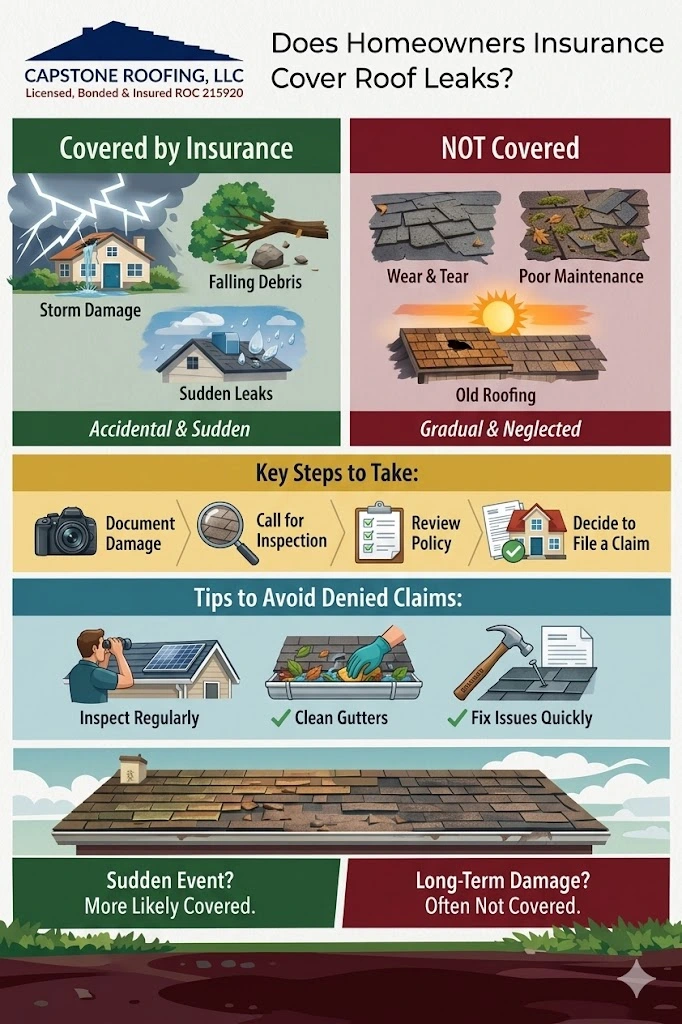
Homeowners insurance typically covers roof leaks when they are caused by a sudden and accidental event. This includes things like:
- Wind damage during monsoon storms
- Falling debris or tree impact
- Hail damage
- Sudden flashing or structural failure
However, leaks caused by long-term wear, lack of maintenance, or aging materials are usually not covered. Insurance policies are designed to protect against unexpected events—not predictable deterioration.
What Insurance Companies Consider a “Covered Roof Leak”
To determine if a roof leak is covered, insurance companies look closely at the cause of the damage. In most cases, a claim is approved when:
- The damage happened suddenly
- The roof was properly maintained before the issue
- The damage can be traced to a specific event
For example, if a monsoon storm lifts tiles or shingles and water enters your home immediately after, that is often considered a covered event. You can learn more about how storms impact roofing systems in this guide on roof weather damage in Phoenix.
What Is NOT Covered (Most of the Time)
Many roof leak claims are denied because the issue falls under maintenance-related damage. Common exclusions include:
- Old or deteriorating roofing materials
- Cracked or worn underlayment
- Clogged gutters causing water backup
- Long-term slow leaks
- Poor installation or past repair issues
In Arizona, this is especially relevant due to heat exposure and UV damage. Over time, roofing systems naturally break down, which is why regular inspections and maintenance are important.
Why Roof Leaks Are Common in Arizona
Roof leaks in Phoenix and surrounding areas behave differently than in other parts of the country. Several regional factors contribute:
- Extreme heat drying out sealants and flashing
- Thermal expansion and contraction loosening materials
- Dust buildup affecting drainage on flat roofs
- Monsoon storms introducing sudden water intrusion
You can explore more local causes in this resource on roof leaks in Arizona.
Sudden Damage vs Gradual Damage (Key Difference)
This is the most important concept when it comes to insurance coverage.
Sudden Damage (Often Covered)
- Storm-related damage
- Wind lifting roofing materials
- Debris puncturing the roof
Gradual Damage (Usually Not Covered)
- Wear and tear over time
- Slow leaks that go unnoticed
- Aging underlayment or materials
Insurance companies often rely on inspections and documentation to determine which category the damage falls into.
Does Insurance Cover Interior Damage From a Roof Leak?
Even if the roof itself isn’t covered, interior damage sometimes is.
For example:
- Water-damaged drywall or ceilings
- Damaged flooring
- Personal belongings affected by the leak
Coverage depends on whether the original cause of the leak is covered. If the leak started from a covered event, interior repairs are more likely to be included.
What About Flat Roofs and Tile Roofs in Arizona?
Different roof types behave differently when it comes to leaks and insurance claims.
Tile Roofs
Leaks often come from underlayment failure rather than the tiles themselves. Since underlayment naturally degrades over time, insurance may classify this as maintenance-related.
Flat Roofs
Flat roofs are more prone to drainage issues and ponding water. If drainage systems fail due to neglect, claims may be denied.
How Roof Leak Detection Affects Insurance Claims
Proper diagnosis is critical. Without identifying the true source of the leak, it’s difficult to support a claim.
Professional roof leak detection helps:
- Pinpoint the exact entry point of water
- Document the condition of roofing materials
- Provide evidence for insurance review
You can also learn more about regional inspection techniques in roof leak detection in Arizona.
Steps to Take If You Discover a Roof Leak
- Document the damage with photos and videos
- Limit further damage (contain water, move belongings)
- Schedule a professional inspection
- Review your policy coverage
- Decide whether to file a claim
If you need repair support, you can review services like roof leak repair in Chandler.
How Maintenance Impacts Coverage
Regular maintenance plays a major role in whether a claim is approved.
Insurance companies may ask:
- Has the roof been inspected recently?
- Were previous issues addressed?
- Is there evidence of neglect?
Following a structured maintenance plan like this guide to roof leak protection can reduce risk.
Do Insurance Companies Require Roof Inspections?
In many cases, yes. Especially for older roofs, insurers may request documentation before or during a claim.
Learn more about what inspections involve here: roof inspections for insurance coverage.
How Monsoon Season Impacts Claims
Arizona’s monsoon season creates a unique pattern of roof damage:
- High winds lift materials
- Wind-driven rain enters small gaps
- Debris causes sudden punctures
Because these are sudden events, they are more likely to be covered—if documented properly.
Should You File an Insurance Claim for a Roof Leak?
Not every leak requires a claim. Consider:
- The cause of the leak
- Your deductible
- The extent of damage
In some cases, a repair without a claim may be simpler and faster.
FAQ: Roof Leaks and Homeowners Insurance
Is a roof leak covered by homeowners insurance?
Yes, if it was caused by a sudden event like storm damage. No, if it developed over time due to wear or maintenance issues.
Does insurance cover roof leaks from rain?
Rain damage is typically covered only if the roof was first damaged by a covered event like wind or hail.
Is a water leak covered by homeowners insurance?
It depends on the source. Sudden water damage is often covered, but ongoing leaks are usually excluded.
How do insurance companies verify roof leaks?
They rely on inspections, photos, contractor reports, and evidence of maintenance history.
Will insurance pay for an old roof?
Most policies reduce coverage for older roofs or only pay depreciated value.
Can I prevent denied roof leak claims?
Regular inspections, maintenance, and documentation significantly improve your chances of approval.
Final Thoughts
Homeowners insurance can cover roof leaks—but only under specific conditions. Understanding the difference between sudden damage and long-term wear is key, especially in Arizona’s climate.
Taking a proactive approach with inspections, maintenance, and proper documentation can help protect your home and make the claims process smoother if a leak does occur.
published on Thursday, April 16th, 2026
