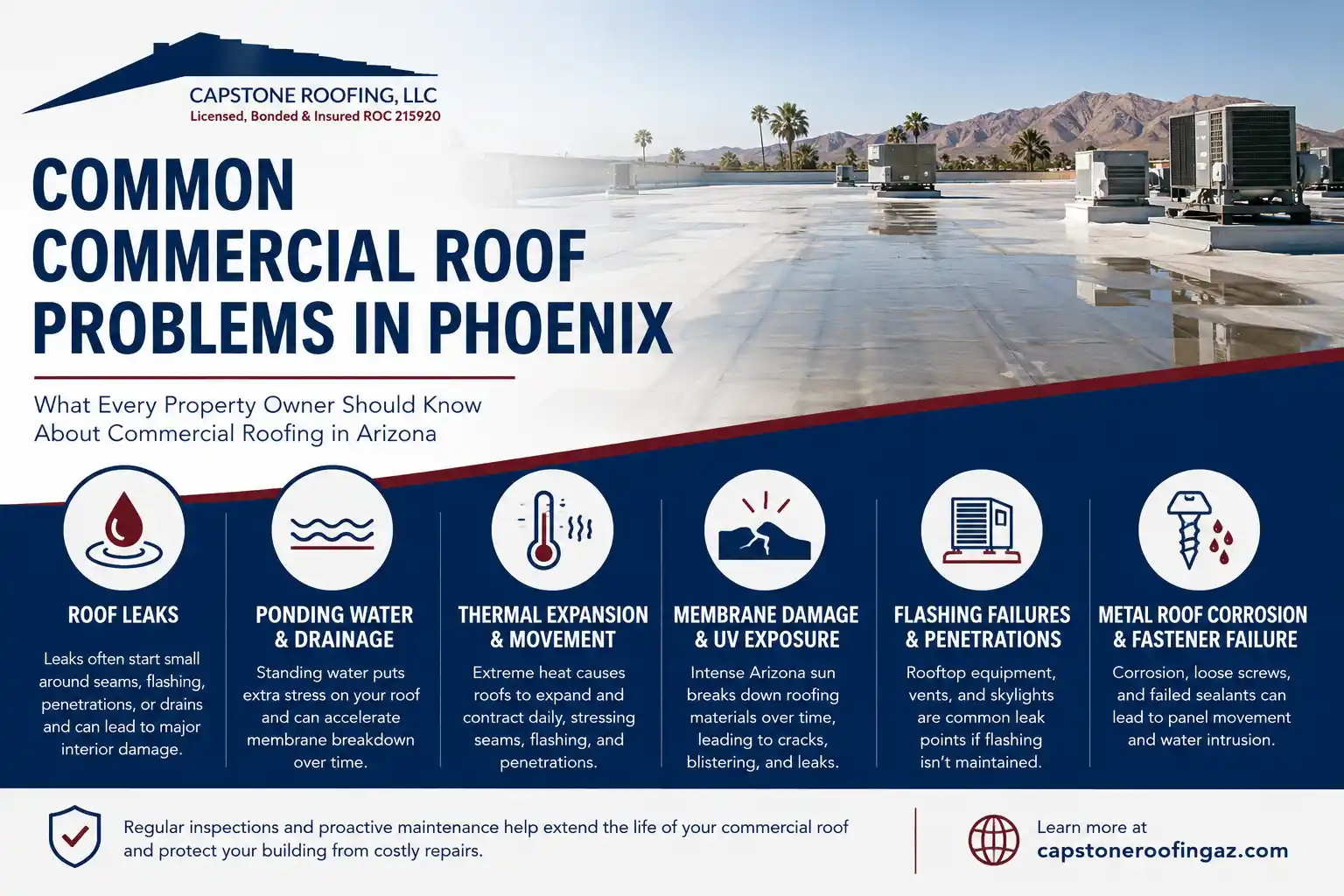
Common Commercial Roof Problems in Phoenix
Phoenix commercial roofs deal with some of the harshest roofing conditions in the country. Between extreme heat, intense UV exposure, monsoon storms, rooftop equipment, and drainage challenges, commercial roofing systems across the Valley face constant wear throughout the year.
For property managers, building owners, HOAs, warehouses, office buildings, retail centers, and industrial facilities, understanding the most common commercial roof problems can help reduce long-term damage and improve roof performance over time.
This guide breaks down the most common causes of commercial roof damage in Phoenix, what to watch for, and how preventative maintenance helps extend the lifespan of commercial roofing systems in Arizona.
Why Commercial Roofs in Phoenix Age Differently
Phoenix commercial roofing systems experience stress differently than roofs in milder climates. Commercial flat roofs and low-slope roofing systems absorb direct sunlight for long periods throughout the year, often reaching surface temperatures far above the outside air temperature.
At the same time, monsoon storms introduce sudden moisture, high winds, debris impacts, and rapid temperature shifts that stress roofing materials even further.
Several regional conditions contribute to accelerated commercial roof wear in Arizona:
- Extreme UV exposure
- Thermal expansion and contraction
- Dust and rooftop debris accumulation
- Standing water after storms
- Heavy rooftop HVAC traffic
- Aging flashing and roof penetrations
- Drainage issues on flat roofs
These conditions make ongoing commercial roof maintenance especially important for buildings throughout Phoenix and the surrounding Valley.
Commercial Roof Leaks
A commercial roof leak is one of the most common issues property owners deal with in Phoenix. Leaks often begin as small vulnerabilities around seams, flashing, drains, skylights, or rooftop penetrations.
Over time, Arizona heat causes roofing materials to expand and contract repeatedly. This movement can loosen fasteners, dry out sealants, and create small openings that allow moisture intrusion during storms.
Commercial roof leaking may show up as:
- Water stains on ceilings
- Interior discoloration
- Wet insulation
- Dripping during storms
- Bubbling membrane surfaces
- Mold or moisture smells
Many leaks in Phoenix commercial buildings become worse during monsoon season because wind-driven rain forces water into weak areas of the roofing system.
Learn more about roof leak detection in Arizona.
Ponding Water and Drainage Problems
Flat and low-slope commercial roofs rely heavily on proper drainage. When water cannot move efficiently toward drains or scuppers, standing water develops across the roofing surface.
Ponding water is one of the most common commercial roof problems in Phoenix.
Standing water may result from:
- Blocked drains
- Roof settlement
- Improper slope design
- Debris accumulation
- Aging insulation systems
- Drainage backups
Water that remains on a roof for long periods increases the risk of:
- Membrane deterioration
- Roof leaks
- Blistering
- Surface cracking
- Structural stress
- Premature roof aging
Commercial flat roofs in Phoenix often experience drainage challenges after monsoon storms because dust, leaves, gravel, and rooftop debris collect around drains and scuppers.
Property managers should visually inspect roofs after major storms to identify areas where water remains more than 24–48 hours after rainfall.
Learn more about our commercial flat roofing company services.
Thermal Expansion and Roof Movement
Commercial roofs in Arizona constantly expand during the day and contract overnight.
This thermal movement places stress on:
- Roof seams
- Flashing systems
- Fasteners
- HVAC penetrations
- Membrane transitions
- Roof edges
Over time, repeated movement can separate seams or weaken waterproofing systems.
Thermal expansion is especially important on:
- Metal roofing systems
- TPO roofing
- Modified bitumen roofs
- Built-up roofing systems
- Single-ply roofing systems
Buildings with large roof spans often experience greater movement because the roofing surface expands across larger areas during extreme summer temperatures.
Without routine maintenance, this movement may eventually contribute to commercial roof leaking.
Membrane Damage and Surface Deterioration
Commercial roofing membranes slowly deteriorate under continuous Phoenix sun exposure.
UV radiation breaks down roofing materials over time and accelerates aging across exposed roof surfaces.
Common signs of membrane deterioration include:
- Cracking
- Blistering
- Surface bubbling
- Seam separation
- Dry or brittle membranes
- Granule loss
Older roofs may also experience punctures from rooftop traffic or debris impacts during storms.
Commercial buildings with multiple HVAC systems often experience additional wear because technicians regularly walk across roofing surfaces for maintenance access.
Routine inspections help identify surface wear before it turns into larger roofing failures.
See what roofers evaluate during roof inspections.
Metal Roof Corrosion and Fastener Failure
Metal roofing systems are durable, but they still require maintenance in Arizona’s climate.
Commercial metal roofs in Phoenix may develop:
- Rust around fasteners
- Loose screws
- Failed sealants
- Oxidation
- Panel separation
- Expansion-related movement
Water often enters commercial metal roofing systems through failed fasteners or deteriorated seams.
Once protective coatings wear down, exposed metal surfaces become more vulnerable to corrosion.
Buildings with older metal roofing systems should undergo periodic inspections to identify aging components before leaks develop.
Learn more about commercial metal roof repair.
Flashing Failures Around Rooftop Equipment
Commercial roofs often contain numerous penetrations and rooftop systems, including:
- HVAC units
- Vents
- Skylights
- Electrical conduit
- Solar equipment
- Mechanical curbs
Every penetration creates an additional waterproofing transition that must remain sealed.
Over time, flashing materials may crack, separate, or loosen due to:
- UV exposure
- Thermal movement
- Aging sealants
- Wind uplift
- Rooftop traffic
Flashing failures are one of the leading causes of commercial roof leaks in Phoenix.
Buildings with frequent HVAC servicing often experience faster wear around penetrations because those areas see higher foot traffic and repeated maintenance activity.
Common Commercial Roofing Mistakes
Many long-term roofing problems begin with avoidable maintenance or installation mistakes.
Some of the most common commercial roofing mistakes include:
- Ignoring small leaks
- Skipping routine inspections
- Allowing debris buildup around drains
- Improper flashing installation
- Using incompatible repair materials
- Delaying preventative maintenance
- Allowing uncontrolled rooftop traffic
- Applying coatings over trapped moisture
Commercial roofs are complex systems. Small issues that go unaddressed often become much larger repairs later.
Property owners who invest in preventative maintenance typically reduce emergency roofing issues and extend overall roof lifespan.
See our additional roof maintenance tips.
How Phoenix Weather Impacts Commercial Roofing Systems
Phoenix weather creates a unique combination of roofing stressors throughout the year.
Summer Heat
Triple-digit temperatures accelerate roofing material aging and place continuous stress on sealants, membranes, and flashing systems.
Monsoon Storms
Heavy rain and wind-driven storms expose vulnerabilities in roofing systems very quickly.
Dust Storms
Dust and debris collect around drainage systems and increase ponding risk on flat roofs.
Rapid Temperature Swings
Daily heating and nighttime cooling cycles create repeated expansion and contraction movement.
These environmental conditions are why commercial roof maintenance schedules are especially important for Arizona buildings.
Preventative Commercial Roof Maintenance
Preventative maintenance helps commercial roofs last longer and perform more consistently.
Routine maintenance programs often include:
- Drain cleaning
- Debris removal
- Flashing inspections
- Seam evaluations
- Sealant repairs
- Coating condition reviews
- Photo documentation
- Post-storm inspections
Many commercial roofing issues can be identified early during routine inspections before interior damage occurs.
Property managers throughout Phoenix often schedule inspections:
- Before monsoon season
- After major storms
- Twice annually
- Before tenant renewals
- Before roof warranty renewals
Learn more about roof inspections in Phoenix.
Built-Up Roofing Systems and Long-Term Durability
Many commercial properties in Phoenix use built-up roofing systems because of their layered protection and durability.
Built-up roofing systems help reduce:
- UV deterioration
- Water intrusion
- Foot traffic damage
- Thermal stress
These systems are commonly used on:
- Warehouses
- Office buildings
- Retail centers
- Apartment complexes
- Industrial properties
Proper maintenance remains important even on durable roofing assemblies.
Learn more about built-up roofing systems.
Roof Coatings and Commercial Roof Longevity
Roof coatings are commonly used across Phoenix commercial roofs to help reduce UV exposure and extend roofing system lifespan.
Depending on the roof condition, coatings may help:
- Improve reflectivity
- Reduce surface temperatures
- Slow UV aging
- Improve waterproofing
- Delay replacement timelines
However, coatings should only be applied after proper inspections and moisture evaluations.
Applying coatings over wet insulation or trapped moisture can create larger roofing problems later.
Learn more about roof coatings for built-up roofs.
TPO vs Modified Bitumen Considerations
Different roofing systems respond differently to Phoenix conditions.
TPO roofing systems are often selected for reflectivity and energy efficiency, while modified bitumen systems are commonly valued for durability and layered waterproofing.
Each system has different maintenance needs, seam details, and repair considerations.
Property owners evaluating long-term roofing strategies should understand how roofing materials perform under:
- Extreme UV exposure
- Rooftop traffic
- Drainage behavior
- Thermal movement
- Monsoon weather
Read more about TPO vs modified bitumen roofing for AZ businesses.
When Commercial Roofing Problems Become More Serious
Some roofing problems may initially appear minor but gradually become larger issues over time.
Commercial property owners should pay attention to:
- Recurring leaks
- Repeated ponding water
- Interior ceiling stains
- Visible seam separation
- Large areas of blistering
- Soft spots in roofing systems
- Rust around metal fasteners
- Repeated HVAC flashing failures
Repeated repairs in the same areas may indicate deeper roofing system deterioration.
Professional evaluations help determine whether repairs, maintenance, coatings, or larger restoration work may be appropriate.
FAQ: Common Commercial Roof Problems in Phoenix
What causes most commercial roof leaks in Phoenix?
Most commercial roof leaks in Phoenix develop around seams, flashing, rooftop penetrations, drains, or aging roofing materials exposed to extreme heat and monsoon storms.
Why is ponding water bad for flat roofs?
Ponding water increases stress on roofing systems and accelerates membrane deterioration, blistering, and leak development over time.
How often should commercial roofs be inspected in Arizona?
Many commercial roofs benefit from inspections at least twice per year, especially before and after monsoon season.
Do commercial roofs wear out faster in Phoenix?
Phoenix roofs often experience accelerated aging because of prolonged UV exposure, extreme heat, thermal movement, and seasonal storms.
Can roof coatings help extend commercial roof life?
Roof coatings may help reduce UV exposure and improve waterproofing when applied to qualifying roofing systems after proper inspections.
What areas of commercial roofs fail most often?
Common failure points include drains, flashing, seams, rooftop penetrations, HVAC curbs, and areas with repeated standing water.
Final Thoughts
Phoenix commercial roofs operate under demanding conditions year-round. Heat, UV exposure, drainage behavior, rooftop traffic, and monsoon storms all contribute to long-term roofing wear across commercial buildings throughout the Valley.
Understanding common commercial roof problems helps property owners make more informed maintenance decisions and identify issues before they become larger disruptions.
Regular inspections, drainage maintenance, preventative repairs, and proper roofing system evaluations all play an important role in extending the lifespan of commercial roofing systems in Phoenix.
published on Wednesday, May 6th, 2026