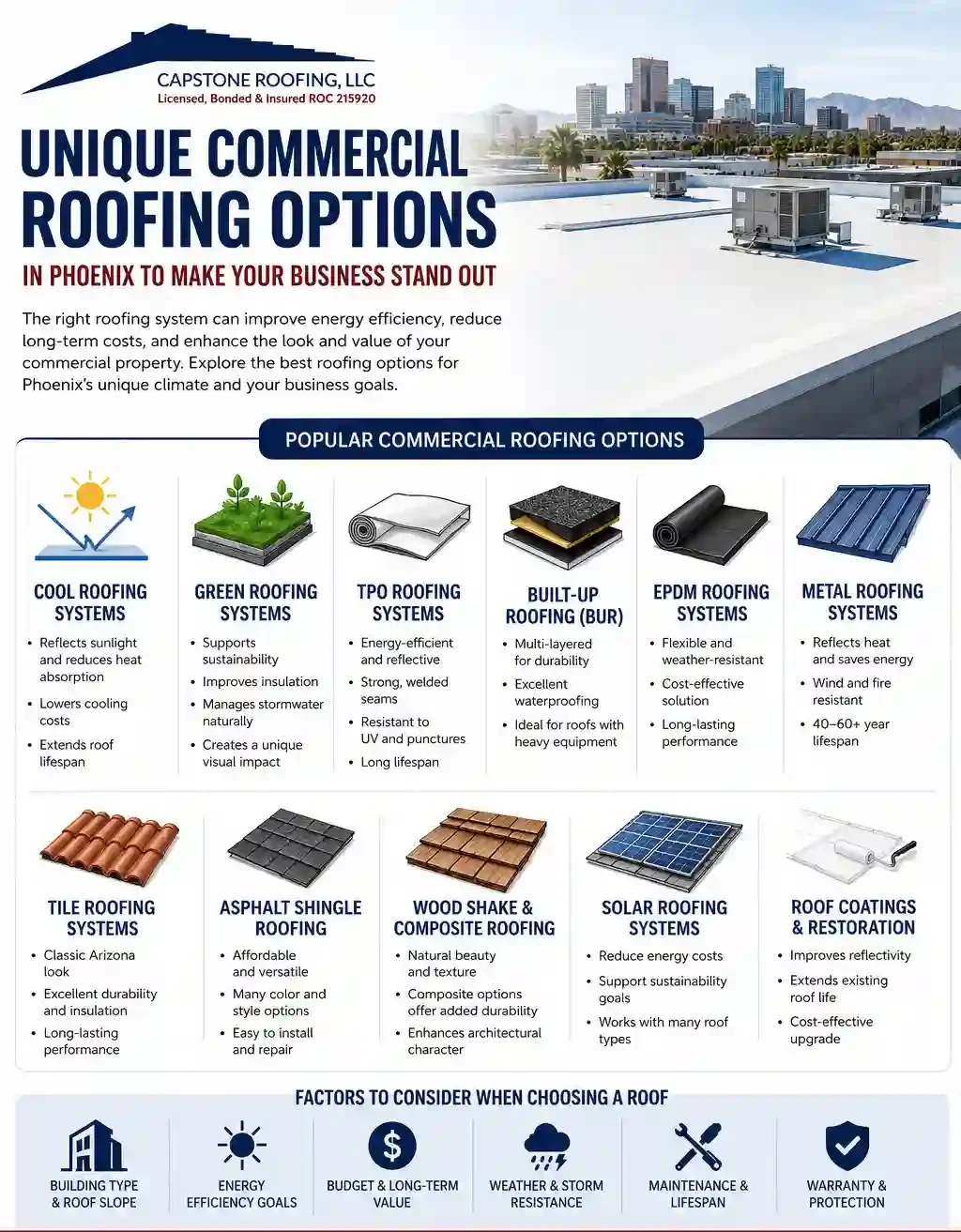
Unique Commercial Roofing Options in Phoenix to Make Your Business Stand Out
Phoenix businesses deal with some of the harshest roofing conditions in the country. Intense UV exposure, long summers, monsoon storms, and heavy rooftop heat can all impact the lifespan and performance of a commercial roofing system. Choosing the right commercial roofing option can improve energy efficiency, reduce long-term maintenance, and help your building stand out visually.
Whether you own a retail center, office building, warehouse, restaurant, or industrial property, modern commercial roofing systems offer far more flexibility than ever before. From reflective cool roofs to rooftop gardens and energy-efficient membrane systems, there are commercial roofing options designed specifically for Arizona’s climate.
In this guide, we’ll explore some of the most effective and unique commercial roofing options for businesses in Phoenix and the surrounding East Valley.
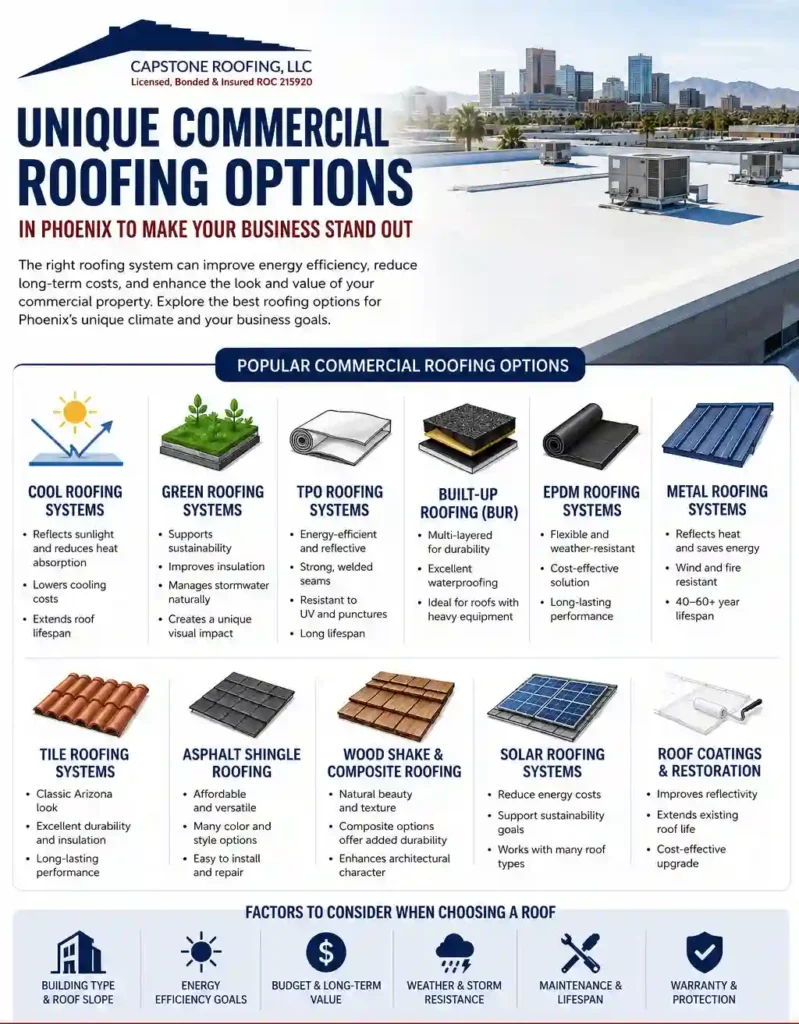
Why Roofing Choice Matters for Commercial Buildings in Phoenix
Commercial roofs in Arizona face constant exposure to sunlight, heat expansion, dust buildup, and seasonal storms. The wrong roofing material can lead to higher cooling costs, premature deterioration, and more frequent repairs.
The right roofing system can help:
- Reduce rooftop temperatures
- Improve energy efficiency
- Extend roof lifespan
- Improve drainage during monsoon season
- Lower maintenance costs
- Create a more modern appearance
- Support solar or HVAC equipment
Many business owners also prioritize sustainability and long-term value when evaluating commercial roofing systems.
Learn more about Arizona-specific roofing materials in our guide to best roofing materials for Arizona.
Cool Roofing Systems
Cool roofing systems are one of the most popular commercial roofing options in Phoenix because they help reduce heat absorption. These systems use reflective materials or coatings that reflect sunlight away from the roof surface.
According to the U.S. Department of Energy, cool roofs can significantly reduce roof temperatures and improve building efficiency in hot climates.
Benefits of cool roofing systems include:
- Lower indoor cooling costs
- Reduced rooftop temperatures
- Less thermal expansion stress
- Improved roof longevity
- Better energy efficiency
Cool roofing systems are commonly installed using:
- TPO membranes
- PVC roofing
- Reflective roof coatings
- Modified bitumen with reflective surfacing
These systems are especially effective on large flat commercial roofs where heat buildup can become extreme during Arizona summers.
You can also explore our page on ENERGY STAR roofing systems in Phoenix for additional energy-efficient options.
Green Roofing Systems
Green roofing systems, also known as vegetative roofs or living roofs, incorporate soil and plant life on top of a commercial roofing system. While less common in Phoenix than in cooler climates, modern irrigation systems and drought-tolerant landscaping make green roofs increasingly viable for Arizona businesses.
Green roofs can:
- Provide natural insulation
- Reduce urban heat buildup
- Absorb rainwater during storms
- Create rooftop gathering spaces
- Improve building aesthetics
- Support sustainability goals
Green roofs are often installed on hotels, office spaces, mixed-use developments, and environmentally focused commercial properties.
The EPA’s green roof research highlights how vegetative roofing systems can help reduce heat island effects and lower rooftop temperatures.
While green roofs require more planning and structural evaluation, they can create a standout visual feature for commercial buildings in Phoenix.
TPO Roofing Systems
TPO roofing has become one of the most widely used commercial flat roofing systems in Arizona. TPO stands for Thermoplastic Polyolefin, a single-ply membrane known for its durability, reflectivity, and energy efficiency.
TPO roofing is commonly installed on:
- Warehouses
- Office buildings
- Retail centers
- Restaurants
- Industrial facilities
Benefits of TPO roofing include:
- UV resistance
- Heat-reflective surface
- Strong welded seams
- Lightweight installation
- Long lifespan
- Resistance to punctures and tears
TPO systems are particularly attractive in Phoenix because of their reflective white surfaces, which help reduce rooftop heat buildup.
Read more in our comparison guide on TPO vs modified bitumen roofing for Arizona businesses.
Built-Up Roofing (BUR)
Built-up roofing systems, commonly called BUR roofs, have been used on commercial buildings for decades. These systems use multiple layers of roofing materials combined with asphalt or adhesives to create a thick, durable roofing assembly.
BUR systems are known for:
- Excellent waterproofing
- Strong durability
- Impact resistance
- Long-term performance
- Protection against heavy foot traffic
Because of their layered design, BUR roofs are often used on commercial buildings with rooftop equipment or high maintenance traffic.
BUR systems can also be paired with reflective coatings to improve energy efficiency.
Learn more in our article on everything you need to know about built-up roofing.
EPDM Roofing Systems
EPDM roofing is a synthetic rubber roofing membrane commonly used on low-slope commercial roofs. EPDM systems are known for their flexibility, weather resistance, and affordability.
Advantages of EPDM roofing include:
- Long lifespan
- Strong weather resistance
- Flexibility during temperature changes
- Cost-effective installation
- Easy maintenance
EPDM can perform well in Arizona, especially when paired with roof coatings that improve reflectivity and UV protection.
For businesses focused on long-term durability and manageable maintenance costs, EPDM remains a dependable commercial roofing option.
Metal Roofing Systems
Metal roofing has become increasingly popular for commercial buildings in Phoenix because of its durability, modern appearance, and energy efficiency.
Commercial metal roofing systems are commonly installed on:
- Industrial buildings
- Office spaces
- Retail developments
- Storage facilities
- Restaurants
Benefits of commercial metal roofing include:
- Long lifespan
- Resistance to wind damage
- Excellent drainage
- Fire resistance
- Minimal maintenance
- Reflective energy-efficient finishes
Standing seam metal roofs are especially popular because they offer clean lines and strong weather resistance.
Metal roofs can also support solar panel systems more easily than many traditional roofing materials.
Businesses interested in metal systems can learn more on our commercial metal roof repair in Phoenix page.
Tile Roofing for Commercial Properties
Tile roofing remains one of the most recognizable roofing styles in Arizona. Clay and concrete tiles offer a Southwest appearance while also providing durability and insulation benefits.
Commercial tile roofs are commonly used on:
- Hotels
- Medical offices
- Restaurants
- Retail centers
- Professional office buildings
Benefits of tile roofing include:
- Long lifespan
- Excellent UV resistance
- Natural insulation
- Classic Arizona appearance
- Wide variety of styles and colors
Tile roofs are heavier than many roofing systems, so structural support must always be considered during installation or replacement.
Our guide on tile roofing in Arizona covers more about tile performance in desert climates.
Asphalt Shingle Roofing
Asphalt shingles are commonly associated with residential roofing, but they are also used on many smaller commercial properties throughout Phoenix.
Architectural asphalt shingles can provide:
- Affordable installation
- Multiple style options
- Improved curb appeal
- Reliable weather protection
- Simpler repairs
Dimensional shingles create a more premium appearance than traditional 3-tab shingles and are commonly used on office buildings, retail spaces, and mixed-use developments.
Reflective shingle technology has also improved significantly in recent years, helping reduce heat absorption in Arizona climates.
Wood Shake and Composite Roofing Options
Some commercial properties prioritize architectural character and visual distinction. Wood shake roofing and synthetic composite alternatives can create a more upscale or rustic appearance.
Natural wood shake roofs provide:
- Distinct texture
- Natural insulation
- Unique curb appeal
However, wood roofing requires more maintenance in Arizona’s dry climate.
Composite roofing systems offer a similar look while improving:
- Fire resistance
- Durability
- Impact resistance
- UV protection
- Maintenance requirements
Many composite roofing materials are designed to replicate slate, cedar shake, or tile without the same structural demands.
Solar Roofing and Photovoltaic Systems
Phoenix receives abundant sunshine throughout the year, making solar roofing systems an attractive option for commercial properties.
Commercial solar roofing can help businesses:
- Reduce utility costs
- Offset energy usage
- Support sustainability goals
- Improve long-term ROI
Solar panels can often be integrated with:
- TPO roofing systems
- Metal roofs
- Flat roofing assemblies
Businesses planning future solar expansion should discuss roofing compatibility during the initial roof installation process.
Learn more about roofing compatibility in our article on roof replacement with solar panels in Phoenix.
How to Choose the Right Commercial Roofing System
The best commercial roofing option depends on several factors:
- Roof slope
- Building size
- Energy efficiency goals
- Budget
- Maintenance expectations
- Building aesthetics
- Future solar plans
- Storm resistance requirements
Business owners should also consider:
- Expected roof lifespan
- Local building codes
- Drainage design
- Monsoon storm exposure
- Heat reflectivity
- Warranty coverage
The National Roofing Contractors Association provides additional commercial roofing resources and maintenance guidance through the NRCA.
Working with experienced commercial roofing contractors is important to ensure the roofing system fits both the building structure and Arizona climate conditions.
Commercial Roofing Maintenance Still Matters
Even the best commercial roofing systems require inspections and maintenance to maximize performance.
Routine commercial roof maintenance can help identify:
- Ponding water
- Membrane separation
- Storm damage
- Drainage issues
- UV deterioration
- Flashing failures
- Roof coating wear
Regular inspections become especially important after monsoon storms and high wind events.
Our article on commercial roof inspections explains why proactive maintenance helps extend roof lifespan.
Commercial Roofing Options for Businesses Across Phoenix
Commercial buildings throughout Phoenix, Mesa, Scottsdale, Gilbert, and surrounding areas all face unique roofing challenges. Some buildings prioritize energy efficiency, while others focus on appearance, longevity, or rooftop functionality.
At Capstone Roofing, we help businesses evaluate commercial roofing systems based on:
- Building type
- Roof slope
- Existing roof condition
- Energy goals
- Long-term maintenance expectations
- Budget planning
Whether you’re considering TPO, BUR, metal roofing, tile systems, coatings, or modern energy-efficient solutions, selecting the right commercial roofing system can improve both performance and long-term value for your property.
Frequently Asked Questions About Commercial Roofing Options
What is the most energy-efficient commercial roofing option?
Cool roofing systems, TPO roofing, reflective roof coatings, and some metal roofing systems are among the most energy-efficient options for Phoenix commercial buildings.
How long do commercial roofing systems last?
Roof lifespan depends on the material, installation quality, maintenance, and climate exposure. Many commercial roofs last between 20 and 50 years.
Are metal roofs good for commercial buildings in Phoenix?
Yes. Metal roofing performs well in Arizona because it reflects heat, resists storm damage, and offers long-term durability.
What commercial roofing systems work best for flat roofs?
TPO, PVC, EPDM, built-up roofing, and modified bitumen systems are all commonly used on flat commercial roofs.
Can commercial roofs support solar panels?
Many commercial roofing systems can support solar panel installations when designed properly. Flat roofs and metal roofs are especially compatible.
Do green roofs work in Arizona?
Yes. Green roofs can work in Phoenix when designed with proper irrigation systems and drought-tolerant vegetation.
What is the difference between TPO and EPDM roofing?
TPO is typically white and reflective, while EPDM is a synthetic rubber membrane commonly available in black. Both are durable commercial roofing systems.
Are roof coatings worth it for commercial roofs?
Roof coatings can improve reflectivity, extend roof lifespan, and help reduce heat absorption on some commercial roofing systems.
How often should commercial roofs be inspected?
Commercial roofs should generally be inspected at least once per year and after major storms.
What roofing system lasts the longest?
Metal roofing, tile roofing, slate, and some synthetic roofing systems can last several decades when properly maintained.
published on Wednesday, May 20th, 2026