5 Benefits of Commercial Roof Inspections for Phoenix Businesses
Whether you own an office building, retail center, warehouse, apartment complex, medical facility, or industrial property, your roof is one of the most valuable assets protecting your investment. Unfortunately, commercial roofing systems often develop small problems long before leaks become visible inside the building.
Regular commercial roof inspections help identify developing issues before they disrupt operations, damage inventory, or lead to costly emergency repairs. In Arizona, where commercial roofs face relentless UV exposure, extreme summer temperatures, monsoon storms, high winds, and rooftop HVAC traffic, preventative inspections play an even larger role in protecting the life of your roofing system.
A professional commercial roof inspector evaluates everything from membranes and flashing to drainage systems, rooftop penetrations, seams, coatings, and structural concerns. The result is a detailed commercial roof inspection report that gives building owners a clear understanding of their roof’s current condition and recommendations for maintenance or repairs.
In this guide, we’ll cover the biggest benefits of commercial roof inspections, explain what inspectors look for, discuss how inspection reports help property managers make informed decisions, and explore why routine inspections are one of the smartest investments a commercial property owner can make.
What Is a Commercial Roof Inspection?
A commercial roof inspection is a comprehensive evaluation of your roofing system performed by an experienced roofing professional. Unlike a simple visual check from the ground, an inspection involves walking the roof, examining critical roofing components, documenting wear, testing drainage, and identifying conditions that could shorten the roof’s lifespan.
Commercial roofing systems are significantly more complex than residential roofs. Flat and low-slope roofs often contain multiple penetrations, rooftop HVAC equipment, drains, expansion joints, skylights, solar equipment, parapet walls, and numerous flashing details. Every one of these components represents a potential failure point if it isn’t routinely inspected.
Depending on your roofing system, an inspection may include:
- Membrane condition
- Roof seams
- Flashing around penetrations
- Drainage performance
- Ponding water
- Roof coatings
- Roof-mounted equipment
- Expansion joints
- Fasteners
- Metal panels
- Curbs and parapets
- Signs of moisture intrusion
- UV deterioration
- Storm damage
- Previous repairs
Unlike emergency inspections performed after visible damage occurs, preventative inspections are designed to identify small issues while they’re still easier to correct.
For many commercial buildings throughout Phoenix, annual inspections, along with additional inspections following severe monsoon storms, provide the best opportunity to maximize roof life while minimizing unexpected repair costs.
If you’d like to understand the types of issues inspectors commonly discover on Arizona commercial roofs, our guide to common commercial roof problems in Phoenix provides a deeper look at the damage caused by heat, UV exposure, ponding water, and seasonal storms.
Why Commercial Roof Inspections Matter More in Arizona
Arizona presents one of the harshest roofing environments in the United States. While many commercial roofs across the country primarily deal with snow loads or freezing temperatures, Phoenix buildings experience year-round exposure to conditions that accelerate roof aging in different ways.
Extreme ultraviolet radiation slowly breaks down roofing membranes, sealants, coatings, and flashing materials. Daily temperature swings cause continual expansion and contraction, stressing seams and fasteners over time. During monsoon season, sudden heavy rainfall combined with high winds can expose vulnerabilities that have developed throughout the year.
Commercial roofs also endure far more foot traffic than residential roofs. HVAC technicians, electricians, solar installers, telecommunications contractors, and maintenance personnel frequently access rooftop equipment. Even routine service visits can unintentionally damage roofing materials if proper walk paths aren’t used.
Without regular inspections, many of these problems remain hidden until water begins entering the building. By that point, repairs may involve interior damage, wet insulation, tenant complaints, inventory concerns, and emergency service needs.
Routine commercial roof inspections help property owners stay ahead of these issues by identifying developing problems before they become disruptive.
For businesses operating flat roofing systems, scheduling preventative evaluations through a qualified commercial flat roofing company can significantly improve long-term roof performance while reducing unexpected maintenance expenses.
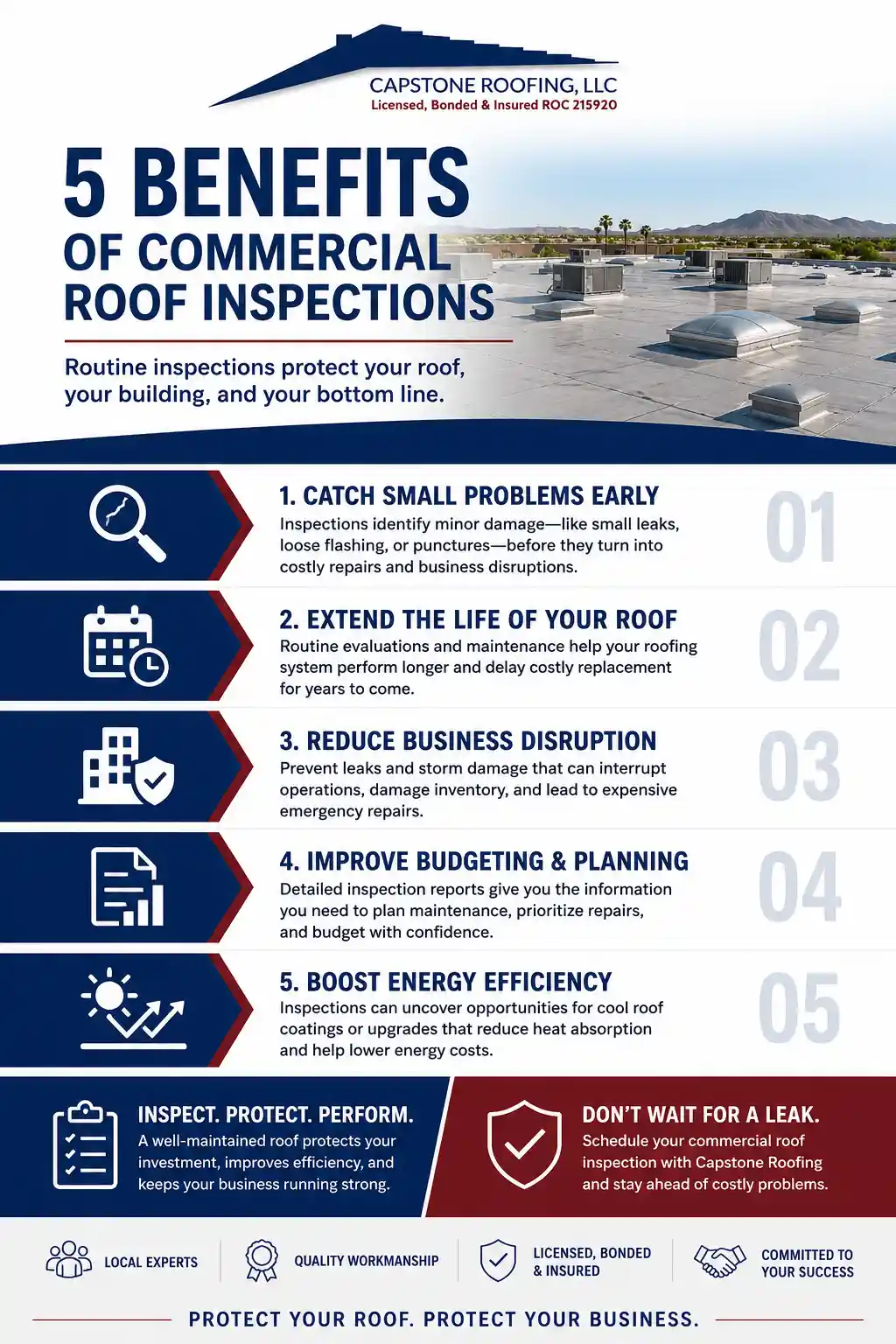
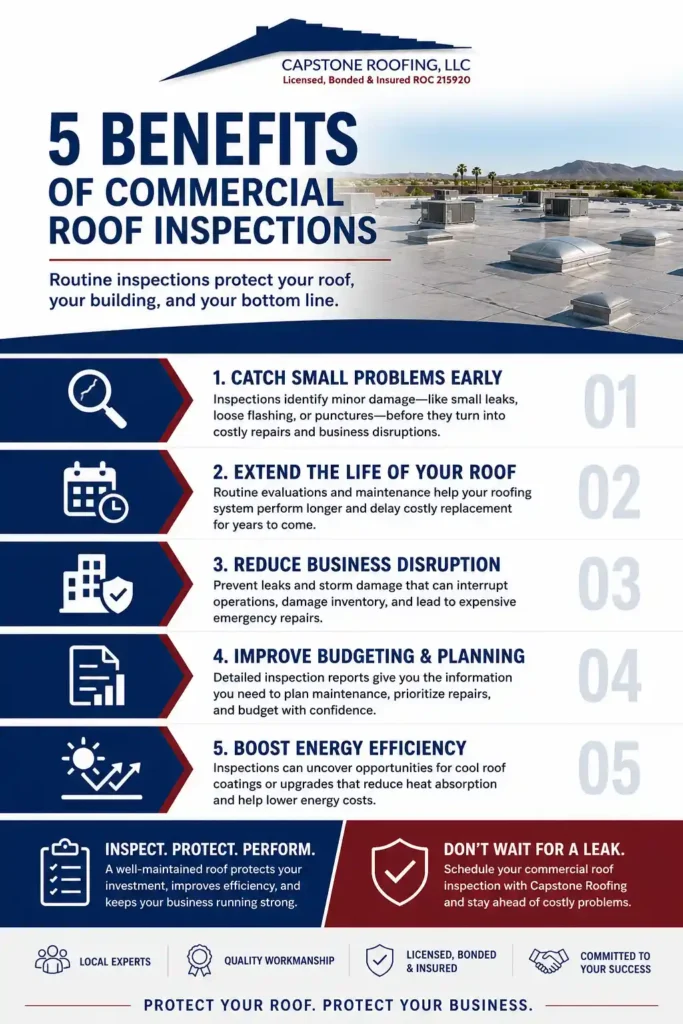
Benefit #1: Catch Small Problems Before They Become Expensive Repairs
The biggest benefit of commercial roof inspections is simple: they find small roofing problems before they become major ones.
Most commercial roof failures don’t happen overnight. Instead, deterioration usually begins with relatively minor issues such as loose flashing, open seams, small punctures, shrinking sealant, clogged roof drains, minor membrane damage, loose fasteners, surface cracks, or early coating failure.
None of these problems necessarily cause immediate leaks. However, when left unaddressed, Arizona’s heat and seasonal storms can quickly make them worse.
For example, a small separation around rooftop HVAC flashing may allow only a tiny amount of moisture beneath the membrane. Months later, repeated expansion, contraction, and heavy rainfall can enlarge that opening enough to create widespread moisture intrusion beneath the roofing system.
By identifying issues early, repairs typically remain smaller, faster, less disruptive, and easier to plan. Instead of replacing large membrane sections or repairing water-damaged insulation, contractors can often perform localized repairs that restore the roof before larger failures occur.
This preventative approach is one of the primary benefits of regular roof inspections, especially for buildings with aging roofing systems or heavy rooftop equipment.
Commercial metal roofs benefit equally from routine evaluations. Fasteners can loosen over time, sealants around penetrations deteriorate under UV exposure, and expansion movement may create gaps that eventually allow water infiltration. Our guide to commercial metal roof repair in Phoenix explains many of the issues inspections routinely uncover before they become costly repairs.
Benefit #2: Extend the Life of the Commercial Roofing System
One of the most important benefits of commercial roof inspections is the ability to extend the working life of the roof. Commercial roofs are major building assets, and most property owners want to get as much useful life from the system as possible before considering replacement.
Routine inspections support that goal by keeping small maintenance issues from accelerating roof aging. A commercial roof may still have years of service life remaining, but neglected seams, clogged drains, worn coatings, loose flashing, or exposed membrane damage can shorten that timeline quickly.
This is especially true in Phoenix, where intense sun exposure and thermal movement place constant stress on roofing materials. Over time, heat can dry out sealants, weaken coatings, and cause roofing materials to expand and contract. If those changes are not monitored, the roof may begin aging faster than expected.
During a professional inspection, the roof is evaluated for conditions that may reduce its service life, including:
- Surface cracking or blistering
- Loss of protective coating
- Open seams or laps
- Standing water after rainfall
- Loose or damaged flashing
- UV-related membrane wear
- Metal panel movement
- Previous repairs that are beginning to fail
When these issues are addressed early, the roof has a better chance of performing as intended. This can help building owners delay major capital expenses and plan future work more strategically.
For example, an inspection may show that a built-up roof does not need immediate replacement but would benefit from localized repairs and a new protective coating. In that case, maintenance may help preserve the existing system and provide more time before a larger roofing project becomes necessary.
That is why inspections should not be viewed as an added expense. They are part of a long-term roof management strategy that helps protect the value of the roof you already have.
Benefit #3: Reduce Business Disruption and Emergency Repairs
Commercial roof leaks rarely happen at a convenient time. A roof problem can interrupt business operations, damage interior finishes, create tenant complaints, affect inventory, or force building managers to coordinate emergency repairs while the property is occupied.
Regular inspections help reduce that risk by identifying vulnerable areas before they fail during a storm or extreme weather event.
For Phoenix businesses, this is especially important before and after monsoon season. A roof that appears stable during dry weather may reveal problems once heavy rain, wind-driven debris, and rapid drainage demands enter the picture. Clogged drains, ponding water, weak seams, and loose flashing can all become more serious during a sudden storm.
A proactive inspection allows property managers to address these concerns before they create interior damage. This is particularly valuable for buildings that house:
- Retail inventory
- Office equipment
- Medical records
- Restaurant operations
- Manufacturing equipment
- Tenant spaces
- Warehouse storage
- Electrical or mechanical systems
The goal is not only to protect the roof. It is to protect the business activity happening underneath it.
Emergency repairs can also be more difficult to coordinate. If a roof leak appears during a widespread storm, roofing contractors may be responding to many calls at once. Preventative inspections give owners more control by allowing repairs to be scheduled before problems become urgent.
Businesses with active leaks, recurring water entry, or storm-related damage may also need help from experienced commercial roofing contractors in Phoenix who understand how local weather affects commercial roofs throughout the Valley.
Benefit #4: Improve Budgeting With Better Roof Documentation
A roof inspection gives commercial property owners more than a quick opinion. A good inspection produces documentation that helps you understand the current condition of the roof, what needs attention, and how urgent each issue may be.
This is where the commercial roof inspection report becomes especially valuable.
Instead of guessing whether the roof needs repair, maintenance, coating, or replacement, owners and property managers can use the report to plan next steps. This is helpful for budgeting, capital planning, tenant communication, warranty records, and long-term maintenance scheduling.
A strong commercial roof inspection report may include:
- Roof system type
- Overall roof condition
- Photos of damaged or vulnerable areas
- Locations of observed defects
- Drainage concerns
- Condition of flashing and penetrations
- Evidence of ponding water
- Moisture-related concerns
- Storm damage observations
- Maintenance recommendations
- Repair priorities
- Notes for future monitoring
This kind of documentation helps property owners avoid reactive decision-making. Instead of waiting until the roof leaks, you can plan repairs in stages, prioritize the most important work, and prepare for future expenses before they become emergencies.
Documentation can also help when comparing repair versus replacement options. A commercial roof may not need replacement just because it has problems. In many cases, inspection findings can show whether targeted repairs, coating, drainage improvements, or flashing work may be enough to restore performance.
For buildings with recurring issues or aging roof systems, a full evaluation can also help determine whether broader commercial roofing services are needed to keep the property protected.
Benefit #5: Identify Energy-Saving Opportunities Like Cool Roofs and Coatings
Commercial roof inspections are often thought of only as a way to find leaks, but they can also reveal opportunities to improve roof performance. In Arizona, that includes energy-related opportunities such as reflective coatings, white membranes, and cool roof systems.
The benefits of cool roofs on commercial buildings are especially relevant in Phoenix because low-slope commercial roofs receive intense sun exposure for much of the year. A roof that reflects more sunlight and absorbs less heat may help reduce surface temperatures and support better building comfort.
The U.S. Department of Energy explains that cool roofs are designed to reflect more sunlight than conventional roofs, which can reduce roof temperatures and lower cooling demand in some buildings. You can review the DOE’s overview of cool roofs for more context.
The EPA also notes that cool roofs can help reduce heat island effects and are commonly used on low-slope commercial and industrial buildings. Their resource on using cool roofs to reduce heat islands explains how reflective roofing materials can support broader heat-reduction goals.
A roof inspection helps determine whether these options are realistic for the current roof condition. Before applying a coating or considering a reflective system, the roof must be evaluated for open seams, trapped moisture, drainage problems, membrane wear, and structural concerns.
In other words, a cool roof upgrade should begin with a condition assessment. If the roof has unresolved leaks or hidden moisture, coating over the problem may only delay the larger repair. If the roof is structurally sound but showing surface wear, a reflective coating or membrane option may be part of a smart long-term strategy.
For Arizona businesses comparing roof systems, our guide to TPO vs. modified bitumen roofing explains how different flat roofing materials perform in desert conditions.
Commercial Roof Inspection Checklist: What Should Be Reviewed?
A strong commercial roof inspection checklist should go beyond looking for obvious leaks. Commercial roofs have multiple components that work together, and a weakness in one area can affect the performance of the entire system.
While every roof is different, a professional commercial inspection should typically review:
| Inspection Area |
What the Inspector Looks For |
| Roof membrane |
Cracks, punctures, blistering, shrinkage, open seams, surface wear, and UV deterioration. |
| Drainage system |
Clogged drains, ponding water, blocked scuppers, improper slope, and debris buildup. |
| Flashing |
Loose metal, open edges, deteriorated sealant, gaps around walls, curbs, and roof transitions. |
| Rooftop penetrations |
HVAC curbs, vents, pipes, skylights, conduit, solar mounts, and other areas where water can enter. |
| Roof edges and parapets |
Cracking, separation, loose coping, damaged edge metal, and water-entry points. |
| Metal components |
Loose fasteners, rust, panel movement, failed sealant, and expansion-related stress. |
| Coatings |
Thin areas, peeling, cracking, chalking, exposed substrate, and loss of reflectivity. |
| Previous repairs |
Patch quality, aging repair materials, recurring problem areas, and signs of improper repair work. |
This checklist is especially important for flat and low-slope roofs because water does not shed as quickly as it does on steep-slope roofing systems. Even a small drainage problem can create ponding water that stresses seams, coatings, and membranes over time.
Industrial roofs may require additional attention because they often include large roof surfaces, heavy rooftop mechanical equipment, exhaust systems, specialized penetrations, and more frequent maintenance traffic. That makes the benefits of industrial roof inspections especially important for warehouses, manufacturing buildings, distribution facilities, and other high-use commercial properties.
What Should a Commercial Roof Inspection Report Include?
A commercial roof inspection is most useful when the findings are documented clearly. A verbal summary may help in the moment, but a written report gives owners, managers, and decision-makers something they can review, compare, and use for future planning.
A helpful commercial roof inspection report should explain what was found in plain language. It should not leave the property owner guessing what the issue means or how urgent it is.
At minimum, a good report should include:
- The date of inspection
- The type of roofing system inspected
- Overall condition notes
- Photos of problem areas
- Descriptions of observed damage
- Drainage concerns
- Signs of leaks or moisture intrusion
- Areas that need immediate repair
- Areas that should be monitored
- Maintenance recommendations
- Repair or replacement considerations
For property managers, this documentation can be especially helpful when communicating with ownership groups, tenants, facility managers, or maintenance teams. Instead of relying on vague statements like “the roof looks worn,” a report can identify specific areas of concern and help prioritize next steps.
A report can also help prevent repeated short-term fixes. If the same drain area, seam, or penetration appears in multiple reports over time, that pattern may show a larger underlying issue that needs more than another patch.
For buildings with flat roofs, documentation can also help track drainage performance after storms. If ponding water continues to appear in the same area, that information may influence future repair, coating, or replacement planning.
Can Drone Roof Inspections Help Commercial Properties?
Commercial drone roof inspections can be useful for documenting large roof areas, hard-to-access sections, steep edges, or areas where visual records are helpful. Drone imagery can provide broad roof views, capture storm damage, and help property owners understand the layout of the roof.
However, drones should be viewed as an inspection tool, not a full replacement for professional roofing expertise.
A drone can help document what is visible from above, but it may not confirm every issue that requires hands-on evaluation. Some roof concerns still require a qualified inspector to walk the roof, check seams, test soft areas, evaluate flashing, inspect penetrations, and assess the condition of roofing materials up close.
The Federal Aviation Administration provides requirements for commercial drone operations, including guidance for commercial drone operators. For property owners, the most important takeaway is that drone-assisted inspections should be performed responsibly and in compliance with applicable rules.
For many commercial buildings, the best approach is a combination of visual documentation and professional roof evaluation. Drone images can help support the inspection report, while the roofing professional provides the actual condition assessment and repair recommendations.
Drone documentation may be especially useful for:
- Large warehouses
- Industrial buildings
- Multi-building commercial properties
- Post-storm documentation
- Areas with limited safe access
- Before-and-after repair records
Even with drone imagery, building owners should still rely on a qualified commercial roof inspector to interpret the findings and determine whether repairs, maintenance, coating, or replacement should be considered.
How Inspections Help With Repair vs. Replacement Decisions
One of the biggest questions commercial property owners ask is whether their roof needs another repair or whether replacement is becoming the more practical option.
This question matters because commercial roof replacement can be a major capital expense. When owners ask how much does commercial roof replacement cost, the answer depends on several factors, including roof size, roof system type, insulation needs, tear-off requirements, access, drainage conditions, material selection, and the extent of existing damage.
A roof inspection helps clarify where the roof stands before a property owner commits to a large project.
In some cases, the inspection may show that the roofing system is still serviceable and only needs targeted repairs. In other cases, it may reveal widespread membrane deterioration, moisture intrusion, recurring ponding, failed seams, or aging materials that make replacement planning more realistic.
The value of the inspection is that it gives owners a factual starting point.
Instead of guessing based on age alone, a property owner can make decisions based on:
- Current roof condition
- Severity of damage
- Number of problem areas
- Repair history
- Drainage performance
- Interior leak patterns
- Remaining service life
- Potential coating options
- Whether repairs are becoming repetitive
This is one of the clearest business roof inspection benefits: better decisions with fewer surprises.
For example, a commercial flat roof with a few isolated seam issues may be a good candidate for repair and continued monitoring. A roof with widespread membrane cracking, wet insulation, chronic ponding, and repeated leak history may require a broader replacement discussion.
Inspections also help owners avoid replacing a roof too early. If the roof can be maintained safely and effectively, routine inspections can help extend its useful life while giving the owner time to budget for a future replacement.
How Often Should a Commercial Roof Be Inspected in Phoenix?
Most commercial roofs should be inspected at least once per year. In Phoenix, many building owners benefit from scheduling inspections before monsoon season, after major storms, or whenever rooftop equipment work has been performed.
A practical inspection schedule may include:
- One annual preventative roof inspection
- A pre-monsoon inspection before heavy summer storms
- A post-storm inspection after high winds, hail, or heavy rainfall
- An inspection after HVAC, solar, electrical, or mechanical work on the roof
- An inspection before buying, selling, or renewing a lease on a commercial property
The right schedule depends on the age of the roof, roof type, past repair history, building use, drainage conditions, and how often contractors access rooftop equipment.
Older roofs, flat roofs, metal roofs, and buildings with previous leak history may need more frequent reviews. Newer roofs may still need annual documentation to monitor wear, protect warranty records, and catch issues caused by rooftop traffic or storm damage.
If your building is heading into storm season, this guide on why Arizona property owners should schedule a roof inspection before monsoon season explains why timing matters.
Final Thoughts on the Benefits of Commercial Roof Inspections
The biggest benefits of commercial roof inspections come down to prevention, planning, and protection. A commercial roof inspection helps identify problems early, extend roof life, reduce emergency repair risk, improve documentation, support budgeting, and uncover opportunities for better long-term performance.
For Phoenix businesses, regular inspections are especially valuable because commercial roofs face constant sun exposure, extreme heat, rooftop equipment traffic, dust buildup, drainage challenges, and seasonal monsoon storms.
A roof may look fine from the parking lot, but that does not always mean seams, flashing, coatings, drains, penetrations, and rooftop equipment areas are holding up properly. A professional inspection gives owners and property managers a clearer picture of what is happening on the roof before small issues turn into larger disruptions.
Whether your building has a flat roof, metal roof, built-up roof, foam roof, coating system, or single-ply membrane, regular inspections are one of the most practical ways to protect your commercial property and plan future roofing decisions with confidence.
Frequently Asked Questions About Commercial Roof Inspections
What are the main benefits of commercial roof inspections?
The main benefits of commercial roof inspections include finding small problems early, extending roof life, reducing emergency repairs, improving maintenance planning, supporting documentation, and helping owners make better repair or replacement decisions.
What is a commercial inspection for a roof?
A commercial roof inspection is a professional evaluation of a business or industrial roofing system. It typically includes checking the roof membrane, flashing, seams, drains, penetrations, rooftop equipment areas, coatings, previous repairs, and signs of moisture intrusion.
How often should a commercial roof be inspected?
Most commercial roofs should be inspected at least once per year. In Arizona, additional inspections are often helpful before monsoon season, after major storms, and after rooftop HVAC, solar, or electrical work.
What should be included in a commercial roof inspection checklist?
A commercial roof inspection checklist should include the membrane, seams, flashing, drains, scuppers, penetrations, roof edges, parapet walls, coatings, fasteners, metal components, previous repairs, and signs of ponding water or leaks.
What should a commercial roof inspection report include?
A commercial roof inspection report should include inspection date, roof type, overall condition, photos, damaged areas, drainage concerns, moisture observations, repair priorities, maintenance recommendations, and notes for future monitoring.
Are commercial drone roof inspections useful?
Commercial drone roof inspections can be useful for documenting large roof areas, storm damage, and hard-to-access sections. However, drone imagery should usually support a professional inspection rather than replace hands-on evaluation by a qualified roof inspector.
Do industrial buildings need roof inspections?
Yes. Industrial roof inspections are especially important because warehouses, manufacturing facilities, and distribution buildings often have large roof surfaces, heavy rooftop equipment, specialized penetrations, and frequent maintenance traffic.
Can roof inspections help reduce commercial roof replacement costs?
Roof inspections can help reduce long-term costs by identifying problems early and helping owners plan repairs before damage spreads. They may also help determine whether repair, coating, maintenance, or replacement is the most practical option.
Do cool roofs still need inspections?
Yes. Cool roofs, reflective coatings, TPO systems, and other energy-efficient roofing options still need inspections. Inspectors check for coating wear, seam issues, drainage problems, punctures, and areas where reflectivity or waterproofing performance may be declining.
When is the best time to schedule a commercial roof inspection in Phoenix?
Many Phoenix businesses schedule inspections before monsoon season, after major storms, or during annual maintenance planning. Inspections are also helpful before buying, selling, leasing, or budgeting for roof repairs.
Who should inspect a commercial roof?
A commercial roof should be inspected by a qualified roofing professional with experience evaluating commercial systems such as flat roofs, metal roofs, built-up roofing, coatings, foam roofing, and single-ply membranes.
published on Friday, February 19th, 2021