Benefits Of Hiring A Professional Roofing Company For A Full Roof Replacement

A full roof replacement is one of the largest and most important improvements a homeowner can make. The finished roof must protect the home from water intrusion, wind, debris, extreme temperatures, and years of exposure to the elements. In Arizona, it also needs to withstand intense sunlight, repeated thermal expansion, dust accumulation, and sudden monsoon storms.
Because so much depends on the quality of the installation, replacing a roof involves much more than removing old materials and installing new shingles or tiles. The project may require evaluating the roof deck, selecting compatible materials, improving ventilation, replacing flashing, correcting drainage problems, and following manufacturer installation requirements.
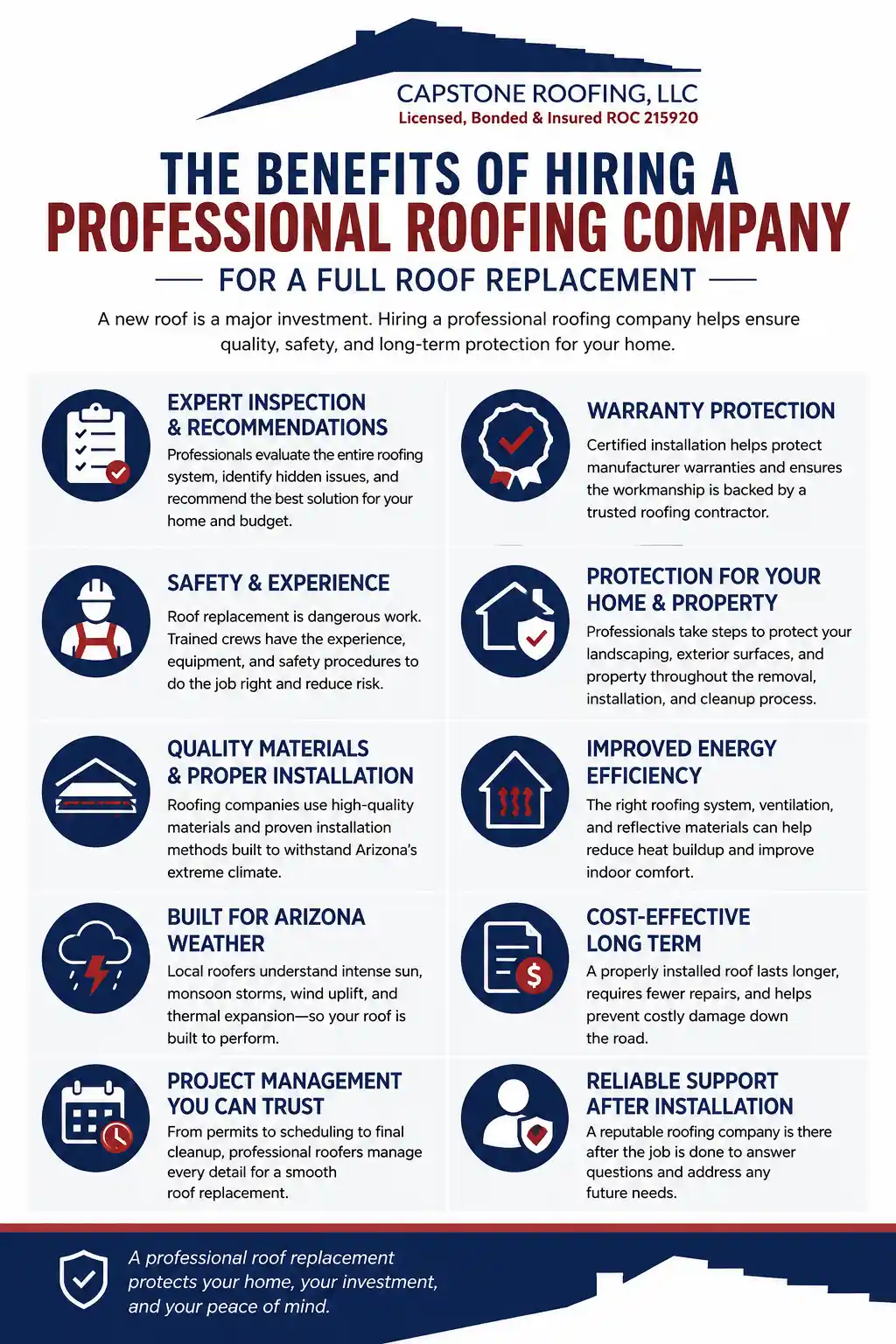
The primary benefits of hiring a roofing company include safer project completion, better material recommendations, warranty protection, property safeguards, accurate installation, and dependable help after the work is finished. A professional roofing company can also help homeowners understand whether a full roof replacement is necessary or whether targeted repairs could still provide a practical solution.
Homeowners researching a roof replacement near them may receive very different recommendations and estimates from different contractors. Understanding what a qualified roofing contractor contributes to the project makes it easier to compare those proposals and choose a company based on more than price alone.
Do You Really Need a Full Roof Replacement?
One of the first responsibilities of a professional roofing company is determining whether replacement is actually the right recommendation. Not every roof leak, cracked tile, damaged shingle, or stained ceiling means the entire roofing system has failed.
A localized problem may sometimes be corrected through roof repair. Replacement becomes more appropriate when damage is widespread, the roofing system is nearing the end of its useful life, leaks are occurring in multiple areas, the underlayment has deteriorated, or previous repairs are no longer providing dependable protection.
A roofing contractor should evaluate the entire system rather than looking only at the most visible damage. This evaluation may include:
- The age and condition of the existing roofing material
- The condition of the roof deck and underlayment
- Areas around vents, skylights, chimneys, and roof penetrations
- Valleys, flashing, drip edges, and transitions
- Evidence of ponding water or poor drainage
- Attic ventilation and signs of trapped moisture
- Past repairs and recurring leak locations
- Storm, wind, hail, or debris damage
A homeowner who is unsure about the right approach can review the differences between choosing to repair, patch, or replace a roof. An inspection can also provide more objective information before a major investment is made. Capstone offers homeowners the option to schedule a professional roof inspection before deciding how to proceed.
An honest recommendation is one of the most valuable benefits of hiring a roofing company. A qualified contractor should be able to explain what is failing, what can still be repaired, what should be replaced, and what may happen if the work is postponed.
Why Hiring a Licensed Roofing Contractor Matters in Arizona
A full roof replacement affects the structural protection, weather resistance, and long-term value of a home. Homeowners should verify that the contractor they hire is properly licensed for the work being performed.
The Arizona Registrar of Contractors roofing license classifications identify the types of roofing work covered by residential, commercial, and combined contractor licenses. Homeowners can use state resources to verify a contractor’s license status before signing an agreement.
Licensing does not guarantee that every project will be flawless, but it provides an important level of accountability. A licensed roofing contractor is operating within an established regulatory system and should understand the standards that apply to the work covered by the license.
Homeowners should also ask a roofing company for current proof of insurance. Liability coverage and workers’ compensation coverage can help reduce the homeowner’s exposure if an accident, injury, or property damage occurs during the project.
Before selecting a contractor, homeowners should verify:
- The company name matches the name on the license
- The license is active and appropriate for the proposed work
- The contractor can provide current insurance documentation
- The business has a permanent local address and contact information
- The written estimate clearly identifies the company completing the work
- Any subcontractor arrangements are explained before the project begins
These steps are especially important after a major storm, when unfamiliar contractors may enter an affected area and offer immediate work. A local roofing company with an established presence is more likely to remain available for questions, warranty concerns, inspections, and future maintenance.
Capstone has additional resources explaining questions to ask before hiring a roofing contractor and how Phoenix homeowners can evaluate a roofer.
Professional Roofers Understand the Entire Roofing System
A roof is not a single layer of visible shingles, tiles, metal panels, or foam. It is a coordinated system of materials that must work together to move water away from the home, resist wind, protect vulnerable transitions, and manage heat and moisture.
Depending on the home and roofing system, a full roof replacement may involve:
- Roof decking or sheathing
- Underlayment or a waterproof membrane
- Starter courses and edge protection
- Flashing around walls and penetrations
- Valley materials
- Roof vents and attic ventilation components
- Pipe boots and roof jacks
- Fasteners, adhesives, sealants, or coatings
- Drainage channels, scuppers, gutters, or downspouts
- The finished roof covering
Problems can develop when one component is installed incorrectly or when incompatible materials are combined. A beautiful new roof covering cannot compensate for weak decking, poorly installed flashing, inadequate underlayment, or a drainage problem that was never corrected.
Experienced roofing contractors know where hidden issues are most likely to appear once the old roof is removed. They can identify deteriorated wood, improper repairs, rusted flashing, damaged penetrations, or sections where water has been entering beneath the visible surface.
This system-level understanding is one of the most significant advantages of professional roof installation. The goal is not simply to make the roof look new. The goal is to build a complete assembly that performs as intended.
Arizona Roof Replacements Require Local Material Knowledge
Roofing materials perform differently depending on the climate in which they are installed. A product that works well in a cooler or wetter region may respond differently to the extreme heat and ultraviolet exposure found throughout the Phoenix metro area.
Arizona roofs experience prolonged sun exposure, rapid temperature changes, wind-driven dust, thermal movement, and intense monsoon storms. These conditions can affect sealants, coatings, fasteners, membranes, underlayment, flashing, and exposed roofing materials.
A local roofing company can explain how different materials respond to these conditions. Common residential roofing systems in Arizona include:
Tile Roofing
Concrete and clay tiles are popular because of their appearance and ability to perform in hot climates. The tiles are only one part of the system, however. The underlayment beneath them provides critical water protection and may deteriorate before the tiles themselves reach the end of their useful life.
Asphalt Shingles
Asphalt shingles can provide an attractive and cost-effective option for many homes. Product selection, attic ventilation, installation methods, color, slope, and sun exposure can all influence long-term performance.
Foam Roofing
Spray polyurethane foam is commonly used on flat and low-slope roofs. Proper application creates a continuous surface that can provide insulation and weather protection. The protective coating must be maintained to shield the foam from ultraviolet exposure.
Metal Roofing
Metal roofing can provide durability and reflective performance when the panels, seams, fasteners, flashings, and transitions are correctly designed and installed. Contractors must account for the expansion and contraction that occurs as temperatures change.
Built-Up and Single-Ply Systems
Some Arizona homes and multifamily properties use built-up roofing, modified bitumen, or single-ply membranes on low-slope areas. Drainage design, seam quality, penetrations, surface protection, and installation conditions are especially important for these systems.
A professional roofing company should recommend materials based on the home’s roof design, slope, exposure, ventilation, budget, maintenance expectations, and surrounding environment. Homeowners can explore additional considerations in Capstone’s guide to the best roofing materials for Arizona homes.
Professional Installation Can Help Protect Warranty Coverage
Homeowners frequently hear the word “warranty” during roof replacement discussions, but not all warranties provide the same coverage. A professional roofing company should clearly explain the warranties associated with the proposed system.
Roof replacement warranties generally fall into two categories:
- Manufacturer warranties, which may cover qualifying defects in roofing materials
- Workmanship warranties, which may cover qualifying problems connected to the contractor’s installation
The details vary by manufacturer, product, roofing system, contractor, and warranty level. Some warranties may require approved accessories, specific installation methods, product registration, documentation, ventilation standards, or installation by a contractor who meets the manufacturer’s requirements.
Improper installation can create several problems. It may allow premature leaks, reduce the useful life of materials, create disputes over whether a failure resulted from the product or the installation, and potentially affect warranty eligibility.
Before signing a roof replacement agreement, ask:
- Which manufacturer warranty applies to the selected materials?
- What does the workmanship warranty cover?
- How long does each type of coverage last?
- Are labor, disposal, tear-off, or replacement materials included?
- Does the warranty need to be registered?
- Are inspections or maintenance required?
- What conditions or exclusions could limit coverage?
- Who should be contacted if a problem develops?
A reputable roofing contractor should provide warranty details in writing rather than relying on broad verbal promises. Homeowners can also review Capstone’s resource covering common new-roof questions before comparing proposals.
Roof Replacement Is Safer With a Trained Crew
Roofing is physically demanding work performed on elevated, sloped, uneven, and sometimes unstable surfaces. Removing old materials can expose weak decking, loose debris, protruding fasteners, and hidden openings. Arizona heat adds another layer of risk for anyone working on a roof for an extended period.
A professional roofing crew should have the equipment, training, and procedures needed to reduce those risks. That may include fall-protection systems, ladders, scaffolding, material-handling equipment, protective footwear, personal protective equipment, and jobsite safety planning.
Roof replacement also involves risks beyond falling. Crews may be using nail guns, cutting equipment, torches, adhesives, hot materials, or heavy bundles of roofing products. Improper handling can injure the person doing the work or damage the home.
The National Roofing Contractors Association contractor selection guidance recommends evaluating a roofing company’s experience, licensing, insurance, references, and written proposal. These checks help homeowners distinguish an established contractor from someone who may not have the resources to complete the work safely and correctly.
Attempting a full residential roof replacement without professional training can also turn small mistakes into expensive problems. A missed flashing detail, exposed fastener, poorly sealed penetration, or incorrect underlayment overlap may not cause an immediate leak. The problem may only become visible during a later storm, after water has already reached the decking, insulation, attic, or interior finishes.
What Should a Roofing Company Protect Besides the Roof?
Homeowners often focus on the finished roofing system, but the installation process can affect many other parts of the property. Old roofing materials must be removed, lowered, collected, and transported away. New products, tools, ladders, trucks, trailers, and disposal containers must be positioned around the home.
A professional roofing company should plan how it will protect:
- Landscaping, trees, shrubs, and garden areas
- Swimming pools and pool equipment
- Driveways, walkways, patios, and pavers
- Exterior walls, windows, doors, and screens
- Air-conditioning units and utility equipment
- Outdoor furniture and decorative features
- Sprinkler heads and irrigation lines
- Gutters, fascia, soffits, and trim
- Garage contents and attic belongings
Crews may use tarps, plywood, temporary barriers, magnetic tools, ground protection, or designated debris zones. The specific precautions depend on the property and the roof design.
Homeowners should move vehicles away from the work area and remove fragile items from walls or shelves because vibration may occur during tear-off and installation. Items stored in the attic may also need to be covered to protect them from dust and small debris.
Cleanup should be included in the project plan. The agreement should explain who is responsible for removing old roofing materials, packaging, fasteners, and other debris. It should also identify how disposal equipment will be placed without unnecessarily damaging the driveway or landscaping.
A Professional Roofer Can Identify Hidden Damage
Not every roofing problem is visible before tear-off begins. Moisture may have entered through a small flashing failure and damaged the decking below. Previous repairs may be concealed beneath layers of material. Pest damage, wood deterioration, improper fasteners, or weakened roof edges may only become visible after the old system is removed.
This is one reason roof replacement estimates should explain how unforeseen conditions will be handled. A detailed proposal may identify a price per sheet of decking, a process for documenting additional damage, or a requirement that the homeowner approve changes before extra work begins.
Professional roofers should not automatically replace sound components simply because they are accessible. They should evaluate the condition of the materials, document damaged areas, explain the recommended correction, and clarify how the change affects the project price.
Transparent communication is important because hidden damage is one of the most common sources of anxiety during residential roof replacement. Homeowners do not want unexpected charges after the project has started. A clear change-order process gives both the homeowner and the contractor a documented way to address conditions that could not reasonably be confirmed earlier.
Why the Cheapest Roof Replacement Quote Can Cost More Later
Roof replacement cost matters, but the lowest initial price does not always represent the lowest long-term cost. Two proposals may appear to describe the same roof while including very different materials, preparation, warranty coverage, ventilation work, flashing replacement, cleanup, and repair allowances.
A low bid may exclude important items or rely on shortcuts that are not obvious to the homeowner. Potential differences include:
- Leaving deteriorated flashing in place
- Using lower-grade underlayment or accessories
- Omitting ventilation improvements
- Installing over materials that should be removed
- Excluding disposal, permits, or cleanup
- Providing limited workmanship coverage
- Using inexperienced labor without adequate supervision
- Failing to address drainage or roof-deck problems
Cost-effectiveness should be measured by the value and expected performance of the complete system, not only the initial price. Professional roofers already have specialized tools, supplier relationships, trained crews, safety equipment, and established installation processes. Homeowners do not need to purchase equipment or manage separate material orders themselves.
The roof replacement cost will depend on factors such as roof size, slope, accessibility, material selection, tear-off requirements, roof-deck condition, flashing details, ventilation, disposal, and the complexity of the roof design. Capstone’s guide to roof replacement costs in Phoenix provides more detail about the factors that may affect a local estimate.
How to Compare Roof Replacement Estimates
Comparing roofing estimates based only on the total at the bottom of the page can be misleading. Each estimate should be reviewed line by line so the homeowner understands the materials, labor, preparation, protection, and warranty included in the price.
A thorough roof replacement proposal should identify:
- The roofing material, manufacturer, product line, and color
- The amount of existing material to be removed
- The type of underlayment or membrane
- Flashing, drip edge, valley, and penetration details
- Ventilation work included in the project
- How damaged decking or unforeseen conditions will be priced
- Property protection and cleanup responsibilities
- Disposal methods and equipment placement
- The estimated project schedule
- Payment terms and change-order procedures
- Manufacturer and workmanship warranty information
- Permit responsibilities, where applicable
Homeowners should ask for clarification when a proposal uses broad terms such as “standard materials,” “replace as needed,” or “complete roofing system” without explaining what those terms include.
It is also helpful to compare how each contractor communicates. Does the company answer questions directly? Does the representative explain why a certain material or repair is recommended? Is the contractor willing to identify exclusions and possible additional charges before work begins?
Capstone’s guide to comparing roofing companies in Phoenix includes additional contractor-selection considerations.
Professional Installation Supports Better Energy Performance
A new roof may contribute to better indoor comfort and energy performance, but the result depends on more than choosing a light-colored surface. The roofing material, reflectivity, insulation, attic ventilation, roof design, penetrations, and installation quality all work together.
Reflective roofing products can reduce the amount of solar heat absorbed by the roof surface. The ENERGY STAR guidance on cool roofs explains that reflective roof surfaces can remain cooler and may reduce cooling demand in some buildings.
Local roofing professionals can evaluate whether a reflective shingle, tile, metal roof, coated flat roof, or foam roofing system is appropriate for the home. The best choice depends on the existing structure, roof slope, neighborhood requirements, maintenance needs, and budget.
Ventilation also deserves attention during a full roof replacement. An attic without balanced airflow may retain excessive heat or moisture. Replacing the roof creates an opportunity to inspect vents, confirm that intake and exhaust components are functioning together, and correct problems that may reduce the life of the new system.
A contractor should avoid promising a specific reduction in utility bills without evaluating the home. Roofing improvements may contribute to energy efficiency, but windows, insulation, ductwork, air sealing, HVAC performance, household habits, and other factors also affect energy use.
Local Roofing Companies Understand Monsoon Preparation
Phoenix-area roofs must be prepared for long dry periods followed by sudden wind and rain. Monsoon storms may expose problems that were not noticeable during calmer weather, including loose materials, failed sealants, clogged drainage paths, damaged flashing, and vulnerable roof penetrations.
A local roofing company understands how wind-driven rain can move across tile roofs, enter beneath damaged shingles, collect around flat-roof drains, or reach openings around vents and transitions. Local experience also helps contractors recognize the effects of prolonged ultraviolet exposure and thermal expansion before storm season begins.
During a full replacement, the contractor should account for:
- Secure attachment at roof edges and vulnerable transitions
- Correct flashing around penetrations and adjoining walls
- Clear drainage paths on flat and low-slope roofs
- Properly sealed vents, skylights, and pipe penetrations
- Underlayment appropriate for the roofing system
- Replacement of brittle or deteriorated waterproofing components
- Removal of construction debris that could block drainage
Homeowners can also review how to prepare a roof for monsoon season and the signs that may indicate roof damage needs professional attention.
Reliable Help Should Continue After Installation
A roofing company’s responsibility should not end as soon as the final payment is made. Homeowners need documentation, warranty information, cleanup, and a clear point of contact for future questions.
At the end of a professional roof installation, the homeowner should receive or confirm:
- The final scope of completed work
- Copies of applicable warranty documents
- Manufacturer registration instructions, where required
- Care and maintenance recommendations
- Photos or documentation of repaired areas
- Confirmation that debris and equipment have been removed
- Contact information for future warranty or service questions
An established local roofing company can also provide future inspections, maintenance, repairs, or guidance after severe weather. This long-term accountability is valuable because some roofing problems do not become visible immediately.
A contractor who maintains accurate project records may be able to identify the materials that were installed, review the original scope, and determine whether a later concern appears connected to maintenance, storm damage, workmanship, or a product issue.
Homeowners interested in understanding the complete experience can review what to expect during a professional roofing project.
Questions to Ask Before Hiring a Roof Replacement Company
The right questions can reveal important differences between roofing companies. Homeowners should ask each contractor the same core questions so the answers are easier to compare.
- Are you licensed to perform this roofing work in Arizona?
- Can you provide current proof of liability and workers’ compensation insurance?
- Who will supervise the project?
- Will employees or subcontractors complete the installation?
- How will you determine whether the roof deck needs repairs?
- What materials and accessories are included?
- Will existing flashing be reused or replaced?
- How will you protect landscaping, pools, driveways, and air-conditioning equipment?
- What happens if hidden damage is discovered?
- What manufacturer and workmanship warranties are included?
- How will debris, nails, and old roofing materials be removed?
- Who should I contact after installation if I have a question?
The answers should be supported by a detailed written agreement. Avoid relying on verbal statements that are not reflected in the contract.
Payment terms should also be clear. A homeowner may be asked for a deposit or progress payments, but the schedule should be tied to specific project stages and documented in writing. Be cautious about demands for full payment before materials have been delivered or work has been completed.
Common Mistakes Homeowners Make During Roof Replacement
Roof replacement can feel overwhelming, especially for homeowners who have never managed a large exterior project. Avoiding a few common mistakes can make the process easier and reduce the chance of misunderstandings.
Choosing a Contractor Based Only on Price
A lower price may reflect a legitimate difference in overhead or material selection, but it may also exclude important work. Compare the scope, products, warranty, and change-order terms before comparing totals.
Failing to Verify the License and Insurance
Do not assume that a company is licensed and insured because its website or truck looks professional. Verify the information and ask for current documentation.
Accepting a Vague Estimate
The proposal should identify the roofing system and major components. Broad descriptions make it difficult to know what the contractor has promised to install.
Ignoring Ventilation and Drainage
A new roof covering will not automatically correct an attic ventilation problem or poor flat-roof drainage. These conditions should be evaluated before installation.
Assuming Every Warranty Covers Everything
Manufacturer and workmanship warranties have different terms, exclusions, and responsibilities. Read the documents and ask questions before the project begins.
Hiring an Unfamiliar Storm Chaser
After a major storm, homeowners may receive unsolicited offers from contractors with no established local presence. Verify the company carefully and avoid signing under pressure.
Skipping the Final Walkthrough
Review the completed work, cleanup, documentation, and warranty information before considering the project finished.
Benefits of Hiring a Professional Roofing Company
For homeowners comparing DIY work, informal labor, and licensed contractors, the main benefits of hiring a roofing company can be summarized clearly:
- Professional evaluation: A contractor can determine whether replacement is necessary and identify problems beyond the visible surface.
- Safer installation: Trained crews have access to appropriate equipment, procedures, and fall-protection systems.
- Arizona-specific recommendations: Local roofers understand heat, ultraviolet exposure, thermal movement, dust, drainage, and monsoon conditions.
- Complete-system knowledge: Professionals address underlayment, flashing, ventilation, decking, penetrations, drainage, and other components.
- Warranty protection: Proper installation and documentation can help homeowners preserve available manufacturer and workmanship coverage.
- Property safeguards: Established crews plan for landscaping, pools, driveways, air-conditioning equipment, windows, and cleanup.
- Clear project management: Written scopes, schedules, change orders, and payment terms reduce confusion.
- Long-term accountability: A local company can remain available for maintenance, inspections, repairs, and warranty questions.
These benefits do not mean homeowners should hire the first roofing contractor they contact. They demonstrate why careful contractor selection matters and why a full roof replacement should be treated as a complete construction project rather than a simple material purchase.
Frequently Asked Questions About Hiring a Roofing Company
How do I know if I need a full roof replacement instead of a repair?
A full roof replacement may be appropriate when the roof has widespread deterioration, repeated leaks, failing underlayment, extensive storm damage, or multiple areas that can no longer be repaired reliably. A professional inspection can determine whether the problem is localized or affects the broader roofing system.
Why should I hire a licensed roofing contractor in Arizona?
A licensed roofing contractor operates within Arizona’s contractor-regulation system and should hold a classification appropriate for the work being performed. Homeowners can verify the license through the Arizona Registrar of Contractors before signing an agreement.
Does professional roof installation affect the warranty?
Installation may affect warranty eligibility and coverage. Manufacturers may require approved components, specific installation methods, registration, ventilation standards, or qualified contractors. Homeowners should review both the manufacturer warranty and the contractor’s workmanship warranty.
What should a roof replacement estimate include?
The estimate should identify the roofing materials, underlayment, flashing, tear-off, disposal, ventilation work, cleanup, property protection, payment terms, change-order process, estimated schedule, and applicable warranties.
How many roofing estimates should I get?
Many homeowners obtain two or three detailed estimates. The goal is not simply to find the lowest price. Multiple proposals can help homeowners compare materials, installation methods, communication, warranties, and the completeness of each scope.
How long does a full roof replacement take?
The timeline depends on the roof’s size, slope, material, accessibility, weather, tear-off requirements, and hidden damage. A straightforward project may take several days, while a large or complex roof may take longer. The contractor should provide a project-specific estimate.
Will a new roof improve my home’s energy efficiency?
A new roof may improve energy performance through reflective materials, insulation, ventilation, air sealing, or replacement of deteriorated components. Actual results depend on the complete home, including windows, ducts, insulation, HVAC equipment, and household energy use.
What roofing materials work well in Arizona?
Tile, asphalt shingles, metal, foam, built-up roofing, modified bitumen, and single-ply membranes may all be appropriate for certain Arizona properties. The best option depends on roof slope, design, sun exposure, maintenance expectations, drainage, neighborhood requirements, and budget.
What should a roofing company do to protect my property?
The contractor should explain how crews will protect landscaping, pools, patios, driveways, air-conditioning equipment, windows, and exterior finishes. The plan should also address debris collection, disposal equipment, nail cleanup, and final inspection of the work area.
Why are roof replacement quotes sometimes so different?
Quotes may include different materials, underlayment, flashing, ventilation, warranties, decking allowances, disposal methods, labor levels, and property protection. Review the complete scope before assuming the proposals describe the same project.
Should I hire the cheapest roof replacement company?
Price should be considered alongside licensing, insurance, materials, installation details, warranty coverage, communication, and local experience. The cheapest proposal may not provide the best value if it excludes important components or relies on shortcuts.
Can a roofing contractor help after the new roof is installed?
An established local contractor can answer warranty questions, perform inspections, recommend maintenance, document storm damage, and complete future repairs. Homeowners should confirm the company’s post-installation process before signing the contract.
Choose a Roofing Company That Explains the Entire Project
A full roof replacement affects far more than the visible surface of a home. The quality of the materials matters, but so do the underlayment, decking, flashing, ventilation, drainage, installation methods, warranties, and people responsible for completing the work.
A professional roofing company should help homeowners understand each of those elements without relying on pressure or vague promises. The contractor should explain why replacement is recommended, what the proposal includes, how the property will be protected, how hidden damage will be handled, and what support remains available after installation.
Capstone Roofing provides residential roofing evaluations, roof repair, inspections, and full roof replacement options for homeowners throughout the Phoenix metro area. The team can review the existing roof, discuss material choices, and explain the work needed to build a roofing system suited to Arizona conditions.
Homeowners who are still comparing solutions can also explore Capstone’s broader residential roofing services or request an evaluation before making a final decision.
published on Tuesday, June 22nd, 2021