
The Pros and Cons of Tile Roofs
Tile roofs are a beloved roofing option across the Southwest for their durability and distinctive style. Yet, like any material, they come with both advantages and disadvantages. This comprehensive guide explores the pros and cons of tile roofs with an emphasis on Phoenix’s extreme climate. You’ll learn about different tile materials, installation considerations, long‑term maintenance, and when tile roofs make sense for your home.
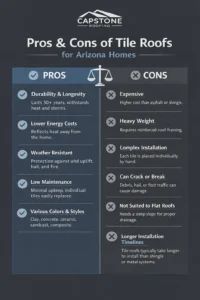
Click to Enlarge
What Are Tile Roofs?
Roof tiles are overlapping pieces—commonly made from clay, concrete, ceramic, sandcast, or composite materials—that form a watertight roof covering. They’re typically laid on sloped roofs in patterns that allow water to shed efficiently. Clay and concrete tiles dominate the Arizona market, but homeowners may also encounter ceramic and composite tiles, each offering unique aesthetics and performance characteristics. For a deeper look at Capstone’s services beyond tile roofing, explore our roofing services page.
Clay tiles: Traditionally fired in kilns, clay tiles are prized for their natural color variation, long lifespan (often 50 – 100 years), and ability to resist heat and UV degradation. They’re heavier than many other roofing materials and require sturdy framing but offer unmatched Southwest character.
Concrete tiles: Made from a mix of cement, sand, and water, concrete tiles can mimic clay, slate, or wood shakes. They tend to be more affordable than clay but still weigh significantly more than asphalt shingles. Their color pigments may fade over time, and their typical lifespan ranges from 40 – 50 years.
Other tile options: Ceramic tiles provide glazed finishes and a wider range of colors but may be brittle. Sandcast tiles deliver rustic charm and are often handcrafted, while composite tiles combine polymers and recycled materials to reduce weight. Each type requires specialized installation techniques and may not be readily available locally, so consult a roofing professional when choosing.
For additional context on the general benefits and drawbacks of tile roofing, see The Spruce’s tile roofing guide.
Advantages of Tile Roofs
Tile roofs offer a variety of benefits that appeal to Arizona homeowners. While this section focuses on the positives, remember that every advantage should be weighed against potential drawbacks discussed later.
Durability and longevity: A properly installed and maintained tile roof can last 50 – 100 years. Clay tiles are naturally resistant to rot, insects, and UV degradation, while concrete tiles provide robust protection against hail, high winds, and fire.
Thermal performance: The air gap between tiles and the roof deck creates natural ventilation, helping to regulate indoor temperatures. This thermal mass slows heat transfer, reducing cooling demand during Phoenix’s scorching summers. Light‑colored tiles further reflect solar radiation. According to energy‑efficiency experts, cool roofs can lower energy costs and improve comfort. To learn more about reflective roofing technologies, explore Energy‑efficient roofing insights from Energy.gov.
Weather resistance: Tile roofs withstand high winds, hail, and driving rain. In monsoon‑prone Phoenix, clay and concrete tiles remain stable under heavy rainfall and resist uplift. Their non‑combustible nature provides added fire safety, an important consideration in wildfire‑vulnerable regions.
Low maintenance: Tiles are individual units, so localized damage (such as a cracked tile) can be addressed without replacing an entire roof section. Routine visual inspections and occasional debris removal help ensure longevity. Annual professional inspections are advisable to identify hidden issues.
Aesthetic versatility: Tiles come in many shapes, profiles, and colors—barrel, S‑tile, flat, and interlocking. Homeowners can choose natural earth tones for a classic Southwestern look or opt for modern glazed finishes. Tile roofing complements both traditional stucco homes and contemporary designs.
Eco‑friendly materials: Clay tiles are made from natural earth and can be recycled at the end of their lifespan. Concrete tiles often incorporate recycled content. Their longevity reduces the frequency of roof replacement, lowering long‑term material consumption.
Disadvantages of Tile Roofs
Despite their many strengths, tile roofs are not a perfect fit for every home. Understanding these disadvantages will help you make an informed choice. For a professional perspective on the trade‑offs, see Whole Home Inspections on tile roof pros and cons.
High upfront cost: Tile roofing materials and installation are among the most expensive options on the market. Pricing varies widely based on tile type and roof complexity, but homeowners can expect to invest significantly more than for asphalt shingles. While the long lifespan may offset these costs, the initial investment can be prohibitive.
Heavy weight: Clay and concrete tiles weigh 600 – 1 000 pounds per 100 square feet, far heavier than asphalt shingles. Many homes require structural reinforcement to support this load. If your existing framing is undersized, a structural engineer should assess and retrofit the roof structure before installation.
Complex installation: Each tile must be individually fastened or hooked, and the underlayment must be precisely installed to prevent leaks. Skilled tile roofers are essential. Improper installation can lead to water infiltration, cracked tiles, or structural damage. DIY installation is not recommended.
Potential for breakage: While tile roofs are durable, individual tiles can crack or break under heavy impact (e.g., falling branches, hailstones, or foot traffic). Replacement requires matching tiles, which may be difficult if the original style or color has been discontinued. Avoid walking on tile roofs and trim overhanging trees to minimize damage.
Limited slope compatibility: Tile roofs perform best on roofs with slopes of 4:12 or steeper. Flat or low‑slope roofs common in Phoenix’s modern architecture are typically better suited to foam or membrane systems. In such cases, consider other roofing solutions that handle drainage more effectively.
Color fading and efflorescence: Concrete tiles may experience color fading as pigments weather over time. Both clay and concrete tiles can develop efflorescence—a chalky white deposit caused by free lime in the concrete reacting with water. Although mainly aesthetic, efflorescence requires cleaning to maintain curb appeal.
Availability and selection: Specialized tiles (such as imported ceramic or sandcast) may have limited local availability, increasing lead times and costs. Some homeowners’ associations impose restrictions on tile color or profile, limiting design flexibility.
If these drawbacks give you pause, feel free to contact us for guidance on alternative roofing solutions.
Phoenix‑Specific Considerations
Living in the Valley of the Sun introduces unique stressors for roofing systems. Here’s how tile roofs perform under Phoenix conditions and what homeowners should keep in mind.
Extreme heat & UV exposure: Summer temperatures regularly exceed 110 °F, and UV radiation accelerates material degradation. Tile roofs fare better than many alternatives; clay tiles are naturally heat‑resistant, and the air gap under each tile reduces heat transfer. Reflective tile coatings can further enhance energy efficiency.
Monsoon storms & wind uplift: Phoenix’s monsoon season (July–September) brings high winds and torrential rains. Properly fastened tiles resist uplift, but ridge and hip tiles are vulnerable if not secured with modern fastening systems. Ensure your roofer uses hurricane clips or foam adhesives where appropriate.
Debris impact & dust: Haboobs (dust storms) can propel small rocks and debris onto roofs. While tile roofs resist abrasion better than asphalt shingles, individual tiles can crack under direct impact. Schedule post‑storm inspections to catch any damage early.
Flat roofs & foam systems:** Many Phoenix homes feature flat or low‑slope sections, often finished with foam or elastomeric coatings. Tile roofing isn’t appropriate for flat areas because water can pond beneath tiles and cause leaks. Hybrid systems may use tiles on the steep portions and foam on flat sections. Review the overall roof design before committing to tile.
To see if your neighborhood falls within Capstone’s service range, check our service area page.
Comparison to Other Roofing Materials
Choosing a roof is ultimately a trade‑off among cost, longevity, aesthetics, and structural compatibility. Here’s how tile roofs compare to other common options in Phoenix.
Asphalt shingles: Asphalt is inexpensive and easy to install, with lifespans around 15 – 30 years. Shingles are lighter than tiles and require less structural support. However, they degrade faster under intense UV radiation and require more frequent replacement.
Metal roofing: Standing‑seam metal roofs can last 40 – 70 years and offer excellent fire resistance. Metal reflects solar radiation and is lighter than tile, but installation costs are comparable. Metal roofs can be noisy during rainstorms and may dent under hail, though high‑quality alloys resist impact better.
Foam and flat‑roof coatings: Spray‑foam and elastomeric coatings are popular for flat roofs. They provide seamless waterproofing, high insulation values, and light weight. However, they must be periodically recoated to maintain protection and can be punctured by foot traffic or debris.
Slate and synthetic composite: Natural slate offers extraordinary longevity (100+ years) and a premium aesthetic but is even heavier and more expensive than tile. Synthetic composites mimic slate or shake with lower weight, though their long‑term durability is still being tested.
When comparing materials, consider your budget, architectural style, structural capacity, and long‑term maintenance commitment. If you’d like a personalized assessment, feel free to request a free roofing estimate.
Maintenance & Inspection Tips
Tile roofs may require less maintenance than other materials, but proactive care maximizes their lifespan.
Regular inspections: Schedule a professional inspection at least once a year (ideally before monsoon season) to identify cracked tiles, loose fasteners, or failing underlayment. Inspections should also follow major storms or if you notice interior leaks.
Debris removal: Keep gutters clear and remove leaves or branches that accumulate in valleys. Accumulated debris can block water flow and lead to leaks or rot. Be cautious when walking on tile; when in doubt, hire a professional to perform debris removal.
Replace damaged tiles promptly: A cracked tile exposes the underlayment to UV radiation and water intrusion. Replacement involves carefully lifting surrounding tiles, sliding the damaged piece out, and inserting a matching tile. Always use manufacturer‑approved fasteners or hooks.
Maintain flashing and sealants: Check metal flashing around chimneys, skylights, and vent stacks for corrosion or gaps. Sealant around roof penetrations can dry out and crack; re‑seal as needed to prevent leaks.
Prevent moss & efflorescence: In shaded or humid areas, moss can grow on tile surfaces. Use a gentle soft‑wash (no pressure washers) with a manufacturer‑approved cleaning solution. For efflorescence on concrete tiles, lightly scrub with a dry brush; avoid harsh chemicals that could discolor the tile.
For assistance with inspections or repairs, review our range of roofing services.
When Are Tile Roofs Right for You?
Tile roofs are best suited for homeowners seeking long‑term durability, distinctive aesthetics, and superior thermal performance. They’re an excellent choice for Mediterranean‑, Spanish‑, or Southwestern‑style homes with adequate roof slopes and structural support. If you plan to stay in your home for decades, the high upfront investment may pay off through lower maintenance and energy costs.
However, if your roof structure cannot support the weight or if budget constraints are paramount, alternatives like metal, foam, or high‑quality asphalt shingles may be more appropriate. Consulting with a licensed roofing contractor helps evaluate your home’s framing, slope, and architectural style to ensure the right fit.
Frequently Asked Questions
How long do tile roofs last in Arizona?
With proper installation and maintenance, clay tile roofs can last 50 – 100 years, while concrete tiles typically last 40 – 50 years. Harsh UV exposure and monsoon storms in Phoenix make routine inspections essential to achieve the longest possible lifespan.
Are tile roofs energy‑efficient?
Yes. The air gap beneath the tiles and the thermal mass of the materials reduce heat transfer into the home. Light‑colored or reflective tiles can further decrease cooling loads in Phoenix’s hot climate.
Do tile roofs require special structural support?
Tile roofs are heavy. Your roof framing must be engineered to support loads of 600 – 1 000 pounds per 100 square feet. Many older homes may require reinforcement before tile installation.
Can tile roofs be installed on flat roofs?
No. Tile roofing requires a slope of at least 4:12 to shed water properly. Flat or low‑slope sections should use foam, single‑ply membranes, or other systems designed for flat roofs.
What are the disadvantages of concrete roof tiles?
Concrete tiles are heavy and may fade over time. They can crack under heavy impact and are less durable than clay over the long term. However, they offer lower initial cost and good weather resistance.
What are the advantages of clay roof tiles?
Clay tiles offer exceptional longevity, natural color variation, resistance to rot and insects, and classic aesthetics. They’re more expensive than concrete but often last longer.
How much do tile roofs cost?
Costs vary widely based on tile type and roof complexity. Generally, tile roof installation can run several times higher than asphalt shingles. Consult a local roofing contractor for a site‑specific estimate.
Can individual tiles be replaced?
Yes. Because tiles are installed individually, a cracked or broken tile can be removed and replaced without disturbing the rest of the roof. Matching the color and profile is important for aesthetic continuity.
Will a tile roof add value to my home?
Tile roofs often enhance curb appeal and can increase resale value due to their durability and aesthetic appeal. However, the return on investment depends on regional preferences and buyer expectations.
How do I choose between tile and other roofing materials?
Consider budget, structural capacity, architectural style, climate, and your long‑term plans. Compare the pros and cons of tile, metal, foam, and asphalt to determine which material aligns with your priorities. A professional roof inspection and consultation can help guide your decision.
published on Monday, January 12th, 2026

