DIY vs Professional Roof Installation: Which Option Makes Sense for Arizona Homeowners?
Replacing a roof is one of the largest maintenance projects most homeowners will ever face. With countless online tutorials, equipment rentals, and home improvement videos available, many homeowners wonder whether they can save money by installing a roof themselves instead of hiring a professional roofing contractor.
The answer depends on several factors, including the type of roof, the condition of the underlying structure, your experience level, available time, safety considerations, and Arizona’s unique climate challenges. While some homeowners successfully complete small roofing projects, a full roof replacement is significantly more complex than many people realize.
This guide compares DIY roof installation and professional roofing services from a practical perspective. You’ll learn the advantages and disadvantages of each approach, common mistakes homeowners make, hidden costs that affect budgeting, and how Arizona’s heat and monsoon weather can impact your decision.
If you’re currently evaluating whether to repair, patch, or replace an aging roof, you may also find our guide on how to know whether to repair, patch, or replace your roof helpful.
Why Homeowners Consider DIY Roof Installation
The biggest reason homeowners consider DIY roofing is simple: cost savings. Labor typically represents a significant portion of a roofing project, and eliminating labor expenses appears attractive at first glance.
Many homeowners also enjoy home improvement projects and take pride in maintaining their own property. For experienced DIYers who have completed framing, electrical, plumbing, or structural repairs, roofing may seem like a logical next challenge.
Some homeowners also believe they can control project quality better by overseeing every detail themselves. Others may have difficulty scheduling contractors during busy roofing seasons and prefer completing the work on their own timeline.
While these motivations are understandable, roofing differs substantially from many other home improvement projects because errors often remain hidden until significant damage develops months or years later.
What DIY Roof Installation Actually Involves
Many people imagine roofing as simply removing old materials and installing new shingles or tiles. In reality, a complete roof replacement involves multiple interconnected systems that must work together to protect the home.
A typical roofing project may include:
- Removing existing roofing materials
- Inspecting decking and structural components
- Replacing damaged sheathing
- Installing underlayment
- Installing flashing systems
- Installing ventilation components
- Applying roofing materials
- Sealing penetrations and transitions
- Cleaning debris and fasteners
- Performing final inspections
Each step affects the performance of every step that follows. A small installation error can compromise the entire roofing system.
Homeowners researching roofing systems may benefit from reviewing our overview of roof installation and our roofing terminology guide at roofing terms.
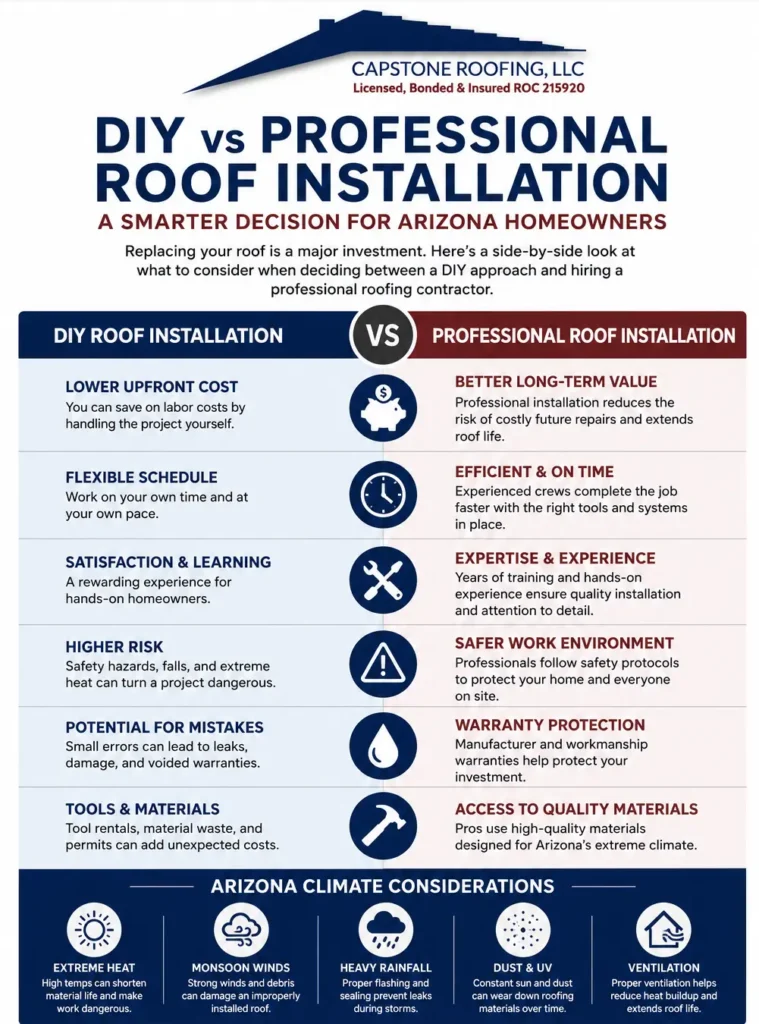
The Pros of DIY Roofing
Potential Labor Savings
The primary advantage of DIY roofing is the potential reduction in labor costs. Depending on roof size and complexity, labor can represent a substantial portion of project expenses.
Homeowners willing to invest significant time and effort may reduce upfront costs by performing portions of the work themselves.
Project Flexibility
DIY projects allow homeowners to work according to their own schedules. Rather than coordinating contractor availability, work can proceed during evenings, weekends, or available vacation time.
Hands-On Learning
Many homeowners enjoy learning new skills. Completing a roofing project provides valuable knowledge about home construction and future maintenance needs.
Direct Material Selection
DIY homeowners control every purchasing decision and can spend additional time researching materials, underlayment options, ventilation systems, and accessories.
The Cons of DIY Roofing
Safety Risks
Roofing remains one of the most physically demanding and potentially dangerous construction activities. Sloped surfaces, extreme temperatures, loose materials, ladders, and elevated work areas all contribute to risk.
Arizona homeowners face additional concerns because roofing surfaces can become extremely hot during summer months.
The Occupational Safety and Health Administration provides extensive guidance regarding OSHA fall protection requirements and roofing safety procedures.
Installation Errors
Professional roofers perform roofing work daily. They recognize potential issues quickly and understand how various roofing components interact.
Most homeowners simply don’t have enough repetition to identify subtle installation mistakes before they become larger problems.
Time Commitment
A project that might take a professional crew several days can require weeks for a homeowner working evenings and weekends.
Longer project timelines increase exposure to weather events and can leave portions of the roof vulnerable during installation.
Tool Costs
DIY roofing requires more than a ladder and hammer. Specialized equipment may include:
- Roofing nailers
- Safety harness systems
- Material lifts
- Cutting tools
- Roof brackets
- Air compressors
- Extension ladders
- Debris removal equipment
Tool purchases and rentals can significantly reduce expected savings.
DIY Roofing Costs vs Professional Roofing Costs
Many homeowners focus exclusively on upfront labor savings when comparing DIY and professional installation.
However, a complete financial comparison should include:
- Material costs
- Equipment rentals
- Safety equipment
- Permit fees
- Waste disposal
- Transportation costs
- Potential repair costs from mistakes
- Future maintenance expenses
Even small installation errors can create future repair expenses that exceed the original labor savings.
Homeowners evaluating replacement projects may also benefit from reviewing our breakdown of roof replacement costs in Phoenix.
Hidden Costs Most DIY Roofers Don’t Consider
One of the biggest surprises for first-time roof installers is the number of secondary expenses that appear during the project.
Examples include:
- Replacing damaged roof decking
- Additional underlayment requirements
- Flashing replacement
- Vent upgrades
- Dumpster rentals
- Extra material orders
- Weather delays
- Permit revisions
These costs rarely appear in online DIY budget calculators but can substantially affect the final project cost.
DIY Roof Inspection vs Professional Roof Inspection
Roof inspections represent another area where homeowners frequently compare DIY and professional approaches.
A homeowner can certainly perform visual observations and identify obvious concerns such as:
- Missing shingles
- Broken tiles
- Storm debris
- Visible leaks
- Sagging areas
However, professional inspections often identify less obvious issues involving underlayment deterioration, flashing failures, moisture intrusion, ventilation problems, and structural concerns.
Many roofing issues begin long before visible symptoms appear inside the home.
For additional guidance, review our articles about roof inspections and professional roof inspections.
Arizona-Specific Challenges That Affect DIY Roofing
Roofing advice written for other regions doesn’t always apply to Arizona.
Phoenix-area roofs experience conditions that many homeowners outside the Southwest never encounter.
- Extreme UV exposure
- Triple-digit summer temperatures
- Rapid thermal expansion and contraction
- Dust accumulation
- Monsoon winds
- Wind-driven rain
- Intense seasonal storms
These conditions place significant demands on roofing materials, fastening systems, flashing details, and ventilation components.
Understanding Arizona-specific material performance is important when deciding between DIY installation and professional installation.
Our guide covering the best roofing materials for Arizona provides additional insight.
Monsoon Season Complicates Roofing Projects
Arizona’s monsoon season introduces another variable that DIY homeowners must consider carefully.
A professional roofing crew may complete a project before weather conditions change. DIY projects often take significantly longer, increasing exposure to unexpected storms.
Strong winds, flying debris, and sudden rainfall can quickly create problems if portions of the roof remain unfinished.
Homeowners planning roofing work near monsoon season should review:
Common DIY Roofing Mistakes
The most common DIY roofing problems are not dramatic failures. They’re small details repeated hundreds or thousands of times across a roof system.
- Incorrect nail placement
- Improper flashing installation
- Insufficient ventilation
- Underlayment overlap mistakes
- Improper sealing around penetrations
- Improper material storage
- Walking damage to roofing materials
- Failure to identify decking issues
Most of these issues remain invisible until a storm or aging process reveals the problem.
published on Tuesday, June 2nd, 2026