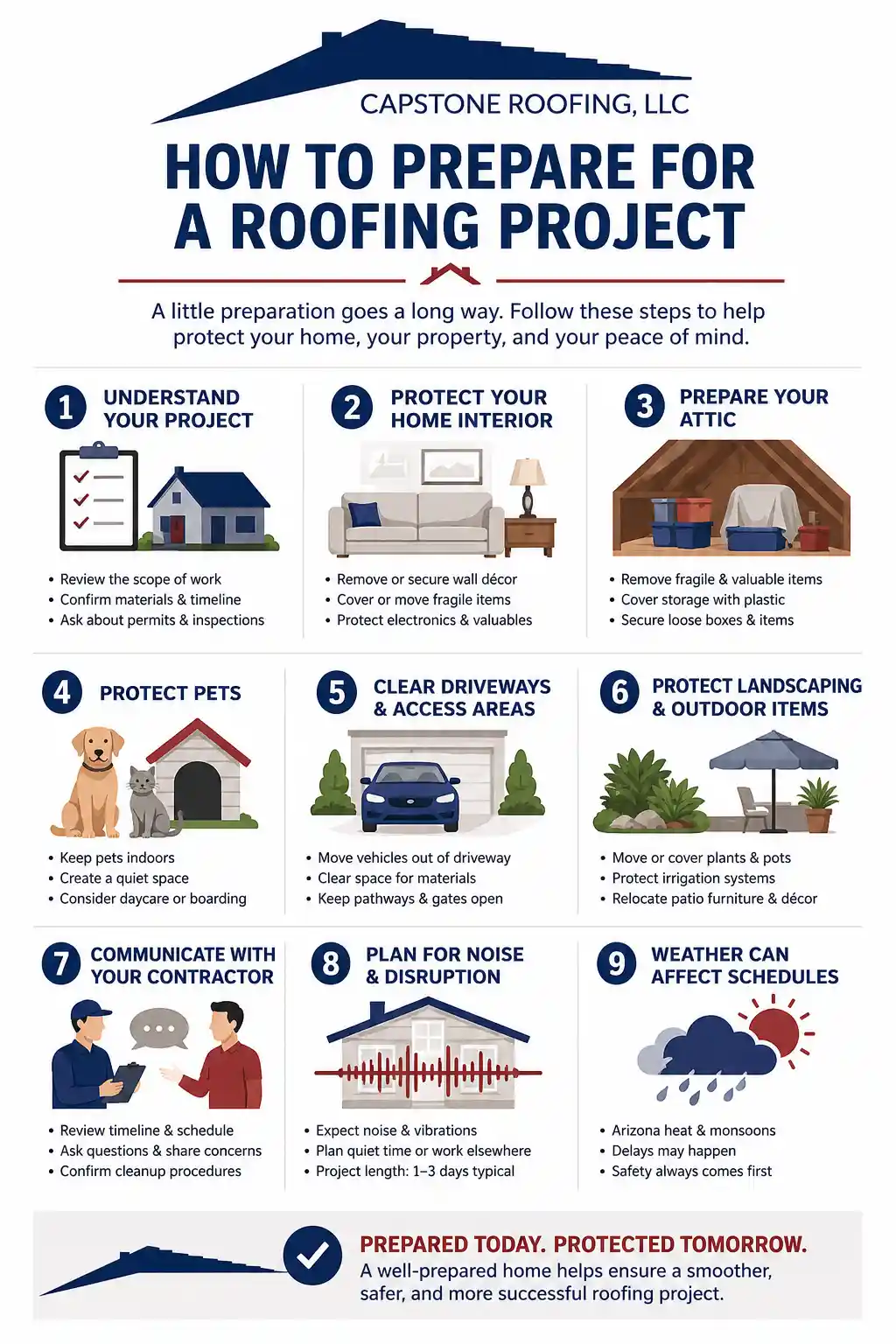
How to Prepare for a Roofing Project
Planning a roofing project can feel overwhelming, especially if it is your first time replacing or repairing a roof. Many homeowners focus on choosing roofing materials and comparing estimates, but the most successful projects begin with proper preparation. Understanding how to prepare for a roofing project can help protect your home, minimize disruptions, and ensure your contractor can work safely and efficiently.
Whether you are preparing for a roof replacement, major roof repair, tile underlayment replacement, flat roof installation, or metal roofing project, taking a few proactive steps before work begins can save time, reduce stress, and improve the overall experience.
Arizona homeowners face unique roofing challenges. Extreme heat, intense UV exposure, seasonal monsoons, and sudden windstorms can all affect roofing systems and project schedules. Proper planning helps ensure your roofing project stays on track while protecting your investment.
In this guide, we’ll explain how to prepare for a roof replacement, how to prepare for a new roof installation, what homeowners often overlook, and the questions you should ask before work begins.
Why Proper Roofing Project Preparation Matters
A roofing project involves much more than replacing shingles, tiles, or underlayment. Crews will be moving materials, removing old roofing components, using specialized equipment, and accessing multiple areas around your property.
Without proper preparation, homeowners may encounter avoidable issues such as damaged landscaping, blocked driveways, stressed pets, unexpected delays, or difficulty working from home during construction.
Preparing in advance helps:
- Protect your home and belongings
- Reduce safety concerns
- Prevent project delays
- Protect landscaping and outdoor features
- Make communication easier
- Improve project efficiency
- Reduce stress throughout the process
A well-prepared roofing project allows your contractor to focus on delivering quality workmanship while minimizing disruptions to your daily routine.
Understand the Scope of Your Roofing Project
Before work begins, make sure you understand exactly what your contractor will be doing.
One of the most common frustrations homeowners mention in online forums and homeowner groups is discovering unexpected work after the project has already started. Having a clear understanding of the scope of work helps eliminate surprises.
Ask questions such as:
- Will the existing roof be completely removed?
- Will the underlayment be replaced?
- Are roof deck repairs included?
- Will permits be required?
- How long will the project take?
- What warranties are included?
- What happens if hidden damage is found?
For many Arizona homes, especially those with tile roofing systems, replacement projects often involve underlayment upgrades. Understanding the lifespan of these components can help homeowners plan accordingly. If you are evaluating your roofing system, review our guide on tile roof underlayment in Arizona.
How to Prepare for a Roof Replacement
Many homeowners search for “how to prepare for roof replacement” because they simply don’t know what to expect.
A roof replacement can involve:
- Removing existing roofing materials
- Inspecting the roof deck
- Repairing damaged components
- Installing underlayment
- Installing new roofing materials
- Replacing flashing and ventilation components
- Final cleanup and inspection
Preparation starts well before installation day.
Review your contract carefully, verify scheduling details, and confirm material delivery dates. If your roof replacement involves storm damage or insurance claims, our roof insurance claim guide can help you better understand the process.
Can You Stay Home During a Roofing Project?
This is one of the most common questions homeowners ask online.
The answer is yes, but it may not always be comfortable.
Roof replacements generate substantial noise. Hammering, material movement, compressors, and crews walking across the roof create vibrations that can be heard throughout the home.
Many homeowners working remotely report that roofing projects are more disruptive than expected.
If you plan to stay home during the project:
- Identify a quiet room away from the primary work area.
- Reschedule important meetings if possible.
- Prepare for intermittent interruptions.
- Keep pets secured indoors.
- Maintain communication with your contractor.
Most residential roofing projects are completed within one to three days, depending on roof size, material type, and weather conditions.
Prepare Your Attic Before Roofing Work Begins
One of the biggest homeowner complaints discussed in roofing forums is discovering attic items shifted, covered in dust, or damaged during installation.
Roof replacement creates vibrations throughout the roof structure. These vibrations can affect items stored in the attic.
Before roofing work begins:
- Remove fragile items.
- Cover stored belongings with plastic sheeting.
- Secure storage containers.
- Relocate valuables.
- Inspect for existing water damage.
This is also a great opportunity to schedule a professional inspection if you have concerns about hidden roofing issues. Learn more about what roofers check during a roof inspection.
Protect Landscaping and Outdoor Features
Arizona homeowners often invest heavily in landscaping, decorative rock, irrigation systems, shade structures, and outdoor living spaces.
Roofing crews work around the entire perimeter of the property, making it important to protect vulnerable areas before work begins.
Recommended preparation steps include:
- Moving potted plants away from the home.
- Covering delicate landscaping.
- Marking irrigation heads.
- Relocating patio furniture.
- Protecting outdoor electronics.
- Removing decorative yard features.
If you have recently invested in landscaping improvements, notify your contractor during the project walkthrough so they can identify areas requiring additional protection.
Move Vehicles Before Roofing Begins
One of the most common recommendations shared by roofing contractors and homeowners alike is to move vehicles away from the work zone.
Roofing projects require space for:
- Material deliveries
- Dumpsters
- Trailers
- Crew vehicles
- Equipment staging
Additionally, removing old roofing materials creates debris that can accidentally fall into driveways or nearby areas.
To avoid potential damage:
- Move vehicles out of the driveway.
- Clear garage access points.
- Relocate recreational vehicles if necessary.
- Keep pathways open for workers.
Preparing Pets for Roofing Day
Many homeowners don’t think about pets until installation day arrives.
Dogs and cats can become stressed by unfamiliar noises, vibrations, and increased activity around the property.
To help protect your pets:
- Keep them indoors.
- Use a quiet room away from the work area.
- Consider boarding or daycare if they are sensitive to noise.
- Walk dogs before work begins.
- Inform roofing crews that pets are present.
After the project is complete, inspect your yard before allowing pets to roam freely. Most professional contractors perform magnetic nail sweeps, but a final inspection adds peace of mind.
Preparing Your Home’s Interior
Many homeowners are surprised by how much vibration occurs during roof replacement.
While roofing systems are designed to withstand installation activities, fragile interior items can occasionally shift.
Before work begins:
- Remove fragile wall decorations.
- Secure hanging artwork.
- Protect electronics.
- Move valuables away from exterior walls.
- Cover sensitive furnishings if desired.
These precautions can help prevent unnecessary damage during installation.
Questions to Ask Your Roofing Contractor Before Installation Day
One recurring theme found in homeowner discussions is that many roofing frustrations stem from poor communication.
Before your project starts, ask:
- Who will supervise the project?
- What is the expected timeline?
- How will cleanup be handled?
- Will landscaping protection be provided?
- How are weather delays handled?
- Who should I contact with questions?
- What happens if additional repairs are discovered?
Establishing expectations early can significantly improve the overall experience.
How Arizona Weather Can Affect Roofing Projects
Arizona’s climate plays a major role in roofing schedules.
Unlike many parts of the country, roofing contractors must account for:
- Extreme summer heat
- Monsoon storms
- High winds
- Dust storms
- UV exposure
These factors can occasionally impact project timelines.
Homeowners scheduling roofing work during summer should understand that safety considerations may require crews to adjust schedules during periods of extreme heat.
For additional seasonal planning tips, review our guide on preparing your roof for monsoon season.
How to Prepare for Different Roofing Materials
How to Prepare a Roof for Shingles
Asphalt shingle systems require a clean roof deck, quality underlayment, and proper ventilation. Existing damage should be repaired before installation.
How to Prepare Roof for Metal Roofing
Metal roofing systems often require inspection of decking, underlayment upgrades, and moisture management considerations. According to the Home Depot metal roofing installation guide, proper preparation of the roof deck is critical for long-term performance.
How to Do Flat Roofing Step by Step
Flat roofing preparation generally includes:
- Roof inspection
- Removal of old materials
- Substrate repairs
- Drainage evaluation
- Insulation installation
- Membrane installation
- Flashing installation
- Final inspection
Drainage is particularly important for flat roofing systems because standing water can significantly impact lifespan.
Common Mistakes Homeowners Make Before a Roofing Project
Voice of Customer research consistently reveals the same avoidable mistakes.
- Waiting until the last minute to prepare.
- Not moving vehicles.
- Ignoring attic storage.
- Forgetting about pets.
- Failing to protect landscaping.
- Choosing contractors based solely on price.
- Not reviewing warranty information.
- Assuming every roofing company follows the same standards.
Homeowners who invest time in preparation often report smoother projects and fewer unexpected issues.
How to Choose the Best Roofing Company for the Job
Choosing the right roofing contractor is one of the most important parts of the process.
Look for a company that offers:
- Proper licensing and insurance
- Strong local reputation
- Positive customer reviews
- Manufacturer certifications
- Clear communication
- Detailed estimates
- Documented warranties
It is also wise to compare multiple estimates and understand exactly what each proposal includes.
If you’re comparing contractors, our article on the benefits of hiring a professional roofing company for a full roof replacement provides additional insights.
Frequently Asked Questions
How do I prepare for a roof replacement?
Move vehicles, secure attic storage, protect landscaping, prepare pets, and review the project timeline with your contractor before work begins.
Can I stay home during a roof replacement?
Yes, but expect significant noise and vibrations throughout the day.
Should I remove items from my attic before roofing starts?
Yes. Fragile or valuable items should be removed or covered to prevent dust or vibration-related damage.
How long does a roofing project usually take?
Most residential roofing projects take one to three days, depending on roof size, material type, weather, and necessary repairs.
Should I move my car before roofing work begins?
Yes. Moving vehicles away from the work area helps protect them from debris and provides access for roofing crews.
What should I do with my pets during a roof replacement?
Keep pets indoors, provide a quiet space, or arrange temporary boarding if they are sensitive to noise.
Will roofing damage my landscaping?
Professional roofing companies take precautions to protect landscaping, but homeowners should still move vulnerable plants and outdoor items when possible.
Can weather delay a roofing project?
Yes. Monsoon storms, high winds, and extreme temperatures can occasionally affect roofing schedules.
Do I need a roof inspection before replacement?
A roof inspection can help identify hidden issues and provide a clearer understanding of your roof’s condition before work begins.
Where can I learn more about roofing safety and best practices?
The National Roofing Contractors Association provides educational resources about roofing systems, maintenance, and safety.
Prepare for Your Roofing Project with Capstone Roofing
A successful roofing project starts long before the first roofing material is installed. By preparing your property, protecting your belongings, communicating with your contractor, and understanding what to expect, you can help ensure a smoother experience from start to finish.
At Capstone Roofing, we help Arizona homeowners navigate roof repairs, roof replacements, tile roof projects, foam roofing systems, leak repairs, inspections, and more. Our team takes pride in providing clear communication, quality workmanship, and dependable service throughout the Phoenix metropolitan area.
If you’re planning a roofing project and want professional guidance, schedule a consultation with Capstone Roofing today and let our team help you prepare for a successful project.
published on Monday, June 8th, 2026