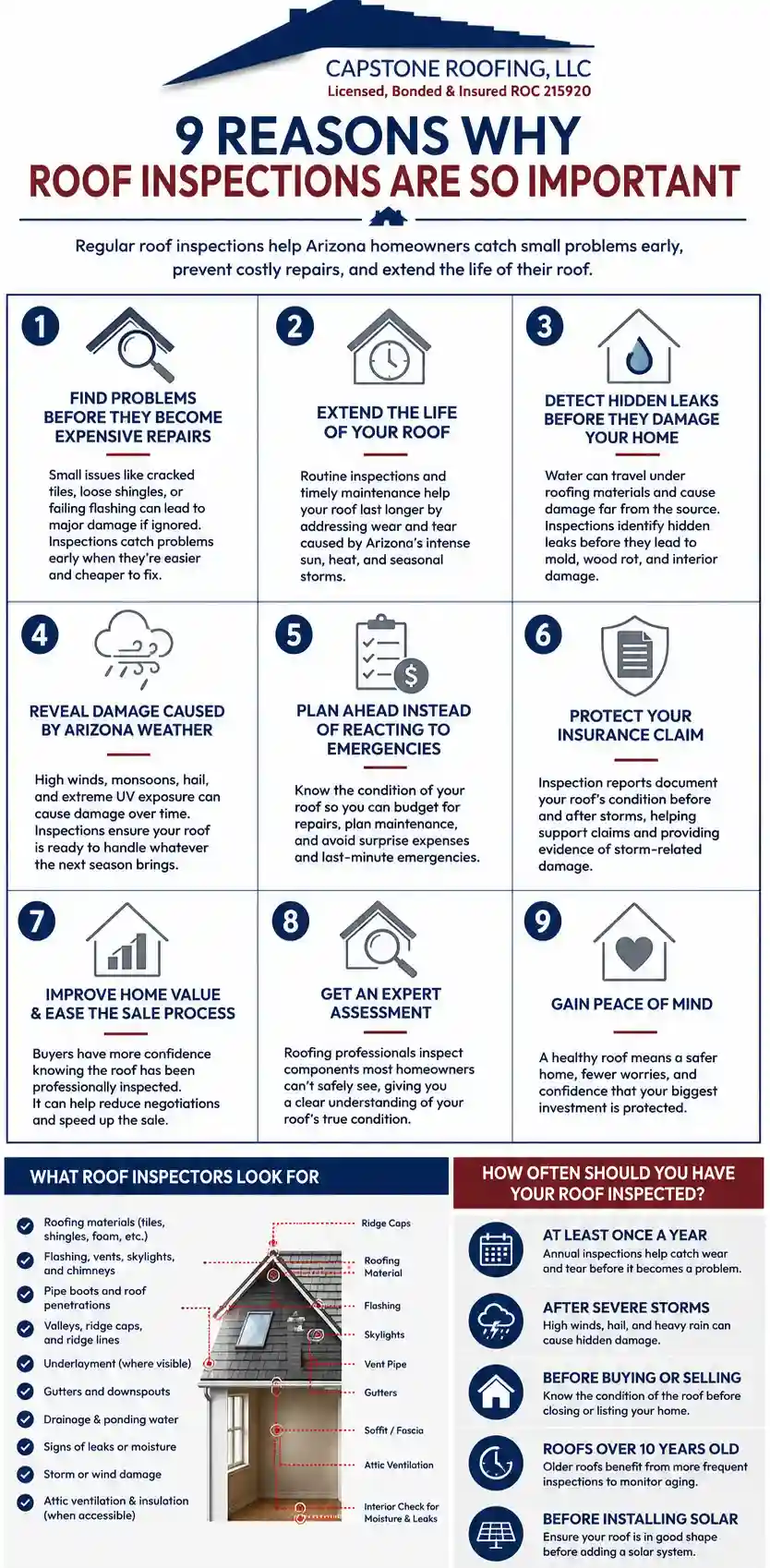
9 Reasons Why Roof Inspections Are So Important
Your roof protects everything beneath it. It shields your home from Arizona’s intense summer heat, monsoon storms, wind-driven rain, dust, and UV exposure while helping regulate indoor comfort and energy efficiency. Yet despite being one of the most important parts of any home, it’s often one of the most overlooked until a leak or major problem appears.
Understanding why roof inspections are important can help homeowners avoid expensive repairs, extend the life of their roofing system, and make better decisions about maintenance, insurance claims, and future roof replacement. A professional inspection doesn’t simply identify active leaks—it evaluates the overall condition of your roof, uncovers hidden issues before they become emergencies, and provides a clear picture of what maintenance or repairs may be needed.
While many people associate roof inspections with buying or selling a home, they’re equally valuable for long-term homeowners. Arizona’s climate is especially hard on roofing materials. Extreme heat causes expansion and contraction, UV radiation slowly breaks down roofing components, and summer monsoon storms can loosen tiles, damage flashing, clog drainage systems, and create entry points for water.
Whether you own a tile roof, shingle roof, foam roof, metal roof, or flat roofing system, regular inspections are one of the simplest ways to protect your investment and avoid costly surprises. In this guide, we’ll explain the importance of regular roof inspections, what roof inspectors look for, when you should schedule one, and nine reasons every Arizona homeowner should make roof inspections part of their maintenance routine.
Why Are Roof Inspections Important?
Roof inspections are important because they identify damage before it becomes expensive, extend the lifespan of your roof, improve safety, help with insurance documentation, and allow homeowners to plan maintenance before small issues become major repairs. In Arizona, where roofs face extreme UV exposure and seasonal monsoon storms, routine inspections help detect cracked tiles, deteriorated underlayment, loose flashing, drainage problems, and hidden leaks that may not be visible from the ground.
A professional roof inspection also gives homeowners confidence in the condition of their roof. Whether you’re purchasing a home, preparing for monsoon season, filing an insurance claim, or simply maintaining your property, knowing the true condition of your roofing system allows you to make informed decisions instead of reacting to unexpected damage.
If you’re wondering exactly what roof inspectors look for, we’ve put together a detailed guide covering every part of the inspection process in our article about what roofers check during a roof inspection.
9 Reasons Why Roof Inspections Are Important
Every roof eventually experiences wear and tear, but many roofing problems develop slowly and remain hidden for months or even years. By the time water stains appear inside your home, the damage underneath the roofing materials may already be extensive. These nine reasons explain why regular roof inspections are one of the smartest investments homeowners can make.
1. Roof Inspections Find Problems Before They Become Expensive Repairs
One of the biggest benefits of roof inspections is catching small issues before they grow into major roofing projects.
Many roofing problems begin with something relatively minor:
- A cracked roof tile
- A lifted shingle
- Small flashing separation
- Minor underlayment deterioration
- A clogged roof drain
- Loose ridge caps
- Failing sealant around roof penetrations
None of these issues may cause an immediate leak. In fact, homeowners often assume their roof is perfectly healthy because there are no visible water stains inside the home.
The reality is that water can travel considerable distances beneath roofing materials before becoming visible indoors. During that time, moisture may damage roof decking, insulation, drywall, framing, or electrical components without obvious warning signs.
A professional roof inspection helps identify these early warning signs while repairs are typically much simpler and less expensive.
For Arizona homeowners, this preventative approach is especially important because intense summer heat accelerates the aging of roofing materials. Daily expansion and contraction caused by temperature swings gradually weaken sealants, flashing connections, and underlayment even if the roofing surface still appears to be in good condition.
Routine inspections also establish a maintenance history for your roof. Rather than waiting for an emergency, homeowners can budget for repairs over time and extend the overall lifespan of the roofing system.
If you’ve already noticed possible warning signs, such as ceiling stains, missing tiles, cracked shingles, or unexplained moisture, it’s worth reviewing our guide on how to spot roof damage before those problems worsen.
2. Regular Roof Inspections Help Extend the Life of Your Roof
Every roofing system has an expected lifespan, but lifespan depends heavily on maintenance.
A roof that receives routine inspections and timely repairs often lasts significantly longer than one that’s neglected until major damage occurs.
This is particularly true in Arizona.
Phoenix-area roofs face challenges that homeowners in many other parts of the country don’t experience, including:
- Extreme ultraviolet radiation nearly year-round
- Summer temperatures exceeding 110°F
- Rapid thermal expansion and contraction
- Dust accumulation beneath roofing materials
- High winds during monsoon season
- Occasional hail events
Over time, these conditions slowly degrade roofing components. Underlayment becomes brittle, flashing begins separating from roof penetrations, fasteners loosen, sealants dry out, and drainage systems collect debris.
Without inspections, these normal aging processes often go unnoticed until they cause water intrusion.
By identifying wear early, homeowners can replace isolated components rather than allowing damage to spread throughout the roofing system.
Different roofing materials age differently as well. Tile roofs may last for decades while the underlayment beneath them requires replacement much sooner. Foam roofs need periodic recoating to maintain waterproof protection. Shingle roofs benefit from replacing damaged shingles before surrounding materials deteriorate.
If you’re wondering how frequently inspections should be scheduled based on your roofing material and Arizona’s climate, our article on how often you should have your roof inspected in Phoenix explains recommended inspection intervals and seasonal timing.
According to the U.S. Department of Energy, maintaining roofing systems properly can also improve energy efficiency by helping roofs perform as designed and reducing unnecessary heat gain caused by damaged roofing components.
3. Roof Inspections Help Detect Hidden Leaks Before They Damage Your Home
One of the biggest reasons why roof inspections are important is that not every roof leak is immediately visible. Water rarely enters a home directly beneath the damaged area. Instead, it often travels along the roof deck, rafters, or underlayment before eventually appearing as a stain on a ceiling or wall. By the time interior damage becomes noticeable, the leak may have existed for weeks or even months.
A professional roof inspection helps identify these hidden problems before they lead to expensive structural repairs. During an inspection, roofers evaluate much more than the visible roofing material. They also inspect flashing, valleys, roof penetrations, vents, skylights, chimneys, drainage systems, and other vulnerable areas where water intrusion commonly begins.
Common signs of hidden roof leaks include:
- Water stains on ceilings or walls
- Peeling paint or bubbling drywall
- Musty odors in the attic
- Wet insulation
- Darkened roof decking
- Mold or mildew growth
- Loose or deteriorated flashing
Arizona homeowners sometimes assume roof leaks only happen during heavy rain. In reality, even a brief monsoon storm can expose weaknesses that have developed over years of UV exposure and thermal expansion. Once water enters the roofing system, every additional storm has the potential to make the damage worse.
If left untreated, even a small leak can result in damaged insulation, warped framing, drywall repairs, mold growth, electrical concerns, and premature roof replacement. That’s why roof inspections are one of the most cost-effective forms of preventative home maintenance.
If you’ve already noticed warning signs, our guide on roof leaks in Arizona explains what causes leaks, how they spread, and when professional repairs are recommended.
4. Roof Inspections Reveal Damage Caused by Arizona Weather
Arizona may not experience hurricanes or months of snow, but the desert climate is surprisingly hard on roofing systems. Between extreme summer temperatures, powerful monsoon storms, wind-driven debris, dust, and occasional hail, roofs throughout the Phoenix area endure year-round stress.
Unlike sudden storm damage that homeowners immediately notice, many weather-related roofing problems develop gradually. UV rays slowly dry out sealants and roofing materials. Daily heating and cooling cycles cause expansion and contraction that loosen flashing and fasteners over time. Monsoon winds can shift tiles, lift shingles, or expose underlayment without creating an immediate leak.
During a roof inspection, roofing professionals look for weather-related damage such as:
- Cracked or displaced roof tiles
- Lifted or missing shingles
- Damaged ridge caps
- Loose flashing around penetrations
- Exposed or deteriorated underlayment
- Impact damage from hail or flying debris
- Standing water on flat roofs
- Drainage issues caused by accumulated debris
Many homeowners are surprised to learn that weather damage isn’t always obvious from the ground. A roof may appear perfectly fine while hidden vulnerabilities continue to worsen after every season.
This is especially true following Arizona’s monsoon season, when high winds can loosen roofing materials without creating immediate interior leaks. Scheduling an inspection after significant storms allows homeowners to address small issues before the next weather event causes more extensive damage.
If your roof has recently experienced severe weather, our article on roof weather damage in Phoenix explains what homeowners should look for and when it’s time to schedule a professional inspection.
5. Roof Inspections Help You Plan for Repairs Instead of Reacting to Emergencies
Many homeowners don’t think about their roof until water starts dripping into the living room. Unfortunately, emergency roof repairs are often more stressful, more disruptive, and more expensive than addressing problems early.
One of the overlooked benefits of professional roof inspections is the ability to plan ahead. Instead of discovering major issues unexpectedly, homeowners receive a clear picture of their roof’s current condition and the maintenance that may be needed over the next several years.
Rather than simply telling you whether your roof is “good” or “bad,” a quality inspection helps prioritize repairs based on urgency. Some issues may require immediate attention to prevent leaks, while others can be monitored and addressed during routine maintenance. This allows homeowners to budget more effectively and avoid surprise expenses.
Roof inspections are particularly valuable for older homes throughout the Phoenix metro area. While many tile roofs can last for decades, the underlayment beneath them typically ages much faster. Likewise, foam roofing systems require periodic recoating to maintain their waterproof performance, and shingle roofs benefit from replacing isolated damaged shingles before widespread deterioration occurs.
Having this information before problems become emergencies gives homeowners greater control over maintenance decisions and often extends the useful life of the roofing system.
For homeowners wondering whether their roof needs a repair, a patch, or a complete replacement, our guide on how to know whether to repair, patch, or replace your roof walks through the factors roofing professionals consider before making recommendations.
Regular roof inspections also support healthier indoor living conditions by helping identify moisture intrusion before it contributes to mold growth. The U.S. Environmental Protection Agency notes that moisture control is one of the most important steps in preventing mold inside homes, making early roof leak detection an important part of protecting both your home and indoor air quality.
6. Roof Inspections Can Protect Your Insurance Claim
Many homeowners don’t think about scheduling a roof inspection until after a storm has already caused visible damage. However, one of the lesser-known reasons why roof inspections are important is that they create documentation of your roof’s condition before and after major weather events.
Insurance companies often want evidence showing when damage likely occurred and whether it resulted from a covered event or long-term wear and neglect. Having routine inspection reports makes that process much easier. Instead of relying solely on photographs taken after a storm, homeowners have a documented maintenance history that can help support an insurance claim.
This becomes especially valuable after Arizona’s monsoon season. Wind-driven rain, flying debris, and hail can loosen tiles, damage flashing, crack roofing materials, or expose underlayment without immediately causing leaks inside the home. Waiting several months before discovering the damage may complicate the claims process.
Professional roof inspections following severe weather can identify:
- Wind-lifted shingles or tiles
- Hail impact damage
- Compromised flashing
- Broken roof penetrations
- Water intrusion beneath roofing materials
- Storm-created drainage problems
- Damage from fallen branches or debris
Even if no immediate repairs are necessary, documenting your roof’s condition provides peace of mind and establishes a baseline should problems appear later.
If you’re filing or considering filing a claim, our guide to roof inspections for insurance coverage explains how inspections support the insurance process and what documentation homeowners should expect.
7. Roof Inspections Improve Your Home’s Value and Make Selling Easier
Whether you’re planning to sell your home next month or several years from now, a healthy roof is one of the biggest factors buyers consider.
Few things create concern during a real estate transaction faster than uncertainty about the condition of the roof. Buyers know that roofing systems represent one of the largest maintenance expenses a home can have, so questions about age, leaks, or deferred maintenance often become negotiation points.
A recent roof inspection gives buyers confidence by showing that the roofing system has been professionally evaluated. If repairs were completed, documentation demonstrates responsible homeownership and reduces uncertainty during the purchasing process.
Even homeowners who aren’t planning to move benefit from understanding their roof’s condition. Knowing approximately how much life remains in the roofing system helps with long-term budgeting, future remodeling projects, solar planning, and overall home maintenance.
For homeowners purchasing a property, scheduling an independent roof inspection before closing can also prevent unexpected repair costs after moving in. While a standard home inspection provides valuable information, a roofing specialist often identifies issues that deserve a closer evaluation.
In competitive Phoenix-area housing markets, having a professionally inspected roof can also help reduce delays during escrow by addressing concerns before they become last-minute negotiations.
8. Professional Roof Inspections Help You Understand the True Condition of Your Roof
One of the most common questions homeowners ask is, “Who does roof inspections?”
While general home inspectors provide an overall evaluation of a property, a professional roofing contractor performs a much more detailed assessment of the roofing system itself.
Roof inspections involve much more than simply looking for broken shingles or cracked tiles. Experienced roofing professionals evaluate how every component works together to keep your home dry and protected.
Depending on the roofing system, an inspection may include evaluating:
- Roof covering condition
- Underlayment performance
- Flashing installation
- Roof penetrations and vents
- Pipe boots
- Valleys
- Ridge caps
- Skylights
- Drainage systems
- Foam coatings
- Roof ventilation
- Evidence of previous repairs
- Signs of structural movement
- Attic moisture and ventilation when accessible
Each roofing material has its own maintenance needs. Tile roofs require careful evaluation of underlayment and broken tiles. Foam roofing systems need coating thickness and surface condition reviewed. Shingle roofs are checked for granule loss, curling, missing shingles, and wind damage. Flat roofs require special attention to drainage, ponding water, and membrane condition.
Understanding exactly what to expect from a roof inspection helps homeowners make informed maintenance decisions instead of relying on assumptions.
Every roofing system eventually ages, but knowing how it is aging allows repairs to be planned before major failures occur.
9. Roof Inspections Give Homeowners Confidence and Peace of Mind
At the end of the day, perhaps the biggest benefit of regular roof inspections is confidence.
Your roof protects your family, your belongings, and one of the largest investments you’ll ever make. Knowing that a qualified roofing professional has evaluated its condition provides reassurance that hidden issues aren’t quietly developing above your ceiling.
Instead of wondering whether the next monsoon storm will expose a problem, homeowners have a clear understanding of their roof’s condition and can make maintenance decisions based on professional recommendations rather than guesswork.
Routine inspections also eliminate much of the uncertainty surrounding older roofing systems. Rather than automatically assuming a roof needs replacement because of its age, homeowners receive an objective assessment that identifies which components remain in good condition and which may require attention in the future.
That peace of mind extends beyond storm season. Whether you’re preparing to sell your home, planning renovations, installing solar panels, or simply protecting your investment, regular roof inspections help ensure there are no unexpected surprises waiting overhead.
For homeowners throughout the Phoenix metro area, where intense UV exposure and seasonal storms create unique roofing challenges, preventative inspections remain one of the smartest investments you can make in the long-term health of your home.
How Often Should You Have Your Roof Inspected?
One of the most common questions homeowners ask is “How often should you have your roof inspected?” While every roof is different, most roofing professionals recommend scheduling a comprehensive inspection at least once every year. Arizona homeowners should also consider additional inspections after significant monsoon storms, hail events, or high-wind weather.
The ideal inspection schedule depends on several factors, including your roof’s age, roofing material, surrounding trees, and previous repair history.
As a general guideline:
- Newer roofs: Every 1–2 years unless severe weather occurs.
- Roofs over 10 years old: Annually to monitor normal aging.
- Tile roofs: Regular inspections help identify broken tiles and aging underlayment.
- Foam roofs: Routine inspections ensure coatings remain watertight and determine when recoating is appropriate.
- After monsoon storms: Schedule an inspection if your neighborhood experienced high winds, hail, or flying debris.
- Before buying or selling a home: A professional inspection helps everyone understand the roof’s condition before closing.
Waiting until you notice a leak often means damage has already spread beneath the roofing materials. Preventative inspections allow repairs to be completed while they’re still relatively minor, helping homeowners avoid emergency service calls and unexpected expenses.
Whether your roof appears perfectly healthy or has begun showing signs of age, establishing a regular inspection schedule is one of the easiest ways to maximize its lifespan and protect your investment.
What Do Roof Inspectors Look For During a Professional Roof Inspection?
Many homeowners are surprised to learn just how comprehensive a professional roof inspection really is. While it’s easy to spot a missing tile or obvious roof leak from the ground, many roofing issues develop beneath the surface or in areas that aren’t visible without a trained eye.
Professional roof inspectors evaluate the entire roofing system—not just the roofing material itself—to identify current damage, signs of aging, installation concerns, and areas that may require preventative maintenance in the future.
A typical roof inspection includes evaluating:
- Overall condition of roofing materials
- Broken, cracked, or displaced roof tiles
- Missing or lifted shingles
- Foam roof coating condition
- Signs of UV deterioration
- Roof underlayment where visible
- Flashing around chimneys, skylights, and vents
- Pipe boots and roof penetrations
- Valleys and transition areas
- Ridge caps and hip tiles
- Roof drainage performance
- Standing water on flat roofing systems
- Gutters and downspouts
- Evidence of previous repairs
- Storm-related damage
- Structural movement or sagging
- Visible attic moisture or ventilation concerns when accessible
Each roofing system has its own inspection priorities. Tile roofs are inspected for cracked tiles, deteriorating underlayment, and ridge cap movement. Shingle roofs are evaluated for curling, granule loss, lifted shingles, and wind damage. Foam roofing systems require inspection of coating thickness, surface wear, and drainage performance, while flat roofing systems are checked carefully for ponding water, membrane deterioration, and seam integrity.
The goal isn’t simply to determine whether your roof leaks today. A professional inspection helps predict future maintenance needs so homeowners can address issues proactively rather than waiting for expensive failures.
For a detailed breakdown of every component evaluated during an inspection, read our complete guide on what roofers check during a roof inspection.
What to Expect From a Roof Inspection
If you’ve never scheduled a roof inspection before, you may be wondering what actually happens during the appointment. Fortunately, the process is straightforward and designed to give homeowners a clear understanding of their roof’s condition.
Every inspection begins with gathering information about the roof’s age, roofing material, previous repairs, and any concerns you’ve noticed. If you’ve experienced leaks, recent storm damage, or visible changes, those areas typically receive additional attention.
The inspector then performs a detailed exterior evaluation of the roofing system. Depending on the roof’s design and accessibility, this may involve walking the roof or inspecting it from multiple safe vantage points. Areas around flashing, valleys, skylights, vents, chimneys, roof edges, and drainage systems receive particularly close attention because these locations are common sources of leaks.
If attic access is available, the inspection may also include looking for signs of moisture intrusion, daylight entering through the roof deck, mold growth, inadequate ventilation, or water staining beneath the roofing system.
Once the inspection is complete, homeowners typically receive recommendations that fall into one of several categories:
- No repairs currently recommended
- Routine maintenance items
- Minor repairs to prevent future damage
- Storm-related repairs
- Monitoring certain areas during future inspections
- Planning for eventual roof replacement when appropriate
The objective isn’t to recommend unnecessary work—it’s to provide homeowners with accurate information about their roof so they can make informed maintenance decisions.
When Should You Get a Roof Inspection?
Although annual inspections are recommended for most Arizona homes, there are several situations where scheduling an inspection becomes especially important.
Before Buying a Home
A dedicated roof inspection provides far more information than a general home inspection alone. Understanding the roof’s condition before closing helps buyers avoid unexpected repair expenses after moving in.
After Monsoon Storms
High winds, hail, and flying debris can damage roofing materials without creating immediate interior leaks. An inspection after major storms helps identify problems while they’re still relatively minor.
When Your Roof Is More Than 10 Years Old
As roofing systems age, inspections become increasingly valuable for monitoring normal wear and planning future maintenance.
Before Installing Solar Panels
Since solar systems typically remain in place for decades, it’s wise to confirm the roof is in good condition beforehand. Addressing roofing concerns before installation is much easier than removing solar panels later to complete repairs.
Before Selling Your Home
Providing buyers with documentation showing the roof has been professionally inspected can help reduce uncertainty during negotiations.
After Any Suspected Leak
Even if the leak appears small, water intrusion often extends well beyond the visible stain inside your home. Early inspection helps minimize repair costs.
Common Roof Inspection Misconceptions
“My roof isn’t leaking, so everything must be fine.”
This is one of the biggest misconceptions homeowners have. Roofs often develop hidden problems long before water becomes visible inside the home.
“My roof is only a few years old.”
Even newer roofs should be inspected after severe storms. Wind damage, installation defects, or accidental damage from service contractors can occur regardless of age.
“I can inspect my roof from the ground.”
While homeowners can sometimes spot obvious damage, many issues—including flashing failures, deteriorated sealants, and underlayment problems—cannot be safely identified without a close inspection.
“Home inspections are enough.”
General home inspectors provide valuable information, but roofing specialists evaluate roofing systems at a much greater level of detail and understand how individual roofing materials age in Arizona’s climate.
Roof Inspection Tips for Arizona Homeowners
Arizona’s climate presents challenges that homeowners in many other parts of the country don’t experience. Taking a proactive approach to roof maintenance can significantly reduce repair costs over the life of your roof.
To help protect your roofing system:
- Schedule inspections annually.
- Inspect the roof after major monsoon storms.
- Remove leaves and debris from roof valleys and drainage areas.
- Trim tree branches that hang over the roof.
- Watch for ceiling stains after heavy rain.
- Don’t ignore cracked tiles or missing shingles.
- Keep gutters flowing properly.
- Address minor repairs before they spread.
- Maintain records of inspections and completed repairs.
Routine maintenance combined with regular inspections helps maximize roof life while reducing the likelihood of emergency repairs.
Frequently Asked Questions About Roof Inspections
How often should you have your roof inspected?
Most roofing professionals recommend at least one inspection every year and another after severe storms, especially in Arizona’s harsh climate.
Why get a roof inspection if there aren’t any leaks?
Many roofing problems develop beneath the surface before becoming visible. Inspections identify hidden issues early, often preventing much larger repairs.
Who does roof inspections?
Licensed roofing contractors with inspection experience are the best choice because they understand how different roofing systems age and perform.
How long does a roof inspection take?
Most residential roof inspections take between 30 minutes and two hours, depending on the roof’s size, complexity, and accessibility.
Can roof inspections help with insurance claims?
Yes. Inspection reports can document storm damage, provide supporting evidence, and establish your roof’s condition before and after severe weather events.
Should I get my roof inspected after every monsoon?
If your neighborhood experienced high winds, hail, fallen branches, or heavy debris, scheduling an inspection is a smart preventative measure.
What happens if a roof inspection finds damage?
Your roofing contractor will explain the findings, prioritize repairs based on urgency, and recommend the most cost-effective course of action.
Can a roof inspection extend the life of my roof?
Absolutely. Catching minor problems early allows repairs to be completed before widespread deterioration occurs, helping many roofing systems reach or exceed their expected lifespan.
Are roof inspections worth it?
Considering the cost of repairing water damage, replacing insulation, or installing a new roof prematurely, routine inspections are one of the most valuable preventative maintenance services homeowners can invest in.
Do tile roofs need inspections even though they last a long time?
Yes. While roof tiles can last for decades, the underlayment beneath them typically ages much faster. Regular inspections help identify underlayment deterioration before leaks develop.
Protect Your Roof Before Small Problems Become Big Ones
Your roof quietly protects your home every day, but it can’t protect itself. Understanding why roof inspections are important allows homeowners to catch problems early, plan maintenance with confidence, and extend the life of one of their home’s most valuable investments.
Whether you’ve recently experienced a monsoon storm, are buying or selling a home, or simply want to make sure your roof is ready for another Arizona summer, scheduling routine inspections is one of the smartest decisions you can make. Small repairs today can often prevent major expenses tomorrow, while giving you confidence that your roof is ready to protect your home for years to come.
If you’re looking for a professional roof inspection anywhere in the Phoenix metro area, Capstone Roofing provides comprehensive inspections for tile, shingle, foam, metal, flat, and commercial roofing systems. Our experienced team helps homeowners understand the true condition of their roofs so they can make informed decisions about maintenance, repairs, and long-term protection.
published on Thursday, February 17th, 2022