Why Roof Leaks Are Common in Phoenix During Monsoon Season
Roof leaks during monsoon season are a common concern for Phoenix homeowners — and not because roofs are poorly built. The combination of extreme heat, wind-driven rain, and roofing systems commonly used across the Valley creates conditions where water intrusion behaves very differently than in other parts of the country.
Understanding why roof leaks occur during Phoenix monsoons helps homeowners recognize warning signs earlier, avoid repeat repairs, and make informed decisions about roof maintenance and inspections during storm season.
This guide is especially helpful for Phoenix homeowners with tile, flat, or foam roofs who only notice leaks during heavy storms.
Monsoon Storms Push Water in Ways Most Roofs Aren’t Tested For
Monsoon storms in Phoenix are defined by sudden intensity rather than long-lasting rainfall. Strong winds, rapid pressure changes, and brief but heavy downpours force water sideways and upward rather than straight down.
According to monsoon weather patterns in Arizona, wind gusts during storms regularly exceed levels most residential roofs are designed to handle. When rain is driven laterally, it can bypass shingles, tiles, flashing, and sealants that perform well under normal rainfall.
This is why many Phoenix homeowners only notice leaks during storms — and why surface repairs often fail when the true water path isn’t identified.
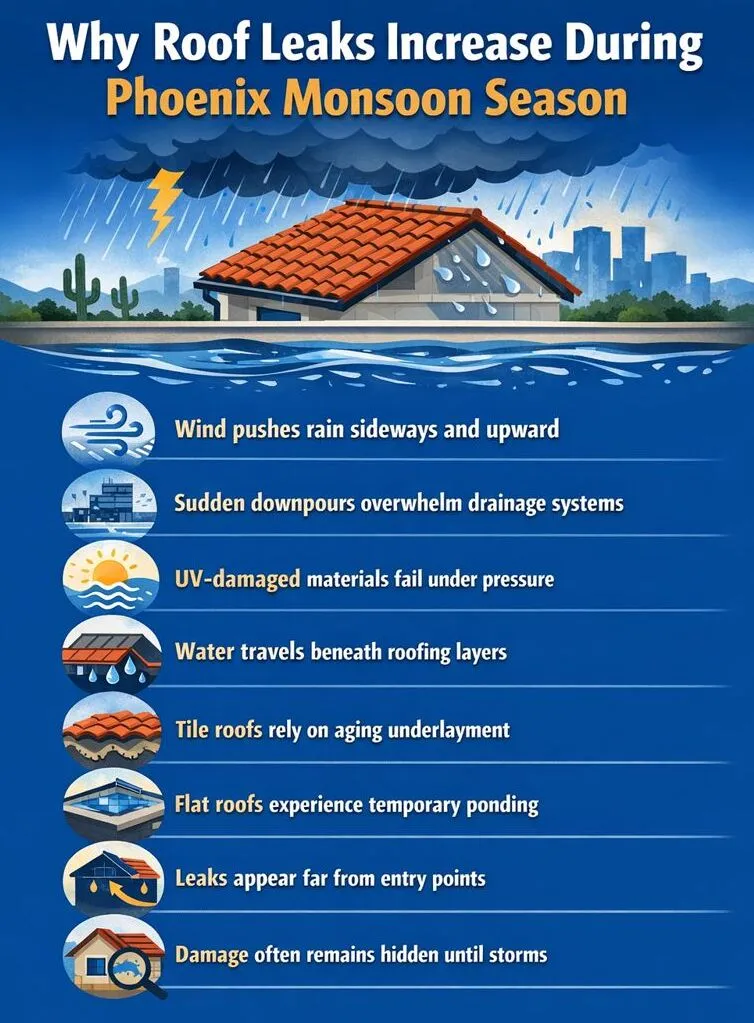
Here’s a visual breakdown of why Phoenix monsoon storms create unique roof leak risks.
Click to Enlarge
Extreme Heat Weakens Roofing Materials Before the Rain Arrives
Months of triple-digit temperatures quietly degrade roofing materials long before monsoon season begins. Constant UV exposure dries out sealants, accelerates underlayment breakdown, and causes repeated expansion and contraction across roofing systems.
Research on extreme heat and building materials shows that prolonged heat stress reduces material flexibility, making roofs more vulnerable when storms finally arrive. This helps explain how heat affects roofing systems in Arizona and why leaks often develop months after damage begins.
By the time monsoon rain hits Phoenix, many roofs already have weakened layers that allow water to seep through once pressure is applied.
Why Tile Roofs Leak Even When Tiles Look Intact
Tile roofs are one of the most common roofing systems in Phoenix. While the tiles themselves are highly durable, they are not the waterproofing layer. Water protection comes from the underlayment beneath the tiles.
Over time, heat exposure dries out underlayment materials. During monsoon storms, water forced beneath tiles finds paths through deteriorated underlayment, leading to interior leaks even when tiles appear undamaged.
This is why many leaks traced during monsoon season originate from tile roof underlayment failures rather than broken tiles.
Flat and Low-Slope Roofs Face Unique Monsoon Challenges
Flat and low-slope roofing systems are common across Phoenix homes and commercial properties. These roofs rely heavily on proper drainage to prevent water intrusion.
During monsoon storms, sudden rainfall can overwhelm drains or scuppers, allowing water to pool temporarily. Even short-term ponding increases pressure on seams and transitions, particularly on older systems.
Understanding how flat roofing systems in Phoenix manage water flow helps explain why leaks often develop after storms rather than during normal rainfall.
Why Roof Leaks Appear Far From the Actual Entry Point
One of the most confusing aspects of monsoon-related roof leaks is that water stains rarely appear directly beneath the point where water enters the roof.
Once water breaches the roofing system, it can travel along framing, decking, or insulation before becoming visible inside the home. FEMA guidance on water intrusion during heavy storms highlights how water follows gravity and airflow paths rather than straight lines.
This is why proper diagnostics, such as roof leak detection methods, are essential for identifying the true source of water intrusion and preventing repeat leaks.
Why Phoenix Roof Leaks Often Return After Repairs
Many homeowners experience repeat leaks because prior repairs focused on visible symptoms rather than underlying causes. Sealing a ceiling stain or replacing a damaged tile without addressing weakened underlayment or flashing allows water to find another path during the next storm.
Monsoon conditions expose vulnerabilities that remain hidden during dry months, making accurate assessment critical before repairs are made.
Why Roof Leaks Are More Common in Phoenix Than Other Desert Cities
Roof leaks occur more frequently in Phoenix than in many other desert cities due to a combination of housing design, climate intensity, and storm behavior unique to the Valley. Many homes were built during periods when tile and flat roofing systems were widely used, both of which rely heavily on underlayment and drainage performance rather than surface materials alone. Central Arizona monsoon storms produce strong, shifting winds that drive rain horizontally, a pattern less common in places like Tucson or Flagstaff. When this storm behavior is combined with extreme heat that accelerates material breakdown, Phoenix roofs experience water intrusion patterns that are less predictable and more difficult to trace.
How Phoenix Homeowners Can Reduce Monsoon-Related Roof Leaks
While no roof is immune to extreme weather, proactive care reduces the likelihood of leaks during monsoon season.
- Schedule seasonal roof inspections before storm season
- Address heat-related material wear early
- Keep drainage paths clear on flat roofs
- Repair minor issues before storms expose them
Resources like preparing your roof for monsoon season and consistent roof maintenance help reduce storm-related surprises.
When to Have Your Roof Evaluated After a Monsoon Storm
If you notice water stains, dripping, musty odors, or damp insulation after a storm, it’s important to have your roof evaluated promptly. Understanding what roofers look for after storms helps homeowners determine whether repairs are needed or if the roofing system remains sound.
Guidance from repair versus replacement considerations can help homeowners understand next steps without unnecessary work.
Frequently Asked Questions About Phoenix Monsoon Roof Leaks
Why do roof leaks only happen during monsoon storms?
Roof leaks often appear during monsoon storms because wind-driven rain and pressure changes force water into areas that remain dry during normal rainfall.
Can extreme heat cause roof leaks later?
Extreme heat contributes to roof leaks by breaking down sealants, underlayment, and flashing over time, leaving roofs vulnerable once rain arrives.
Are tile roofs waterproof?
Tile roofs are not waterproof on their own, as tiles shed water while the underlayment beneath them provides the primary moisture barrier.
Why does water appear far from the leak?
Water appears far from the leak because it travels along decking, framing, or insulation before becoming visible inside the home.
Should roofs be inspected after monsoon season?
Roofs should be inspected after monsoon season to identify hidden moisture damage and prevent small issues from worsening over time.
For more roofing education and seasonal guidance, visit our resources page.
published on Friday, January 9th, 2026