What Is a Gable Roof?
A gable roof is one of the most common and recognizable roof styles in residential construction. In Phoenix and surrounding Arizona communities, it remains popular because it sheds water efficiently, works with tile and shingle roofing, and fits many home styles.
Arizona homeowners also have to think about more than appearance. Extreme heat, UV exposure, monsoon winds, and dust can all affect how a gable roof performs over time.
If you are comparing roofing systems or noticing signs of wear after a storm, understanding the basic anatomy of a gable roof can help you make better decisions about maintenance, repairs, and replacement.
Parts, Designs, Benefits, and Arizona Considerations
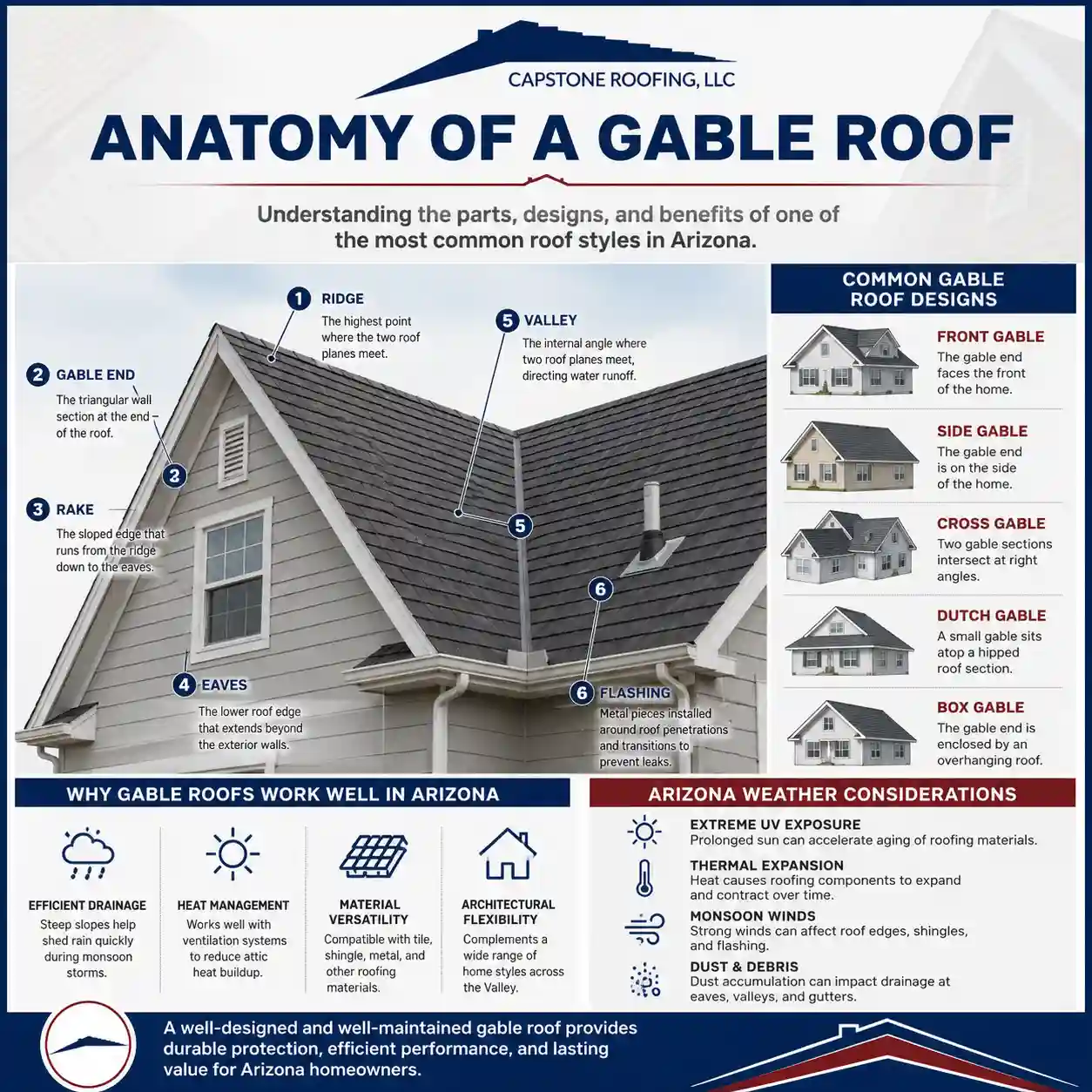
A gable roof has two sloping roof planes that meet at a ridge, creating a peak at the top of the structure. The triangular wall section at each end of the roof is called the gable.
This design is easy to identify from the street and is widely used because it offers strong drainage and a simple roof layout. Gable roofs can be built with many different roofing materials, including tile roofing, asphalt shingles, metal roofing, and composite roofing materials.
Because the shape naturally supports airflow in the attic, a gable roof can also help with ventilation in hot climates like Arizona. For homes that struggle with heat buildup, that can be an important performance benefit.
Gable Roof Parts
Understanding the main parts of a gable roof can help homeowners spot problem areas more easily.
- Ridge. The ridge is the highest point where the two roof planes meet.
- Gable end. This is the triangular wall section beneath the roof peak.
- Rake. The rake is the sloped edge running from the ridge to the eaves.
- Eaves. The eaves are the lower edges of the roof that extend beyond the walls.
- Valleys. Valleys form where two roof sections intersect and channel water runoff.
- Flashing. Flashing protects roof transitions and penetrations from water intrusion.
These areas often deserve close attention during a roof inspection in Phoenix, especially after severe weather. If you want a deeper breakdown of what roofers look for, our guide on what roofers check during a roof inspection is a helpful companion article.
Common Gable Roof Designs
Gable roofs come in several styles, and each one affects the look and performance of the home.
Front gable roof
A front gable roof places the gable end toward the street. This style is common on cottages, craftsman homes, and many modern houses.
Side gable roof
A side gable roof places the gable ends on the sides of the home. This is one of the most common residential roof styles in the U.S. and throughout Arizona.
Cross gable roof
A cross gable roof uses two or more gable sections that intersect. This design creates more valleys and more roof complexity.
Dutch gable roof
A Dutch gable roof combines a gable with a hip roof structure. It can add visual interest and extra attic space.
Box gable roof
A box gable roof extends the roof over the gable end for a more finished appearance and added protection.
Why Gable Roofs Work in Arizona
Gable roofs remain popular in Arizona because they combine practical drainage with architectural flexibility. They also pair well with the roof materials commonly used in the Valley.
Efficient drainage
Monsoon storms can bring heavy rain in a short period of time. A gable roof helps water shed quickly and reduces standing water on the roof surface.
Compatibility with tile and shingles
Many Phoenix homes use tile roofing, while others use asphalt shingles. A gable roof supports both systems well.
Supports attic ventilation
Attic heat can become intense during Arizona summers. Gable roof layouts often make it easier to plan ventilation strategies that help reduce heat buildup. For homeowners who want to understand airflow options better, our article on why roof ventilation is important is a useful next read.
Fits many home styles
From ranch homes to suburban builds, gable roofs work with a wide range of architectural designs across Phoenix, Chandler, Gilbert, Mesa, Scottsdale, and Peoria.
Tile vs. Shingle Gable Roofs
Many Arizona homeowners compare tile and asphalt shingles when planning a roof replacement or repair.
| Material |
Pros |
Tradeoffs |
| Tile |
Strong UV resistance, long service-life potential, classic Southwestern look |
Heavier, underlayment often wears out before tile, repairs can be more specialized |
| Asphalt shingles |
Lower upfront cost, wide style selection, straightforward repairs |
Can age faster in Arizona heat and sun exposure |
The best choice depends on budget, structural requirements, maintenance goals, and long-term ownership plans. If you are comparing roof systems more broadly, our guide to the best roofing materials for Arizona may also help.
How Arizona Weather Affects a Gable Roof
Arizona weather creates unique roof challenges that homeowners should not ignore.
- UV exposure can age sealants, coatings, flashing, and roofing materials.
- Thermal expansion and contraction can stress fasteners, seams, and sealants.
- Dust and debris can collect in valleys, gutters, and drainage channels.
- Monsoon winds can damage rake edges, trim, shingles, and flashing.
- Wind-driven rain can expose weak points around roof intersections and penetrations.
These conditions make regular maintenance and roof inspections especially important in Phoenix. For more seasonal planning, see our guide on how to prepare your roof for monsoon season.
Common Gable Roof Problems in Phoenix
Even a well-built gable roof can develop problems over time.
- Wind-damaged shingles near roof edges.
- Cracked or slipped roof tiles.
- Deteriorated gable-end trim.
- Flashing failures around vents, skylights, and roof transitions.
- Valley debris buildup that slows drainage.
- Wear around roof penetrations caused by thermal movement.
If these issues are ignored, they can lead to leaks, interior staining, or more expensive roof repair needs. If you are already seeing symptoms, our page on roof leak detection and our guide to how to tell if your roof is leaking may help.
Signs Your Gable Roof Needs Repair
Watch for these warning signs:
- Missing or damaged roofing materials.
- Water stains on ceilings or walls.
- Loose, bent, or corroded flashing.
- Sagging or uneven roof lines.
- Debris in valleys or gutters.
- Repeated moisture problems in the same area.
If you notice any of these issues, a professional roof inspection can help determine whether the problem is minor or more serious. In some cases, a targeted roof repair is enough; in others, the roof may be telling you it is time to think about a larger solution.
Where Gable Roof Leaks Usually Start
Water stains indoors do not always appear directly below the source of the leak. Water can travel before it becomes visible.
Common leak areas on a gable roof include roof valleys, flashing around vents and pipes, skylights, roof-to-wall intersections, gable-end transitions, and areas with worn sealants or aging underlayment.
A proper inspection should look at the full roof system, not just the interior damage. For Arizona homeowners dealing with stains or active moisture, our article on brown spots on your ceiling explains what those symptoms can mean.
Phoenix Homeowner Checklist
Use this quick checklist after storms or during routine roof maintenance:
- Check the ground around your home for fallen shingles, tiles, or debris.
- Look at valleys and roof edges from the ground for buildup or visible damage.
- Inspect ceilings and walls inside for new stains or discoloration.
- Make sure gutters are flowing and not overflowing during rain.
- Watch for lifted flashing or damaged trim around gable ends.
- Schedule an inspection if you notice repeated issues in the same area.
If you want to stay ahead of storm-related damage, our guide on roof weather damage in Phoenix is a useful reference.
Gable Roof Maintenance Tips
Routine maintenance can help extend roof life and reduce the chance of unexpected repairs.
- Inspect the roof after major storms.
- Keep valleys clear of debris.
- Check flashing and roof penetrations regularly.
- Clean gutters and drainage paths.
- Watch gable-end trim and fascia for wear.
- Schedule preventative evaluations before small issues spread.
In Arizona, these steps are especially important because heat, dust, and monsoon weather can accelerate wear over time. Our article on roof maintenance in Phoenix goes deeper into seasonal upkeep.
Safe Gable Roof Inspection Tips
Homeowners can often spot roof concerns without getting on the roof.
Start with a ground-level inspection and look for missing shingles or tiles, damaged gutters, loose flashing, debris buildup, visible sagging, and signs of storm damage.
Tile roofs should not be walked on unless necessary, since foot traffic can crack or displace tiles. If you see signs of damage, it is safer to call a roofing professional.
Is a Gable Roof Good for Arizona Homes?
Yes. Gable roofs are a practical choice for many Arizona homes because they offer efficient drainage, ventilation potential, and compatibility with popular roofing materials.
Long-term performance depends on installation quality, maintenance, material choice, and weather exposure. For Phoenix homeowners, a gable roof can be an excellent option when it is built and maintained correctly.
If you are comparing roof styles or materials, our guide on how long a roof lasts in Arizona can also help set expectations.
Schedule a Gable Roof Inspection in Phoenix
If you are noticing missing shingles, cracked tiles, roof-edge damage, or signs of a leak, now is the time to act. Arizona weather can turn a small roofing issue into a larger repair if it is left alone.
Schedule a professional gable roof inspection in Phoenix to identify problems early and protect your home before the next monsoon storm. You can also request a free roofing estimate if you want to compare repair options or plan ahead for replacement.
published on Monday, June 22nd, 2026