Best Roofing Materials for Arizona: A Comprehensive Guide
Arizona’s unique climate—with intense summer heat, low humidity, sudden monsoon storms, and dust‑laden winds—poses special challenges for homeowners looking to protect their property. Your roof is your first defense against these elements, so choosing the right material is crucial. This guide expands on Capstone Roofing’s original post to offer a thorough, locally focused exploration of roofing options for Arizona homes and businesses. We’ll compare lifespans, costs, energy efficiency, and maintenance requirements to help you select a roof that stands up to the harsh desert environment while meeting your aesthetic and budgetary goals.
Understanding Arizona’s Extreme Roofing Environment
The Phoenix metro area experiences temperature swings exceeding 40 °F in a single day. Constant thermal cycling causes materials to expand and contract, leading to fatigue and premature failure. The dry season exposes roofs to relentless ultraviolet radiation, while the monsoon brings sudden downpours, wind‑driven rain, and debris impact. Dust storms add another abrasive element that can erode protective coatings. Because flat roofs, tile roofs, and foam systems are common in Arizona, homeowners must factor in weight, reflectivity, insulation, and uplift resistance when choosing materials. Regular inspections—especially before and after monsoon season—are essential to catch small issues before they become costly repairs. For detailed inspection schedules, see our guide on how often to inspect your roof.
Key Factors to Consider When Choosing Roofing Materials
When evaluating roofing materials for Arizona, consider these criteria:
- Longevity: Tile and metal roofs can last 40–100 + years with proper care, while asphalt shingles may need replacement after 15–30 years. Foam roofs have lifespans of 15–50 years depending on maintenance and coating choice.
- Cost and Value: Asphalt shingles have the lowest upfront cost; tile and metal require larger investments but offer longer life and potential energy savings. Foam roofs fall mid‑range and may pay for themselves through reduced cooling bills.
- Energy Efficiency: Materials with high reflectivity and insulation reduce heat gain. Foam roofs can cut cooling costs by up to 30 %, while tile’s thermal mass moderates attic temperatures. Metal roofs reflect solar energy and may qualify for insurance discounts.
- Weight and Structural Support: Clay and concrete tiles are heavy; your home’s structure must be able to support them. Foam and metal roofs are much lighter, making them suitable for retrofits.
- Aesthetic and HOA Considerations: Tiles offer Mediterranean charm; metal can mimic shakes or shingles; shingles provide a traditional look. Always check HOA guidelines before selecting a material.
- Maintenance Requirements: All roofs need periodic inspections. Tile roofs require underlayment replacement every 25–35 years; foam roofs require recoating every 5–10 years. Shingles may need patching after storms.
Asphalt Shingles: Affordable and Familiar
Lifespan: 15–30 years in Arizona.
Asphalt shingles remain popular due to their low cost and easy installation. They come in two main types: three‑tab shingles and architectural (dimensional) shingles. Architectural shingles cost slightly more but offer better durability and wind resistance. In Arizona, shingles must withstand thermal cycling, hail, and occasional high winds. Some varieties can be coated with reflective granules to reduce heat absorption and improve energy efficiency. Shingles are also recyclable—the asphalt content can be reused for road construction.
Pros: Cost‑effective; easy to install; available in many colors; can achieve Class A fire rating. Some high‑end shingles are impact‑resistant and withstand hail and wind.
Cons: Shorter lifespan than tile or metal; prone to curling and cracking in extreme heat; not suitable for flat roofs; susceptible to wind uplift and monsoon‑driven rain. Shingles may need replacement more often, increasing life‑cycle costs.
For homeowners interested in eco‑friendly variations or reflective coatings, explore our resource on energy‑efficient roofing options.
Wood Shakes and Shingles: Rustic Charm with Caveats
Lifespan: 30–50 years with diligent upkeep.
Wood shakes (hand‑split) and wood shingles (machine‑cut) deliver a natural, textured look favored in rustic or historic architecture. In Arizona, however, their popularity has waned due to fire risk and maintenance demands. Local regulations may limit or prohibit wood roofs in certain neighborhoods because untreated wood is combustible. To use wood, you must apply fire‑retardant treatments and routine preservative coatings to resist termites and decay.
Pros: Aesthetically appealing; layered construction offers good insulation; wood is recyclable for mulch or biomass.
Cons: High cost; susceptibility to fire, termites, and mold; intensive maintenance; shorter lifespan than tile or metal; restrictions by local authorities.
If you choose a wood roof, follow our roofing maintenance tips to extend its life.
Metal Roofing: Modern Durability and Energy Efficiency
Lifespan: 40–70 years (and up to 100+ years for premium metals like copper).
Metal roofs have surged in popularity due to their durability, fire resistance, and sleek appearance. Common materials include galvanized steel, aluminum, zinc, and copper. Standing seam systems conceal fasteners, improving weather resistance. Metal roofs reflect solar radiation, reducing attic temperatures and cooling loads. They are also lightweight compared to tile, making them suitable for existing structures without major reinforcement.
Pros: Longevity (often 50+ years); energy efficient; fireproof; recyclable; low maintenance; good performance in monsoon winds; potential insurance discounts.
Cons: Higher upfront cost than shingles; may be noisy during heavy rain or hail; improper installation can lead to leaks; repairs usually require a professional.
For a deeper discussion of metal roof benefits and potential drawbacks, see this authoritative article on pros and cons of metal roofs. If you’re comparing metal to foam, our piece on foam roof pros and cons offers further insight.
Tile Roofing: Timeless, Heavy, and Long‑Lasting
Lifespan: 50 + years; some Arizona tile roofs have lasted 80 years.
Clay, concrete, and sandcast tiles are ubiquitous in Arizona due to their durability and ability to withstand extreme heat. Tiles provide excellent thermal mass, keeping attics cooler and reducing air‑conditioning costs. Concrete tiles are generally cheaper than clay but may use underlayment that doesn’t last as long. Undamaged tiles can often be salvaged and re‑installed when replacing underlayment.
Pros: Fireproof and rot‑resistant; long life; cool roof properties; recyclable; high curb appeal. Tile roofs are often considered the “gold standard” for desert heat control.
Cons: Very heavy—structural reinforcement may be needed; expensive materials and installation; underlayment needs replacement every 25–35 years; tiles can break if walked on or struck by debris; not suitable for low‑slope roofs.
To learn more about advantages and disadvantages of tile roofs, explore our article on pros and cons of tile roofs. For an external perspective, AZUL Roof provides insights into the lifespan of tile roofs, noting that properly maintained tile systems can last decades.
Foam Roofing: Seamless Protection for Flat Roofs
Lifespan: 20–50 + years, depending on maintenance and coating.
Polyurethane spray foam roofing (SPF) is widely used on Arizona’s flat and low‑slope roofs. The foam is applied as a liquid that expands into a seamless, monolithic membrane. This eliminates joints where leaks typically develop and provides an insulating layer that reduces thermal transfer. Foam roofs are lightweight yet durable—closed‑cell SPF has a compressive strength of 50–60 psi and flexes with building movement without cracking. Protective coatings reflect UV rays, preventing discoloration and degradation. Studies show foam roofs can reduce cooling costs by 20–30 %, sometimes paying for themselves in five years.
Pros: Superior insulation; seamless waterproofing; flexible and lightweight; excellent wind uplift resistance; fast installation on existing roofs; environmentally friendly due to lower energy consumption.
Cons: Higher initial cost than asphalt; requires periodic recoating (every 5–10 years) to maintain waterproofing; limited contractor expertise available; appearance may not suit all homeowners.
If you’re considering foam for a residential or commercial roof, The Holm Group highlights the benefits of foam roofing in Arizona. You can also read our in‑depth look at foam roof recoat vs replacement and explore our expert foam roofing services.
Comparing Roofing Materials: Lifespans and Performance in Arizona
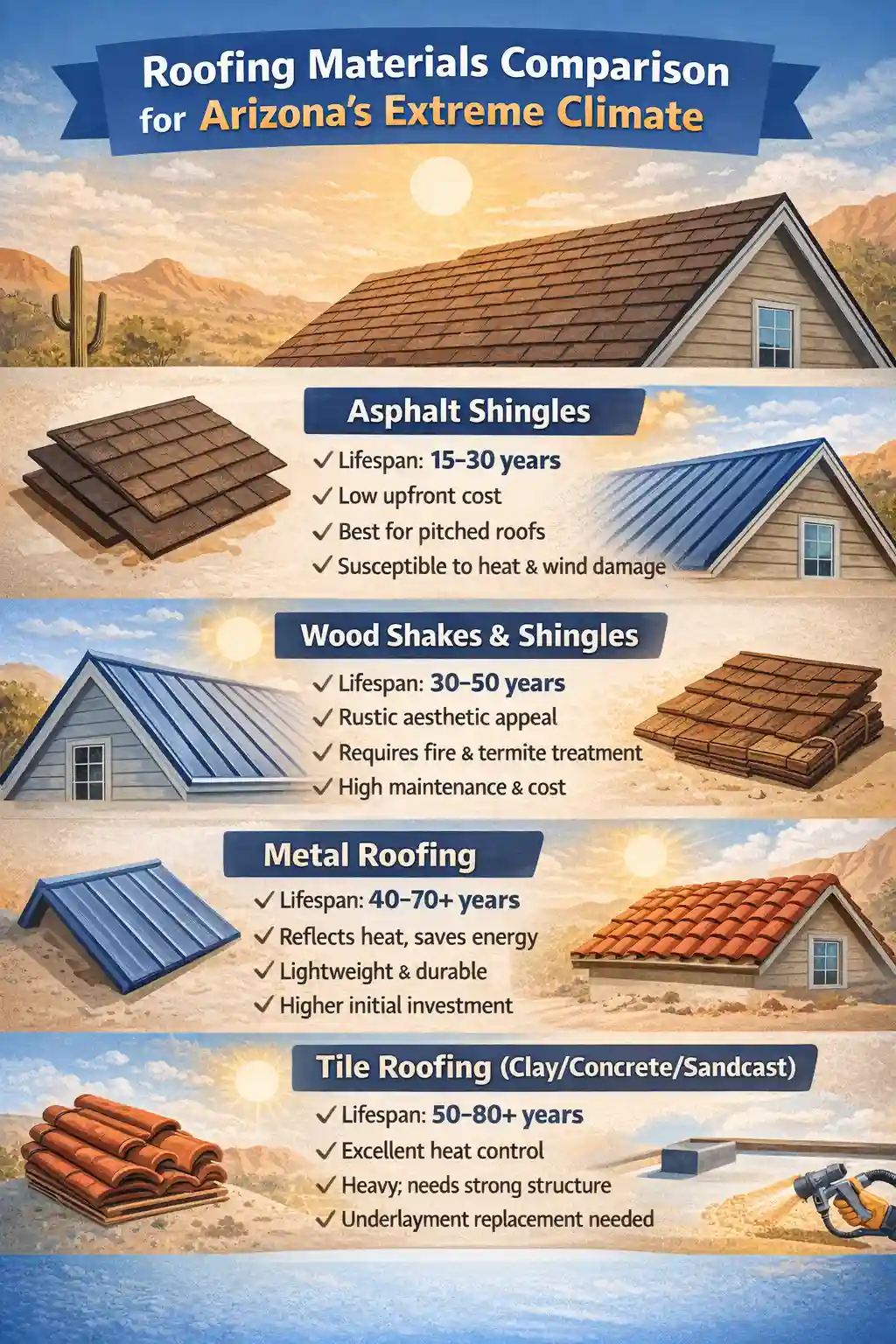
To help you evaluate your options, here’s a summary of lifespans and notable features for each material.
| Material |
Typical Lifespan (AZ) |
Key Benefits |
Key Drawbacks |
| Asphalt Shingles |
15–30 years |
Affordable; easy to install; recyclable; various styles |
Shorter lifespan; susceptible to heat and wind damage; not for flat roofs |
| Wood Shakes/Shingles |
30–50 years |
Natural aesthetic; layered insulation; recyclable |
Fire risk; high cost; intensive maintenance; termite susceptibility |
| Metal Roofing |
40–70+ years |
Durable; energy efficient; fireproof; recyclable |
High upfront cost; can be noisy; professional installation required |
| Tile Roofing (Clay/Concrete/Sandcast) |
50–80+ years |
Excellent heat control; long life; fireproof; recyclable |
Heavy; expensive; underlayment replacement needed; brittle tiles |
| Foam Roofing |
20–50+ years |
Seamless waterproofing; superior insulation; lightweight; flexible |
Requires recoating; appearance may be less traditional; higher cost than shingles |
For readers focused on sustainability, visit our article on eco‑friendly roofing in Phoenix to learn about cool roofs, recyclable materials, and energy‑saving upgrades.

Maintenance and Inspection: Keeping Your Roof in Top Shape
No matter which roofing material you choose, proactive maintenance is key to longevity. Here are our top recommendations:
- Schedule annual inspections: Inspect your roof every spring or fall to check for loose tiles, missing shingles, or coating degradation. Use a professional for steep or high roofs.
- Prepare for monsoon season: Clear gutters, downspouts, and drains; trim overhanging branches; and check for debris accumulation.
- Monitor flashing and sealants: Areas around skylights, chimneys, and vents are prone to leaks. Ensure sealants remain intact.
- Recoat foam roofs: Apply a fresh elastomeric coating every 5–10 years to maintain waterproofing and UV resistance.
- Replace underlayment: For tile roofs, schedule underlayment replacement every 25–35 years to prevent leaks.
For more in‑depth advice on leak prevention, see our guide to roof leak protection and roofing maintenance tips. If you suspect hidden damage, schedule a professional roof inspection.
Making Your Choice: Balancing Budget, Performance, and Sustainability
Selecting the best roofing material for your Arizona home involves weighing upfront costs against long‑term value. Asphalt shingles may suffice for short‑term budgets or rental properties, but metal and tile roofs offer longevity and potential energy savings. Foam roofing excels on flat roofs, especially for homeowners who prioritize insulation and seamless waterproofing. Wood shakes appeal to those seeking a unique, rustic aesthetic but require robust fire protection. When in doubt, consult a licensed roofing contractor to evaluate your home’s structural capacity, desired appearance, and maintenance tolerance.
Additionally, consider local incentives and environmental impact. Some municipalities offer rebates for cool roofs or solar‑ready structures. When you’re ready to take the next step, Capstone Roofing provides professional roof inspections and expert foam roofing services to help you make an informed decision.
FAQs About Roofing Materials in Arizona
What roofing material lasts the longest in Arizona?
Tile and metal roofs typically offer the longest lifespans in Arizona, often exceeding 50 years. Premium metal roofs and well‑maintained tile systems can last up to 100 years or more.
Are asphalt shingles suitable for Arizona’s climate?
Asphalt shingles are budget‑friendly and widely used, but they have a shorter lifespan (15–30 years) and may degrade more quickly under Arizona’s intense heat and monsoon winds. Opt for architectural shingles with reflective coatings for better performance.
How do tile roofs handle Arizona heat?
Tile roofs excel in hot climates because their thermal mass moderates indoor temperatures and they resist UV radiation. However, they are heavy and require a strong roof structure; underlayment must be replaced every 25–35 years.
What are the pros and cons of metal roofs in Arizona?
Metal roofs are durable, fireproof, and energy efficient; they reflect heat and can last 40–70 + years. The drawbacks include higher initial cost, potential noise during heavy rain, and the need for professional installation.
Is foam roofing good for flat roofs in Arizona?
Yes. Spray foam roofing forms a seamless, insulated barrier ideal for flat roofs. It offers excellent waterproofing and can reduce cooling costs by 20–30 %. Proper maintenance involves recoating every 5–10 years.
How often should I inspect my roof in Arizona?
Conduct a professional inspection at least once a year—preferably before monsoon season—and after major storms. Regular inspections help detect issues early and extend the life of your roof.
Do wood shakes work well in Arizona?
Wood shakes can last 30–50 years, but they are less common due to fire risk and high maintenance requirements. Local regulations may restrict their use; treatments for fire and termite resistance are essential.
How can I improve the energy efficiency of my roof?
Choose materials with high reflectivity and insulation, such as metal roofs, tile roofs with light colors, or foam roofing. Applying reflective coatings and ensuring proper attic ventilation also reduce cooling costs.
What local factors should I consider when choosing roofing materials?
Arizona homeowners should consider extreme heat, UV exposure, monsoon storms, wind uplift, dust, and roof pitch. Flat roofs may favor foam or modified bitumen, while steep roofs can support tile, metal, or shingles.
How do I know when it’s time to replace my roof?
Signs include persistent leaks, widespread shingle curling or granule loss, cracked tiles, sagging rooflines, or rising energy bills. For accurate assessments, schedule a professional inspection.
By understanding these options and local conditions, you can choose a roof that provides lasting protection and enhances your home’s value.
published on Monday, August 9th, 2021