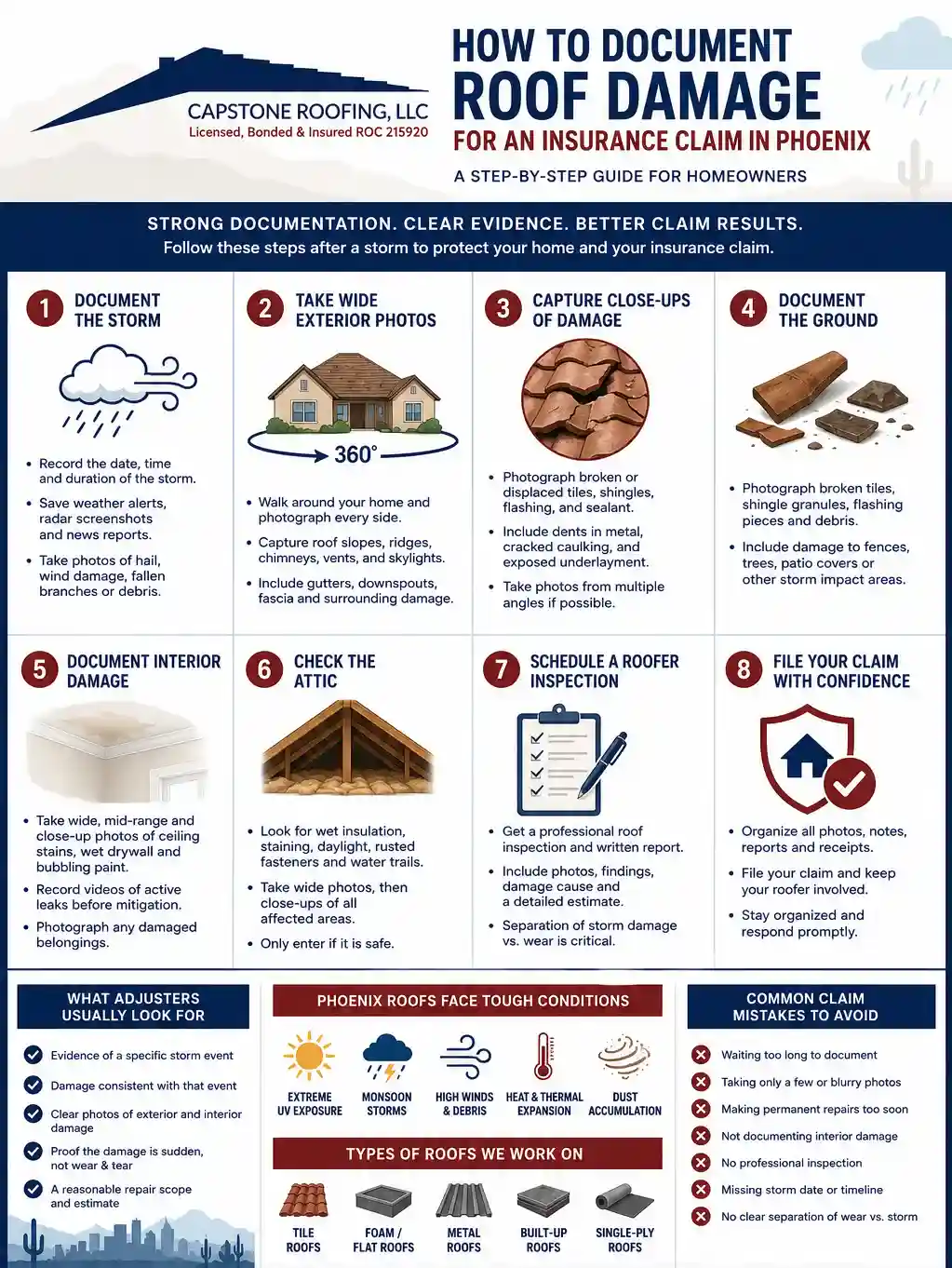
How to Document Roof Damage for an Insurance Claim in Phoenix
If a monsoon storm just rolled through Phoenix and now you’ve got a ceiling stain, broken roof tile in the yard, or water showing up where it shouldn’t, the first few days matter more than most homeowners realize. Not because you need to panic or file a claim immediately, but because this is the window where good documentation can make the insurance process much cleaner. It’s also the window where missing photos, incomplete notes, or premature repairs can make a legitimate claim harder to support later.
This guide is built for Phoenix-area homeowners who need practical, step-by-step help documenting roof damage for an insurance claim. We’ll cover what to photograph, how to document both interior and exterior damage, what insurance adjusters usually want to see, when to schedule a roofer inspection, how to tie damage to a specific monsoon event, and what to do if the roof has a mix of storm damage and older wear. We’ll also talk about the mistakes that commonly lead to claim delays, partial approvals, or pushback.
Arizona roofs age differently than roofs in milder climates. Extreme UV, thermal expansion, dust buildup, monsoon wind, and sudden heavy rain all affect how roofing materials perform over time. A tile roof can look mostly intact from the street and still have underlayment damage or flashing failure after a storm. A foam roof may not have obvious punctures but could still be holding water around drains or parapet transitions. And a small brown spot on the ceiling may be the first sign of a larger roof leak that started during the last storm, not the one before it.
That’s why roof insurance claim help in Phoenix has to be more tactical than generic advice like “take some photos and call your insurance company.” The right approach is to document the storm, document the roof, document the inside of the home, and get a clear inspection before evidence changes or water spreads.
What Insurance Adjusters Usually Need to See in a Phoenix Roof Claim
At a basic level, your insurance carrier is trying to answer four questions:
- Was there a covered event? In other words, did wind, hail, debris impact, or another covered cause of loss actually occur?
- Is the roof damage consistent with that event? Does the condition of the roof match what a monsoon windstorm, hail event, or debris strike would typically cause?
- Is the damage sudden, or does it look like wear and tear? This is one of the biggest pressure points in Arizona roof claims.
- What repair scope is actually necessary? Is the claim about a few broken tiles, localized leak repair, underlayment failure in one area, or damage extensive enough to affect larger sections of the roof?
That means the adjuster is not only looking for damage. They’re looking for context, timing, consistency, and enough detail to connect the damage to a specific event rather than general roof aging. In Phoenix, that distinction matters because roofs are exposed to conditions that naturally wear materials down over time. Shingles dry out. Tile roofs develop vulnerable flashing areas. Flat roofs and foam systems take relentless UV exposure. Sealants around penetrations, skylights, and vents can age out. If a claim file doesn’t clearly separate sudden storm damage from normal aging, the carrier may push back on part of the scope or ask for more documentation.
That’s one reason it helps to understand what a roofer looks for during an inspection before the adjuster ever arrives. If you want a better sense of how that evaluation works, Capstone’s article on what roofers check during a roof inspection gives useful background on the kinds of issues that may not be obvious from the ground.
Before You File: Understand the Two Big Coverage Questions
Before you start building the claim file, it helps to understand the two coverage issues that cause the most confusion in Arizona roof claims: what caused the damage and how your policy pays for roof damage.
1. Was the damage caused by a sudden event or by gradual wear?
Homeowners insurance generally responds to sudden, accidental damage from a covered event. For a roof in Phoenix, that often means monsoon wind damage, hail impact, flying debris, or water intrusion caused by storm-created roof failure. What it usually does not cover is long-term deterioration, deferred maintenance, or a leak that’s been quietly developing for months.
That distinction gets messy in Arizona because a roof can have both. For example:
- A tile roof may have older underlayment, but a July storm may still have displaced tile and allowed new water intrusion.
- A foam roof may already have UV wear, but monsoon ponding may expose a seam or low spot that suddenly turns into an active leak.
- An older shingle roof may have normal age-related granule loss, but wind uplift can still crease or tear shingles during a specific storm.
Documentation is what helps separate those issues. The more clearly you can tie the damage to a storm date, the stronger the claim file becomes.
2. Does your policy pay Actual Cash Value or Replacement Cost Value?
This isn’t the place for a full insurance policy deep dive, but it’s worth checking your declarations page before the claim moves too far. Some policies pay roof losses on an Actual Cash Value (ACV) basis, while others use Replacement Cost Value (RCV). That can affect how much is paid initially and whether depreciation is recoverable later after the work is completed.
If you’re not sure how your policy handles roof damage, it’s worth reviewing before you assume what a claim will pay. Capstone’s roof insurance claim guide is a better place to read through the broader claim process and what those payment structures can mean in practice.
If You Only Have a Small Ceiling Stain, Should You Still Document It?
Yes. Especially in Phoenix.
One of the most common homeowner mistakes after a storm is assuming that if the roof isn’t actively dripping, the issue can wait. But in Arizona, the first visible sign of roof damage is often not a dramatic leak. It’s a small brown ring on the ceiling, a soft spot in drywall, damp attic insulation, or a stain that appears a day or two after heavy rain. By the time that shows up indoors, water may already have traveled across underlayment, along framing, or through a roof penetration before finally appearing inside the house.
If you’ve got even a small stain, treat it like evidence. Don’t assume it’s old. Don’t assume it’s harmless. And don’t paint over it before it’s documented.
There’s a reason ceiling stains are one of the biggest early warning signs in roof leak investigations. If that’s what you’re seeing, Capstone has separate resources on brown spots on your ceiling and how to tell whether your roof is leaking that can help you understand what may be happening behind the drywall.
Step 1: Document the Storm Itself Before You Focus Only on the Roof
The roof matters, but the storm record matters too. One of the easiest ways to strengthen a roof storm damage insurance claim in Phoenix is to create a simple timeline of the weather event itself. That gives the claim context before you ever start arguing over tile, shingles, flashing, or underlayment.
Start a note in your phone or a simple document and record:
- The date of the storm
- The approximate start and end time
- Whether you saw high wind, hail, blowing debris, heavy rainfall, or a haboob-style dust front
- When you first noticed the damage
- Any interior leak activity, ceiling staining, or dripping that began during or after the storm
Then save supporting weather evidence if you can. Helpful examples include:
- Phone screenshots of severe weather alerts
- Radar screenshots from the time of the storm
- Photos of hailstones, broken branches, blown patio furniture, or fence damage
- Official local weather summaries from the National Weather Service Phoenix office
This part is often overlooked, but it can be valuable when multiple monsoon events hit close together. In Phoenix, it’s not unusual to have one strong storm, then another wind event a few days later, then more rain the following week. If you wait too long and don’t record the first event clearly, it becomes easier for a carrier to ask whether the damage happened during a later storm or whether it had been there already.
Step 2: Take Exterior Roof Photos in a Way That Actually Helps the Claim
“Take photos of the roof” sounds simple until you’re standing in the driveway trying to figure out what that actually means. The goal is not just to collect random close-ups. The goal is to create a photo record that shows where the damage is, what it looks like, and how it fits into the roof as a whole.
Start with wide photos first
Walk the property and take wide-angle photos from every side of the house. Try to capture:
- Each roof slope that’s visible from the ground
- The ridge line
- Valleys and roof-to-wall transitions if visible
- Skylights, chimneys, vent penetrations, and roof-mounted equipment
- Gutters, downspouts, fascia, and eaves
These wide photos give the adjuster context. They show where the close-up damage is located and whether multiple areas of the roof appear affected.
Then take mid-range and close-up photos
After the wide photos, document specific damage areas. Depending on the roof type, that may include:
- Broken or displaced tile
- Cracked ridge cap pieces
- Lifted or creased shingles
- Granule loss concentrated in one impact area
- Damaged flashing around a chimney, skylight, vent, or wall transition
- Dented gutters, downspouts, or soft metals after hail
- Foam roof cracks, exposed foam, worn coating, or damage around drains and scuppers
- Debris impact points from branches or blown objects
Try to photograph each issue from more than one angle. If possible, use your phone’s zoom rather than climbing onto the roof yourself. A close-up of a cracked tile is useful. A close-up plus a mid-range shot showing where that tile sits on the roof is much more useful.
Don’t forget the ground-level evidence
Some of the best storm evidence is on the ground, not on the roof. Photograph:
- Broken tile pieces in the yard or on walkways
- Shingle fragments or granule piles near downspouts
- Metal flashing pieces that blew loose
- Branches or debris that struck the roof
- Damage to patio covers, fencing, or gutters that supports the storm severity
If you have a tile roof and you’re finding broken pieces around the property after a monsoon, that’s especially worth documenting carefully. Tile systems in Arizona often involve a larger conversation than just the visible tile itself because the real waterproofing layer sits underneath. If you’re trying to understand how those systems work, Capstone’s articles on tile roofing in Arizona and tile roof underlayment in Arizona can help explain why storm damage on a tile roof isn’t always limited to the broken pieces you can see from the yard.
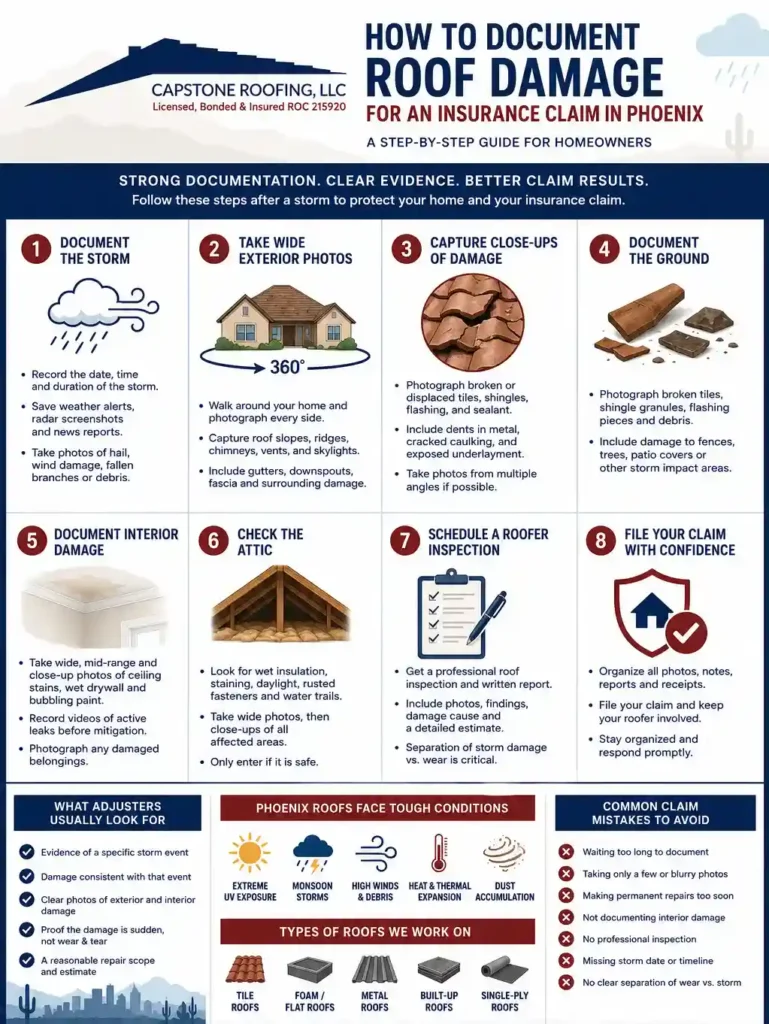
Step 3: Document the Inside of the House Like It’s Part of the Roof Claim — Because It Is
One of the biggest content gaps in most insurance claim advice is interior documentation. People focus on the roof surface and forget that interior damage often becomes some of the clearest evidence that water actually made it through the roofing system.
If you have an active leak, ceiling stain, bubbling paint, damp drywall, or attic moisture, document it thoroughly.
How to photograph ceiling stains and interior leak damage
For every affected room, take three kinds of photos:
- Wide room photos that show where the stain or damage is located in the room.
- Mid-range photos that show the stain relative to vents, lights, windows, walls, or corners.
- Close-up photos that show discoloration, bubbling texture, peeling paint, sagging drywall, or active moisture.
If water is actively dripping, take a short video before placing a bucket underneath it. If the ceiling feels soft or swollen, photograph that too. If personal property was damaged, such as flooring, furniture, or electronics near the leak area, document those items separately.
What if the stain looks old?
Document it anyway. Don’t try to decide on your own whether it’s old or new. A stain that appears dry may still be related to a recent storm, especially if the area darkened, spread, or reactivated during the last rain. A roofer can help determine whether the stain aligns with fresh roof damage, a recurring leak path, or an older issue that was never fully resolved.
Interior symptoms are one reason roof leak claims can get complicated. If you want more background on how carriers tend to look at roof-related water intrusion, Capstone’s article on whether homeowners insurance covers roof leaks is worth reading alongside this guide.
Step 4: Go Into the Attic if It’s Safe — This Is Where Hidden Damage Often Shows Up First
If your home has accessible attic space and it’s safe to enter, the attic can tell you more about recent storm damage than the roofline alone. That’s especially true in Phoenix homes with tile roofs, where the visible roof surface may not reveal what happened underneath.
Bring a flashlight and look for:
- Wet or compressed insulation
- Dark staining on roof decking or framing
- Moisture around vents, chimneys, skylight openings, or pipe penetrations
- Rust around nails or metal fasteners
- Daylight showing through the roof deck or around penetrations
- Water trails running along framing members
Take wide attic photos first, then close-ups of any suspicious areas. If you can, photograph both the damaged area and a nearby dry section for comparison. This helps show that the issue is localized rather than just general attic discoloration.
Attic moisture is one of the clearest ways to support a roof leak insurance documentation file because it helps connect the exterior roof event to actual water intrusion inside the structure. It also helps explain why a leak may show up in one room even though the roof opening is several feet away. Water often travels before it becomes visible indoors.
My Roof Looks Fine From the Ground. Could There Still Be Storm Damage?
Yes, absolutely. This is one of the most common Phoenix roof claim situations.
A roof can look mostly normal from the driveway and still have storm-related issues such as:
- Lifted tile that reseated after wind but broke the waterproofing pattern underneath
- Underlayment exposure or tearing below tile that isn’t visible from the ground
- Cracked flashing around penetrations
- Dislodged ridge components
- Minor impact damage that later becomes a leak path during the next storm
- Foam roof coating damage around drains or parapet transitions
- Low-slope membrane issues that don’t become obvious until ponding occurs
This is one reason it’s worth pairing your own documentation with a professional inspection rather than relying only on what you can see from outside. Capstone’s article on how to spot roof damage is useful if you’re trying to understand what visible warning signs may point to a larger problem.
Step 5: Get a Roofer Inspection Before the Adjuster Visit if Possible
If the situation is safe enough to wait a day or two, one of the smartest things you can do is schedule a professional roof inspection before the insurance adjuster arrives. That doesn’t mean delaying the claim for weeks. It means building the claim file with better information before the adjuster’s scope becomes the starting point.
Why this matters
Adjusters inspect roofs all the time, but they’re still working within the insurer’s claim process. A local roofer is evaluating the roof itself: what was damaged, what’s old, what’s storm-related, where the leak path likely started, whether the problem is isolated or systemic, and what repair scope makes sense. Those are not always the same conversation.
A roof inspection for insurance claim support should ideally include:
- Photos of all storm-related damage areas
- Notes on roof material type and approximate condition
- Interior or attic findings if relevant
- Identification of likely leak entry points
- A written roof estimate for insurance claim review
- Clear notes separating storm damage from older wear where possible
If you’re dealing with a monsoon leak or roof damage that isn’t obvious from the ground, that inspection can be the difference between a clear claim file and a vague one. Capstone’s article on roof inspections for insurance coverage goes deeper on how these inspections support the claim process.
Step 6: Don’t Make Permanent Repairs Too Early
This is one of the easiest mistakes to make, especially when water is actively getting into the house. Homeowners understandably want the problem gone fast. The issue is that permanent repairs can remove or obscure the very evidence the adjuster needs to evaluate the claim.
In general, there’s a big difference between temporary mitigation and permanent repair.
Temporary mitigation usually makes sense
Examples include:
- Tarping an exposed section of roof
- Placing buckets or protective coverings under active leaks
- Moving furniture or belongings out of the leak area
- Using fans or drying measures to limit interior damage after documentation is complete
Keep receipts for anything you buy or pay for as part of emergency mitigation.
Permanent repair should usually wait until the damage is documented
Examples include:
- Replacing broken tile before it’s inspected
- Re-shingling a damaged area before the adjuster sees it
- Recoating a foam roof section that failed during the storm
- Painting over stains or replacing damaged drywall immediately
If you have to do more than temporary mitigation because of a severe leak or safety issue, document the area thoroughly before work begins and keep all invoices, photos, and removed materials if possible.
How to Handle Roof Damage That’s Part Storm and Part Older Wear
This is where a lot of Phoenix roof claims get frustrating. A homeowner sees obvious storm-related problems, but the roof is also older. The insurance carrier points to age. The homeowner points to the storm. The reality may be both.
The key is not trying to argue that the roof was brand new when it wasn’t. The key is documenting what changed because of the storm.
Helpful evidence includes:
- Photos of broken or displaced roofing materials immediately after the storm
- New interior staining that appeared after the event
- Attic moisture or leak activity that wasn’t present before
- Recent pre-storm roof inspection records if you have them
- Maintenance receipts showing the roof wasn’t ignored
- A roofer’s written explanation of which issues appear storm-related versus age-related
This is also why pre-monsoon maintenance matters more than many homeowners think. If you’ve had a recent inspection or routine roof maintenance before the storm season, that baseline can be incredibly helpful later. If you haven’t done that yet, Capstone’s resources on how to prepare your roof for monsoon season and roofing maintenance tips are good places to start for future seasons.
What Common Roof Problems in Phoenix Create Insurance Claim Confusion?
Some roof issues are straightforward after a storm. Others are not. Here are a few common examples where claim documentation needs to be especially clear.
Tile roof leaks with no obvious missing tile
Tile roofs often shed visible water well even when the underlayment below has been compromised. A storm may shift tile, crack flashing, or expose vulnerable transitions without leaving a dramatic hole in the roof surface.
Foam roof leaks that only show up after heavy monsoon rain
A foam roof can perform fine for months and then suddenly reveal ponding or coating failure during one intense storm. If you’re dealing with a low-slope roof, document drains, low spots, parapet areas, and any places where water tends to sit after rain.
Ceiling stains that don’t line up directly below the roof damage
Water rarely drops straight down from the entry point. It can travel along framing, underlayment, or decking before appearing inside. That’s why attic documentation and a roof inspection matter.
Skylight-area leaks that look like “roof leaks” but may involve flashing failure
Skylights are a common trouble spot because they interrupt the roof system and rely heavily on flashing details. A leak near a skylight doesn’t automatically mean the skylight itself failed, but it does mean that transition area needs close inspection.
Storm damage on a roof that was already near replacement age
Older roofs are not automatically excluded from claims, but the documentation has to do a better job showing what the storm changed.
Common Reasons Roof Insurance Claims Get Pushed Back in Phoenix
If a roof claim gets delayed, reduced, or disputed, it often comes back to one of these issues:
1. The storm date isn’t clearly documented
If several storms hit within a short time, the carrier may question which one caused the damage. That’s why your weather timeline matters.
2. There are too few photos or the photos don’t tell a story
Three random close-ups of cracked tile don’t explain where the damage is or how extensive it may be. Wide, mid-range, and close-up documentation works better.
3. The homeowner repaired too much before the inspection
Once the evidence is gone, the claim becomes harder to support.
4. The damage looks like wear and tear, and there’s no documentation showing otherwise
This is especially common with older Phoenix roofs.
5. Interior damage was ignored or not photographed
That ceiling stain or attic moisture may be some of the strongest evidence you have that the roof failure caused real interior damage.
6. No roofer inspection was done before the adjuster scope was written
That doesn’t automatically ruin a claim, but it can make missed damage harder to add later.
7. The homeowner waited too long
Delay doesn’t always mean denial, but it can make causation harder to prove. In monsoon season, weeks matter.
A Simple Documentation Checklist You Can Use After the Next Storm
If you want a practical workflow, here’s a straightforward checklist to follow after a suspected roof damage event in Phoenix.
Within the first few hours
- Make sure the home is safe
- Write down the storm date and time
- Save weather alerts or radar screenshots
- Take wide exterior photos of the roofline and property
- Photograph debris, broken tile, hail, or visible damage
Within the first 24 hours
- Take interior photos of stains, leaks, and damaged belongings
- Check the attic if safe and document moisture or staining
- Start a claim folder on your phone or computer
- Keep receipts for emergency tarping or mitigation
Within the next day or two
- Schedule a professional roof inspection
- Collect a written inspection report and estimate if needed
- Review your policy deductible and coverage basics
- Prepare to file the claim with documentation already organized
FAQ: Documenting Roof Damage for an Insurance Claim in Phoenix
How do I document roof damage for an insurance claim in Phoenix?
Start by documenting the storm date, weather conditions, and the first time you noticed damage. Then take wide, mid-range, and close-up photos of exterior roof issues, broken roofing material on the ground, interior ceiling stains, attic moisture, and any temporary mitigation work. If possible, schedule a professional roof inspection before the adjuster visit so the claim file includes a written assessment and roof estimate.
What photos should I take for a roof storm damage insurance claim?
Take wide photos of every visible roof slope and the overall property first. Then take closer photos of broken tile, lifted shingles, damaged flashing, dents in gutters or vents, debris impact, ceiling stains, attic moisture, and any active leak areas. Ground-level debris like broken tile pieces or shingle fragments can also help support the claim.
Do I need to photograph the inside of the house too?
Yes. Interior documentation is often one of the most important parts of a roof leak claim. Photograph ceiling stains, bubbling paint, sagging drywall, wet insulation, active dripping, and any personal property affected by the leak. These photos help connect the exterior roof issue to actual interior damage.
Should I call insurance or a roofer first?
If the situation is not an immediate safety emergency, it often helps to document the damage and schedule a roof inspection first. A roofer can help identify storm-related damage, locate hidden issues, and provide a written inspection report before the adjuster arrives. That can make the claim file more complete from the beginning.
Can insurance deny a roof claim because the roof is old?
Insurance can push back if the damage appears to be caused by wear and tear rather than a sudden covered event. An older roof does not automatically mean a claim is invalid, but it does mean documentation becomes more important. Photos taken right after the storm, attic evidence, maintenance records, and a roofer’s inspection can all help separate storm damage from age-related wear.
What if I only have a small stain on the ceiling?
You should still document it and have it inspected. A small stain can be the first visible sign of a larger roof leak, especially after a Phoenix monsoon. Water often travels before it becomes visible indoors, so the stain may not be directly below the roof opening.
How long should I wait before filing a roof insurance claim?
Don’t wait longer than necessary, but don’t assume you need to file before you’ve documented anything either. In many cases, the best approach is to document the storm, photograph the damage, schedule a roof inspection, and then file the claim promptly with better information in hand. Review your policy for any notice requirements and avoid letting multiple storms pass without action.
Can I make repairs before the adjuster sees the roof?
Temporary mitigation is usually appropriate if it helps prevent further damage, such as tarping an exposed area or containing an active leak. Permanent repairs are different. If you replace damaged roofing material, repaint ceilings, or otherwise remove evidence before the adjuster sees it, you may make the claim harder to support. Always document thoroughly before any work begins.
What if my roof looks fine from the ground but I have a leak inside?
That’s common in Phoenix, especially on tile roofs and low-slope systems. A roof can look mostly intact from the street and still have flashing failure, underlayment damage, displaced tile, or ponding-related leak paths that aren’t obvious from below. Interior damage after a storm is a good reason to schedule an inspection even if the roofline looks normal.
Does homeowners insurance cover roof leaks from monsoon storms?
It depends on the cause of the leak. If the leak is tied to sudden storm damage from wind, hail, or debris impact, it may be covered. If the leak is caused by long-term deterioration, neglected maintenance, or an old unresolved problem, coverage may be limited or denied. Documentation is what helps establish that difference.
Do I need a roof estimate for an insurance claim?
A roof estimate is not the same thing as insurance approval, but it can be extremely helpful. A detailed estimate helps explain what repairs are being recommended, what areas were affected, and whether the issue appears isolated or more extensive. It also gives you something to compare to the adjuster’s scope.
Can a roofer meet the insurance adjuster at my house?
Yes, and in many cases that’s helpful. Having the roofer present during the adjuster inspection can make it easier to point out specific storm damage, attic findings, leak areas, and repair needs that might otherwise be overlooked in a quick site visit.
What if the adjuster’s estimate is lower than the roofer’s estimate?
That doesn’t automatically mean either side is wrong, but it does mean the scopes should be compared carefully. Sometimes the adjuster missed a damage area, used a narrower repair scope, or did not account for related work around flashing, underlayment, or interior damage. A roofer can help review those differences and determine whether additional documentation or a supplement makes sense.
How do I prove which storm caused the damage if Phoenix had multiple storms close together?
Document the first storm as early as possible. Save weather alerts, note the date and time, take photos immediately after the event, and keep a written record of when you first noticed the damage. The longer you wait, the harder it can be to tie the issue to one specific monsoon event.
Final Takeaway
If you need roof insurance claim help in Phoenix, the most useful mindset is this: document first, repair second, and don’t assume the roof tells the whole story from the street.
Take the storm seriously enough to build a real record. Photograph the roofline, the broken pieces in the yard, the gutters, the attic, the ceiling stains, the active drips, and the temporary tarps. Write down the storm date. Save the weather alerts. Get a professional roof inspection if you can before the adjuster arrives. And if the roof is older, don’t assume that means a legitimate storm claim disappears. It just means the documentation needs to be more precise.
Phoenix roofs deal with conditions that make storm claims more nuanced than they first appear. Monsoon wind can move tile without making the roof look destroyed. Heat and UV can blur the line between old wear and new failure. And a “small” leak can still point to meaningful roof damage. The better the documentation, the better your chances of getting the claim reviewed on the actual condition of the roof rather than on guesswork after the fact.
published on Tuesday, July 7th, 2026