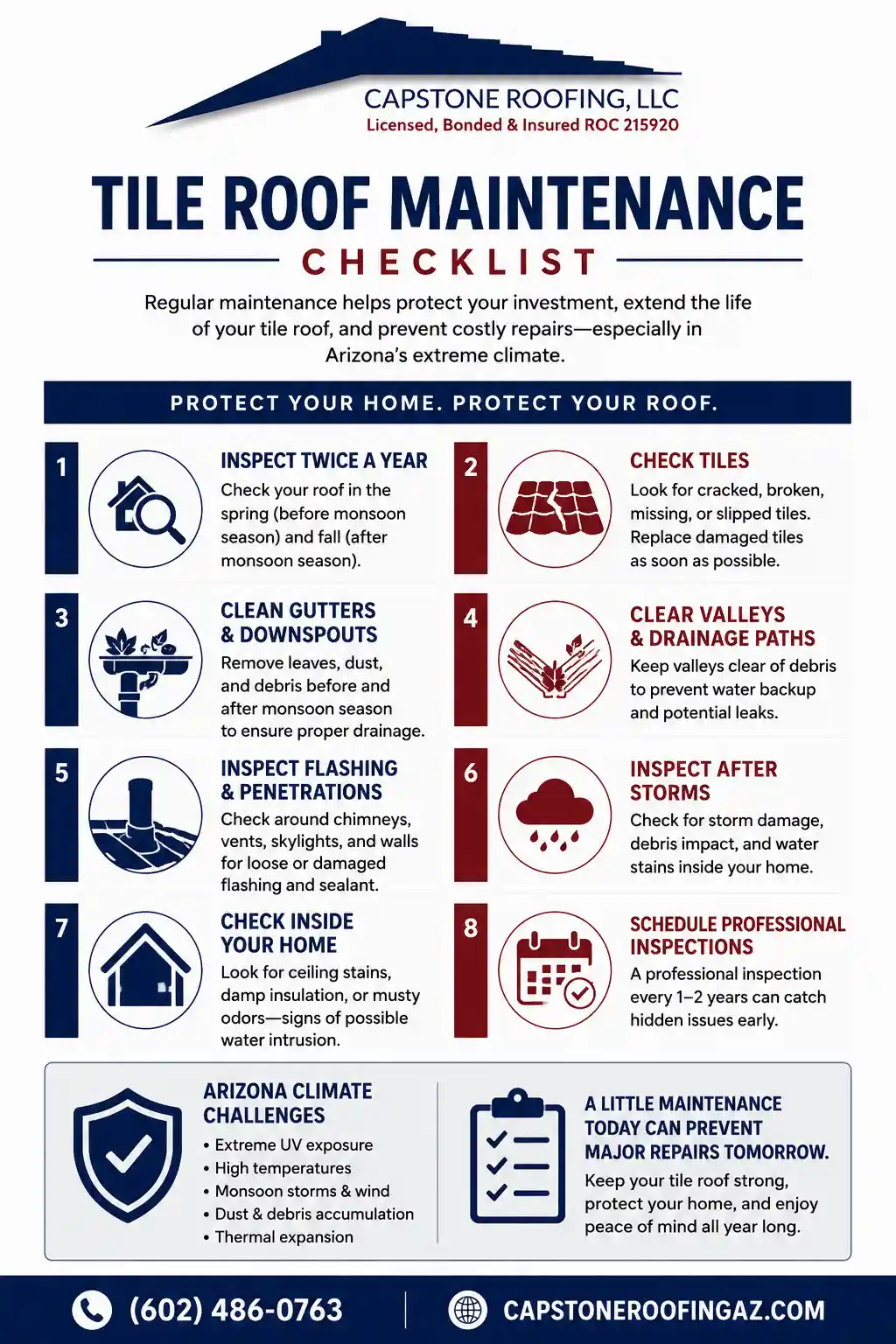
Tile Roof Maintenance Guide for Arizona Homeowners
Tile roofs are one of the most popular roofing systems throughout Phoenix, Scottsdale, Mesa, Chandler, Gilbert, and the rest of Arizona. Homeowners choose tile roofing because it offers exceptional durability, a timeless appearance, excellent heat resistance, and a lifespan that can far exceed many other roofing materials when properly maintained.
However, one of the biggest misconceptions homeowners have is that tile roofs are maintenance-free. While tile roofs are incredibly durable, they still require regular care and inspections to protect the components underneath the tile. In Arizona’s harsh climate, intense UV exposure, monsoon storms, dust accumulation, thermal expansion, and occasional high winds can all impact the long-term performance of a tile roofing system.
If you’ve ever asked yourself:
- How do you maintain a tile roof?
- How often should a tile roof be inspected?
- What maintenance does a tile roof actually need?
- Can a tile roof leak even if the tiles look fine?
- Is cleaning a tile roof necessary?
This guide will walk you through everything Arizona homeowners should know about tile roof maintenance and how to maximize the lifespan of their roofing system.
What Is Tile Roof Maintenance?
Tile roof maintenance is the process of inspecting, cleaning, repairing, and monitoring the components of a tile roofing system to ensure it continues protecting the home from water intrusion, weather damage, and premature deterioration.
Many homeowners assume the roof tiles themselves are the primary waterproofing layer. In reality, the tile serves as a protective shield against UV exposure, debris, and weather while the underlayment beneath the tile acts as the primary water-resistant barrier.
That’s why proper maintenance focuses on much more than simply checking for broken tiles.
A comprehensive tile roof maintenance program includes:
- Inspecting cracked or slipped tiles
- Monitoring roof underlayment condition
- Checking flashing around roof penetrations
- Removing debris from valleys and drainage paths
- Cleaning gutters and downspouts
- Inspecting skylights and vents
- Looking for signs of moisture intrusion
- Evaluating storm-related damage
- Monitoring areas susceptible to thermal movement
In Arizona, where temperatures can exceed 110°F for extended periods, maintenance becomes even more important because roofing materials expand and contract daily throughout much of the year.
Why Tile Roof Maintenance Matters in Arizona
Arizona presents unique challenges for roofing systems compared to many other parts of the country.
Homeowners often assume roof damage only occurs during storms. While monsoon weather certainly contributes to roofing issues, Arizona roofs are exposed to year-round environmental stressors.
The most common factors affecting tile roofs in Arizona include:
- Extreme ultraviolet exposure
- High summer temperatures
- Thermal expansion and contraction
- Dust accumulation
- Monsoon winds
- Wind-driven rain
- Debris impact
- Occasional hail events
- Poor drainage caused by clogged valleys and gutters
Over time, these conditions can accelerate wear on flashing, sealants, underlayment systems, and attachment points.
Regular maintenance helps identify issues before they develop into roof leaks or structural damage.
My Roof Isn’t Leaking. Do I Still Need Maintenance?
This is one of the most common questions homeowners ask.
“My roof looks fine. Why should I spend time or money maintaining it?”
The reality is that most roofing problems develop long before visible water damage appears inside the home.
Many roof leaks begin as:
- Minor flashing deterioration
- A single cracked tile
- A slipped tile after a storm
- Blocked drainage paths
- Underlayment deterioration hidden beneath the tile
By the time a homeowner notices a stain on the ceiling, moisture may have been entering the roofing system for weeks or even months.
Routine maintenance allows homeowners to identify and address these issues before they become expensive repairs.
How Often Should You Inspect a Tile Roof?
For most Arizona homes, a tile roof should receive a visual inspection at least twice per year.
The ideal schedule is:
- Spring (before monsoon season)
- Fall (after monsoon season)
Additional inspections should be performed after:
- Major wind events
- Monsoon storms
- Hailstorms
- Falling tree limbs
- Construction activity involving rooftop access
Homeowners don’t necessarily need to climb onto the roof for every inspection.
In many cases, a ground-level inspection using binoculars can identify obvious issues such as:
- Missing tiles
- Broken tiles
- Displaced tiles
- Debris buildup
- Damaged gutters
Tile Roof Maintenance Checklist for Arizona Homeowners
| Maintenance Item |
Frequency |
| Visual roof inspection |
Twice per year |
| Gutter cleaning |
Before and after monsoon season |
| Valley debris removal |
As needed |
| Storm damage inspection |
After major storms |
| Flashing inspection |
Annually |
| Underlayment evaluation |
Every few years |
| Professional roof inspection |
Every 1–2 years |
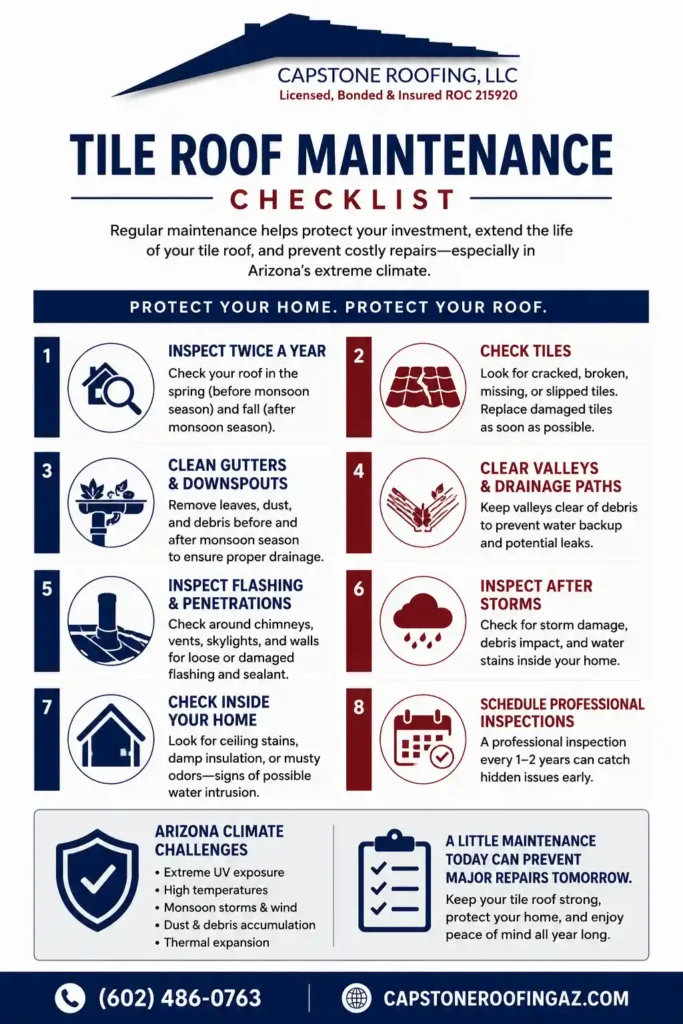
Keep Roof Valleys and Drainage Paths Clear
Roof valleys are one of the most important components of a tile roofing system.
Valleys direct water safely off the roof during rain events. During Arizona’s monsoon season, valleys can experience significant water flow in a short period of time.
Unfortunately, valleys also collect debris.
Common debris found on Arizona roofs includes:
- Palm fronds
- Leaves
- Twigs
- Dust
- Seed pods
- Roof granules from nearby structures
When debris accumulates, water can become trapped and redirected beneath tiles.
Regular valley cleaning helps ensure proper drainage and reduces the risk of moisture intrusion.
Inspect for Cracked, Broken, and Slipped Tiles
One cracked tile doesn’t always mean your roof is leaking.
However, damaged tiles can expose the underlayment beneath the roof to increased UV exposure and water intrusion.
Common causes of tile damage include:
- Falling branches
- Storm debris
- Foot traffic
- Improper maintenance
- Natural aging
If you notice cracked or displaced tiles, it’s best to address them sooner rather than later.
A small tile issue is often much easier to repair than widespread underlayment damage.
Pay Attention to Roof Flashing
Many homeowners focus entirely on roof tiles while overlooking flashing.
Flashing is one of the most common locations where roof leaks originate.
Flashing is installed around:
- Chimneys
- Skylights
- Roof vents
- Wall transitions
- Valleys
Over time, flashing materials can deteriorate due to:
- UV exposure
- Thermal movement
- Sealant failure
- Storm damage
Regular flashing inspections can help identify vulnerabilities before leaks occur.
Don’t Ignore Your Gutters
Many homeowners don’t associate gutters with tile roof maintenance.
However, clogged or damaged gutters can create significant roofing issues.
When gutters overflow, water can back up beneath roofing materials and contribute to moisture problems.
Arizona homes often accumulate dust, leaves, and debris that can clog drainage systems throughout the year.
Cleaning gutters before monsoon season is one of the simplest ways to help protect your roofing system.
Can You Pressure Wash a Tile Roof?
This is another common homeowner question.
In most cases, pressure washing a tile roof is not recommended without professional guidance.
High-pressure washing can:
- Damage tile surfaces
- Force water beneath tiles
- Dislodge roofing components
- Reduce the lifespan of certain roofing materials
If cleaning is necessary, discuss the safest approach for your specific roof type with a roofing professional.
How to Clean a Tile Roof Safely
When homeowners ask how to care for a tile roof, cleaning is often one of the first topics discussed.
Cleaning goals should focus on:
- Removing debris
- Preventing drainage issues
- Reducing organic buildup
- Maintaining appearance
The safest cleaning methods often involve:
- Soft-bristle brushes
- Low-pressure rinsing
- Manual debris removal
- Professional roof cleaning services
Walking on tile roofs can be risky both for homeowners and for the roof itself.
“I Don’t Know How to Walk on a Tile Roof”
You’re not alone.
This concern appears frequently among homeowners.
Tile roofs are not designed to be walked on casually.
Improper foot placement can:
- Crack tiles
- Dislodge tiles
- Create leaks
- Cause falls and injuries
If you’re uncertain about roof access, it’s generally safer to have a professional perform inspections and maintenance tasks.
What to Check After a Monsoon Storm
Monsoon season creates some of the most demanding conditions for Arizona roofs.
After a major storm, inspect for:
- Broken tiles
- Missing tiles
- Debris accumulation
- Damaged gutters
- Loose flashing
- Water stains inside the home
Many storm-related roofing problems can be addressed quickly when discovered early.
Signs Your Tile Roof Needs Professional Attention
Schedule a professional inspection if you notice:
- Water stains on ceilings
- Visible underlayment exposure
- Multiple broken tiles
- Persistent roof leaks
- Sagging roof areas
- Recurring moisture issues
- Flashing deterioration
These issues may indicate more than simple maintenance concerns.
The Most Overlooked Part of Tile Roof Maintenance: Underlayment
The tile gets all the attention.
The underlayment does most of the waterproofing.
Over time, Arizona’s extreme temperatures gradually wear down underlayment systems.
Many homeowners discover their roof underlayment is deteriorating long before the tile itself reaches the end of its lifespan.
This is why routine inspections are important even when the roof appears to be in excellent condition from the ground.
FAQ: Tile Roof Maintenance
How do you maintain a tile roof?
Maintain a tile roof through regular inspections, debris removal, gutter cleaning, flashing inspections, and replacing damaged tiles when necessary.
How often should tile roofs be inspected?
Most Arizona tile roofs should be inspected twice per year and after major storms.
Do tile roofs require maintenance?
Yes. While tile roofs are durable, they still require ongoing maintenance to protect the underlayment and drainage systems.
Can cracked roof tiles cause leaks?
Yes. Cracked tiles can allow increased exposure to moisture and UV damage that may eventually impact the underlayment.
Can I pressure wash my tile roof?
Pressure washing can damage tiles and force water beneath the roofing system. Consult a professional before cleaning.
How long do tile roofs last in Arizona?
The tiles themselves can often last several decades, while underlayment may require replacement sooner depending on materials and exposure conditions.
What causes tile roofs to leak?
Common causes include damaged flashing, underlayment deterioration, broken tiles, debris buildup, and storm damage.
What should I do after a monsoon storm?
Inspect for visible damage, check gutters and drainage paths, and look for interior signs of water intrusion.
Can I walk on my tile roof?
Improper foot traffic can damage tile roofs. Homeowners should exercise caution and consider professional assistance.
How do I know if my roof underlayment is failing?
Water stains, recurring leaks, and aging roofing systems may indicate underlayment deterioration.
What is the most important tile roof maintenance task?
Regular inspections are often the most valuable maintenance activity because they help identify issues before they become costly repairs.
Is tile roof maintenance worth it?
Yes. Routine maintenance helps maximize roof lifespan, improve performance, and reduce the likelihood of unexpected repairs.
Final Thoughts on Tile Roof Maintenance
Tile roofs are one of the most durable roofing systems available, but they are not maintenance-free. Arizona’s intense sun, monsoon storms, dust accumulation, and temperature fluctuations place constant stress on roofing systems throughout the year.
By performing regular inspections, keeping drainage paths clear, monitoring flashing and underlayment conditions, and addressing small problems early, homeowners can significantly extend the life of their tile roof.
The goal of tile roof maintenance isn’t simply to keep the roof looking good. It’s to protect the entire roofing system and help prevent minor issues from turning into major repairs.
A little preventative maintenance today can help your tile roof continue protecting your home for decades to come.
published on Friday, April 8th, 2022