Roofing Maintenance Tips for Arizona Homeowners
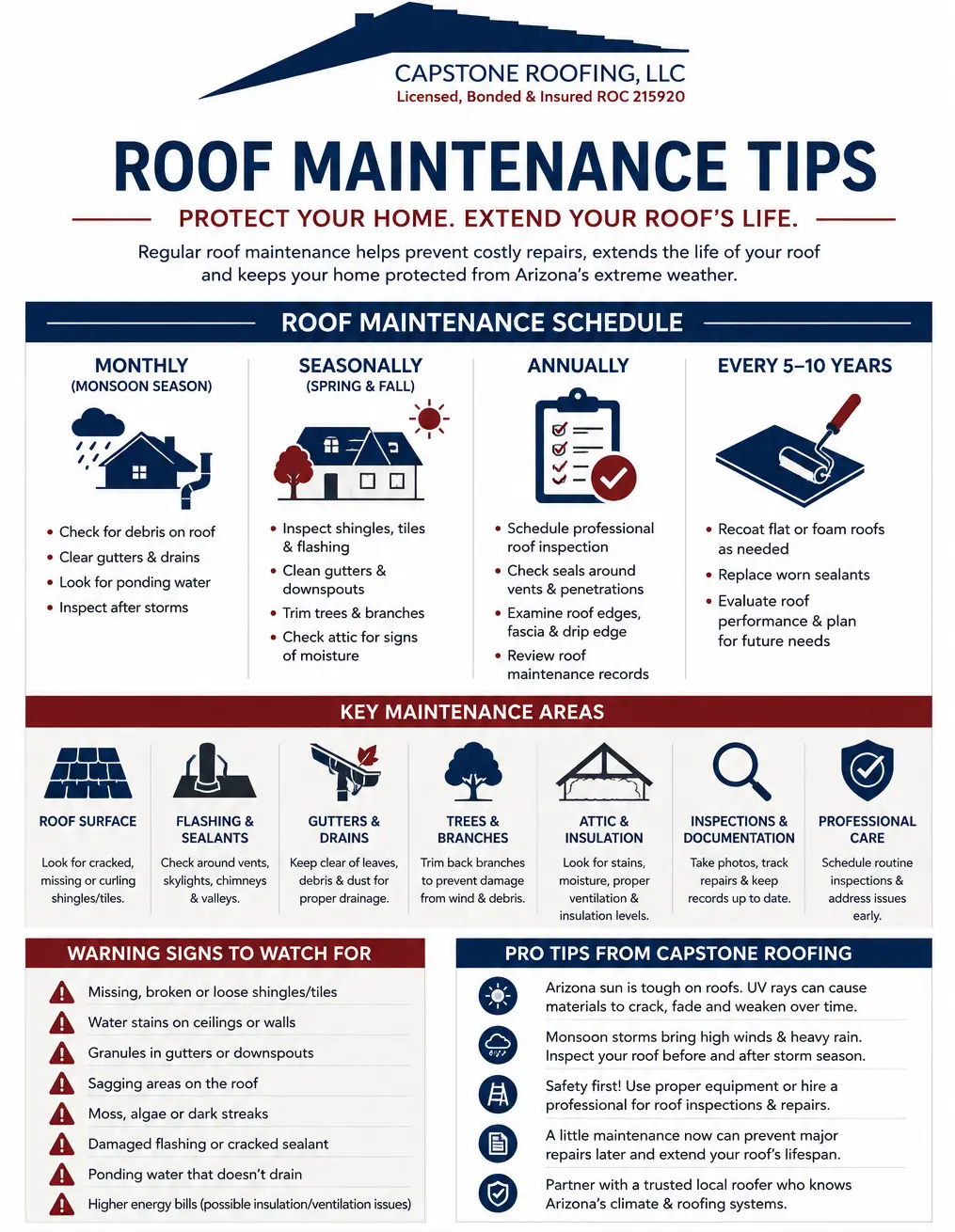
Your roof protects your home from intense sunlight, wind, dust, monsoon rain, airborne debris, and rapid temperature changes. In Arizona, those conditions can wear down roofing materials even when there is no obvious leak or visible damage. Regular roof maintenance helps homeowners catch small problems before they affect the underlayment, roof deck, insulation, ceilings, or interior walls.
The most useful roof maintenance tips are not complicated. Keep drainage paths open, inspect the roof after severe weather, watch for changes in the roofing material, trim nearby trees, check the attic for moisture, and schedule professional inspections before minor wear turns into a larger repair. The exact maintenance needs will vary depending on whether your home has tile, asphalt shingles, spray foam, metal, or a flat roofing system.
This guide explains how often to do roof maintenance, what is included in roof maintenance, which tasks homeowners can safely perform, and how to build a practical roof maintenance schedule for a home in Phoenix or the surrounding Arizona communities.
What Is Included in Roof Maintenance?
Residential roof maintenance is a combination of visual inspections, cleaning, minor corrections, documentation, and professional evaluations. The purpose is not simply to make the roof look cleaner. Preventative roof maintenance is intended to protect the roofing system’s ability to shed water, resist wind, manage heat, and prevent moisture from entering the home.
A typical roof maintenance checklist includes:
- Inspecting roofing materials for cracks, movement, curling, punctures, or missing sections
- Checking flashing around vents, skylights, chimneys, valleys, and wall transitions
- Clearing leaves, branches, dust, and other debris from the roof surface
- Cleaning gutters, downspouts, scuppers, and roof drains
- Looking for ponding water on flat and low-slope roofs
- Checking sealants around roof penetrations
- Inspecting fascia, drip edges, and exposed roof edges
- Looking inside the attic for stains, damp insulation, daylight, or musty odors
- Trimming trees and branches that hang over or touch the roof
- Documenting changes with dated photos and inspection reports
- Completing small repairs before the affected area becomes larger
Professional maintenance may also include securing loose materials, replacing damaged tiles or shingles, sealing minor penetrations, correcting drainage issues, and recommending repairs based on the age and condition of the roof. Homeowners who need a more complete evaluation can review what is normally covered during a professional roof inspection.
How Often Should Roof Maintenance Be Done?
Most Arizona homeowners should visually review their roofs at least twice a year and after major weather events. A useful schedule is to check the roof during spring and again before or immediately after the summer monsoon season. Homes surrounded by trees, properties with flat roofs, and older roofing systems may need more frequent attention.
A simple roof maintenance schedule may look like this:
| Frequency |
Recommended Maintenance |
| Monthly during monsoon season |
Check flat-roof drains, scuppers, gutters, and visible debris accumulation. |
| After major wind, hail, or rain |
Look for moved tiles, missing shingles, punctures, damaged flashing, fallen branches, and signs of water intrusion. |
| Twice per year |
Complete a broader visual inspection of roofing materials, drainage, sealants, penetrations, fascia, and attic conditions. |
| Annually |
Consider a professional evaluation, especially for an aging roof, a flat roof, or a roof with a history of leaks. |
| As recommended for the roof system |
Complete coating, sealant, underlayment, fastener, or membrane maintenance based on material condition and manufacturer guidance. |
There is no single schedule that applies to every roof. A newer roof with limited tree coverage may need less attention than an older tile roof with aging underlayment or a flat roof with several drainage points. The article on how often to schedule roof inspections in Phoenix provides additional guidance based on roof age, weather exposure, and property conditions.
Why Arizona Roofs Need a Local Maintenance Plan
Generic maintenance advice often focuses on snow, ice dams, and long periods of freezing weather. Those concerns are less relevant to most homes in the Phoenix metro area. Arizona homeowners need a maintenance plan built around extreme UV exposure, monsoon storms, dust accumulation, high surface temperatures, and repeated expansion and contraction.
Extreme UV Exposure
Sunlight continuously affects exposed roofing materials. Asphalt shingles may dry, lose granules, curl, or become brittle. Roof coatings can chalk, thin, or crack. Sealants around vents and penetrations may shrink or separate. Foam roofing can become vulnerable when its protective coating wears down.
UV-related damage often develops gradually. Homeowners may not notice a single dramatic failure. Instead, the roof slowly loses flexibility and weather resistance. Regular inspections help identify changes before they create an opening for rainwater.
Thermal Expansion and Contraction
Roof surfaces can become extremely hot during an Arizona summer and cool considerably at night. That repeated movement can place stress on seams, flashing, fasteners, coatings, and transitions between different materials.
Metal components may expand at a different rate than surrounding materials. Sealants may crack. Membrane seams may begin to separate. Tiles may shift slightly when the roof deck and fastening system move. Preventative roof maintenance should include close attention to these transition points.
Monsoon Winds and Wind-Driven Rain
Monsoon storms can bring strong winds, sudden rainfall, dust, hail, and flying debris. Wind may move loose tiles, lift shingle edges, loosen flashing, or push branches against the roof. Wind-driven rain can enter small openings that may not leak during a light, vertical rainfall.
Before summer storms arrive, homeowners should follow a dedicated monsoon roof preparation plan. After a severe storm, inspect the property from the ground and look for visible changes. The National Roofing Contractors Association also advises property owners to assess storm damage from the ground and leave close-up evaluation and repair work to a professional contractor. Review the NRCA’s storm roof repair guidance.
Dust and Debris Accumulation
Dust does not usually create immediate roof failure, but it can collect in drainage paths, around rooftop equipment, beneath solar panels, and near parapet walls. When dust mixes with leaves or organic debris, it can form dense material that blocks water movement.
Flat roofs are especially sensitive to clogged scuppers and drains. Water that cannot leave the roof may collect in low areas, exposing seams and coatings to prolonged moisture.
A Seasonal Roof Maintenance Schedule for Arizona
Spring Roof Maintenance
Spring is a practical time to assess the effects of winter rain and prepare the roofing system for summer heat. Start with a ground-level review of the roof. Look for displaced tiles, missing shingles, damaged flashing, debris, or changes around roof edges.
Inside the home, inspect ceilings and upper walls for stains. Check the attic for dark marks on the roof deck, damp insulation, or signs that light is entering through an opening. A small stain does not always identify the exact location of a leak because water can travel along rafters or underlayment before becoming visible.
Spring maintenance should also include cleaning gutters and checking downspouts. Water should discharge away from the fascia, walls, and foundation. If a downspout is separated, crushed, or blocked, correct the problem before the summer storm season.
Early Summer and Pre-Monsoon Maintenance
Before monsoon activity increases, remove loose debris and confirm that drainage paths are open. Trim branches that could strike the roof or break during high winds. The U.S. Fire Administration recommends trimming branches that overhang the home and maintaining separation between vegetation and the structure. See FEMA’s guidance for branches around the home.
Inspect sealants around vents, pipes, skylights, and rooftop equipment. Sealant that is cracked, pulling away, or missing may allow wind-driven rain to enter. On a flat roof, look for open seams, punctures, blisters, or low areas where water has previously collected.
Pre-monsoon maintenance is also a good time to review previous repair locations. A patch that has begun to separate may need additional work before heavy rain arrives.
Post-Monsoon Maintenance
After the primary storm season, inspect the roof for damage that may have occurred without producing an immediate leak. Look for new piles of shingle granules near downspouts, broken tiles on the ground, bent gutters, damaged screens, displaced flashing, or debris lodged in valleys.
Check the attic again after rainfall. Fresh stains, damp wood, or musty odors may indicate water intrusion. Homeowners who notice unexplained moisture can review common methods for finding the source of a roof leak.
Winter Roof Maintenance
Winter in the Phoenix area is generally mild, but cooler weather provides an opportunity to complete repairs that were postponed during summer. Inspect the roof after seasonal rain, clean accumulated leaves, and verify that flashing and sealants remain intact.
Homes at higher elevations or in colder Arizona communities may also need to consider snow, freeze-thaw movement, and ice around drainage areas. The maintenance plan should always reflect the property’s actual location and elevation rather than a statewide generalization.
Shingle Roof Maintenance Tips
Asphalt shingles are common because they are cost-effective and available in many styles. Arizona sunlight and heat, however, can accelerate drying and granule loss. Shingle roof maintenance should focus on surface condition, fastening, flashing, drainage, and attic ventilation.
Look for shingles that are:
- Curling at the corners or edges
- Buckling or lifting away from the roof deck
- Cracked through the center
- Missing after a wind event
- Darkened by trapped moisture
- Losing large amounts of protective granules
- Separated around vents, valleys, or roof edges
A few loose or damaged shingles may be repairable. Widespread curling, exposed matting, repeated blow-offs, or extensive granule loss can indicate broader aging. Do not apply generic caulk over damaged shingles as a long-term fix. Improper sealants may trap water, fail under heat, or make later repairs more difficult.
Clean Shingle Roofs Carefully
Do not use a pressure washer on asphalt shingles. High-pressure water can remove granules, damage shingle edges, and force water beneath the roof covering. If algae or organic growth is present, use a roof-safe cleaning method appropriate for the material.
The Asphalt Roofing Manufacturers Association recommends low-pressure cleaning and warns against pressure washing asphalt shingles. It also explains that overhanging branches and accumulated debris can contribute to moss growth. Review ARMA’s roof cleaning recommendations.
Arizona roofs usually experience less moss than roofs in humid climates, but shaded areas near trees or irrigation can still remain damp enough for organic growth. Address the moisture source as well as the visible staining.
Tile Roof Maintenance Tips
Concrete and clay tile roofs are widely used across Phoenix, Scottsdale, Mesa, Chandler, Gilbert, Glendale, and other Valley communities. The tiles provide a durable outer surface, but they are only one part of the roof system. The underlayment beneath the tiles is responsible for providing the primary water-shedding layer when water gets below the tile surface.
Tile roof maintenance should include checking for:
- Cracked, chipped, or broken tiles
- Tiles that have slipped out of position
- Exposed underlayment
- Debris collected in valleys
- Damaged mortar at ridges or hips
- Loose flashing around vents and walls
- Signs that birds or animals have entered beneath the tiles
- Previous repairs that no longer match or protect the surrounding area
Do not assume the tiles must be replaced simply because the roof leaks. In many cases, the tiles remain usable while the underlayment or flashing needs attention. However, moving tiles incorrectly can break them, damage fasteners, or create new openings. Homeowners should avoid walking on tile roofs unless they understand safe foot placement and have the correct fall protection.
For material-specific guidance, review these tile roof maintenance tips. Homeowners with older roofs may also benefit from understanding how long tile roof underlayment lasts in Arizona.
Flat Roof Maintenance Tips
Flat and low-slope roofs require consistent drainage maintenance. Although they are commonly called flat roofs, they should still have enough slope to direct water toward scuppers, drains, or gutters. Ponding water can reveal low spots, blocked drainage, compressed insulation, or problems with the roof structure.
Flat roof maintenance tips include:
- Clear scuppers and drains before monsoon season
- Remove leaves, branches, dirt, and construction debris
- Look for punctures caused by tools, branches, or foot traffic
- Check seams for separation or movement
- Inspect flashing at parapet walls and penetrations
- Look for blisters, bubbles, cracks, or worn coating
- Document where water remains after rainfall
- Limit unnecessary foot traffic
- Use protective walk pads where technicians regularly access equipment
Air-conditioning service, solar work, satellite installation, and other rooftop activity can accidentally damage a membrane. After another contractor works on the roof, check the access path and work area for dropped screws, cuts, displaced flashing, or compressed foam.
Water that remains briefly after a storm does not always indicate failure, but water that repeatedly collects in the same location should be evaluated. Flat-roof repairs may involve drainage corrections, membrane patching, flashing work, or restoration of a protective coating. A property with active damage may need an evaluation from a contractor experienced in flat roof repair.
Foam Roof Maintenance Tips
Spray polyurethane foam roofing creates a continuous insulated surface that works well for many Arizona properties. The foam must remain protected by an exterior coating. When that coating deteriorates, UV exposure can damage the foam beneath it.
Foam roof maintenance should focus on the condition of the coating and the presence of punctures. Look for:
- Chalky or thinning coating
- Areas where the foam is visible
- Cracks around penetrations
- Bird pecks or small punctures
- Damage near rooftop equipment
- Low areas that retain water
- Separated coating around drains or scuppers
- Previous patches that are lifting
The time between recoating projects depends on the original coating, thickness, exposure, drainage, workmanship, and current condition. Avoid relying on a fixed calendar alone. Regular inspections can show whether the coating is still performing or whether restoration should be scheduled.
Small punctures may be repairable when identified quickly. If they are ignored, moisture can enter the foam and affect a larger area. Read more about maintaining a foam roof in Arizona and the differences between a foam roof recoat and full replacement.
Metal Roof Maintenance Tips
Metal roofing can provide strong resistance to heat, wind, and fire when installed and maintained correctly. Maintenance should focus on fasteners, seams, coatings, sealants, and contact points between different metals.
Check exposed-fastener systems for loose, backed-out, or deteriorated fasteners. Washers may harden or crack over time. Standing-seam systems should be reviewed for seam movement, damaged clips, or separation at transitions.
Also inspect areas where metal meets stucco walls, skylights, vents, gutters, or other roof types. Rust, discoloration, and coating failure should be evaluated before corrosion spreads. Avoid using an incompatible metal patch or fastener because contact between dissimilar metals can contribute to corrosion.
Never assume a visible screw or small gap can be corrected with ordinary household caulk. Roofing sealants must remain compatible with the metal, coating, movement, and expected temperature range.
Keep Gutters, Scuppers, and Drains Clear
Drainage maintenance is one of the most important parts of regular roof maintenance. Gutters and drains are designed to move water away from roof edges, fascia, walls, and foundations. When they become clogged, water may back up beneath roofing materials or overflow where it can damage exterior finishes.
Arizona gutters can collect more than leaves. Dust, roof granules, seed pods, palm debris, bird nesting material, and fragments from deteriorating sealant may all restrict water movement.
When cleaning drainage components:
- Use gloves and eye protection
- Stabilize the ladder on level ground
- Remove large debris by hand or with a scoop
- Flush downspouts to confirm they are open
- Look for separated seams and loose hangers
- Confirm water exits away from the structure
- Check for damaged fascia behind the gutter
- Inspect scuppers for cracks or loose flashing
Do not lean heavily against gutters or use them as ladder supports. If a gutter is pulling away from the fascia, the fasteners or underlying wood may already be damaged.
Trim Trees Without Creating New Roof Damage
Tree maintenance protects the roof from scraping, impact, shade-related moisture, and debris accumulation. Dead or weakened limbs are more likely to break during strong winds. Branches that rest on the roof may gradually wear through shingles, coatings, or tile surfaces.
Tree trimming should be completed from the ground or by a qualified tree professional. Avoid dragging large branches across the roof or allowing cut limbs to fall onto roofing materials. Branches near power lines require specialized handling.
Trees do not need to be removed simply because they are near the home. Thoughtful trimming can preserve shade while reducing roof contact and storm risk. The goal is to maintain enough clearance so branches do not strike the roof during normal wind movement.
Inspect Flashing, Sealants, and Roof Penetrations
Many roof leaks begin around penetrations and transitions rather than in the middle of an open roof area. Flashing directs water away from vulnerable joints. Sealants close smaller gaps and allow for controlled movement.
Common areas to inspect include:
- Plumbing vent pipes
- Exhaust vents
- Skylights
- Chimneys
- Roof-mounted HVAC equipment
- Satellite or solar attachments
- Parapet walls
- Roof-to-wall intersections
- Valleys
- Drip edges and eaves
Look for cracked sealant, missing fasteners, rust, gaps, loose metal, exposed nail heads, or flashing that has lifted away from the surrounding material. Applying more sealant over a poorly designed or damaged flashing detail may temporarily hide the opening without correcting the cause.
Skylights deserve special attention because their seals, flashing, domes, and frames are exposed to constant UV radiation. Condensation inside a skylight is not always a roof leak, but stains around the opening should be evaluated.
Check the Attic for Hidden Roof Problems
A roof can appear normal from outside while moisture is entering beneath the surface. The attic may reveal problems before they become visible in living areas.
During an attic inspection, look for:
- Dark stains on decking or rafters
- Damp or compressed insulation
- Rust on fasteners
- Water marks around vents or chimneys
- Daylight entering through unintended openings
- Musty odors
- Mold-like discoloration
- Signs of rodents, birds, or insects
- Blocked soffit vents
Use caution when entering an attic. Step only on structural framing or properly installed decking. Drywall ceilings are not designed to support body weight. Attics can also become dangerously hot during much of the year in Arizona, so inspections should be completed during cooler conditions.
Proper ventilation helps control heat and moisture, but more ventilation is not always automatically better. Intake and exhaust need to work together. Bathroom and kitchen exhaust should discharge outdoors rather than into the attic. Additional information is available in Capstone Roofing’s guide explaining why roof ventilation matters.
Roof Cleaning Tips: What to Do and What to Avoid
Roof cleaning should remove harmful debris without damaging the roofing system. The safest method depends on the roof material.
Recommended Roof Cleaning Practices
- Use a leaf blower from a safe position to move loose debris down the slope
- Use soft brushes only when approved for the roofing material
- Direct airflow and water down the roof rather than beneath material edges
- Protect landscaping when using roof-cleaning solutions
- Clear valleys and drainage points carefully
- Use low-pressure rinsing when appropriate
- Follow the roofing manufacturer’s cleaning instructions
Roof Cleaning Mistakes to Avoid
- Pressure washing asphalt shingles
- Walking carelessly on clay or concrete tiles
- Using harsh chemicals without checking compatibility
- Scraping coatings or membranes with metal tools
- Blowing debris beneath shingles or tiles
- Allowing cleaning runoff to damage plants or exterior finishes
- Covering cracks with cosmetic coatings before repairing the underlying issue
Dark streaks are not always mold, and stains do not always indicate structural damage. Identify the cause before selecting a treatment. In dry Arizona conditions, dirt, airborne particles, roof coating chalk, and runoff patterns may all change the roof’s appearance.
Common Roof Maintenance Mistakes Homeowners Make
Waiting for a Leak Before Inspecting the Roof
A visible ceiling stain often appears after water has already reached the roof deck, insulation, or drywall. Preventative inspections are intended to identify problems before interior damage occurs.
Walking on the Roof Without Understanding the Material
Walking on brittle shingles, unsupported tiles, or soft foam can create damage. It also exposes the homeowner to fall hazards. Many useful observations can be made from the ground, through windows, or from a properly positioned ladder.
Using Temporary Sealant as a Permanent Repair
Sealant may be part of a correct repair, but it is not a universal solution. Covering a flashing problem, membrane separation, or cracked tile with caulk may redirect water or conceal continuing deterioration.
Ignoring Small Amounts of Ponding Water
Water that repeatedly remains in the same area can accelerate coating wear, expose seams, attract debris, and reveal a drainage problem. Take photos after rainfall and track whether the area is growing.
Failing to Inspect After Other Contractors Access the Roof
HVAC technicians, solar installers, satellite contractors, painters, and pest-control workers may need rooftop access. Even careful work can disturb tiles, puncture foam, or affect flashing. Inspect the access path after the project is complete.
Hiring Based Only on the Lowest Repair Price
Roof repair recommendations should explain the source of the problem, the affected materials, and the proposed correction. A low-cost surface patch may not address moisture beneath the roof covering.
My Roof Looks Fine. Do I Still Need Maintenance?
Yes. A roof can look acceptable from the street while hidden components are deteriorating. Tile underlayment, flashing details, sealants, fasteners, membrane seams, and attic conditions cannot always be evaluated from a basic ground-level view.
Maintenance does not mean replacing parts unnecessarily. It means establishing the roof’s current condition, documenting changes, and addressing genuine problems before they spread. A newer roof may only need routine observation and drainage cleaning. An older roof may require closer attention to underlayment, coatings, flashing, and previous repairs.
Homeowners often say, “My roof is not leaking, so I do not think anything is wrong.” A better question is whether the roof is still prepared for the next period of high wind and heavy rain. Maintenance evaluates readiness rather than waiting for failure.
When Does a Maintenance Issue Become a Repair?
Routine maintenance becomes a repair when the roofing material or a supporting component is no longer performing correctly. Examples include replacing broken tiles, repairing lifted shingles, patching membrane punctures, restoring damaged flashing, correcting drainage, or replacing deteriorated pipe boots.
Signs that the roof may need repair include:
- Water stains on ceilings or walls
- Recurring moisture in the attic
- Broken or missing roofing materials
- Exposed underlayment
- Open membrane seams
- Visible foam beneath a worn coating
- Damaged flashing
- Repeated ponding
- Granules collecting heavily in gutters
- Sagging roof areas
- Soft decking
- Damage caused by a fallen branch
Not every repair indicates that the entire roof needs replacement. The decision depends on the extent of damage, roof age, previous repairs, material availability, moisture spread, and overall condition. Capstone Roofing’s comparison of roof repair versus replacement explains the factors homeowners should consider.
How Roof Maintenance Supports Energy Efficiency
Roof maintenance can help preserve energy-related performance, although maintenance alone cannot correct every comfort or efficiency problem. Reflective coatings, ventilation, insulation, and intact roofing materials work together to manage heat transfer.
A worn reflective coating may absorb more heat than it did when new. Damaged insulation may no longer provide consistent thermal resistance. Blocked ventilation can contribute to heat and moisture accumulation. Gaps around penetrations may allow conditioned air to escape.
During maintenance, look for changes in coating condition, attic insulation, ventilation openings, and roof penetrations. Homeowners planning a future replacement may also consider environmentally friendly roofing options that support reflectivity, durability, material reuse, or energy performance.
Keep a Roof Maintenance Record
A written maintenance record helps homeowners track roof condition over time. It can also provide useful information when selling the home, reviewing a warranty, discussing storm damage, or comparing contractor recommendations.
Your roof maintenance record can include:
- The approximate roof installation date
- Roofing material and manufacturer information
- Warranty documents
- Inspection dates
- Dated photos
- Storm dates and observed damage
- Repair invoices
- Areas that require continued monitoring
- Dates of foam recoating or membrane restoration
- Tree trimming and gutter cleaning dates
- Names of contractors who accessed the roof
Take photos from the same general locations when possible. Consistent photos make it easier to identify movement, coating wear, new cracks, and drainage changes.
DIY Roof Maintenance Versus Professional Maintenance
Homeowners can safely complete some roof maintenance tasks, but others require roofing knowledge, fall protection, and material-specific experience.
Tasks Many Homeowners Can Perform
- Inspecting the roof from the ground
- Checking ceilings and attic areas for stains
- Taking photographs after storms
- Removing accessible debris from gutters
- Monitoring downspout discharge
- Trimming small branches from the ground
- Keeping maintenance records
- Watching for changes in existing problem areas
Tasks Better Left to a Roofing Professional
- Walking on tile, foam, steep, or damaged roofs
- Repairing flashing
- Replacing underlayment
- Repairing membrane seams
- Correcting structural ponding
- Recoating foam roofing
- Diagnosing an active leak
- Repairing storm damage
- Working near electrical lines or rooftop equipment
- Evaluating soft or sagging roof decking
Professional maintenance is especially useful when the roof is older, has a history of leaks, contains multiple roofing systems, or includes areas that cannot be viewed safely. Capstone Roofing provides roof maintenance in Phoenix for homeowners who need a closer evaluation or material-specific work.
Roof Maintenance Tips from Capstone Roofing
The most effective maintenance plan is consistent, roof-specific, and based on Arizona weather. Do not wait for visible water damage before reviewing the condition of the roof. Check drainage before monsoon season, inspect after high winds, track changes in roofing materials, and address small problems while the affected area is still limited.
A professional can help determine whether a concern needs monitoring, maintenance, repair, restoration, or replacement. The goal of an inspection should be to explain what is happening, identify the affected components, and provide practical next steps.
Homeowners who notice changes in their roof or need help creating a maintenance plan can use the Capstone Roofing contact page to share information about the property and roofing system.
Frequently Asked Questions About Roof Maintenance
How often should roof maintenance be done in Arizona?
Homeowners should visually review their roof at least twice per year and after major wind, hail, or rain events. Flat roofs, older roofs, and properties surrounded by trees may need more frequent checks. Professional inspection frequency should be based on roof age, material, previous damage, and warranty requirements.
What is included in regular roof maintenance?
Regular roof maintenance includes checking roofing materials, flashing, sealants, drainage, gutters, vents, penetrations, roof edges, and attic conditions. It may also include debris removal, minor sealing, replacing isolated damaged materials, documenting roof condition, and identifying repairs that should be completed before the next storm season.
Can I perform roof maintenance myself?
Homeowners can safely perform ground-level inspections, look for attic stains, clean accessible gutters, trim small branches from the ground, and keep maintenance records. Walking on the roof, repairing flashing, replacing tiles, patching membranes, and diagnosing leaks should generally be left to a qualified roofer.
How do I know whether my roof needs maintenance or repair?
Maintenance preserves a roofing system that is still functioning. Repair corrects an area that is damaged or no longer performing correctly. Broken tiles, missing shingles, open seams, exposed foam, active leaks, and damaged flashing typically require repair rather than routine cleaning or observation.
Should I have my roof inspected even if it is not leaking?
Yes. Leaks are often a late sign of deterioration. Flashing can loosen, underlayment can age, coatings can wear, and drainage can become blocked without creating an immediate ceiling stain. An inspection helps identify those conditions before water reaches the interior.
What should I check after an Arizona monsoon storm?
From the ground, look for broken or displaced tiles, missing shingles, fallen branches, damaged gutters, loose flashing, debris in valleys, and roofing material on the ground. Check ceilings and the attic for new stains or dampness. Do not climb onto a wet, damaged, or steep roof.
How can I maintain a flat roof?
Keep drains, scuppers, and gutters clear. Remove debris, watch for ponding water, inspect seams and flashing, limit foot traffic, and check the roof after HVAC or solar work. Punctures, open seams, recurring ponding, and deteriorated coatings should be evaluated promptly.
How often should a foam roof be recoated?
There is no universal interval for every foam roof. Timing depends on the type and thickness of the coating, UV exposure, drainage, maintenance history, and current condition. Inspect the coating regularly and plan recoating when it becomes thin, cracked, chalky, or no longer fully protects the foam.
Can I pressure wash an asphalt shingle roof?
Pressure washing is not recommended for asphalt shingles. It can remove protective granules, damage shingle edges, and force water beneath the roofing material. Use a roof-safe, low-pressure cleaning method that follows the shingle manufacturer’s instructions.
Do tile roofs need maintenance if the tiles last a long time?
Yes. The tiles may remain durable while underlayment, flashing, sealants, fasteners, and roof penetrations deteriorate. Tile roofs should be checked for cracked or displaced tiles, exposed underlayment, debris in valleys, and signs of moisture beneath the roof covering.
Does homeowners insurance pay for roof maintenance?
Homeowners insurance generally does not pay for routine maintenance or deterioration caused by age and neglect. Policies may cover sudden damage from covered events, but coverage varies. Maintaining records and photos can help document the roof’s condition before and after a storm.
Will regular roof maintenance prevent every leak?
No maintenance plan can guarantee that a roof will never leak. Severe storms, falling objects, hidden installation defects, and unexpected material failures can still occur. Regular maintenance reduces avoidable risks and improves the chance of finding damage before it spreads.
What are the most common signs of poor roof drainage?
Common signs include overflowing gutters, water stains near roof edges, debris-filled scuppers, repeated ponding, sagging gutters, rotted fascia, dirt rings on flat roofs, and water discharging too close to the foundation. Drainage problems should be corrected before the next period of heavy rain.
How can I tell whether a ceiling stain is caused by the roof?
A ceiling stain may come from the roof, plumbing, HVAC condensation, or another moisture source. Note whether the stain changes after rainfall and inspect the attic above the area. Because water can travel along framing, the visible stain may not be directly below the roof opening.
Should I inspect the roof after solar panels are installed?
Yes. Review the installation area, roof penetrations, flashing, and the path workers used to access the roof. Solar panels can also make some roof sections more difficult to inspect, so keep installation documents and photos that show the roof condition before the panels were added.
Does trimming trees really help protect the roof?
Yes. Proper trimming reduces contact between branches and roofing materials, limits debris accumulation, improves sunlight exposure in shaded areas, and lowers the risk of falling limbs during strong winds. Large limbs and trees near electrical lines should be handled by a qualified tree professional.
What should I include in a roof maintenance record?
Record inspection dates, storm events, photographs, repair invoices, warranty documents, coating dates, gutter cleaning, tree trimming, and any areas that need continued monitoring. A clear history makes it easier to compare changes and explain the roof’s condition to contractors, buyers, or insurance representatives.
published on Saturday, August 13th, 2022