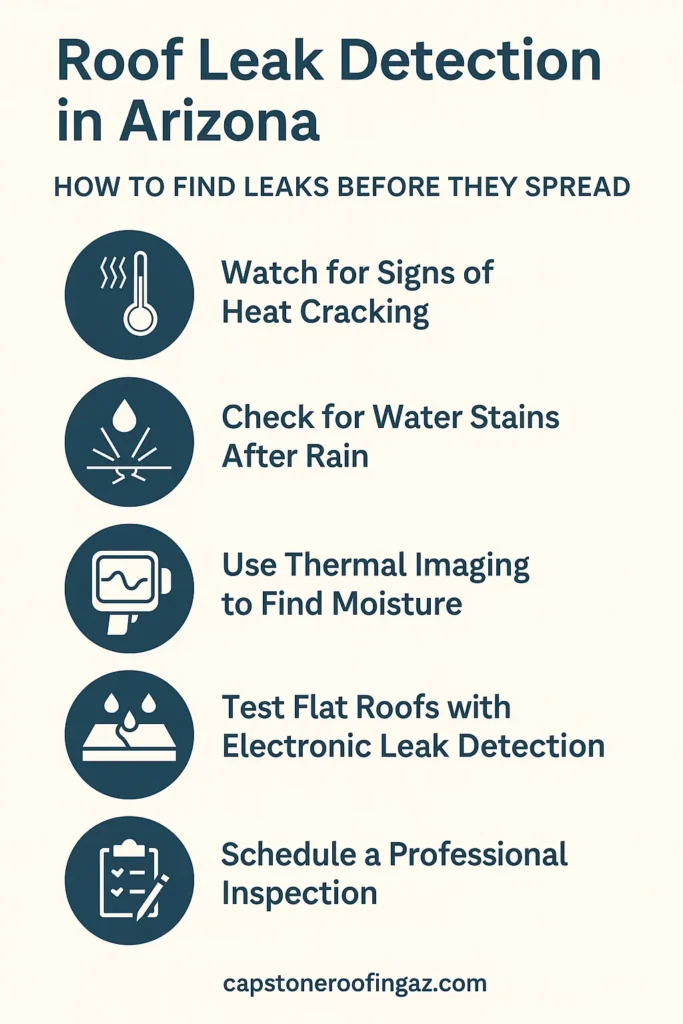
When roof leaks occur in Arizona, they often start small — a tiny crack in flashing or sealant that expands under extreme heat. Add a heavy monsoon downpour, and that small gap can quickly become a serious leak. The key is learning how to spot, locate, and prevent roof leaks before they spread.
Capstone Roofing’s guide explains how to identify early warning signs, find leaks on flat and foam roofs, understand the costs and process of leak detection, and keep your roof protected year-round.
When roof leaks during monsoon season, wind-driven rain can force water beneath tiles and flashing.
Thermal expansion causes sealants to separate as the sun bakes and cools your roof daily.
Dust buildup clogs drains on flat roofs, leading to pooling and slow leaks that appear days later.
Even a small crack can spread moisture across insulation layers in just 24 hours. Knowing how common roof leaks are in Arizona — and how quickly they spread — helps homeowners take action early.
Most homeowners want to know what does a leaking roof look like or how to tell if they have a roof leak before calling for help. Unfortunately, leaks don’t always appear right away — water can travel through attic spaces or under tiles before visible damage appears.
Why Roof Leaks Sometimes Come and Go
Some leaks appear only during wind-driven rain.
Heat can cause materials to expand, temporarily sealing cracks.
Moisture may take hours or even days to show through ceilings after a storm.
Intermittent leaks might seem minor, but they’re a sign of aging materials and hidden moisture.
What Does a Leaking Roof Look (or Sound) Like?
Brown stains or rings on ceilings and walls
Bubbling or peeling paint
Sagging drywall or dark attic rafters
Musty odors from trapped moisture
Dripping or popping sounds during or after rain
If you’ve ever wondered what a roof leak sounds like, listen for faint tapping or dripping in the attic during storms. Leaks often start above the visible stain.
How to Tell Where a Roof Leak Is Coming From
In your attic, look for damp insulation or stained wood.
Trace streaks upward toward the roof deck.
Inspect flashing around skylights, vents, and chimneys.
On flat roofs, follow the slope toward drains or seams.
If you can’t find where your roof is leaking from, professional tools such as infrared cameras and moisture probes can pinpoint the true entry point.
If you’re asking who can check your roof for leaks, Capstone Roofing’s licensed team can help. We use advanced leak-detection technology to identify where leaks start — even when hidden beneath roofing layers.
If you’re unsure how to know if there is a leak in your roof, professionals use technology to find leaks long before interior damage appears.
Infrared Thermography
Thermal imaging identifies cooler spots on a roof caused by trapped moisture — perfect for locating hidden leaks beneath coatings or tiles.
Electronic Leak Detection (ELD)
Used mainly on flat or foam roofs, this method pinpoints even pinhole leaks invisible to the eye.
Moisture Mapping
Probes track how far water travels under roofing materials to target repairs precisely.
Water Hose Testing
Controlled rainfall simulation isolates leak sources safely without damaging materials.
How Much Does Roof Leak Detection Cost in Arizona?
Homeowners often ask what to expect when scheduling a leak inspection.
Residential roof leak detection typically ranges from $150–$350 depending on roof size, slope, and access.
Flat or foam roofs needing electronic or infrared testing may cost slightly more.
When you choose Capstone Roofing for repairs, this inspection fee is often credited toward your total service.
A short inspection can prevent thousands in ceiling or drywall damage later — making it one of the smartest home-maintenance investments for Arizona homeowners.
How Long Does Roof Leak Detection Take?
Most leak-detection visits last 60–90 minutes for a single-family home. Larger or multi-layer flat roofs may take longer. Our process includes:
A detailed visual inspection
Infrared or electronic scanning for hidden leaks
A photo report outlining recommended repairs
For emergencies, we can respond within 24 hours and apply temporary protection until weather clears.
Flat Roof Leak Detection
If you’re searching how to find a leak on a flat roof or how to check a flat roof for leaks, you’re not alone. Flat and foam roofs are common in Arizona — and especially vulnerable to leaks due to standing water and extreme heat.
Why Flat Roofs Leak So Often in Arizona
Ponding water after monsoon storms
Cracked flashing or open seams
UV damage that dries out coatings
Blocked drains or scuppers
How to Find or Locate a Leak on a Flat Roof
Check for soft spots, bubbles, or discoloration in coating layers.
Inspect flashing and seams near drains and rooftop units.
Look for ponding areas or cracks in foam surfaces.
Use a gentle water test to simulate rainfall in small sections.
If you’re unsure how to find a leak in a flat roof, our team can perform an infrared or electronic scan to locate hidden moisture safely.
How Do I Know If My Flat Roof Is Leaking?
Look for ceiling stains, musty odors, or soft areas underfoot. Even small surface blisters may indicate trapped moisture beneath your coating.
If you’re still wondering who can check your roof for leaks, Capstone Roofing provides professional roof leak detection in Arizona using advanced technology. From thermal imaging to electronic testing, we pinpoint leaks accurately and repair them before they spread.
Serving homeowners across Phoenix, Scottsdale, Mesa, Chandler, and the East Valley, we restore your peace of mind — and your roof’s integrity.