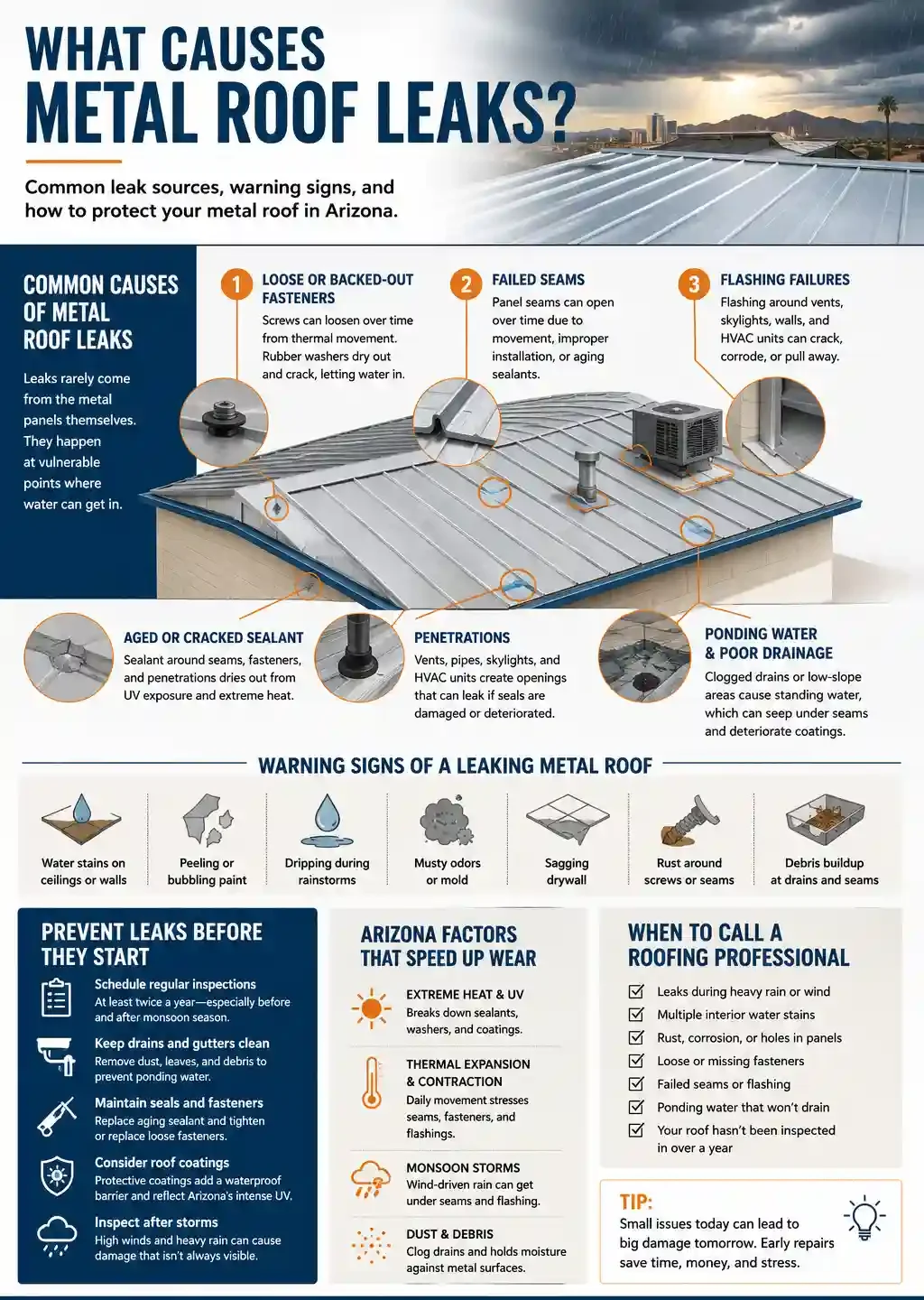
What Causes Metal Roof Leaks?
Metal roofing systems are known for durability, energy efficiency, and long lifespans, especially in Arizona’s extreme climate. Even so, metal roof leaks can still happen over time. In Phoenix and across the Valley, intense UV exposure, rapid temperature swings, monsoon storms, dust buildup, and aging sealants all place stress on roofing systems year after year.
A metal roof is rarely leaking because the metal itself “failed.” In most cases, leaks develop around seams, fasteners, flashing, penetrations, or areas where movement and weather exposure gradually weaken the roof system.
This guide explains the most common causes of metal roof leaks, why Arizona conditions accelerate certain problems, how professionals identify hidden leak sources, and what property owners can do to help prevent long-term water intrusion.
Why Metal Roof Leaks Happen in Arizona
Metal roofs perform well in Arizona compared to many other roofing materials, but the desert environment creates unique stress that affects how roofing systems age.
Daily heat cycles cause metal panels to expand during the day and contract at night. Over years, this constant movement stresses seams, fasteners, flashing, and sealants. Phoenix roofs also endure some of the highest UV exposure levels in the country, which gradually breaks down coatings and waterproofing materials.
Monsoon storms add another layer of stress. Heavy rain combined with high winds can push water beneath seams and flashing. Dust and debris accumulation may also clog drainage paths and create ponding around vulnerable areas.
Our guide to roof leak detection in Arizona explains how many leaks begin long before visible water stains appear inside the property.
Why Is My Metal Roof Leaking?
When homeowners or property managers ask “why is my metal roof leaking,” the answer is usually tied to one of several common failure points.
1. Loose or Backed-Out Fasteners
Fasteners are one of the most common sources of metal roof leaks.
Metal roofs use screws and fasteners with rubber washers to create watertight seals. Over time, Arizona’s thermal expansion and contraction cycles can slowly loosen these fasteners. Even a slight amount of movement creates small gaps where water can enter.
Rubber washers also dry out and crack from UV exposure. Once the washer deteriorates, water can seep around the screw during rainstorms.
Common warning signs include:
- Raised or crooked fasteners
- Rust around screws
- Missing washers
- Dripping during heavy rain
- Water stains near roof penetrations
Our metal roof repair services frequently address fastener-related leaks throughout Phoenix and the East Valley.
2. Failed Seams on Standing Seam Metal Roofs
Standing seam roofs are designed for durability, but seam separation can still occur over time.
As panels expand and contract, the movement stresses seam connections. Aging sealants or improper installation can eventually allow small openings to develop between panels.
During Arizona monsoon storms, wind-driven rain can force water upward beneath weakened seams.
Signs of seam-related leaks may include:
- Intermittent leaking during storms
- Leaks only during wind-driven rain
- Visible seam gaps
- Water traveling far from the source
Our article on commercial metal roof repair in Phoenix explains how seam separation commonly develops in Arizona conditions.
3. Flashing Failures Around Roof Penetrations
Flashing protects vulnerable transition points where the roof meets vents, skylights, HVAC units, chimneys, or walls.
These areas naturally experience more movement and weather exposure than open roof sections. Over time, flashing can crack, separate, loosen, or corrode.
In Arizona, UV exposure accelerates flashing deterioration — especially when older sealants begin drying out.
Common flashing leak areas include:
- Pipe boots
- Skylight curbs
- HVAC penetrations
- Parapet walls
- Valleys and transitions
Our guide to roof leak protection explains how these vulnerable areas are commonly inspected.
4. Aging or Cracked Sealants
Sealants are critical components in metal roofing systems.
Sealants are commonly applied around seams, flashing, fasteners, ridge caps, and roof penetrations. Arizona’s intense UV exposure gradually dries these materials out, causing cracking, shrinkage, and separation.
Once sealants fail, water can move beneath the roofing system.
High-quality silicone and polyurethane sealants typically perform better in extreme heat because they remain flexible longer under UV exposure.
Metal Roof Leaks in Heavy Rain
Many Arizona property owners first notice roof leaks during monsoon season.
Metal roof leaks in heavy rain are often connected to:
- Wind-driven rain entering seams
- Loose flashing
- Backed-out fasteners
- Ponding water
- Blocked drainage areas
- Roof penetrations
Heavy rain can reveal weaknesses that remain hidden during lighter storms.
Arizona monsoon systems create especially difficult conditions because rain often arrives with strong winds. Water can be pushed upward beneath panels rather than simply flowing downward.
Our article about why roof leaks are common in Phoenix during monsoon season explains this in greater detail.
Metal Roof Coating to Stop Leaks
For aging metal roofing systems, coatings can sometimes help extend roof life and reduce leak risks.
A metal roof coating creates a protective waterproof layer over the existing roofing surface. These coatings can help seal small cracks, reinforce seams, improve UV resistance, and reduce thermal stress.
Common coating systems include:
- Silicone roof coatings
- Acrylic coatings
- Polyurethane coatings
- Elastomeric coatings
In Arizona, reflective coatings may also help reduce rooftop temperatures and improve energy efficiency.
However, coatings are not appropriate for every roof. If widespread corrosion, structural movement, or major seam failure exists, repairs or replacement may still be necessary.
Our roof coating services page explains how coatings are used on Arizona roofing systems.
Best Metal Roof Sealant for Leaks
The best metal roof sealant for leaks depends on the roofing system, roof condition, and Arizona weather exposure.
Silicone Sealants
Silicone sealants are popular because they provide excellent UV resistance and remain flexible under extreme temperatures.
Benefits include:
- Strong waterproofing
- Excellent UV resistance
- Long-term flexibility
- Good performance in extreme heat
Polyurethane Sealants
Polyurethane sealants provide strong adhesion and durability.
These products are often used around flashing and penetrations because they bond well to metal surfaces.
Acrylic Sealants
Acrylic systems are commonly used with roof coatings and can provide good UV resistance while remaining cost-effective.
Proper preparation is critical regardless of the sealant type. Surfaces must be cleaned thoroughly and allowed to dry before application.
Steel Roof Leak Repair
Steel roofing systems require specialized repair approaches because corrosion and oxidation can become major concerns if water intrusion continues.
Steel roof leak repair may involve:
- Replacing rusted fasteners
- Seam resealing
- Flashing replacement
- Coating restoration
- Panel replacement
- Corrosion treatment
Rust around screws or panel edges should never be ignored. Once corrosion spreads beneath protective coatings, damage can accelerate quickly.
Our metal roof repair in Tempe page explains how Arizona heat and storms affect standing seam and corrugated systems.
How to Fix a Leaking Metal Roof
How to fix a leaking metal roof depends entirely on the source of the problem.
Minor Leak Repairs May Include:
- Replacing damaged screws
- Resealing flashing
- Applying sealant to seams
- Patching small punctures
- Cleaning clogged drainage areas
Larger Repairs May Include:
- Panel replacement
- Flashing reconstruction
- Underlayment repairs
- Structural reinforcement
- Roof coating restoration
One of the most important parts of leak repair is identifying the true entry point. Water often travels far from the visible stain before becoming noticeable inside the property.
Our article on how to find out if your roof is leaking explains how hidden leak paths develop.
Signs Your Metal Roof Is Leaking
Some leaks are obvious. Others remain hidden for months before interior damage appears.
Interior Warning Signs
- Brown ceiling stains
- Bubbling drywall
- Peeling paint
- Musty odors
- Dripping during storms
- Sagging drywall
- Wet insulation
Exterior Warning Signs
- Loose fasteners
- Cracked sealants
- Rust around screws
- Open seams
- Ponding water
- Corroded flashing
- Debris accumulation
Our guide to spotting roof damage explains how to identify early warning signs before leaks worsen.
How Thermal Expansion Causes Metal Roof Leaks
Thermal expansion is one of the biggest long-term challenges for metal roofing systems in Arizona.
As rooftop temperatures rise during the day, metal panels expand. At night, they contract again as temperatures cool.
This constant movement gradually affects:
- Fasteners
- Seams
- Flashing
- Penetrations
- Sealants
- Attachment clips
Over years, these stress cycles create tiny openings where moisture intrusion begins.
Arizona roofs experience especially aggressive thermal movement because surface temperatures can exceed 150°F during summer afternoons.
How Dust and Debris Contribute to Metal Roof Leaks
Dust is often overlooked when discussing roof leaks in Arizona.
Dust storms and airborne debris gradually collect around:
- Scuppers
- Drains
- Valleys
- HVAC penetrations
- Parapet edges
When monsoon storms arrive, this debris can slow water drainage and create temporary ponding.
Standing water increases the risk of:
- Sealant deterioration
- Corrosion
- Seam infiltration
- Coating breakdown
Routine maintenance and roof cleaning help reduce these risks significantly.
Commercial Metal Roof Leaks
Commercial roofing systems often experience different leak patterns than residential roofs.
Commercial metal roofs commonly feature:
- Large low-slope surfaces
- Multiple penetrations
- HVAC equipment
- Long seam runs
- Complex drainage systems
As buildings expand and contract, movement across large roof areas can gradually stress seams and fasteners.
Commercial buildings may also experience ponding water near drains or rooftop equipment.
Our commercial roofing services page explains how preventative maintenance helps extend roof performance.
How Roof Inspections Help Prevent Metal Roof Leaks
Routine roof inspections are one of the most effective ways to prevent leaks before they become major problems.
Professional inspections commonly evaluate:
- Fastener movement
- Flashing condition
- Seam integrity
- Drainage performance
- Coating wear
- Corrosion
- Penetration seals
Arizona property owners often benefit from inspections:
- Before monsoon season
- After major storms
- After visible roof damage
- When purchasing property
- When leaks first appear
Our guide on how often roof inspections are needed in Phoenix explains recommended inspection timing.
Metal Roof Leak Repair Cost
Metal roof leak repair costs vary based on:
- Roof size
- Roof complexity
- Accessibility
- Type of metal roofing
- Severity of damage
- Extent of water intrusion
- Whether coatings or panel replacement are needed
Minor repairs such as replacing fasteners or resealing seams may be relatively small projects, while widespread corrosion or structural damage can require larger repairs.
Roof coatings may also provide a lower-cost alternative to full replacement in some situations.
Our article on roof repair vs replacement in Phoenix explains how roofing professionals evaluate long-term repair decisions.
Preventing Metal Roof Leaks in Arizona
Metal roofs can last for decades when maintained properly.
Helpful preventative steps include:
- Scheduling regular roof inspections
- Cleaning debris from drains and scuppers
- Replacing aging sealants
- Monitoring flashing condition
- Addressing loose fasteners early
- Applying protective coatings when appropriate
- Inspecting roofs after monsoon storms
Arizona’s climate creates extreme roofing conditions, but proactive maintenance helps reduce long-term water intrusion risks significantly.
Frequently Asked Questions About Metal Roof Leaks
Why does my metal roof leak only during heavy rain?
Leaks that appear only during heavy rain are often caused by wind-driven rain entering seams, flashing gaps, or roof penetrations. Monsoon storms in Arizona frequently expose small vulnerabilities that lighter rain does not.
Can metal roof sealant stop leaks permanently?
Sealants can help stop leaks when used correctly, but long-term results depend on identifying the true source of the problem. If movement, corrosion, or flashing failure continues, additional repairs may still be necessary.
What is the best metal roof sealant for Arizona heat?
Silicone and polyurethane sealants are commonly used because they remain flexible under extreme heat and UV exposure. The best option depends on the roofing system and repair area.
How often should a metal roof be inspected in Arizona?
Most Arizona metal roofs benefit from professional inspections at least once or twice per year, especially before and after monsoon season.
Can roof coatings help stop metal roof leaks?
In some cases, roof coatings can help seal small cracks, improve waterproofing, and extend roof life. However, coatings are not a replacement for structural repairs when severe damage exists.
What are the most common causes of metal roof leaks?
The most common causes include loose fasteners, failed seams, flashing deterioration, cracked sealants, corrosion, and movement caused by thermal expansion.
How do professionals find hidden metal roof leaks?
Professional leak detection may involve infrared imaging, moisture mapping, visual inspections, and water testing to locate hidden intrusion points beneath roofing materials.
Can monsoon storms damage metal roofing systems?
Yes. Monsoon storms can loosen flashing, drive water beneath seams, damage coatings, and create debris accumulation that affects drainage performance.
published on Tuesday, May 26th, 2026