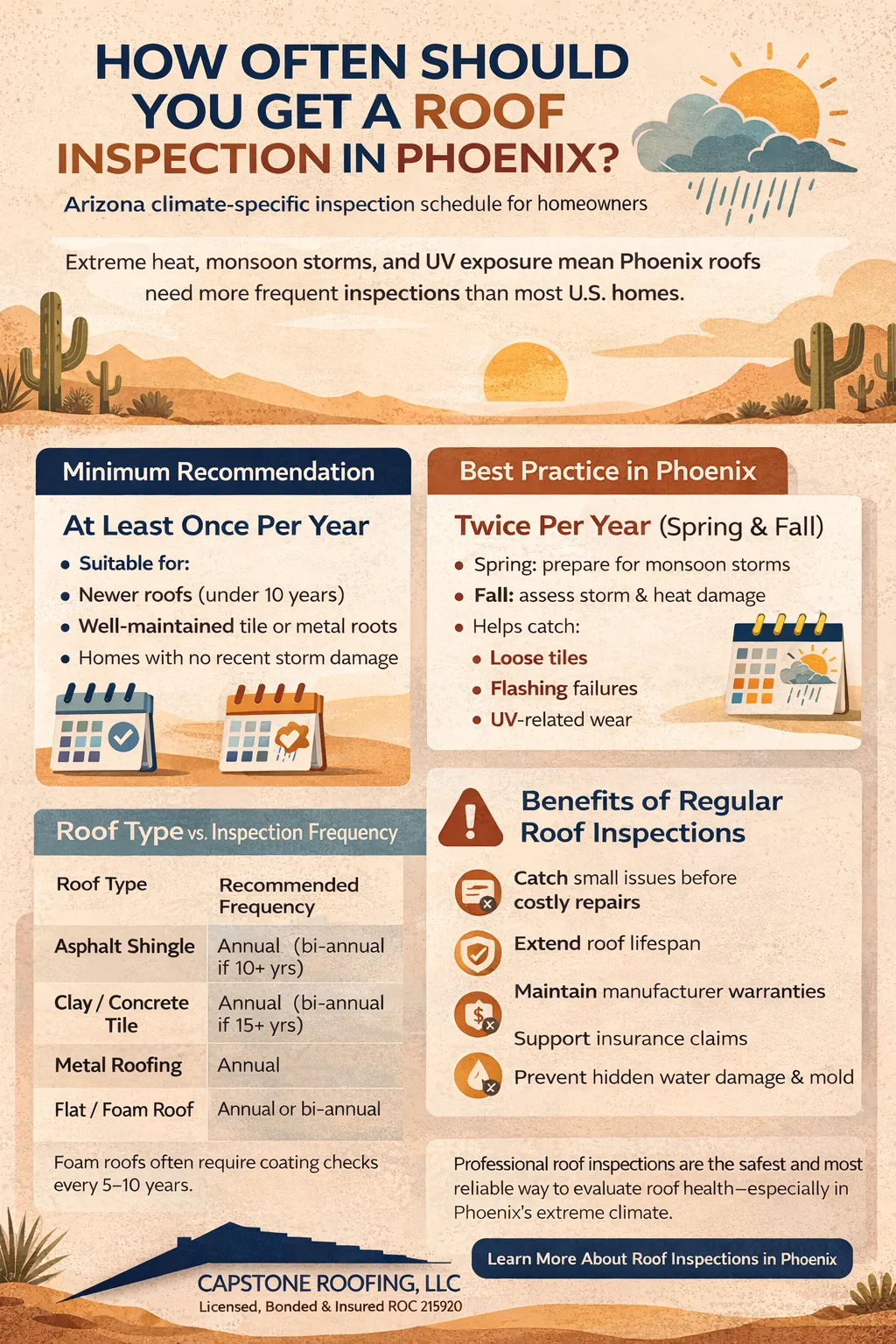
How Often Should You Get a Roof Inspection in Phoenix?
Living in the Valley of the Sun means your roof takes the brunt of extreme conditions: searing heat, ultraviolet radiation, dust storms, monsoon downpours and occasional hail. It’s easy to forget about what’s happening overhead until a leak appears, but roofing is not a set‑and‑forget system. Regular roof inspections protect your home or business, extend the life of your roof and preserve your investment. This guide explains how often to schedule inspections in Phoenix, why frequency matters in Arizona’s unique climate, what happens during a professional inspection and how you can supplement professional services with do‑it‑yourself checks. Throughout, we’ll link to additional resources (both internal and external) to help you make informed decisions and ensure your roof stays in top shape.
Why Roof Inspections Are Essential in Arizona
The roof over your head is your first line of defense against the elements. In the desert Southwest, this defense endures punishing sun, sudden temperature swings and wind‑driven monsoon rains. These forces accelerate wear on shingles, tiles, metal panels, underlayment, flashing and sealants. Without routine inspections, small problems can go unnoticed until they become expensive repair jobs or, worse, structural failures.
Industry experts and insurers alike emphasize the value of routine inspections. Scottsdale Roofing & Gutters advises Arizona homeowners to schedule at least one professional inspection every year, noting that annual check‑ups are the most effective way to catch minor issues caused by sun and storms before they become major repairs. Arizona Roof Rescue goes further, recommending bi‑annual inspections—once in the spring and again in the fall—so your roof is ready before the monsoon season and to address any issues after intense summer heat. The national insurer Allstate also supports an annual professional inspection, stating that roof inspections are an investment that uncovers hidden damage, improves energy efficiency and protects property value.
These sources agree on a simple truth: inspections are preventative care. Just as regular check‑ups with a doctor help you maintain good health, scheduled roof inspections keep your home or building healthy. They identify wear before it escalates into leaks, structural rot or mold. They also help maintain warranties (many roofing warranties require documented inspections) and can make insurance claims smoother by demonstrating that you’ve taken reasonable care of your property.
How Often Should You Inspect Your Roof?
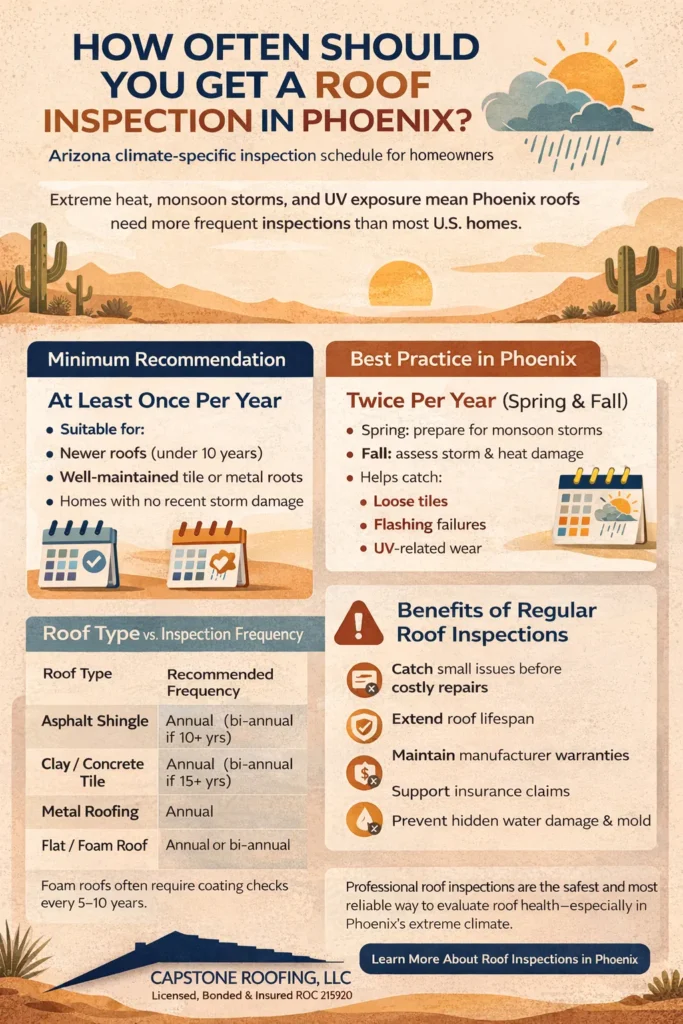
Click to Enlarge
So, what’s the right frequency for Phoenix roofs? The answer depends on several factors: roof age, material, slope, recent weather events and the building’s occupancy type. Below we break down general guidelines, then explore how specific conditions may shift inspection intervals.
Annual Professional Inspection (Minimum)
At a minimum, every roof in the Valley should be professionally inspected once per year. This aligns with guidance from major insurers and roofing experts. An annual inspection is suitable for relatively new roofs (<10 years old), steep‑slope shingle roofs and well‑maintained tile or metal roofs without a history of issues. The yearly check allows you to spot granule loss, cracked tiles, minor flashing failures and sealant deterioration early.
Bi‑Annual Inspections (Spring & Fall)
Many Phoenix homeowners and commercial property managers opt for bi‑annual inspections: one in early spring (March–May) and one in late fall (September–November). There are good reasons for this schedule:
- Monsoon Preparation: A spring inspection ensures your roof is ready to handle monsoon storms. Roofers can secure loose tiles, repair flashing, clean gutters and reinforce weak points before heavy rains and high winds arrive.
- Post‑Monsoon Assessment: A fall inspection allows you to assess any damage the monsoon may have caused—such as wind‑lifted shingles, hail impact, clogged scuppers or leaks from wind‑driven rain—and fix issues before winter.
- Thermal Stress Monitoring: Temperatures can swing dramatically between summer highs over 110 °F and winter lows near freezing. These swings cause roofing materials to expand and contract, which can open up seams and joints. Bi‑annual inspections catch stress cracks early.
Capstone Roofing emphasizes that bi‑annual inspections help prepare your roof for seasons with more intense weather and that this schedule may vary depending on conditions. Many homeowners find that the small investment in two yearly inspections pays off by preventing large repair bills.
Additional Inspections After Severe Weather
Even with an annual or bi‑annual schedule, certain events warrant an extra inspection. Phoenix occasionally experiences microbursts, hailstorms and extreme monsoon winds. If a major storm passes through, call a qualified inspector to check for damage such as missing shingles, broken tiles, cracked foam coatings, blown‑off roof penetrations or leaks in flat areas. The National Foam Roofing Association (NFR) notes that even homeowners on a twice‑a‑year plan should schedule an inspection after major storms, fallen branches, prolonged heatwaves or before buying or selling a home.
DIY Checks Between Professional Visits
While professional inspections are essential, homeowners can and should perform visual checks between visits. Here’s what you can safely do from the ground (using binoculars if necessary) or from a sturdy ladder:
- Look for Visible Damage: Scan for cracked, curled or missing shingles; broken or slipped tiles; blisters or bubbles on foam roofs; rusted or loose metal panels; and sagging roof sections.
- Check Flashing & Sealants: Inspect the flashing around chimneys, skylights, vent pipes and valleys for gaps or corrosion. Re‑seal small cracks with roofing caulk if you’re comfortable doing so.
- Clear Debris: Remove leaves, pine needles and debris from gutters, downspouts and roof valleys. Debris can trap moisture and cause rot or ponding.
- Inspect Attics & Ceilings: Inside your home, look for stains on ceilings or walls, damp insulation, mold or musty odors, which may indicate a roof leak.
These DIY checks do not replace professional assessments—roofers use specialized equipment to measure moisture levels, inspect underlayment and assess structural components. However, they help you catch obvious problems early and keep your roof clean between inspections.
Factors That Influence Inspection Frequency
Not all roofs age at the same pace. Consider the following factors when deciding how often to schedule inspections:
Roof Age
Roofs over 10 years old require closer attention. Even durable tile roofs can experience underlayment degradation after a decade in the desert. Foam roofs need re‑coating every 5–10 years. If your roof is approaching or past mid‑life, adopt a bi‑annual schedule and watch for signs of aging such as granule loss, brittleness and sagging. For roofs older than 20 years, an annual January inspection is often recommended to ensure there’s enough time to complete repairs before the heat intensifies.
Roof Material
Different materials have unique vulnerabilities:
- Asphalt Shingles: These are common on pitched roofs. Heat and UV rays dry out the asphalt, causing granule loss and brittleness. Inspect at least annually, plus after storms. Bi‑annual may be wise if the roof is dark‑colored or more than 10 years old.
- Clay & Concrete Tile: Tile roofs are popular in Phoenix for their longevity and resistance to heat. However, the underlayment (felt or synthetic) can deteriorate. Inspect tile roofs annually; if they are older than 15 years, consider checking twice a year. Tile roofs also require periodic checking for cracked tiles and slipped pieces.
- Metal Roofing: Metal panels are durable and reflective, but thermal cycling can loosen fasteners or cause panel movement. Yearly inspections ensure screws remain tight and sealant is intact.
- Flat & Foam Roofs: Foam roofs are common on flat structures. They require regular inspections to monitor coating thickness, prevent ponding water and identify UV damage. Many foam roofing experts recommend annual or even semi‑annual inspections due to the potential for pooling water and the importance of maintaining reflective coatings.
Building Type & Occupancy
Commercial roofs, multifamily buildings and apartment complexes often house HVAC units, vent stacks and mechanical equipment on the roof. The increased number of penetrations raises the risk of leaks, making bi‑annual or quarterly inspections prudent. HOAs and property managers should keep detailed records of inspections and repairs to coordinate maintenance across units.
Recent Roof Work
If you’ve recently replaced or repaired your roof, schedule an inspection six months after the project to ensure workmanship is holding up. When installing solar panels or satellite dishes, have a professional verify that mounting brackets are sealed properly. Penetrations made without proper flashing can become leak points.
Insurance & Warranty Requirements
Review your roofing material warranty and homeowner’s insurance policy. Many warranties stipulate regular inspections by a certified roofer. Insurers may deny claims if they determine damage resulted from lack of maintenance. An annual inspection record, complete with a professional report, can speed up claim processing and demonstrate that damage wasn’t pre‑existing. Regular inspection documentation also makes it easier to prove that monsoon or hail damage occurred as a sudden event and not from long‑term neglect.
What Happens During a Professional Roof Inspection?
Hiring a professional provides a level of detail that homeowners cannot achieve on their own. A certified roof inspector typically examines the following components:
Roofing Material
The inspector checks shingles, tiles, foam coatings or metal panels for signs of deterioration. They look for granule loss, cracked or broken pieces, lifted shingles, corrosion, blistering or delamination. They assess whether the material is approaching the end of its expected lifespan and identify areas where water could penetrate.
Roof Penetrations & Flashing
Areas where pipes, vents, chimneys or skylights penetrate the roof are potential leak points. A professional inspects the seals and flashing (metal or flexible barriers around penetrations) for cracks, rust and proper overlap. They also check the flashing in valleys, along ridges and at roof edges to ensure water flows away correctly.
Decking, Soffit & Structural Components
Underneath the visible roof covering lies the decking (usually plywood or OSB), rafters and trusses. An inspector will look at the attic or crawl space to assess structural integrity, moisture levels, insulation and ventilation. They examine soffits (the underside of eaves) and fascia boards for rot, insect damage or warping. Proper attic ventilation helps release trapped heat and moisture, preventing rot and mold in Phoenix’s extreme climate. For more on ventilation, refer to our article on why roof ventilation is important.
Drainage Systems
Gutters, downspouts and scuppers are critical for diverting water off your roof. Inspectors ensure these components are clear of debris, properly attached and sized to handle monsoon rain. On flat roofs, they check for ponding water, clogged scuppers and adequate slope toward drains. They may recommend installing leaf guards or additional drains if runoff is insufficient.
Ancillary Components
Inspections may include rooftop HVAC units, solar panels, satellite dishes and skylights. An inspector will check that mechanical equipment is properly flashed and that mounts or brackets aren’t causing penetrations to leak. They verify that panels aren’t shading or weakening roofing materials and that they comply with building codes.
Written Report & Recommendations
After the inspection, you should receive a written report outlining observed conditions, photos of problem areas, recommended repairs and an overall assessment of your roof’s health. Keep this document for your records; it’s useful for warranty claims, insurance documentation and planning future maintenance. Ask your inspector to clarify any technical terms—our roofing terms glossary can help you understand the jargon.
Benefits of Regular Roof Inspections
Beyond preventing leaks, routine roof inspections offer numerous benefits that justify the time and cost:
- Early Detection of Problems: Inspections reveal small issues—like cracked tiles, worn sealant or loose flashing—before they evolve into leaks, rot and interior water damage. Catching problems early can save thousands of dollars compared to major repairs.
- Extended Roof Lifespan: Regular maintenance keeps roofing materials functioning as designed. Clean gutters prevent water backup; timely repairs stop moisture intrusion; proper ventilation prevents heat buildup. These actions collectively prolong roof life and delay expensive replacements.
- Warranty Compliance: Many manufacturers’ warranties require documented inspections. Without them, coverage may be void. Professional reports provide the documentation you need to preserve warranty protection.
- Insurance Claim Support: If your roof suffers storm damage, insurers may ask for proof of maintenance. Inspection records demonstrate due diligence and can expedite claims. Annual inspections can also show that damage was sudden rather than the result of long‑term neglect.
- Peace of Mind & Health: Knowing your roof is sound reduces anxiety about leaks or mold. Annual inspections also help catch hidden mold or moisture issues before they affect your family’s health. Allstate notes that regular inspections are an essential part of responsible homeownership.
How Much Does a Roof Inspection Cost in Phoenix?
Inspection costs vary depending on roof size, pitch, material and whether the inspector uses specialized equipment (such as drones or infrared cameras). In Phoenix, homeowners can expect to pay between $150 and $400 for a professional roof inspection. Some companies, including Capstone Roofing, offer complimentary inspections for new customers or as part of maintenance programs. When comparing quotes, don’t choose solely based on price—experience, certifications and thoroughness matter more than saving a few dollars. A detailed inspection that identifies problems early will always be cheaper than a missed issue that leads to major repairs.
Roof Inspection Schedule by Roof Type
Below is a breakdown of recommended inspection frequencies for common roof systems in Phoenix. Use this as a starting point, but adjust based on the age of your roof, warranty requirements and recent weather events.
Asphalt Shingle Roofs
Asphalt shingles are widespread because they’re economical and come in various styles. However, heat and UV exposure shorten their life. New shingle roofs (less than 10 years old) should be inspected annually, plus after severe storms. Shingle roofs older than 10 years or those with dark colors that absorb more heat may benefit from bi‑annual inspections. Look for curling, missing granules, cracked shingles and exposed nails during your DIY checks. If you see missing or broken shingles, our guide on roof weather damage in Phoenix explains what to do next.
Clay & Concrete Tile Roofs
Tile roofs are durable and energy‑efficient but rely on underlayment to keep water out. Inspect tiles annually for cracks, chips and displacement. Bi‑annual inspections are recommended for roofs over 15 years old or those exposed to heavy foot traffic (such as HVAC servicing). Because replacement underlayment is expensive, catching issues early saves money. For a detailed comparison of tile roof advantages and drawbacks, see our article on pros and cons of tile roofs.
Metal Roofs
Metal roofs (steel, aluminum or copper) excel at shedding water and reflecting heat. They can last 40–70 years with proper care. Annual inspections should verify that fasteners remain tight, seams are sealed and coatings aren’t peeling. Post‑storm inspections are important because hail or debris can dent panels, although such damage rarely affects waterproofing. Pay special attention to expansion joints, as metal expands and contracts more than other materials during Phoenix’s extreme temperature swings.
Foam & Flat Roofs
Flat roofs are common on commercial buildings, modern homes and some multifamily residences. Many use spray polyurethane foam (SPF) topped with an elastomeric coating. These roofs are highly energy‑efficient because they reflect sunlight and insulate the building. However, they require regular maintenance. Inspect at least annually and consider bi‑annual checks if your foam roof is over 5 years old. Look for ponding water, blistered coatings, punctures from foot traffic and separation at seams. Our foam roof maintenance guide offers tips on maintaining SPF roofs in Arizona.
People Also Ask: Frequently Asked Questions
The following questions address common concerns homeowners and property managers have about roof inspections. They’re also included in the schema markup to help capture People Also Ask snippets.
How Often Should You Inspect Your Roof in Phoenix?
Most experts recommend at least one professional roof inspection per year. Many Phoenix homeowners choose bi‑annual inspections—spring and fall—to prepare for and recover from the monsoon season. Older roofs, flat/foam systems and buildings that have recently experienced a major storm may need additional inspections.
Can I Inspect My Roof Personally?
Homeowners can perform visual checks from the ground or a sturdy ladder. Look for broken tiles, missing shingles, rusted flashing, debris in gutters and stains on ceilings. However, only a professional inspection can assess underlayment, structural components and moisture levels. DIY checks complement but do not replace professional services.
When Is the Best Time of Year for a Roof Inspection?
Spring and fall are ideal. A spring inspection prepares your roof for the monsoon season by identifying loose tiles or weak flashing, while a fall inspection catches any damage from summer storms and heat before winter. For foam roofs or roofs older than 10 years, a January inspection can be helpful to schedule repairs before contractors become busy.
How Much Does a Roof Inspection Cost?
Professional roof inspections in Phoenix typically cost between $150 and $400. Prices vary based on roof size, complexity, slope and whether specialized equipment is used. Some companies offer free inspections for new clients or as part of maintenance plans. Always verify that your inspector is licensed and insured.
What Are the Signs I Need an Immediate Inspection?
If you notice leaks, water stains on ceilings, sagging roof sections, sudden spikes in energy bills or visible damage after a storm, schedule an inspection immediately. Additionally, if a tree branch has fallen on your roof or if hail impacts have dented metal panels or cracked tiles, a prompt inspection can prevent further damage.
How Long Does a Roof Inspection Take?
Most residential inspections take one to two hours. Large homes, multifamily buildings or structures with multiple roof types may require more time. The inspector will conduct a thorough visual assessment, document findings and provide a written report with photos and recommendations.
Do Roof Inspections Extend the Life of My Roof?
Yes. By catching minor issues early—such as loose flashing or cracked tiles—inspections help prevent water intrusion, structural rot and mold. Timely repairs keep roofing components functioning as intended and can significantly extend the life of your roof.
Does My Roofing Warranty Require Regular Inspections?
Many manufacturers’ warranties stipulate that roofs must be inspected at defined intervals (often annually) and that maintenance must be performed promptly. Failure to document inspections and maintenance may void warranty coverage. Check your warranty documentation for specifics.
Should I Get an Inspection Before Buying or Selling a Home?
Absolutely. A pre‑purchase inspection uncovers hidden issues that could influence your offer or provide negotiation power. For sellers, having an inspection report ready builds buyer confidence and may speed up the transaction. In Arizona, roof condition can affect home value significantly due to the harsh climate.
What Happens if Problems Are Found?
Your inspector will explain the severity of any issues and provide repair recommendations. Minor problems (e.g., replacing a few cracked tiles or resealing flashing) can often be addressed quickly. Major problems (e.g., extensive underlayment failure, widespread shingle deterioration) may require larger repairs or replacement. Our article on how to know whether to repair, patch or replace your roof can help you decide next steps.
How Do I Choose a Roof Inspector?
Look for licensed, bonded and insured roofing contractors with experience in Arizona’s climate. Check reviews and ask for references. Ensure they provide written reports with photos and will answer questions about recommended repairs. Avoid inspectors who push for unnecessary services or provide vague estimates.
Conclusion: Protect Your Investment with Regular Inspections
Roofs in Phoenix endure extreme conditions that demand proactive care. Whether you have a shingle, tile, metal or foam roof, scheduling regular inspections—at least annually and ideally in spring and fall—keeps your roof performing at its best. Inspections catch small problems before they become major issues, extend your roof’s lifespan, maintain warranty and insurance coverage, and provide peace of mind. Supplement professional inspections with periodic DIY checks to keep gutters clean and watch for obvious damage.
For a thorough assessment of your roof’s health, trust a qualified local contractor. Capstone Roofing’s professional roof inspection services are designed for Phoenix’s unique climate, and our team can recommend maintenance tailored to your roof type. For tips on ongoing maintenance between inspections, see our roof maintenance guide and explore related topics like foam roof maintenance and Arizona’s monsoon season. When you’re ready to schedule your next inspection, contact Capstone Roofing—we’re here to help you safeguard your home or business for years to come.
published on Sunday, December 28th, 2025