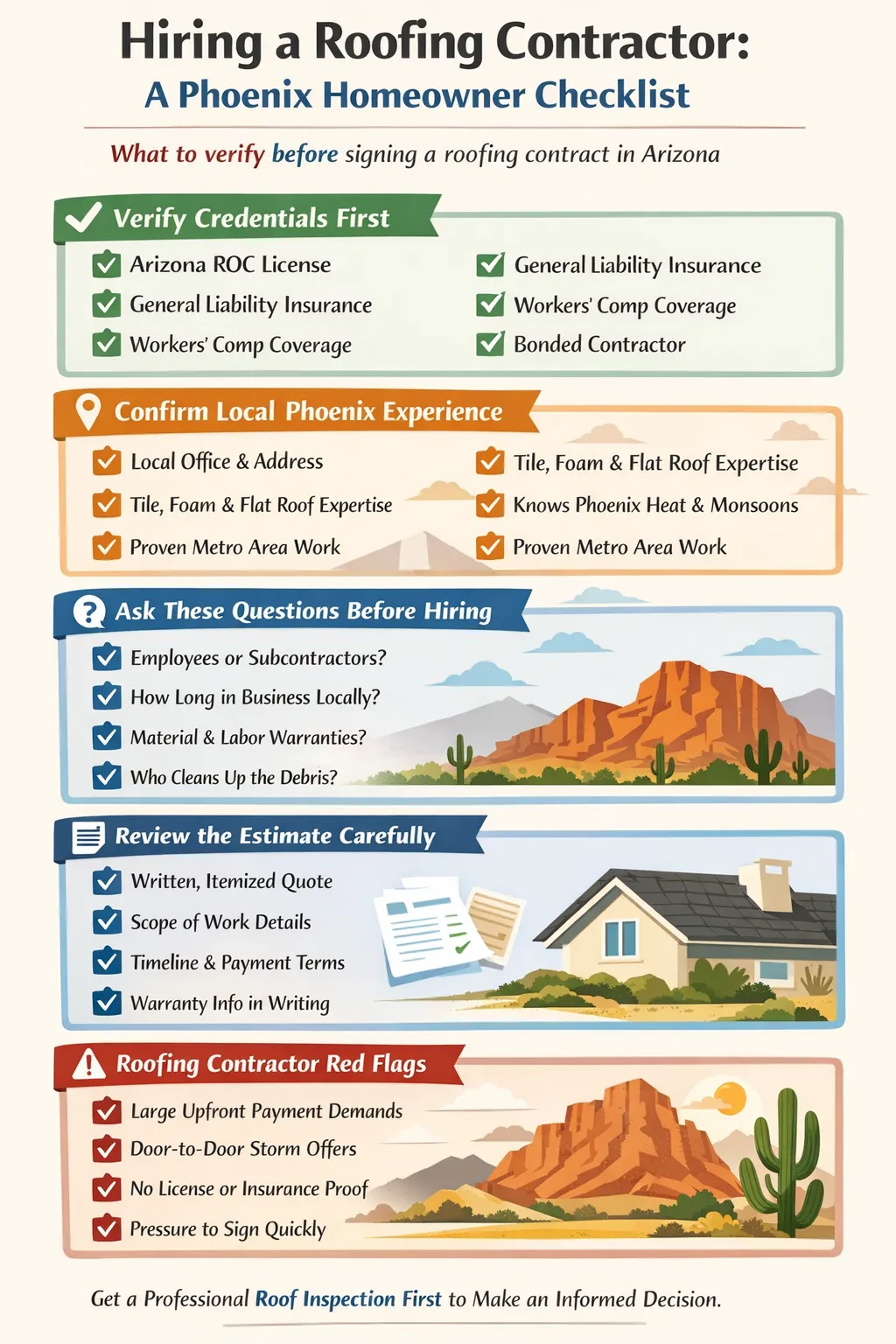
Hiring a Roofing Contractor: Your Complete Guide for Phoenix Homeowners
When your roof shows signs of wear or damage, choosing the right contractor can feel daunting. In Arizona’s unique climate—where triple‑digit heat, intense UV exposure, and monsoon storms challenge even the best roofs—it’s vital to hire a professional who understands local conditions. This guide walks you through everything you need to know to confidently hire a roofing contractor while staying focused on education, trust and safety.

Click to Enlarge
1. Why Hiring the Right Contractor Matters in Arizona
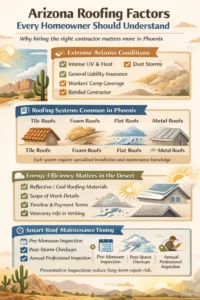
Arizona roofs face extreme stresses: blazing sun that deteriorates shingles and tiles, sudden dust storms that drive debris under flashing, and seasonal monsoon rains that test waterproofing. Flat, tile and foam roofs dominate the Phoenix Metro, each requiring specific expertise. A contractor familiar with these conditions can recommend materials that resist UV degradation, improve reflectivity and offer better insulation, lowering energy costs in summer. Inadequate installation can lead to leaks, premature failure and costly repairs. Thus, investing time in vetting professionals pays dividends.
2. Verify Licensing, Insurance and Credentials
Always start by confirming that a contractor is licensed in Arizona and carries both general liability and workers’ compensation insurance. Owens Corning recommends never paying for a roof in advance and ensuring that payment terms are clear and in writing. Ask for the license number and verify it with the Arizona Registrar of Contractors. Reputable roofers will also be bonded to protect you if they fail to complete the job.
Look for certifications from manufacturers or industry associations. Certifications signal that installers have been trained on specific products and adhere to quality standards. Memberships in national organizations (e.g., NRCA) also demonstrate commitment to professionalism.
3. Evaluate Local Presence and Experience
According to industry experts, homeowners should only consider contractors with a local address and phone number. A local business understands Phoenix building codes, permitting processes and climate challenges. They’re also easier to reach if issues arise. Ask how long they’ve been in business and request examples of recent projects in your area. A well‑established roofer should provide references you can contact to verify workmanship and professionalism.
4. Ask the Right Questions
Before signing a contract, interview at least three contractors and ask detailed questions. Classic Metal Roofing Systems suggests asking how long the company has been in business, who owns it, and whether you can see current projects. Other critical questions include:
- Who will be installing my roof—employees or subcontractors? What training do they have?
- Do you have experience with tile, foam or flat roofs common in Phoenix?
- Can you provide proof of insurance and licensing?
- What warranties do you offer on workmanship and materials?
- How will you protect my property (landscaping, pool, AC units) during the job?
- What is your plan for cleanup and disposal of debris?
- How do you handle unexpected issues, like hidden water damage?
Having a written checklist ensures you cover every critical topic. Use our comprehensive roof inspection guide to learn what professional inspections should entail.
5. Understand Estimates and Payment Terms
Obtain detailed, written estimates from multiple contractors. Estimates should itemize labor, materials, permits, preparation, cleanup and disposal. Compare not only total price but also scope of work, quality of materials and proposed timelines. Avoid choosing solely based on the lowest bid; unusually low estimates may indicate cut corners or hidden fees.
In Arizona, never pay large upfront deposits. Reputable roofers often require minimal (or no) deposit on standard projects; payment schedules tied to milestones protect both parties. The CSLB’s consumer guide advises homeowners to get at least three references, compare multiple bids and ensure contracts are fully understood before signing.
Click to Enlarge
6. Examine Materials and Roofing Systems
Phoenix’s roofing landscape includes tile, foam, metal and flat built‑up roofs. Each has pros and cons:
- Tile roofs offer long life and aesthetic appeal but need proper underlayment and ventilation to withstand heat. See our tile roof underlayment article for details.
- Foam roofs provide seamless insulation and excellent reflectivity; they require contractors experienced in spray foam application. Learn more in our foam roofing systems guide.
- Metal roofs are durable and reflect solar radiation; ensure your contractor understands metal-specific flashing and fastener techniques. See metal roof durability for context.
- Flat roofs often use built‑up or modified bitumen systems; proper slope and drainage are critical. Our flat roof repair options page explains these systems.
Ask contractors which products they recommend for your home, why, and whether the materials are rated for high reflectivity and energy efficiency—a key factor in Arizona’s heat.
7. Address Monsoon and Storm Readiness
Monsoon storms bring heavy rain, wind and flying debris. Discuss wind‑uplift ratings of proposed roofing materials and ask how the contractor will secure shingles or tiles. A storm-ready roof includes proper fasteners, secondary water barriers and strong edge metal. Contractors should have an emergency plan for protecting your home if storms strike mid-project.
Our storm damage guidance page provides more information on storm‑proofing your roof.
8. Protect Yourself From Scams
Scammers often appear after storms, offering unsolicited inspections or pressuring homeowners with “special deals.” Connecticut officials warn residents to reject pressure tactics, verify registration numbers and insist on detailed contracts including project summary, timeline and total cost. The Better Business Bureau advises relying on research and referrals and ensuring contractors handle cleanup and waste removal.
Red flags include lack of license or insurance, requests for large upfront payments (>15 %), absence of a written contract, and refusal to provide references. In Phoenix, always verify the contractor’s ROC license and avoid door‑to‑door solicitations.
9. Sustainability and Energy Efficiency
With energy costs rising, consider contractors knowledgeable about cool roof coatings, high‑albedo shingles, and insulation. Reflective coatings can reduce roof surface temperature and lower indoor cooling costs. Arizona’s intense sun makes energy‑efficient roofing investments worthwhile. Ask about ENERGY STAR‑rated products and local incentives.
For more on green roofing options, visit our articles on eco‑friendly roofing and energy‑efficient roofs.
10. Finalizing the Contract
Once you’ve selected a contractor, ensure your contract includes: full company name and ROC license number; detailed scope of work; materials and brands; start and completion dates; total cost; payment schedule; warranty information; and a clause for unforeseen issues. Keep all correspondence and receipts for your records.
Before work begins, schedule a pre‑job meeting to review expectations, discuss access to your property, and confirm the plan for debris disposal. After completion, perform a walkthrough with the contractor to ensure satisfaction and understand maintenance requirements.
11. Maintaining Your Roof After Installation
Hiring a contractor doesn’t end when the roof is installed. Regular maintenance extends roof life and protects your investment. Conduct annual inspections, particularly before monsoon season. Clear debris, check for loose tiles or shingles, and ensure gutters and downspouts are clean. For professional help, explore our routine roof maintenance services.
Conclusion
Hiring a roofing contractor in the Phoenix metro area requires careful vetting, attention to local climate challenges, and awareness of common scams. By verifying credentials, asking the right questions, understanding contracts and focusing on sustainability, you’ll safeguard your home and invest wisely. Use this guide as a starting point, explore linked resources, and reach out to trusted professionals for inspections and advice. With the right partner, your roof will endure Arizona’s heat and storms for years to come.
published on Thursday, December 25th, 2025