Is Your Roof Ready for This Year’s Monsoon Season?
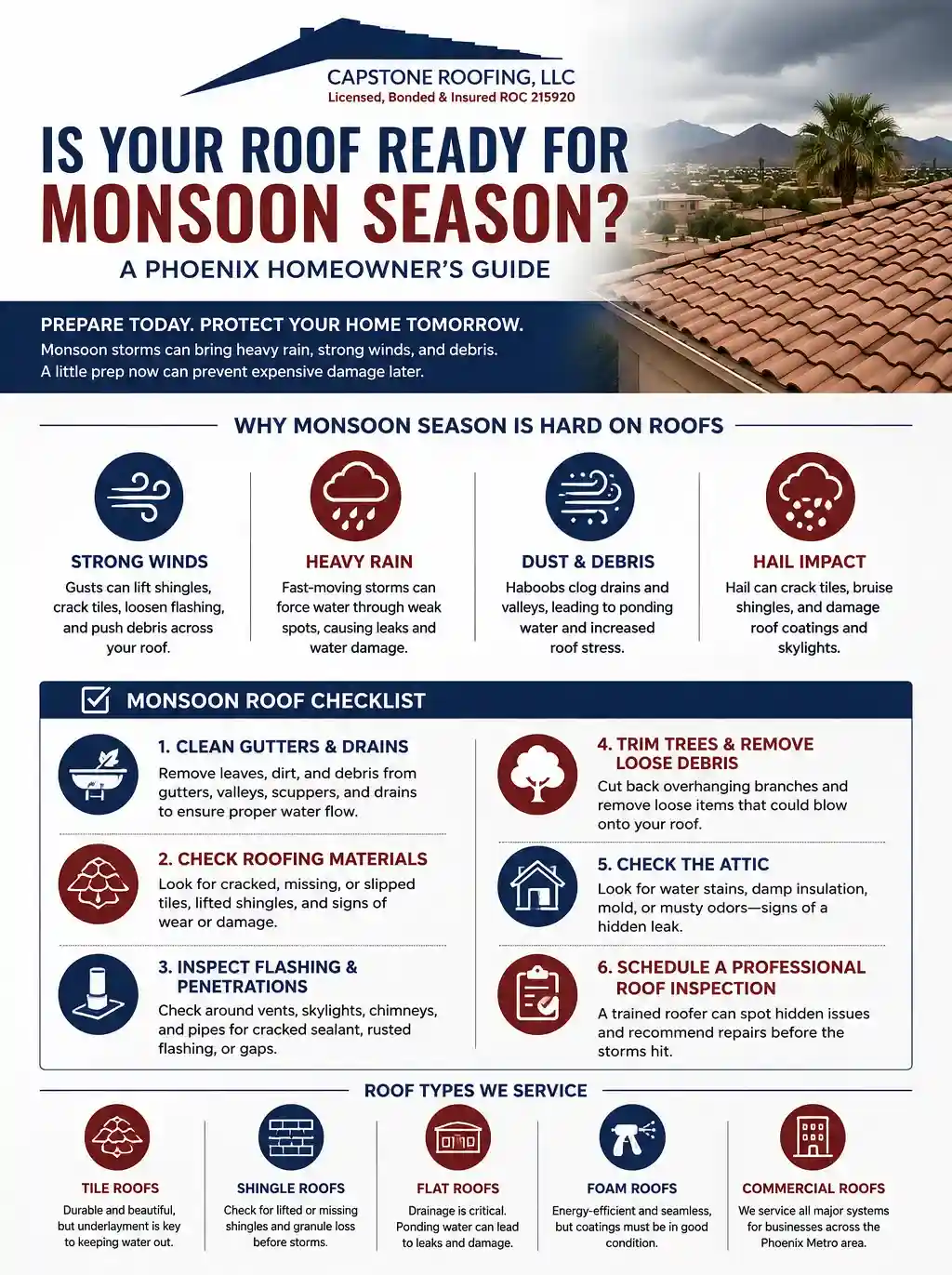
Arizona monsoon season can be hard on any roof in the Phoenix metro. After months of extreme heat, UV exposure, dust buildup, and thermal expansion, your roof suddenly has to handle wind-driven rain, dust storms, heavy downpours, flying debris, and occasional hail. A roof that looked fine during the dry months can start showing problems quickly once storm season begins.
For homeowners in Phoenix, Scottsdale, Glendale, Mesa, Tempe, Gilbert, Chandler, and surrounding Valley communities, monsoon roof prep is not just about cleaning up after a storm. It is about finding small issues before heavy rain and wind turn them into roof leaks, ceiling stains, damaged underlayment, wet insulation, or emergency repairs.
If you have not had your roof checked recently, this guide will help you understand what to look for, how monsoon weather affects different roof types, and when to schedule a professional Phoenix roof inspection before the next storm rolls through.
Why Monsoon Season Is So Hard on Arizona Roofs
Arizona roofs go through a unique cycle every year. For most of the spring and early summer, roofing materials are exposed to extreme heat, dry air, and intense sunlight. Sealants dry out. Foam coatings age. Tile underlayment continues to break down beneath the surface. Shingles lose flexibility. Flat roof drainage areas collect dust, leaves, and debris.
Then monsoon season arrives and tests every weak point at once. A fast-moving storm can bring heavy rain, strong wind, blowing dust, and falling branches in the same event. That combination can expose problems that were not obvious from the ground a few weeks earlier.
Wind Can Lift, Shift, and Break Roofing Materials
High winds during monsoon season can lift shingle edges, shift roof tiles, damage ridge areas, loosen flashing, and push debris across the roof surface. On tile roofs, a cracked or displaced tile can expose underlayment to direct water. On shingle roofs, lifted tabs can allow wind-driven rain to get underneath the roofing material. On foam and flat roofs, wind can move debris into drains and scuppers or damage the protective roof coating.
Heavy Rain Finds Small Openings Fast
Monsoon storms often drop a lot of rain in a short period of time. When water hits the roof quickly, it does not need a large opening to create damage. A small flashing gap, cracked pipe jack, deteriorated sealant, or exposed underlayment can be enough for water to enter the roof system.
This is why many homeowners do not realize they have a roofing issue until the first major storm. The roof may have been vulnerable for months, but it takes wind-driven rain to reveal the problem.
Dust Storms Can Create Drainage Problems
Dust storms and haboobs are a major part of the Phoenix monsoon season. Fine dust, grit, leaves, seed pods, and small branches can collect in roof valleys, gutters, drains, and scuppers. When rain arrives after a dust storm, those blocked drainage paths can cause water to back up or pond on the roof.
For flat roofs, this is especially important. Water that cannot drain properly can sit on the surface and stress seams, coatings, flashing, and low areas.
Hail Can Damage Tile, Shingles, Skylights, and Coatings
Hail is not the most common monsoon threat in Phoenix, but it does happen. Depending on the storm, hail can crack tile, bruise shingles, damage skylights, dent metal flashing, or compromise foam roof coatings. Even if hail damage does not create an immediate leak, it can weaken the roofing system and shorten its service life.
When Does Monsoon Season Start and End in Phoenix?
Arizona’s official monsoon season runs from June 15 through September 30. In the Phoenix area, the most active storm periods often occur in July and August, although damaging weather can happen earlier or later depending on the year.
The best time to prepare your roof is before the storms become frequent. Late spring and early summer are ideal because roofing contractors are usually easier to schedule, repairs can be completed before daily storm chances increase, and roof materials have time to cure properly before humidity and rain become a factor.
Capstone Roofing has a dedicated resource on the broader Arizona monsoon season that explains how these storms affect homes and roofs across the Valley.
How to Know If Your Roof Is Ready for Monsoon Season
A monsoon-ready roof is not just a roof with no obvious holes. It is a roof with secure materials, clear drainage, intact flashing, healthy underlayment, sealed penetrations, and no visible signs of active or hidden water damage.
Before storm season, homeowners should check the roof from the ground, inspect interior ceilings, look inside the attic if safe, and schedule a professional inspection if the roof is older, has leaked before, or has not been checked recently.
Signs Your Roof May Not Be Ready
- Cracked, slipped, or missing roof tiles
- Lifted, curled, or missing shingles
- Water stains on ceilings or walls
- Cracked sealant around vents, skylights, or roof penetrations
- Debris in gutters, valleys, drains, or scuppers
- Ponding water on flat roof sections
- Foam coating that looks cracked, chalky, or worn thin
- Previous leaks that were never professionally repaired
- Musty odors or damp insulation in the attic
If you are seeing any of these warning signs, it is better to address them before the next storm. Capstone’s guide on how to prepare your roof for monsoon season goes deeper into seasonal maintenance steps for Arizona homeowners.
Your Phoenix Monsoon Roof Prep Checklist
Every roof is different, but most Phoenix-area homes benefit from the same core monsoon prep steps. The goal is to reduce the chance of wind damage, improve drainage, identify weak points, and catch leak risks before the first major storm.
1. Clear Gutters, Valleys, Scuppers, and Drains
Water needs a clear path off the roof. If gutters, valleys, scuppers, or drains are blocked, stormwater can back up and move under roofing materials. This is one of the simplest problems to prevent and one of the most common causes of avoidable storm-season leaks.
Homeowners should remove leaves, dirt, palm debris, seed pods, and loose branches before monsoon season starts. After major wind events, check again. A roof can be clean in the morning and clogged by the evening after a dust storm.
2. Check for Broken Tile or Lifted Shingles
From the ground, look for roof tiles that appear cracked, shifted, or missing. On shingle roofs, look for lifted edges, curling, bare spots, or missing shingles. Do not walk on the roof unless you can do so safely and know how to avoid damaging the materials.
Tile roofs are especially tricky because the tile itself is not usually the main waterproofing layer. The underlayment beneath the tile does the real water-shedding work. If tiles are broken or displaced, the underlayment may be exposed to more sun and water than it should be.
3. Inspect Flashing and Roof Penetrations
Many roof leaks start around flashing, not in the open field of the roof. Pay close attention to skylights, vents, chimneys, pipe jacks, HVAC curbs, roof-to-wall intersections, and valleys. These areas rely on proper flashing and sealant to keep water out.
Arizona heat can dry out sealants and cause them to crack or shrink. Once monsoon rain arrives, those small gaps can become active leak points.
4. Trim Overhanging Trees
Tree branches can damage roofs during high winds. They can scrape shingles, crack tile, tear foam coatings, and drop debris into roof valleys or gutters. Trimming branches away from the roofline reduces both impact damage and drainage problems.
5. Look Inside the Attic
The attic can reveal roofing problems before they show up in the living space. Look for dark stains on the underside of the roof deck, damp insulation, rusted nail tips, daylight coming through roof openings, or musty odors.
If you notice any of these signs, it may be time to schedule roof leak detection before a small leak spreads into a larger problem.
6. Review Past Roof Repairs
If your roof has had several patch repairs, recurring leaks, or storm damage from previous years, monsoon season can reopen those weak spots. A previous repair is not automatically a problem, but it should be checked if you are still seeing stains, odors, or water intrusion during storms.
Tile Roofs and Monsoon Season
Tile roofing is common across Phoenix, Scottsdale, Mesa, Chandler, Gilbert, and other Valley communities because it performs well in hot, dry climates. However, tile roofs still need monsoon prep. The tile protects the roof, but the underlayment underneath is what keeps water out of the home.
This is why homeowners sometimes get surprised by tile roof leaks. From the street, the roof may look fine. But beneath the tile, the underlayment may be aging, brittle, torn, or deteriorated around penetrations and valleys.
Common Tile Roof Monsoon Issues
- Cracked or broken tiles
- Slipped tiles exposing underlayment
- Failing underlayment beneath the tile
- Leaks around valleys, skylights, vents, and chimneys
- Debris buildup that slows water flow
- Cracked mortar or ridge details
If your tile roof is older or has recurring leaks, a basic patch may not solve the underlying problem. In some cases, targeted tile roof repair is enough. In other cases, the roof may need a broader underlayment evaluation.
Shingle Roofs and Monsoon Season
Shingle roofs in Arizona face intense sun exposure, and that heat can dry out asphalt shingles over time. When shingles lose flexibility, they become more vulnerable to cracking, curling, granule loss, and wind uplift.
Before monsoon season, shingle roofs should be checked for missing shingles, lifted tabs, exposed nails, cracked flashing, and granule buildup in gutters. If shingles are already loose or brittle, high winds can make the damage worse. Once shingles are lifted, wind-driven rain can reach the underlayment and roof deck.
Shingle roofs can often be repaired when damage is isolated. However, widespread granule loss, repeated leaks, or multiple failing areas may indicate the roof is nearing the end of its useful life.
Flat Roofs and Monsoon Season
Flat and low-slope roofs are common on both homes and commercial buildings in Phoenix. These roofs can perform well in the desert, but they need careful drainage and maintenance before monsoon season.
Unlike pitched roofs, flat roofs do not shed water as quickly. They rely on slope, scuppers, drains, seams, coatings, and flashing details to move water off the roof. When one part of that system fails, water can pond and stress the roofing material.
Flat Roof Areas to Inspect Before Storm Season
- Scuppers and drains
- Low areas where water ponds
- Parapet wall transitions
- HVAC curbs and rooftop equipment
- Membrane seams
- Foam coating condition
- Cracks, blisters, punctures, or soft spots
For commercial buildings, churches, offices, warehouses, retail centers, and multi-unit properties, drainage becomes even more important because roof areas are larger. Capstone works on commercial roofing services throughout the Phoenix area, including flat and low-slope systems that need seasonal maintenance before storm activity increases.
Foam Roofs and Arizona Monsoon Prep
Foam roofing is popular in Arizona because it can help with insulation, energy efficiency, and seamless coverage on low-slope roofs. But foam roofs depend on their protective coating. If that coating wears thin, cracks, or becomes damaged, the foam beneath can be exposed to moisture and UV damage.
Before monsoon season, foam roofs should be checked for coating wear, cracks, punctures, blistering, ponding water, and damaged edges. Even a small puncture can become a bigger issue when heavy rain and wind are involved.
Regular maintenance can extend the life of many foam roofs. Capstone’s resource on foam roof maintenance in Arizona explains why inspections and recoating schedules are so important in the desert climate.
Why Roof Leaks Are Common During Phoenix Monsoon Season
Roof leaks are common during monsoon season because storm conditions expose problems that may not show up during normal weather. A roof might handle light rain without leaking, but wind-driven rain is different. Water can be pushed sideways, under lifted materials, and into flashing details that are not fully sealed.
Another reason leaks are common is that many Phoenix roofs are already stressed before the storms arrive. Months of heat can weaken sealants, dry out materials, and accelerate underlayment aging. Once heavy rain arrives, the roof has less margin for error.
Capstone has a dedicated guide on why roof leaks are common in Phoenix during monsoon season that covers the most frequent leak sources and warning signs homeowners should watch for.
What to Do After a Monsoon Storm
Once a major storm passes, take a few minutes to inspect your home safely. You do not need to climb on the roof. In fact, you should avoid walking on a wet or potentially damaged roof. A ground-level and interior inspection can still reveal a lot.
Check the Exterior
- Look for roof tiles or shingles on the ground
- Check gutters and downspouts for heavy granule buildup
- Look for branches or debris on the roof
- Watch for displaced flashing or bent metal
- Look for new ponding on flat roof sections if visible from a safe location
Check the Interior
- Look for new ceiling stains
- Check around skylights and vents
- Inspect upper walls for bubbling paint
- Look in the attic for damp insulation or staining
- Pay attention to musty odors after rain
Some leaks do not appear immediately. A stain may show up days after the storm because water can travel through insulation, framing, or drywall before becoming visible. If you notice delayed staining after a storm, do not assume the issue has stopped.
What If Your Roof Starts Leaking During Monsoon Season?
If your roof starts leaking during a storm, the first priority is limiting interior damage. Move furniture, electronics, rugs, and valuables away from the leak area. Place a bucket or towel where water is dripping. If water is spreading through drywall or pooling near electrical fixtures, use caution and avoid the area.
Take photos of the leak, staining, and any visible storm damage. Documentation can help if you need to talk with your insurance company or provide information to your roofing contractor.
Do not climb onto a wet roof. Wet tile, shingles, and flat roof coatings can be slippery, and storm damage may make the surface unstable. A roofing professional can safely inspect the area and determine whether the leak is caused by storm damage, flashing failure, underlayment issues, drainage problems, or something else.
If the problem is active and severe, Capstone offers emergency roof repair in Phoenix for urgent roofing issues that need immediate attention.
Repair, Patch, or Replace: How to Think About Monsoon Roof Damage
Not every roof leak means you need a new roof. Many monsoon-related problems can be repaired if the damage is isolated. A cracked tile, a failed flashing detail, a small shingle issue, or a minor foam coating puncture may be fixable without replacing the entire roof.
However, recurring leaks are different. If your roof leaks in multiple areas, has failing underlayment, shows widespread wear, or has needed repeated patch repairs, replacement may start to make more sense than continuing to chase symptoms.
The right answer depends on roof age, roof type, damage severity, repair history, and whether the problem is localized or system-wide. Capstone’s guide on how to know whether to repair, patch, or replace your roof can help homeowners understand the difference before making a decision.
Does Homeowners Insurance Cover Monsoon Roof Damage?
Homeowners insurance may cover sudden storm-related damage, but coverage depends on your policy, the cause of the damage, and whether the issue is considered sudden damage or long-term wear. Wind damage, hail damage, and storm debris may be treated differently than leaks caused by neglected maintenance or an old roofing system.
This is one reason roof documentation matters. A professional inspection before monsoon season gives you a record of the roof’s condition. If a storm later causes damage, photos, inspection notes, and repair records may help support your claim.
If you are dealing with storm damage and insurance questions, Capstone’s roof insurance claim guide explains what homeowners should know before starting the claim process.
Common Mistakes Homeowners Make Before Monsoon Season
Many monsoon roof problems become worse because homeowners wait too long or assume a small issue is harmless. Here are some of the most common mistakes to avoid.
Waiting Until the First Storm
By the time the first major storm hits, roofing schedules can fill quickly. If you already know your roof has an issue, waiting until it leaks usually makes the situation more stressful and more expensive.
Assuming No Leak Means No Problem
A roof can have cracked tile, failing sealant, worn coating, or aging underlayment before it leaks into the house. No visible leak simply means water has not reached a visible area yet.
Ignoring Small Ceiling Stains
A small brown stain may be the first visible sign of a much larger moisture path. Even if the stain dries out, the roof issue that caused it may still be there.
Climbing on the Roof After a Storm
Wet roofs are dangerous. Tile roofs can crack under foot traffic, and flat roofs may hide soft spots or slippery coating areas. Use ground-level observation and call a professional if you suspect damage.
Using Temporary Sealant as a Permanent Fix
Caulk, roof cement, and patch products may temporarily slow water intrusion, but they often do not address the real source of the leak. Poor DIY patches can also make future repairs more difficult.
Why Professional Roof Inspections Matter Before Monsoon Season
A homeowner can spot obvious problems, but a professional roofer can identify issues that are easy to miss. That includes hidden underlayment problems, early flashing failure, small punctures in foam coating, cracked pipe boots, lifted shingle tabs, drainage concerns, and storm damage that is not obvious from the ground.
A good inspection should help answer practical questions: Is the roof ready for storm season? Are there repairs that should be handled now? Is the roof near the end of its useful life? Are there drainage issues? Are old repairs still holding? Is there evidence of active or previous leaks?
For Phoenix homeowners, that clarity is valuable. It helps you decide what needs attention now and what can be monitored later.
Why Homeowners Call Capstone Roofing Before Monsoon Season
Capstone Roofing works on residential and commercial roofing systems throughout Phoenix and the surrounding Valley. Our team understands how Arizona heat, dust, UV exposure, and monsoon storms affect different roof types, including tile roofs, shingle roofs, foam roofs, flat roofs, and commercial roofing systems.
Whether you need a pre-season inspection, help finding the source of a leak, storm damage repairs, tile roof work, foam roof maintenance, or a larger replacement conversation, Capstone can help you understand what your roof actually needs.
If you want broader guidance on storm preparation, our article on preventing roof damage from summer monsoons offers additional ways to protect your roof before storms become frequent.
Frequently Asked Questions About Monsoon Roof Prep in Phoenix
Is your roof ready for monsoon season if it is not leaking?
Not necessarily. A roof can have cracked tile, worn flashing, aging underlayment, clogged drainage, or thin foam coating before it leaks into the home. A leak is often the last sign of a problem, not the first.
When should I schedule a roof inspection before monsoon season?
Late spring or early summer is usually best. Scheduling before the storms become frequent gives you time to address repairs before contractors get busy with emergency calls.
How long does monsoon season last in Phoenix?
Arizona’s official monsoon season lasts from June 15 through September 30. Storm frequency and intensity vary each year, but July and August are often the most active months in the Phoenix area.
What roof type is most vulnerable during monsoon season?
Any roof can be vulnerable if it has existing damage or poor maintenance. Flat roofs are especially sensitive to drainage problems, while tile roofs often depend heavily on the condition of the underlayment beneath the tile.
Can a tile roof leak even if the tiles look fine?
Yes. Tile is not usually the main waterproofing layer. If the underlayment beneath the tile is deteriorated, the roof can leak even when the visible tile still looks acceptable from the ground.
What are the most common monsoon roof leak areas?
Common leak areas include skylights, pipe vents, chimneys, valleys, roof-to-wall transitions, flat roof drains, scuppers, HVAC curbs, and areas where roofing materials are loose or damaged.
Should I clean my gutters before monsoon season?
Yes. Gutters, valleys, and drainage paths should be cleared before storm season and checked again after major wind events. Blocked drainage can cause water to back up under roofing materials or pond on flat roofs.
Does wind-driven rain cause different roof leaks?
Yes. Wind-driven rain can enter areas that may not leak during a normal light rain. This often exposes problems with flashing, penetrations, roof-to-wall transitions, or lifted roofing materials.
Can foam roofs handle monsoon storms?
Foam roofs can perform very well during monsoon season when properly maintained. The protective coating must be intact, drainage must be clear, and cracks or punctures should be repaired before storms arrive.
What should I do if I see a ceiling stain after a storm?
Take photos, monitor whether the stain grows, and schedule a roof inspection. Even a small stain can indicate water intrusion above the ceiling, and the source may not be directly above the visible mark.
Can I patch a monsoon roof leak myself?
Temporary DIY patches may slow water in some cases, but they often do not fix the real problem. Incorrect patching can also trap moisture or make later repairs harder. A professional inspection is the safest way to identify the actual source.
Does insurance cover monsoon roof leaks?
It depends on the cause of the leak and your policy. Sudden storm damage may be covered, while leaks caused by age, poor maintenance, or long-term wear may not be. Documentation and professional inspection reports can be helpful.
How can I tell if monsoon damage is serious?
Missing roofing materials, active dripping, spreading ceiling stains, sagging drywall, exposed underlayment, ponding water, and storm debris impact should all be taken seriously. When in doubt, have the roof inspected.
Should I inspect my roof after every monsoon storm?
You do not need a professional inspection after every storm, but you should do a quick visual check from the ground and inside the home after major wind, hail, or heavy rain events.
What if my roof was damaged during a Chandler monsoon storm?
Storm damage can vary by city and neighborhood because monsoon cells are often localized. Capstone has more information on Chandler roof repair for monsoon damage for homeowners dealing with storm-related issues in that area.
Get Your Roof Ready Before the Next Phoenix Monsoon
Monsoon season is part of life in Arizona, but roof leaks do not have to be. The best time to address roofing issues is before wind, dust, and rain expose them. If your roof has not been inspected recently, if you noticed damage after a previous storm, or if you are worried about aging underlayment, flashing, foam coating, or flat roof drainage, now is the time to take a closer look.
Capstone Roofing helps homeowners and businesses across the Phoenix metro prepare for monsoon season with inspections, repairs, leak detection, maintenance, and replacement services. Whether your roof needs a small repair or a more detailed evaluation, our team can help you make the right decision before storm season creates bigger problems.
Schedule your roof inspection before the next monsoon storm arrives and make sure your roof is ready for this year’s Arizona weather.
published on Friday, February 14th, 2020
