How Long Does a Roof Last in Arizona? A Phoenix Homeowner’s Guide
Arizona homes face some of the harshest roofing conditions in the United States. Between intense summer heat, powerful monsoon storms, and constant UV exposure, roofing systems in the Phoenix area are under pressure year-round.
Because of these conditions, many homeowners ask an important question: How long does a roof actually last in Arizona?
The answer depends on several factors including roofing material, installation quality, maintenance, and the specific climate conditions your home experiences. In the Valley, most roofs last somewhere between 20 and 50 years, although some materials can last significantly longer with proper care.
In this guide, we’ll break down the expected lifespan of common roofing materials in Arizona, explain why desert climates shorten roof life, and help homeowners recognize the signs that it may be time for repair or replacement.
Average Roof Lifespan in Arizona by Material
Different roofing materials perform very differently in hot desert climates. Some materials hold up well against extreme temperatures, while others break down more quickly when exposed to long periods of heat and UV radiation.
According to the National Roofing Contractors Association, roof longevity is largely determined by the material itself, the quality of the installation, and the environment where the roof is installed.
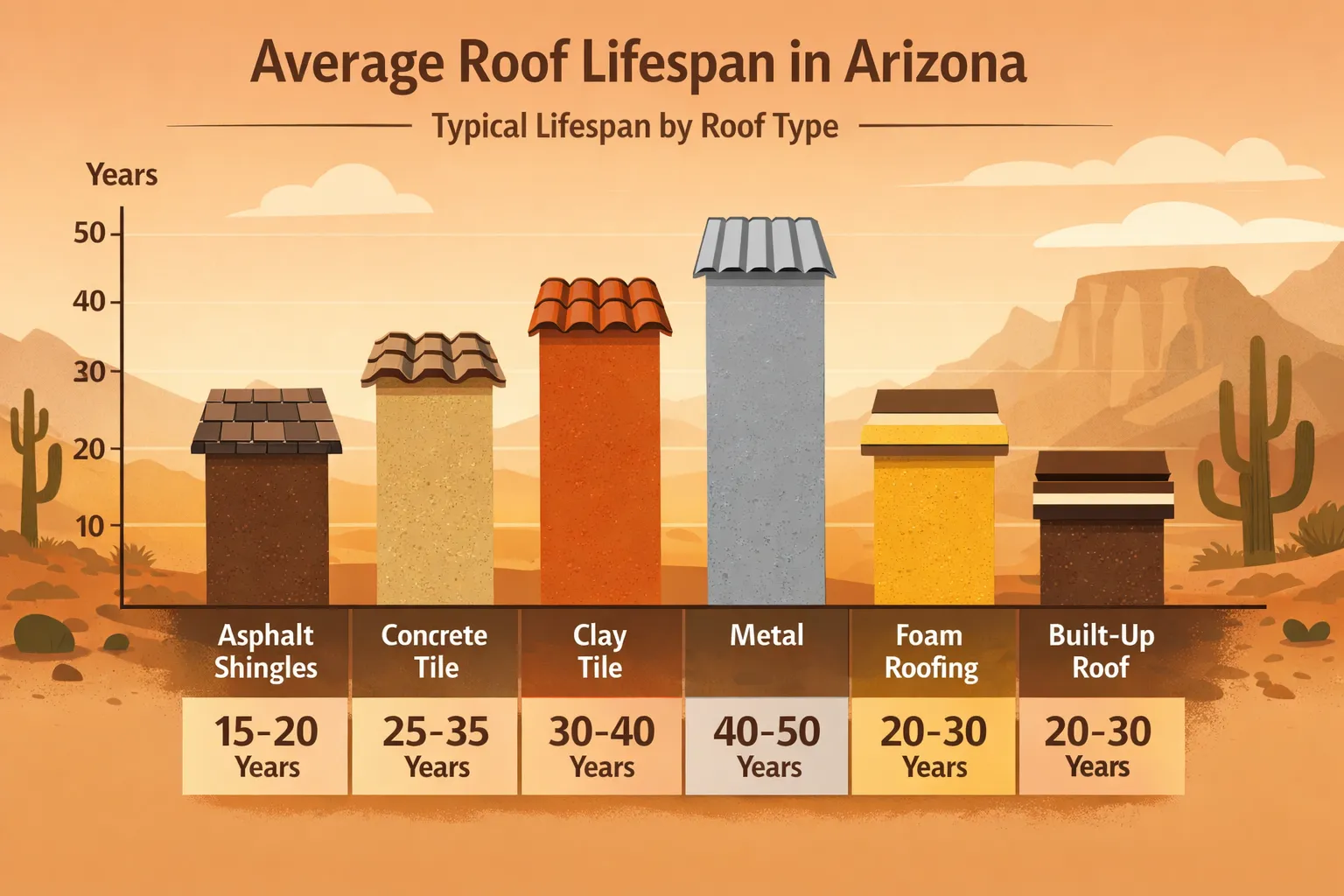
Typical Lifespans of Roofing Materials in Arizona
- Asphalt Shingles: 15–30 years
- Concrete Tile: 40–50 years
- Clay Tile: 50–100+ years
- Metal Roofing: 40–80 years
- Foam Roofing: 15–25 years (longer with recoating)
- Built-Up or Flat Roof Systems: 20–30 years
Tile roofing is the most common residential roofing system across Phoenix and the surrounding Valley. The tiles themselves are extremely durable and can last for decades, but homeowners should understand that the roof underlayment beneath the tiles typically needs replacement every 15–20 years.
If your tile roof is approaching this age range, it may be time to consider tile roof underlayment replacement to maintain proper waterproof protection.
Why Arizona Roofs Wear Out Faster
Arizona’s desert environment is one of the most demanding climates for roofing materials. Constant temperature swings, powerful sunlight, and seasonal storms all contribute to gradual roof deterioration.
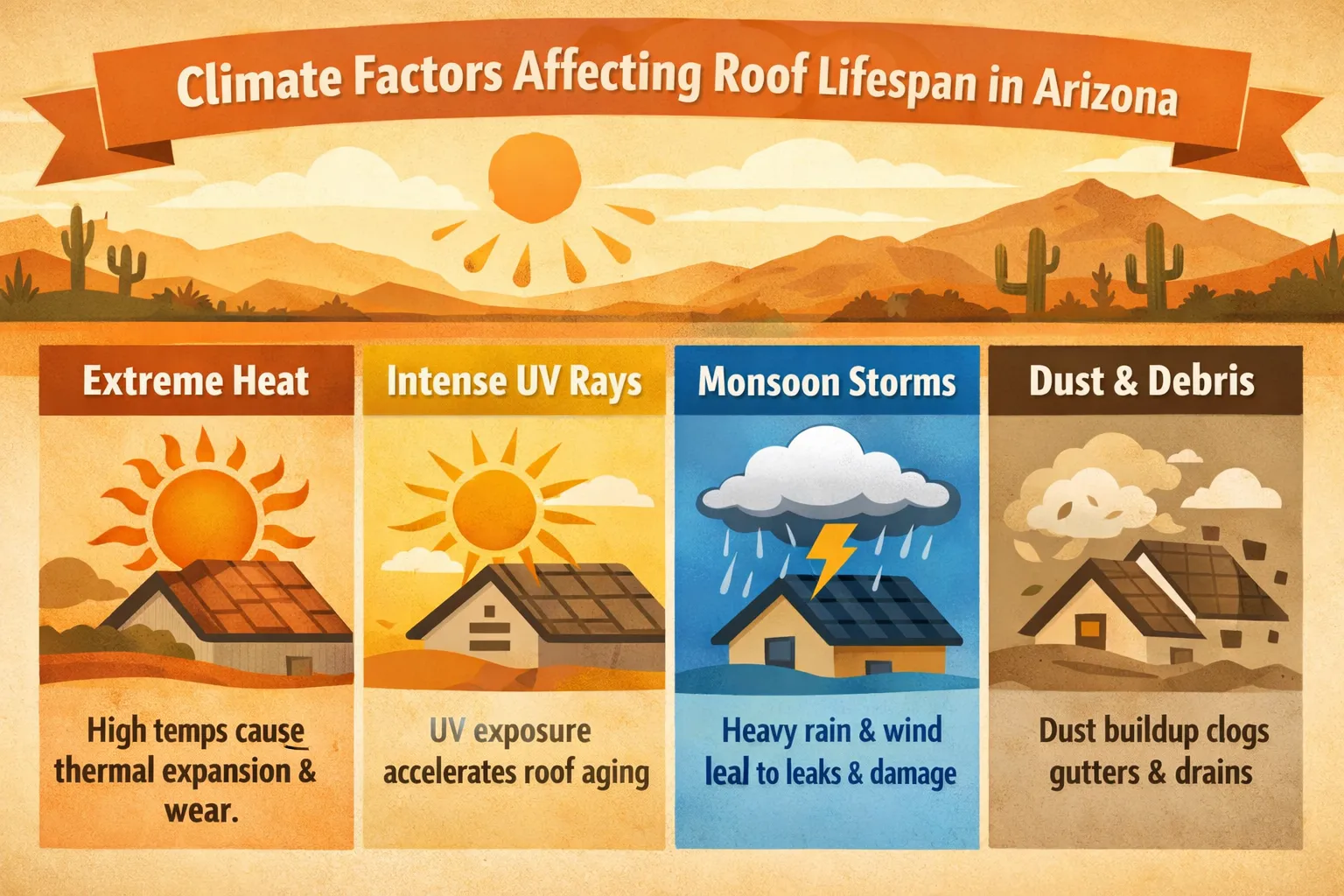
Extreme Heat
Summer temperatures in Phoenix frequently exceed 110°F. These temperatures cause roofing materials to expand during the day and contract at night, creating long-term stress on roofing systems.
This repeated expansion and contraction can weaken sealants, crack underlayment, and shift roofing components over time.
Intense UV Radiation
Arizona receives some of the highest ultraviolet radiation levels in the country. UV exposure gradually breaks down many roofing materials, especially asphalt-based products.
Reflective roofing materials can help reduce heat absorption and improve energy efficiency. The U.S. Department of Energy explains how cool roof systems can reduce heat gain and extend the life of roofing materials in hot climates.
Monsoon Storms
Arizona’s monsoon season typically runs from June through September and can bring heavy rain, strong winds, and dust storms.
According to the National Weather Service, monsoon storms can produce wind gusts exceeding 60–70 mph, which may loosen roof tiles, damage flashing, and expose vulnerable areas of the roof.
Dust and Debris
Desert winds frequently deposit dust and debris on rooftops. Over time, debris can collect in roof valleys or gutters, trapping moisture and preventing proper drainage.
This buildup may eventually lead to roof leaks if not addressed during routine maintenance inspections.
Tile Roof Lifespan vs. Underlayment Lifespan
Many Arizona homeowners assume their tile roof will last 50 years or more — and the tiles themselves often do.
However, the critical waterproof layer beneath the tile, known as the underlayment, typically wears out much sooner.
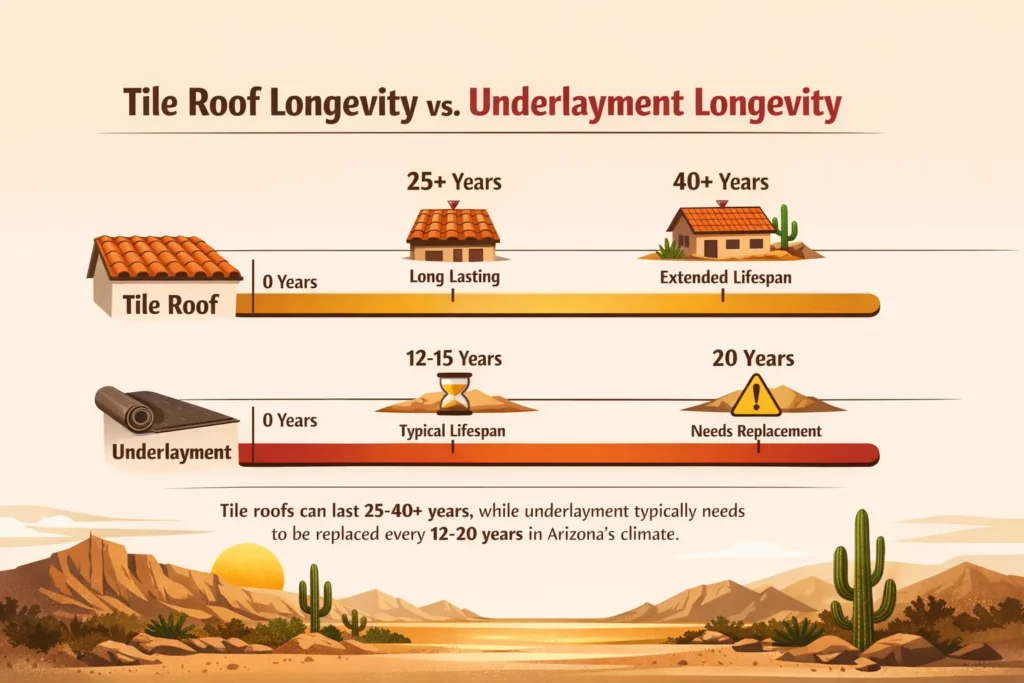
In Arizona’s heat, underlayment commonly lasts around 15–20 years before it begins to deteriorate.
When this layer fails, homeowners may start noticing:
- Roof leaks during monsoon storms
- Water stains on ceilings
- Loose or sliding roof tiles
- Higher indoor humidity levels
If your home has a tile roof that is more than 15 years old, scheduling a professional inspection can help determine whether repairs or roof repair may be needed.
Signs Your Roof May Be Near the End of Its Life
Even durable roofing systems eventually show signs of aging. Knowing what to look for can help homeowners address issues before they turn into expensive repairs.
Common Warning Signs
- Broken or cracked roof tiles
- Water stains on ceilings or walls
- Frequent roof leaks during storms
- Granule loss on shingle roofs
- Sagging roof areas
- Damaged flashing around vents or chimneys
If you notice any of these signs, it’s best to schedule a professional roof inspection before the problem worsens.
How to Extend the Life of Your Roof in Arizona
While Arizona’s climate is tough on roofing systems, there are several steps homeowners can take to maximize roof lifespan.
Schedule Regular Roof Inspections
Annual roof inspections allow professionals to identify minor issues before they turn into major damage.
Prepare for Monsoon Season
Before summer storms arrive, homeowners should ensure roof tiles are secure and gutters are clear.
Keep Gutters and Roof Valleys Clean
Removing debris allows water to drain properly and reduces the risk of leaks.
Repair Small Issues Early
Addressing small repairs promptly can add years to the life of a roofing system.
Final Thoughts: Understanding Roof Lifespan in Arizona
Roof longevity in Arizona depends on more than just the roofing material. Extreme heat, UV exposure, and seasonal storms all play a role in how long a roof lasts.
While some roofing systems can last decades, routine inspections and proper maintenance are key to protecting your home and extending the life of your roof.
Whether your roof is nearing the end of its lifespan or you simply want peace of mind before the next monsoon season, professional inspections can help identify potential issues early.
For homeowners in Phoenix and the surrounding Valley, understanding how Arizona’s climate impacts roofing systems is the first step toward protecting your home for years to come.
published on Thursday, March 5th, 2026