
What Roofers Check During a Roof Inspection
A roof health check is one of the simplest ways to understand how your roof is really doing, especially in Phoenix where heat, sun, dust, and monsoon storms can wear roofing systems down faster than many homeowners expect. If you’ve ever searched “roof check,” “roof check up,” or “roof assessment,” you’re usually looking for the same thing: a clear, practical look at what’s working, what’s aging, and what needs attention before it becomes a bigger repair.
This guide breaks down what professional roofers check during a roofing inspection, why each checkpoint matters, and what you can expect to learn afterward. It’s written for homeowners who want straight answers, not pressure.
Why a Roof Health Check Matters in Phoenix
In Arizona, roofs take a daily beating from conditions that don’t always show immediate symptoms from the ground. A roof can look “fine” until a small issue turns into a leak during monsoon rain, or until heat exposure dries out sealants and opens pathways for water to travel once storms hit.
A professional roof check up helps you catch early warning signs such as worn flashing, loose materials, heat-related cracking, and drainage problems. The goal isn’t to “find problems” for the sake of it. The goal is to understand roof condition and reduce surprise issues later.
If you want a deeper library of maintenance topics beyond this post, the roofing resources hub is a good place to start.
Roof Inspection vs Roof Assessment vs “Roof Check Up”
Homeowners use different phrases, but they often mean similar things. Here’s a practical breakdown of how these terms typically show up in real life:
- Roof check / roof check up: Usually a general request to see if anything looks off, especially before a season change, before buying a home, or after a storm.
- Roof inspection / roofing inspection: A structured evaluation of roof materials, transitions, drainage, and visible risk areas. Many roofers also look at attic/interior clues when accessible.
- Roof assessment: Often used when the homeowner wants a clearer “condition summary” (what’s aging, what’s stable, what should be watched) rather than a single yes/no outcome.
No matter the wording, a solid roof health check should end with clarity: what’s normal wear, what’s a concern, and what should be addressed sooner rather than later.
What Roofers Check First: Overall Roof System Layout
Most inspections start with a broad scan before zooming in. Roofers look at the roof’s shape, slope transitions, drainage paths, and the areas where different materials meet. These “transition zones” are where roofs most often develop small failures over time, especially on homes with multiple elevations, valleys, skylights, or roof-to-wall intersections.
During this early scan, roofers also look for uneven lines, dip points, and visible signs of stress that might indicate issues below the surface. If anything looks questionable at the system level, it guides the rest of the inspection.
Shingles and Surface Materials
On shingle roofs, the surface check is one of the most important parts of a roof health check. Roofers look for missing shingles, lifted edges, cracking, granule loss, and exposed fasteners. They also check seal strips and bonding areas that can weaken with sun exposure.
On tile roofs, roofers look for cracked tiles, slipped tiles, broken corners, and areas where tiles may no longer sit flush. Tile roofs can hide problems underneath the visible surface, which is why the underlayment condition matters just as much as the tile appearance.
On flat and low-slope roofs (including foam and coated systems), roofers look for surface cracking, soft spots, ponding areas, seam failures, and coating wear. They’ll also pay attention to penetrations and edges because those areas tend to take the most stress.
If you want a homeowner-friendly way to recognize early issues between inspections, this guide on how to spot roof damage is a helpful reference.
Flashing, Seals, and the “Leak Path” Areas
Flashing is one of the most common sources of roof leaks, not because it’s “bad,” but because it’s where roofs have to bridge materials, angles, and openings. Roofers check flashing around chimneys (if applicable), vents, skylights, roof-to-wall edges, and any penetration that breaks the roof plane.
They also inspect sealants and adhesives that may have dried out, cracked, or separated due to heat cycling. In Phoenix, repeated expansion and contraction can weaken these areas even when the roof looks fine from a distance.
For a practical overview of how roofs are commonly protected against water intrusion, this roof leak protection guide explains the basics in plain language.
Gutters, Drainage, and Water Exit Points
Drainage gets overlooked because Phoenix doesn’t have constant rain. But when monsoons hit, drainage has to work fast. Roofers check gutters, downspouts, scuppers, and valleys to confirm water has a clean path off the roof.
Even a small clog can force water to back up under materials or sit longer than it should, increasing the chance of leaks, staining, or edge damage. Roofers also look for overflow patterns and staining that suggest water is not exiting the way it’s supposed to.
If you’ve ever noticed ceiling discoloration after storms, this article on brown spots on your ceiling can help you connect the dots between roof drainage and interior symptoms.
Structural Stability: Sagging, Soft Spots, and Uneven Lines
Roofers look for signs that the roof deck is no longer stable or evenly supported. Sagging areas, waviness, soft spots, or dips can indicate moisture intrusion, compromised decking, or long-term stress at a specific point.
This doesn’t automatically mean you need a full replacement. It does mean that area deserves attention, because structural issues rarely improve on their own. Roofers will document the location, evaluate severity, and explain what the finding typically points to.
Do Roofers Check Attics During a Roof Inspection?
Yes, when access is available and it’s appropriate for the inspection. Many homeowners are surprised by how much information an attic can reveal during a roofing inspection.
From inside the attic, roofers may look for:
- Moisture staining: Darkened wood, water marks, or damp insulation can indicate active or past leak paths.
- Ventilation balance: Poor airflow can trap heat and moisture, which can shorten roof material life and contribute to interior comfort issues.
- Light penetration: Small openings can sometimes be seen from inside before they cause visible ceiling damage.
- Insulation compression: Wet or compacted insulation can signal moisture issues and reduce energy efficiency.
Ventilation is a big piece of roof performance in hot climates. If you want to understand how airflow impacts roof health, this breakdown of why roof ventilation is important provides a clear overview.
Heat, UV Exposure, and Phoenix-Specific Wear Patterns
Phoenix roofs face months of intense sunlight and extreme surface temperatures. During a roof health check, roofers pay special attention to components that commonly degrade in heat and UV exposure, including sealants, underlayment edges (when visible), coating wear, and areas where materials meet.
Common Phoenix-local inspection notes often include:
- Heat-driven cracking: Small cracks in coatings or sealants that expand over time.
- UV wear: Surface brittleness, fading, or accelerated aging on exposed edges and transitions.
- Dust buildup: Dust can affect drainage and reflectivity, and it can hide early surface issues if left unchecked.
- Thermal movement stress: Repeated expansion and contraction can loosen fasteners and weaken seals at penetrations.
Roof energy performance also ties into material and ventilation choices. If you’re interested in ways homeowners often improve roof efficiency, see three ways to improve roof energy efficiency.
Monsoon Storm Checks: What Roofers Look For After Wind and Rain
After monsoon storms, roofers focus on different risk areas than they do during a routine roof check up. Wind can lift edges, shift tiles, and drive debris into vulnerable points. Heavy rain can expose drainage issues and flashing weaknesses.
Post-monsoon roof inspection checkpoints often include:
- Lifted or loosened shingle edges and ridge components
- Displaced tiles or cracked corners from impact
- Flashing separation at vents, skylights, and roof-to-wall intersections
- Debris impact zones (especially on valleys and low-slope transitions)
- Drainage backups or overflow staining
For a deeper look at how storms affect roofing in the area, this guide to roof weather damage in Phoenix is a strong companion piece.
If you’re planning ahead, this article on how to prepare your roof for monsoon season also pairs well with a routine inspection schedule.
Inspection Checklist: What Roofers Typically Document
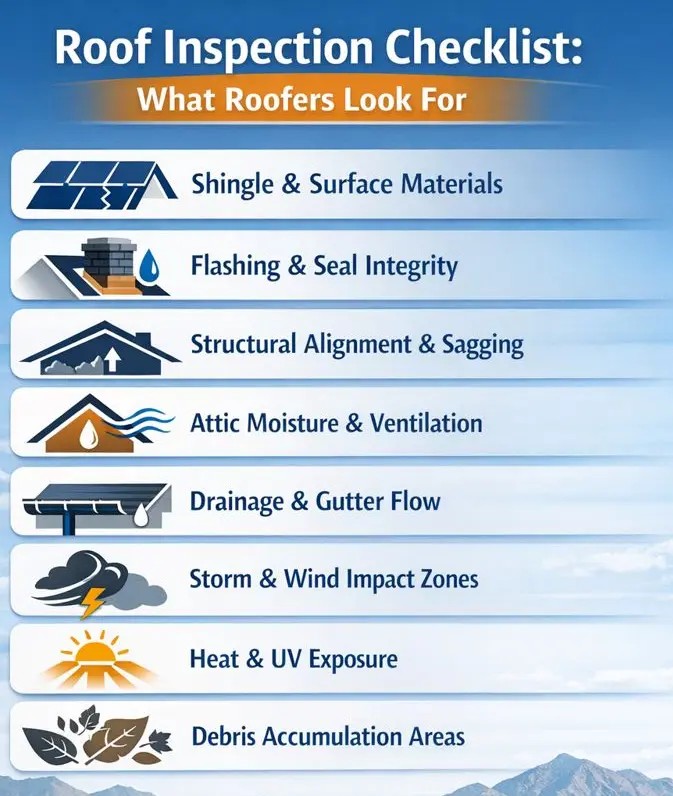
If you want a quick “roof health check” summary, here’s a practical checklist of what roofers commonly document during a professional roofing inspection. (This is also a good section to pair with your infographic.)
Recommended infographic placement: Insert your “Roof Inspection Checklist” infographic directly below this paragraph for a quick visual scan before the detailed sections continue.
- Surface materials: Missing, cracked, lifted, or worn areas
- Flashing and seals: Open seams, dried sealant, separation points
- Roof edges and transitions: High-stress zones where failures often start
- Drainage and gutters: Clear water exit paths, overflow signs
- Penetrations: Vents, skylights, pipes, and any roof opening
- Structural lines: Sagging, soft spots, uneven planes
- Attic indicators (when accessible): Moisture, ventilation, insulation condition
- Storm impact areas: Wind uplift edges and debris zones
Roof Inspection Standards and Trusted References
Even though every roof is different, many inspection concepts are consistent across the industry. The National Roofing Contractors Association is a widely recognized source for general roofing education and industry context.
For broader building performance and weather-related considerations, FEMA building science guidance is a strong reference for how structures respond to environmental stressors.
And when homeowners want to understand how roofing choices can affect comfort and energy use, the U.S. Department of Energy roofing guidance offers practical, homeowner-readable information.
What Happens After a Roof Inspection?
A solid roof assessment should leave you with a clear understanding of roof condition and next steps. Most inspection outcomes fall into one of these categories:
- Everything looks stable: Normal wear is present, but no urgent issues are found. You may get maintenance suggestions or a re-check timeline.
- Minor issues identified: Small repairs or preventative maintenance may be recommended to keep the roof performing well.
- Active risk areas found: The roofer may recommend addressing specific points sooner to prevent leaks or material failure.
- Planning conversation: If the roof is approaching end-of-life, you may get a long-term plan rather than a rushed decision.
If your inspection findings suggest water intrusion, it’s often helpful to learn the difference between “where water shows up” and “where the roof is actually letting water in.” This guide to roof leak detection in Arizona explains how that process works in a homeowner-friendly way.
How Often Should You Schedule a Roof Check Up in Phoenix?
There isn’t a single schedule that fits every roof, but Phoenix homeowners often benefit from routine inspections because of the combination of heat exposure and seasonal storm impact. A roof check up can be especially useful:
- Before monsoon season
- After major wind and rain events
- When buying or selling a home
- If the roof is older or has had past repairs
- When you notice interior symptoms like staining or musty smells
For a more detailed discussion of timing, see how often to get a roof inspection in Phoenix.
When a Roof Check Turns Into “Call a Roofer” Territory
This post is meant to stay educational, but it’s also fair to say that some signs should not be ignored. If you’re noticing repeated leak symptoms, ceiling staining, or visible storm damage, it may be time to move from “general roof check” to professional evaluation.
This guide on when to call a roofer in Arizona helps homeowners decide what’s worth watching versus what’s worth addressing sooner.
Professional Inspection Options (Informational Only)
If you’re looking for what a professional inspection includes and how it’s typically structured, Capstone Roofing provides general information on roof inspections in the Phoenix area. And if your questions are specifically about tracking down leak sources, their overview of leak detection explains what that evaluation usually focuses on.
Frequently Asked Questions
What is a roof health check?
A roof health check is a practical review of your roof’s condition, focused on materials, transitions, drainage, and common wear points. Many homeowners use this term interchangeably with a roof inspection or roof check up.
What do roofers look for during a roof inspection?
Roofers typically check surface materials, flashing and seals, roof edges and transitions, drainage systems, penetration points (vents/skylights), and signs of structural stress. When attic access is available, they may also look for moisture and ventilation indicators.
Do roofers check the attic during an inspection?
Often, yes. If the attic is accessible and it fits the scope of the inspection, roofers may look for moisture staining, ventilation balance, insulation condition, and light penetration that can signal roof entry points.
Will a roof inspection find a leak?
An inspection can identify common leak sources and risk areas, but “finding a leak” can mean different things. Water may appear in one place while entering elsewhere. That’s why leak detection and roof inspections are often related but not identical.
How is a roof inspection different from a roof assessment?
A roof inspection usually follows a structured checklist of components. A roof assessment often emphasizes the overall condition summary, expected performance, and what should be watched over time. In practice, many professionals blend both.
How often should I do a roof check up in Phoenix?
Many homeowners benefit from seasonal timing, especially before monsoon season and after major storms. Roof age, roof type, and past repairs can also influence how often inspections make sense.
What should I do before a roof inspection?
Clear driveway access if needed, note any interior symptoms you’ve noticed (stains, odors, drips), and share the timing of recent storms or repairs. The more context you provide, the more useful the inspection summary tends to be.
What does an inspection not usually include?
Inspections typically focus on roof-related systems and visible conditions. They may not include full interior diagnostics, mold testing, or structural engineering analysis unless specifically requested.
Can a roof look fine but still have problems?
Yes. Some of the most common issues start at flashing, seals, underlayment edges, or drainage zones that aren’t obvious from the ground. That’s one reason routine roof health checks are helpful.
What are common Phoenix-specific roof issues roofers watch for?
Heat and UV degradation, dried sealants, dust-related drainage issues, thermal movement stress at penetrations, and monsoon-related uplift or impact zones are all common Phoenix-local concerns.
How do I keep small roof issues from becoming big repairs?
Staying consistent with roof checks, keeping drainage paths clear, and addressing minor material or flashing problems early is often the simplest way to reduce surprise issues later. Educational resources and inspection notes can help you plan rather than react.
published on Friday, January 16th, 2026
